Why Is Tightening Lug Nuts with an Impact Wrench Risky?
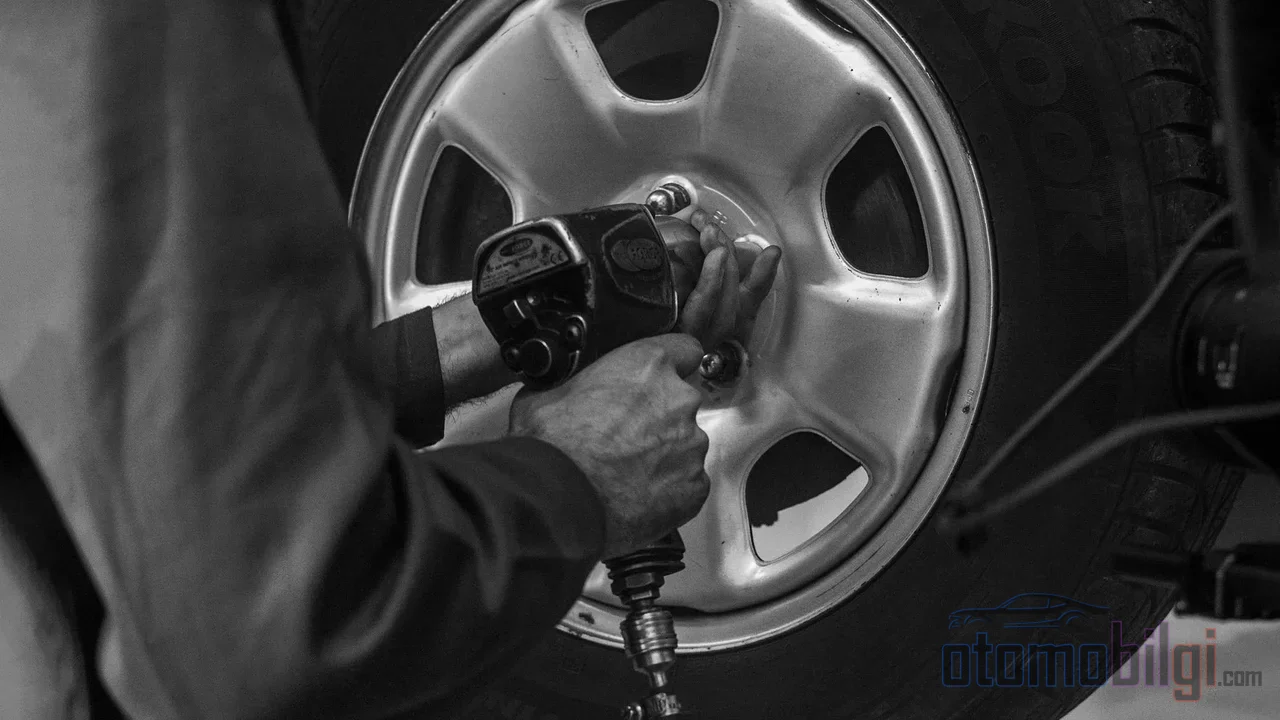
What connects the wheel to the road from the moment the tire is mounted and the wheel sits in place is not the four or five nuts themselves, but the correct amount of tightening force those nuts carry. This force is called torque and it is measured in Nm. The interesting part is that over-tightening and under-tightening the lug nuts lead to the same outcome: a wheel that loosens on the road, or even comes off the vehicle. So why is tightening it "enough" by arm strength alone not sufficient? The answer lies in the physics of the brake disc and in how metal behaves over time.
Let me say this as someone who has been in this business for more than thirty years: in the old days, lug nuts at service shops were tightened as far as the arm could lean on, and then the vehicle owner was left alone on the roadside with a nut that could not be removed. Now manufacturers give a clear value in Nm in the owner's manual, and stepping outside that value, unfortunately, opens the door to invisible damage.
What Does a Torque Wrench Do, and Why Can Nothing Else Replace It?
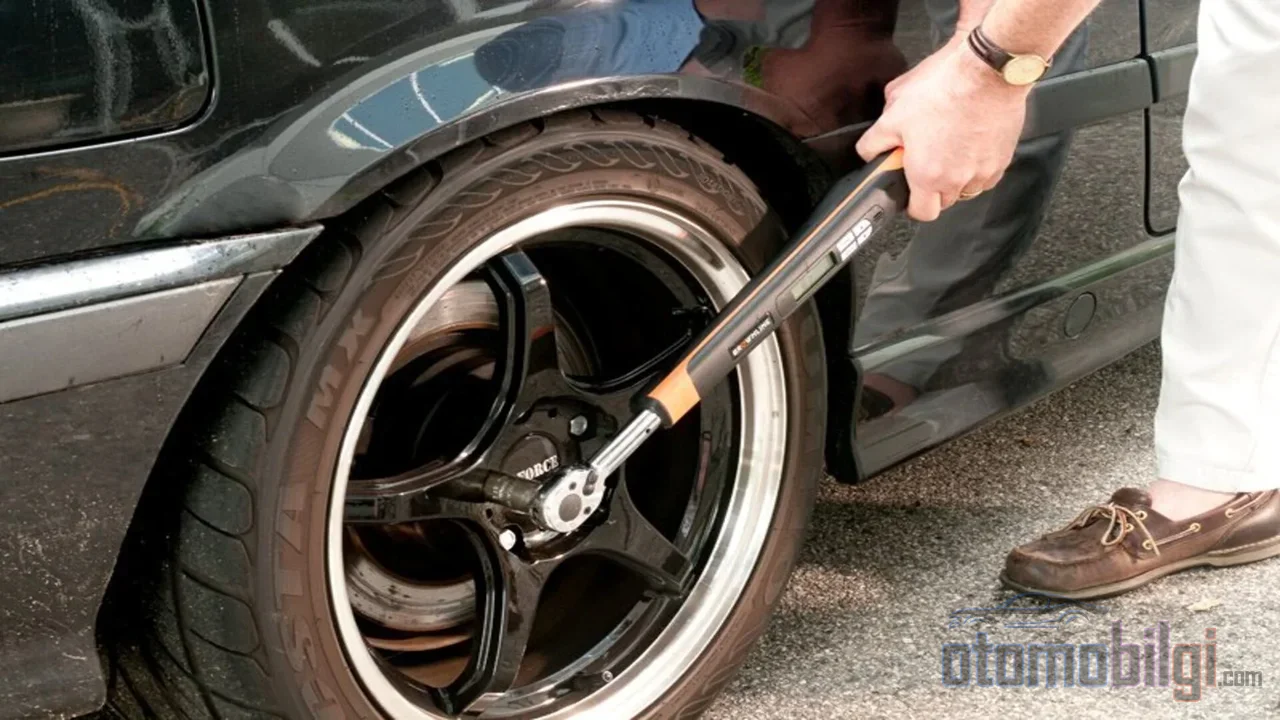
A torque wrench is a tool that measures the applied rotational force. The lug nuts are first fitted by hand and tightened by hand as much as possible; then the final tightening is done with a torque wrench set to the value specified in the vehicle's owner's manual, following a cross (star) pattern. The star sequence is critical: what ensures the wheel clamps evenly against the hub is tightening the nuts in an alternating sequence.
Every vehicle has its own torque requirement, and the correct value is always written in the owner's manual. To give a general idea: in passenger cars and light commercial vehicles, lug torque typically ranges between 80-180 Nm; the most common range is around 100-140 Nm. On larger and heavier vehicles, this value can go up to 120-200 Nm.
Key Highlights
- Lug torque typically falls in the range of 80-180 Nm depending on the vehicle; the most common values are around 100-140 Nm.
- An impact wrench can unknowingly apply 4-5 times the intended force.
- On newly mounted wheels, the lug nuts must be re-checked after the first 50-100 km.
- Torque values apply to dry and clean threads; a lubricated lug nut should never be tightened to the same value.
The Effect of Over-Tightening on the Brake Disc: Warping or Run-Out?
The most debated consequence of over-tightened lug nuts is deformation of the brake disc. The mechanism is actually simple: the disc clamps to the hub through the lug nuts. If the lug nuts are not tightened with equal force or are over-tightened, an uneven pressure distribution forms on the disc's mounting surface, and distortion develops over time. Unevenly tightened lug nuts also contribute to disc thickness variation (DTV) during rotation; this is one of the classic causes of the vibration felt in the brake pedal.
There is a subtle distinction here: some technicians point out that excessive torque does not so much literally "warp" the disc as cause rotational run-out, and this run-out is noticed especially at high speeds. In practice, the result leads to the same place: the pedal vibrates, braking comfort deteriorates, and the disc and pads wear out prematurely. Overtightening can also damage the hub flange and bend the threads inside the nut outward, creating permanent stress; stretched lug studs can snap under stress.
An example of how big the error is numerically: while working with an impact gun, instead of the intended roughly 110 Nm (80 ft-lbs), you may unknowingly apply 400-540 Nm (300-400 ft-lbs). This exceeds not the disc's, but directly the stud's and nut thread's endurance limit.
The Result of Undertightening: Chain Loosening
Insufficient torque produces a faster and more dramatic outcome at the other end. An undertightened nut cannot create the clamping force needed to hold the wheel in place from the start; settling movements at the mating surface cause it to loosen itself over time. The real danger begins after that: when a single nut loosens, the load is redistributed to the remaining nuts, and as the grip weakens, the loosening spreads in a chain reaction.
The outcome chart is clear: a wheel that becomes unstable, loosens, or completely detaches from the vehicle. An example from real life: as a result of a dealer overtightening the lugs, a wheel detached on the road after 28 days. And a striking statistic: the most common cause of wheel detachment cases is the lugs not being re-tightened after the first 80-160 km.
Typical Torque Values by Lug Size
You should always get the value specific to your vehicle from the manual; but typical ranges by lug size provide a healthy reference. The following values are in foot-pounds (ft-lbs); 1 ft-lb corresponds to approximately 1.356 Nm. The table also shows how many turns the nut needs to be threaded onto the stud at minimum; when buying new wheels, the lug length must meet this minimum thread engagement count.
| Lug size | Typical torque (ft-lbs) | Approximate Nm equivalent | Minimum turns |
|---|---|---|---|
| 12 x 1.25 mm | 70-80 | 95-110 | 8 turns |
| 12 x 1.5 mm | 70-80 | 95-110 | 6.5 turns |
| 14 x 1.25 mm | 85-90 | 115-120 | 9 turns |
| 14 x 1.5 mm | 85-90 | 115-120 | 7.5 turns |
| 1/2 inch | 75-85 | 100-115 | 8 turns |
| 9/16 inch | 135-145 | 183-197 | 8 turns |
Why Impact Wrench and Torque Stick Are Not Enough?
An impact wrench cannot be set to a precise torque value; the force it applies varies depending on the tool, the condition of the air line, and the way it is used. The result can be a wheel left loose with low torque or a lug snapped with high torque. Torque sticks are not recommended for the same reason: they can neither reliably hit the value nor may they damage the wheel surface.
The applicable middle way is this: the impact wrench is used only for pre-tightening, and final tightening must always be done with a torque wrench. One more rule: the torque wrench is only for tightening; it should never be used for loosening, because it damages its mechanism.
Dry Threads Rule: Why Is Lubrication Forbidden?
Lug nut torque specifications apply only to dry threads; the bolt threads and seating surfaces must be free of oil, dirt, dust and corrosion. The reason is physics: torque is actually an indirect measurement, converted into clamping force through friction. Oil alters this friction, and a lubricated lug tightened with the same torque value produces a much higher clamping force than the dry condition.
Technical literature contains recommendations that torque should be reduced by anywhere from 20 to 50 percent for lubricated threads; the ratio varies depending on the lubricant used. However, for vehicle lug nuts the practical advice is clear: never use lubricant or anti-seize under any circumstances. Even if someone else applies oil to the threads and lowers the torque value, calculating which lubricant corresponds to which ratio at the wheel is nobody's job.
Re-Check After the First 50-100 Kilometers
Tire manufacturers recommend that lug nuts be checked after roughly 50 km of driving following the installation of new tires, and re-tightened with the same values if necessary; this service is free of charge at many tire shops. Wheel manufacturers and retailers, on the other hand, point to the first 80-160 km for new wheels. The reasons are obvious: metal surfaces settling against each other, thermal stresses, and the need to verify the initial installation.
The routine that should become a habit is this:
- Every time a wheel is removed and refitted, the lug nuts are checked after 50-100 km.
- Roughly every 8,000 km, the torque check is repeated together with tire rotation.
- During the check, the wheel should have cooled down to ambient temperature; torque should never be applied to a hot wheel.
- Re-tightening is done by loosening and re-tightening in a crisscross sequence.
In practice, there are also shops that recommend a three-stage check at 25, 50 and 100 km; while the kilometer intervals vary somewhat between shops, the essence is the same: a lug nut does not seat properly right after installation, and a seated lug nut demands a check.
Why Lug Nuts Are Torqued to Specification: The Short Answer
The essence of the answer is this: lug nuts are tension bolts designed to lock the wheel onto the hub, and they only work correctly at the proper torque value. Too little torque lets the wheel loosen on the road, while too much torque deforms the brake disc and causes permanent damage to the hub and nut threads. That is why lug nuts are not tightened by hand but with a torque wrench set to the value in the manual, in a crisscross sequence, with dry and clean threads, and are re-checked after the first 50-100 km.
After a forty-five-minute tire installation, this five-minute check is the cheapest insurance protecting the entire chain from the brake disc to the wheel bearing. Arm strength is a matter of feel; a torque wrench is a matter of physics. Trying to substitute one for the other usually sends the bill your way, with a delay, at the roadside.
Sources
- How Do I Properly Torque My Wheel Lug Nuts or Bolts?
- Wheel Torque Specs | Lug Nut Torque
- How Much Torque Do You Need?
- Choosing The Right Torque Wrench For Lug Nuts
- How important is lug nut torque?
- Does Over torqued lug nuts = warped rotors? YES
- Can over tightening your wheels warp brake rotors?
- Do torque settings need to always be according to spec?
- Why do wheels need to be torqued?
- How important is hitting torque spec on wheel lug nuts?