Why Does a Tire Wear on One Side Only and What Is the Solution?
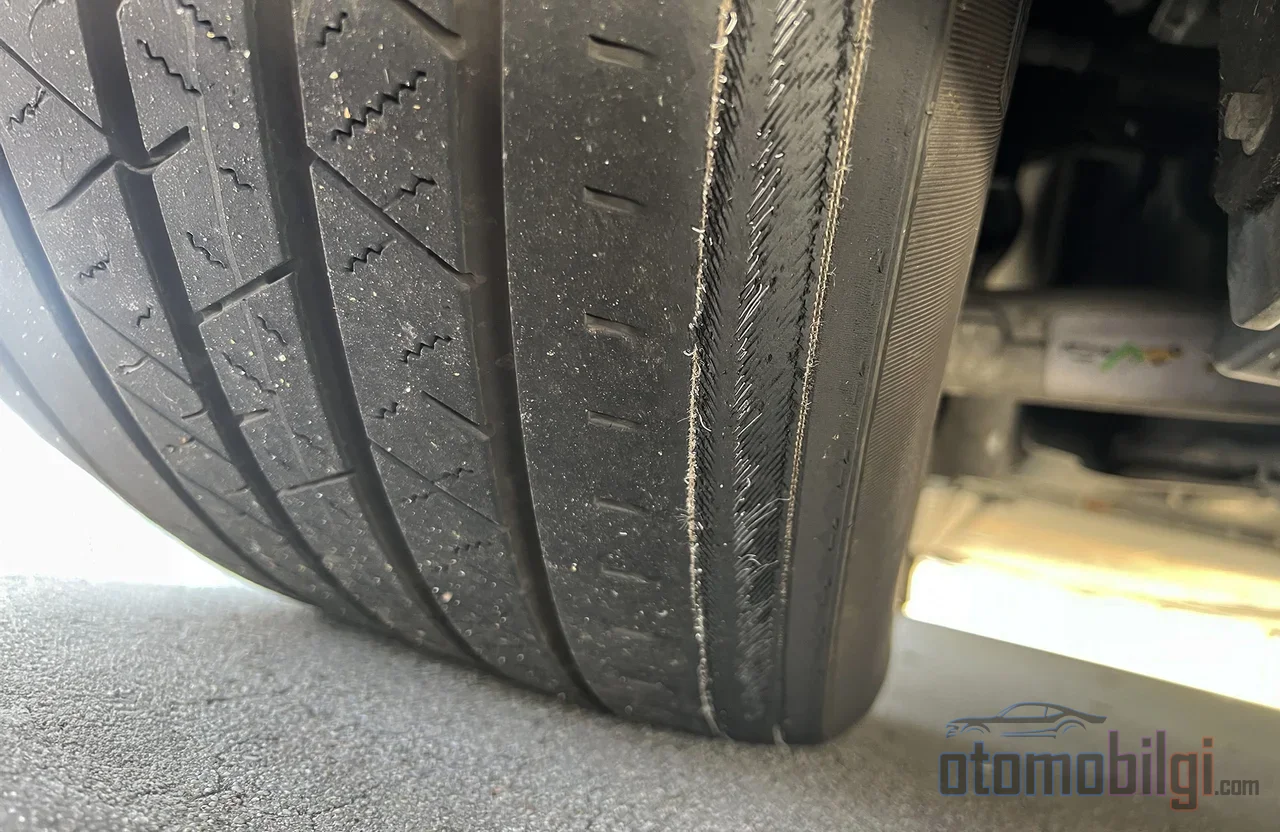
If one edge of the tire wears fast and the other wears little, there is a calculation behind it, and that calculation usually lies not in the tire itself but in the vehicle's geometry. The most common misconception someone who has spent over thirty years in the automotive world sees is this: the driver blames the tire, fits a new one, and a few thousand kilometers later the same pattern reappears. Because a wear pattern is a result; the cause is usually the camber angle, toe setting, looseness in the suspension, or a pressure error. On this page we will go through, one by one, which fault corresponds to one-sided, sawtooth, center, and cupped wear patterns, how it shows up in the vehicle's behavior, and which service needs to be brought in.
Irregular Wear Patterns and What They Mean
The tire's tread surface is an honest report from which you can read the vehicle's mechanical condition. If you know how to read the pattern correctly, you can catch the problem before the vibration starts, before the cords show. The table below summarizes the most frequently encountered patterns and their most likely causes.
| Wear pattern | Most likely cause | Service to be performed |
|---|---|---|
| One-sided inner shoulder wear | Excessive negative camber, incorrect toe | Wheel alignment, suspension check |
| One-sided outer shoulder wear | Excessive positive camber, aggressive cornering | Wheel alignment |
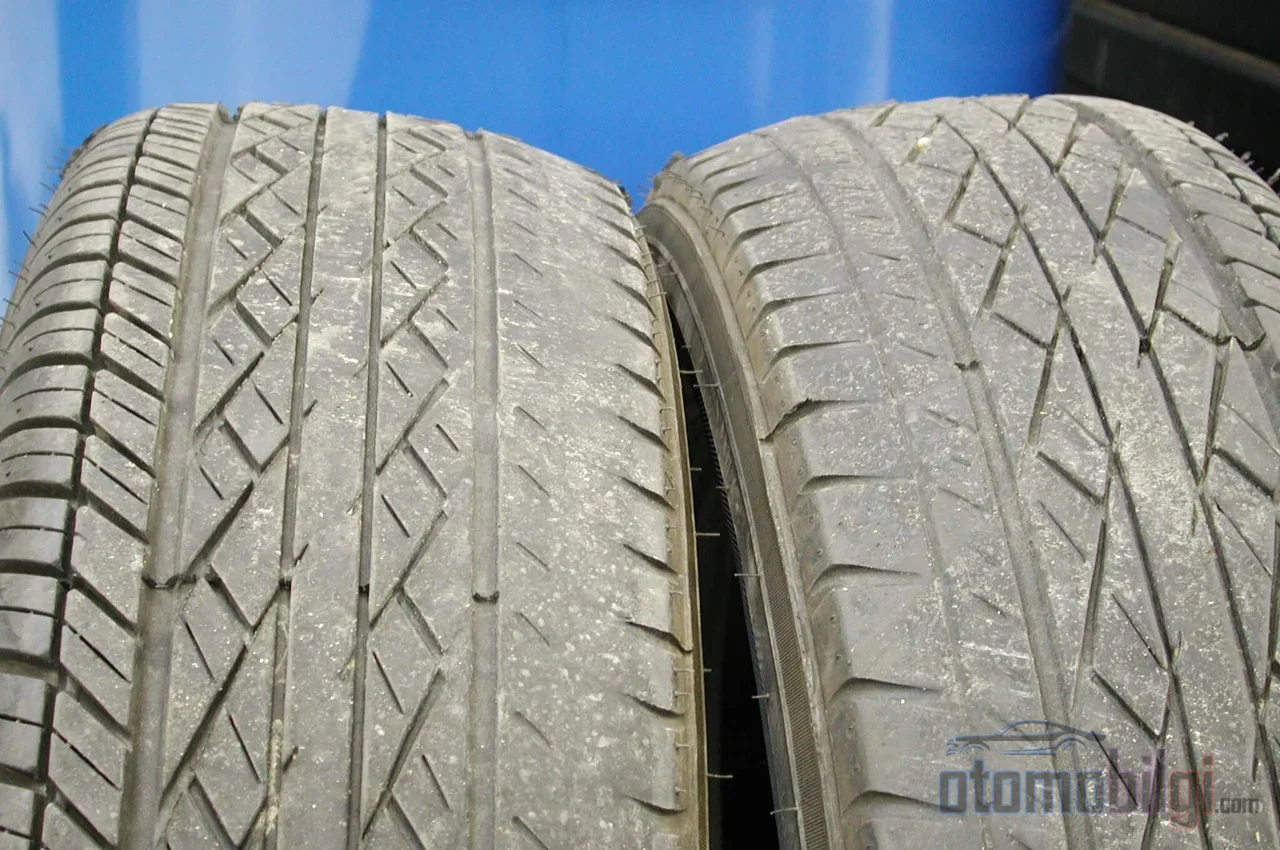
| Sawtooth, feathered block edges | Excessive toe-in or toe-out | Wheel alignment |
| Wear on center tread only | Overinflation | Pressure correction |
| Wear on both shoulders together | Low pressure or overloading | Pressure and load check |
| Cupped, wavy surface | Worn shock absorbers, imbalance, loose suspension | Suspension check, balancing |
Key Takeaways
- Toe error is the single biggest cause of premature tire wear; in severe cases, new tires can be worn out before 5,000 miles.
- Even if the vehicle drives straight, the tires can wear rapidly; pulling and wear are independent of each other.
- A wheel alignment will not restore lost tread, but a correction can stop the pattern from progressing.
- Suspension repair is essential before new tires; otherwise the new tires will start wearing the same way.
- For pressure checks, the value on the plate in the door pillar is what counts, not the maximum value on the tire sidewall.
One-Sided Edge Wear: Camber or Toe?
If only one edge of the tire, the inner or outer shoulder, is wearing, the first angle that comes to mind is camber. Viewed from the front, the tire tilting inward is negative camber, and tilting outward is positive camber; excessive negative camber eats the inner shoulder, excessive positive camber eats the outer shoulder. In modern vehicles camber is typically kept between 0 and -2 degrees and is used deliberately to distribute load across the contact patch; in classics from the 1950s through the 70s, values between 0 and +1 degrees were the standard. So a certain amount of negative camber is part of the design; to be guilty, it has to go beyond the limit.
But on the practical side, the toe angle works more insidiously. Toe is the condition where, viewed from above the vehicle, the tires point inward or outward, and it drags the tire sideways as it rolls. Experience tells us this: camber wear is relatively slow, while toe error is the single biggest cause of premature tire wear. In severe toe misalignment, there have been recorded cases of new tires being worn out within a few days, in less than 5,000 miles. What makes it even more deceptive is that toe error does not pull the vehicle - on the contrary, it can quietly consume the tires even while the car is driving straight.
Single-edge wear has other common culprits besides camber and toe: worn suspension parts, a component bent from hitting a curb, or incorrect ride height can all produce the same pattern. An alignment is not a cure-all; first the damaged part is found, then the angles are corrected.
Feathered Pattern: The Blocks' Protest
If you run your palm across the tire tread and each block feels sharp on one edge and soft on the other, you have feathering - the term used in technical literature, known in Turkish as tüylanma or sawtooth wear. Its dominant cause is excessive toe-in or toe-out; the tire, which should roll straight, rubs slightly sideways, and the blocks wear constantly in the same direction. A hard cornering habit combined with low pressure can also trigger the same pattern. The hand check is simple and effective: a tread that feels rough in one direction and smooth in the other is a sign that should send you to an alignment service.
Center and Both-Edge Wear: The Pressure Question
If only the center of the tread is wearing away rapidly, the tire is overinflated; the tire bulges outward and carries all the load in the middle of the tread. If both shoulders wear together, the picture is the opposite: the pressure is either low or the vehicle is constantly overloaded. Low pressure increases rolling resistance and heat, and presses both edges into the road. An old rule of thumb still applies here: take the correct value not from the maximum pressure written on the tire's sidewall, but from the plate on the vehicle's door pillar. The figure on the sidewall is the tire's limit, not the vehicle's need.
Cupped, Scalloped Wear: The Suspension's Signature
The cupping pattern, where high and low zones alternate along the tread, is proof that the tire is bouncing on the road. The most frequent cause is a worn shock absorber or strut; alongside that, imbalance in the wheel-tire assembly, a bent wheel, or looseness in the suspension can also produce the same pattern. Cupping usually announces itself with a droning or rumbling noise that varies with road speed. A loose steering linkage causes irregular shoulder wear, while worn bushings cause camber and toe values to shift during braking and cornering; a bad ball joint in the front end causes knocking over bumps, and looseness and vibration in the steering. Rapid wear on the inner or outer edges of the front tires is also among the classic symptoms of a bad ball joint.
One must be measured here: a cupped pattern on its own is not an order to replace the shock absorbers. During inspection, tire condition, wheel balance, wheel damage, and suspension should be evaluated together. The visible pattern is a diagnostic clue, not a confirmed diagnosis; multiple problems may exist at the same time.
Alignment or Balancing? Telling the Two Apart
This is the pair drivers confuse the most. Wheel alignment corrects the wheel angles, that is, camber, caster, and toe values, according to the vehicle and the road; its symptoms are uneven tire wear, pulling, wandering, and a steering wheel that sits off-center when driving straight. Balancing, on the other hand, corrects uneven weight distribution in the wheel-tire assembly with small metal weights; its symptom is vibration. The rule is simple: if the car does not drive straight or the tires wear unevenly, it is an alignment problem; if the complaint is vibration, the solution you are looking for is balancing. Since cupped wear can also be a sign of imbalance, both procedures are sometimes needed in the same visit.
As for caster: this is the forward or rearward tilt of the steering axis, and nearly all vehicles are designed with positive caster. Insufficient positive caster causes wandering, while too much increases steering effort; but caster rarely causes noticeable wear and is only meaningful on steering, that is, front wheels. The two main players on the wear table are camber and toe.
How Does the Car Tell You This?
During periods when you cannot see the pattern with the naked eye, the car's behavior tells you. A car with excessive negative camber or a toe problem pulls to one side; the direction of pull is toward the side with the greater camber angle, from negative to positive. However, pulling and wear are independent of each other: the car may pull but the tires may not wear, and conversely, the tires may wear out quickly while the car drives as straight as possible. Wear in suspension components works in secret; angles measured during a stationary inspection may differ from those measured on the road under load. For this reason, checking the suspension and steering by hand before an alignment is essential; if a part is replaced after the alignment, the alignment must be redone.
The Role of Driver Habits
Not every wear pattern is mechanical. Aggressive cornering, hard braking, and sudden starts and stops trigger the pattern; if you see wear on a single outer edge and the angles are correct, a repeated aggressive cornering habit is the likely cause. Hard cornering combined with low pressure leads to feathering. Rough and damaged roads increase friction and quickly consume the tread; high speed heats the tire and accelerates wear. In the past, only master mechanics would talk about these matters; now you can read pressure and temperature data from the car in real time, but interpreting the pattern still falls to the human eye and hand.
What Should Be Done to Stop One-Sided Wear?
The short answer is this: first check the pressure against the value on the sticker on the door jamb, then check tread depth separately at the inner, middle, and outer regions of the tire; if there is single-edge wear, have an alignment done after a suspension inspection. Alignment corrects the adjustable angles; but it won't restore worn tread, repair a damaged tire, or fix balance or worn-out parts. If the tire is still usable, proper alignment stops the wear pattern from progressing. A tire with visible cords, bulging, separated layers, or insufficient tread depth needs to be replaced before an alignment, not after.
The sequence to follow is as follows:
- Compare cold tire pressure with the value on the sticker on the vehicle's door jamb; not with the maximum value on the tire sidewall.
- Measure tread depth separately at the inner, center, and outer grooves; alignment-related problems usually start on the inside, and a solid-looking outer edge can be misleading.
- Have the suspension and steering inspected before the alignment; worn parts that wear each other out in sequence need to be replaced first.
- Ask for the alignment values after the repair; the numbers should be symmetrical side by side and suitable for use.
- Check pressure monthly and rotate the tires every 5,000-7,500 miles; get an alignment at least once a year, and immediately after hitting a curb.
- When you notice a new vibration, pulling, or off-center steering, intervene before the tread is visibly damaged.
Rotation balances future wear but does not undo existing damage; also know that directional tires, different front-rear sizes, or severe shoulder wear are limitations. The most critical ordering is this: suspension repair should be done before new tires. If the underlying problem stays with the vehicle, new tires will start wearing the same way within a few thousand miles; that is the summary of this paragraph.
When Is Uneven Wear Dangerous?
Severe uneven wear is not a cosmetic issue: it reduces grip on wet surfaces, produces noise and vibration, destabilizes handling, can expose the cord, and increases the risk of tire failure. Tire life is shortened, and there is a cost at the fuel pump as well. The good news is that uneven wear is usually a sign of a fixable problem: incorrect inflation, misalignment, or a worn suspension component. A driver who reads the pattern correctly and gets to the right shop in time extends the life of their tires and gets their share of safety on the road.
Sources
- Uneven tire wear: Causes, Symptoms, and Fixes
- What Causes Uneven Tire Wear? Inner vs. Outer Edge
- Caster, Camber and Toe
- Uneven Tire Wear: Causes & Fixes
- Tire Feathering
- Tire Tread Wear: Causes And Symptoms
- Commercial Truck Tire Wear Patterns & Causes
- Why would it wear uneven like this?
- Camber doesn't wear your tires, it's toe