Should New Tires Be Fitted to the Front or the Rear?
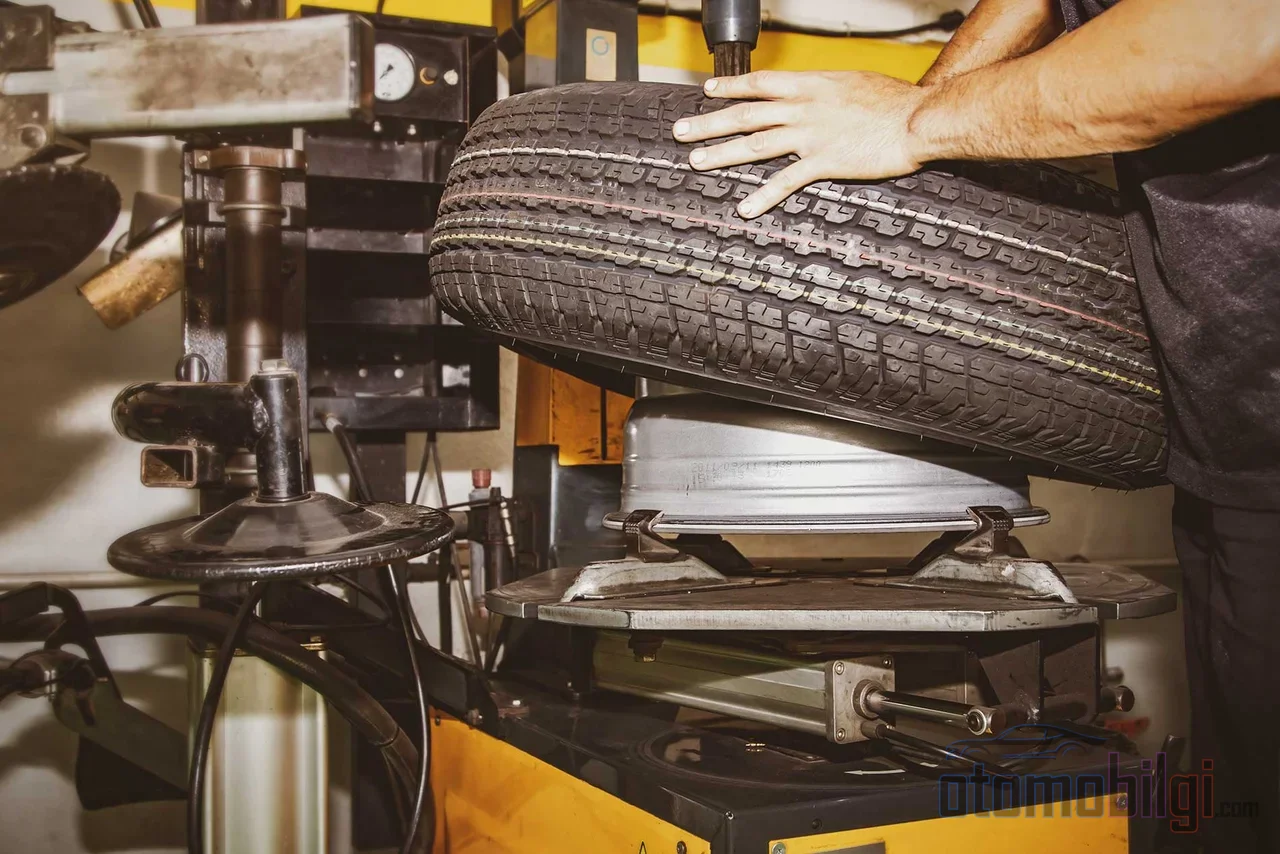
The tire shop is holding two new tires in front of you and asks: should I put these on the front or the rear? As someone who has been around this trade for more than thirty years, let me tell you: there is a rule about this question that keeps getting the wrong answer, persistently. Most drivers' intuition points to the axle that carries the power and the steering: in a front-wheel-drive car, logic says front. The recommendation the industry has repeated for years points to exactly the opposite.
In this article we will not simply accept the rule as it is; we will dig into the reason why. We will take the concepts of braking, skidding and sliding one by one, weigh the dry versus wet surface distinction with concrete data, and sort out the details that change depending on the drivetrain type. At the end, we will arrive at a clear decision you can make at the tire shop with your own vehicle.
Why Do Only Two Tires Become a Matter of Decision?
In an ideal world, all four tires are replaced at once. The recommendation of the tire industry's professional organizations points in this direction from the start: best practice is to renew the entire set at the same time. But in practice, due to budget, time, or wear on a single axle, most vehicle owners make do with two tires. Especially in front-wheel-drive vehicles, the front tires wear noticeably faster because they carry power transmission, steering and cornering loads at the same time; therefore, the first replacement almost always concerns the front axle.
Making do with two tires is a perfectly legitimate choice. The real question is which axle the new ones will be placed on. And on this question, intuition and the industry recommendation part ways from the first conversation: the average driver's inner voice says front, the guides say rear. Behind this contradiction lies a technical logic; to understand it, we first need to look at how a vehicle loses its grip.
Highlights
- If only two tires are replaced, the industry recommendation is the rear axle regardless of drivetrain type.
- With a tire at the legal minimum tread depth (1.6 mm), the braking distance on wet roads is 6.8 meters longer compared to full tread.
- Rear grip loss creates oversteer, front loss creates understeer; oversteer is far more difficult for the average driver to manage.
- On AWD vehicles, the ideal solution is not two, but renewing all four tires at once.
Understanding How a Vehicle Slides: Understeer and Oversteer
When a tire loses its grip, the vehicle's behavior changes completely depending on which axle loses it. If the front tires lose grip, the vehicle tries to continue in a straight line instead of entering the intended road; this is called understeer, meaning a loss of steerability. The steering is turned to the right, but the vehicle insists on going straight. Every driver who encounters understeer recognizes it, and the natural reflex of reducing speed usually works in this situation.
If the rear tires slide, the picture reverses: the rear end starts to escape outward and the vehicle oversteers, meaning the tail swings out. This is a situation most drivers never train for; the correct response is countersteering, and a driver who panics at that moment can run the vehicle off the road or slide it into oncoming traffic. In forensic vehicle engineering, this distinction is addressed clearly: lost front grip is considered controllable, while lost rear grip is deemed practically uncontrollable for the average driver.
The entire logic of the rear-axle recommendation is built on this single, standalone fact. If the new tires are on the rear, the rear tires become the last to experience grip loss; when the side losing grip is the front, the vehicle slows down more predictably with understeer. If the new tires are on the front, the rear tires with reduced tread become the first to lose grip during sudden maneuvers or hard cornering, especially in wet conditions, and the vehicle can spin out.
Aquaplaning: Where Does the Real Threat on Wet Roads Emerge?

Aquaplaning means the formation of a film of water between the tire and the asphalt at the moment the tire can no longer evacuate the water beneath it through its tread channels. At that moment, the tire loses both braking effectiveness and directional control; the steering becomes light, and braking commands fail to reach the road. The critical point in terms of the mechanism is this: if the tread on the rear tires is deeper than on the front tires, the front tires enter aquaplaning first, and the loss of grip is at the front; when the driver reduces speed, the tire grips the road again. If the rear tires enter aquaplaning first, the loss is at the rear and the vehicle begins to spin with its tail.
The numbers here are thought-provoking. With a tire worn down to the legal minimum tread depth of 1.6 mm, the braking distance on wet surfaces increases by 6.8 meters compared to a tire close to full depth. That means more than a car length at the edge of an intersection. By the same logic, tires with a tread depth of 3 mm or less are already considered highly worn; steering and braking performance deteriorates noticeably in the rain. This data directly concerns the point everyone discussing wet-surface braking distances talks about: when the best tires are not on the rear, wet braking performance also drops because of the old tires at the rear.
Comparative tests point in the same direction: placing the better tires on the front axle slightly reduces wet braking and grip compared to the rear axle. In other words, braking distance, the main argument for front installation, does not work in the wet as one might think; braking performance worsens when the old tires are on the rear.
What Does the Front-Installation Argument Say, and Where Is Its Strength?
The debate on this topic is genuinely alive, and writing one-sidedly would undermine it. The argument of the front-installation side is this: if a modern vehicle's weight and drive are at the front, load shifts onto the front axle during braking, and steering passes through the front tires; therefore, the best tires should be on the axle carrying the most weight and the most critical task. This view is widely defended everywhere from forums to independent mechanic articles, and some claims are bold: one maintenance writer states that they find the rear recommendation of major tire brands frankly illogical, and advocates front installation. Debates stretching systems like ABS and traction control point in a similar direction.
On the other hand, experimental research findings reveal an interesting detail: when drivers are asked where they would install them, the majority choose the front axle, but it is precisely this preference that increases the likelihood of losing control under certain conditions. Let us add a footnote: the industry's recommendation stems not from well-intentioned amateur intuition, but from crash mechanisms verified through controlled testing. Indeed, manufacturer guidance and the official manuals of major tire brands converge on the same point: if only two tires are being replaced, those two tires should be fitted to the rear axle. The reasoning behind this recommendation does not refute the counterargument for fitting them to the front; it is true that braking and steering take place at the front tires. But the safety equation is not just about braking distance, and losing control carries a higher price.
Does the Situation Change Depending on Drivetrain Type?
Putting new tires on the rear of a front-wheel-drive car feels counterintuitive to most drivers; because those two tires will carry neither the power nor the steering. But it is precisely for this reason that the risk of losing control is reduced in front-wheel-drive vehicles: while acceleration and cornering loads are at the front, the final grip that determines stability is at the rear. Even during braking on slippery surfaces, new tires on the rear axle reduce the likelihood of oversteer.
In rear-wheel-drive vehicles, the recommendation finds an even more natural fit: providing consistent rear grip in every road condition minimizes the risk of rear-end loss of control. On the all-wheel-drive side, the picture is somewhat more nuanced. Fitting the new tires to the rear axle is again the basic recommendation; however, in AWD vehicles, different diameters or different levels of wear can create stress on the drivetrain. For this reason, the ideal for all-wheel-drive vehicles is to replace four tires at once, not two; even if there is no absolute necessity, replacing all four is the cleanest solution to prevent differences in wheel speeds from damaging the differential and transfer case. The rule does not change on the winter tire side: if two winter tires are purchased, the new ones should again be fitted to the rear axle.
| Drivetrain Type | When Two Tires Are Purchased | Note |
|---|---|---|
| Front-wheel drive (FWD) | Rear axle | Front tires wear out faster; the risk of losing control drops with new rear tires |
| Rear-wheel drive (RWD) | Rear axle | Consistent rear grip on every surface reduces oversteer risk |
| All-wheel drive (AWD) | Ideally all four at once | Replacing only two tires can put stress on the drivetrain |
| Winter tires (all types) | Rear axle | The rule does not change with drivetrain type |
Should Tires Be Matched? Which Side Wins on Braking Distance?
The matter of matching is simple: tires on the same axle must be of the same size and type. Having different tire types together on the same axle disrupts even wear and balanced grip; therefore, when replacing tires in pairs, choosing tires from the same category is essential. Rather than a single worn tire, replacing both together with its partner on the same axle is the right move in most cases.
Returning to the question of braking distance, the advantage of having new tires at the front on dry surfaces is limited; on dry asphalt, tread depth affects braking very little. On wet surfaces, as we saw in the previous section: a tire with worn rear tread both extends braking distance and lowers the aquaplaning threshold. The braking distance argument may seem meaningful when defended with dry surface measurements; but the real road risk often appears in the wet, and there the calculation turns in favor of the rear.
Decision Guide: What Should You Say at the Tire Shop?
Let's return to the scene at the beginning of the article. If you have two new tires, a vehicle, and a choice to make, your decision should be this: Two new tires should be mounted on the rear axle regardless of drivetrain type; the partially worn existing tires should be moved to the front.
- If you drive a front-wheel-drive vehicle, contrary to your instinct, have the new ones put on the rear; even though the front tires carry both the power and the steering load, the risk of losing control is managed by the rear tread depth.
- In a rear-wheel-drive vehicle the question is already easy: the new tires go to the rear axle, their natural placement.
- In an all-wheel-drive vehicle, if your budget allows, replace all four tires at once; the health of the drivetrain components also depends on this.
- Do not want to run tires for long on any axle whose tread depth approaches the 1.6 mm legal limit or drops below 3 mm; in the wet, braking and skidding performance deteriorates noticeably.
- After the replacement, have your wheel alignment and balancing done; the life and even wear of the new tires depend on this procedure.
In the past, this issue was settled by the tire shop's word; today the internet offers ten different versions of every answer. But despite the noise of the debate, the technical picture is clear: the unmanageable loss is rear loss, and it creates the most dangerous scenario in terms of safety. On your next visit to the tire shop, have your answer ready: put both of them on the rear.
Sources
- Tire Replacement Guide - Bridgestone Americas
- Tire Replacement - Tire Industry Association
- Does it Matter Which Position My New Tires Are Mounted? - Tire Rack
- New Pair of Tires: Do They Go on the Front or Back? - Allstate
- Tire Forensics: Proper Placement of New Tires - Robson Forensic
- What is aquaplaning - Continental Tires
- Should Your Better Pair of Tyres Go to the Front or Back - Oponeo
- Where to Put New Tires: Front or Back? - Tire Agent
- Should You Replace All Four Tires on Your AWD Vehicle? - Les Schwab
- Two New Tires Should be Mounted on the Rear - ResearchGate