Does the Winter Tire 7-Degree Rule Really Work?

Mid-October, the thermometer reads 6 degrees in the morning and your car still has summer tires. Service shops talk about "the 7-degree rule," your neighbor says "I changed them last November, nothing happened," and on forums there are people arguing that the rule is a marketing trick. The question of when to switch to winter tires is usually answered with a single-sentence recommendation on the pages where you choose your tires; yet behind it lies rubber chemistry, temperature thresholds and a fair amount of debate. On this page we will cover the scientific basis of the 7-degree rule, how the situation changes with all-season tires, and whether you can decide by looking at the snowflake symbol.
What Is the 7-Degree Rule and Where Does It Come From?
The definition of the rule is simple: when daily temperatures regularly fall below 7°C, it is time to switch to winter tires; even if there is no snow on the ground. A Toyota dealership in Canada presents this as an official recommendation; in the same country, tire manufacturers and automotive experts use the same threshold. There is also a version known in practice as the "7-7 rule": if temperatures stay below 7°C for seven days in a row, winter tires should be fitted. This version prevents a single cold September morning from causing panic and an early switch.
The rule has no single "inventor." From one tire manufacturer's research organization to the tire industry's guidelines, the same threshold has appeared in the practices of different institutions and over time has become a common guideline. This does not mean the rule is invalid; its basis is not marketing, but how rubber behaves with temperature. But to understand its basis, we first need to look at why tires are so sensitive to temperature.
Why Does 7 Degrees Matter for Rubber?
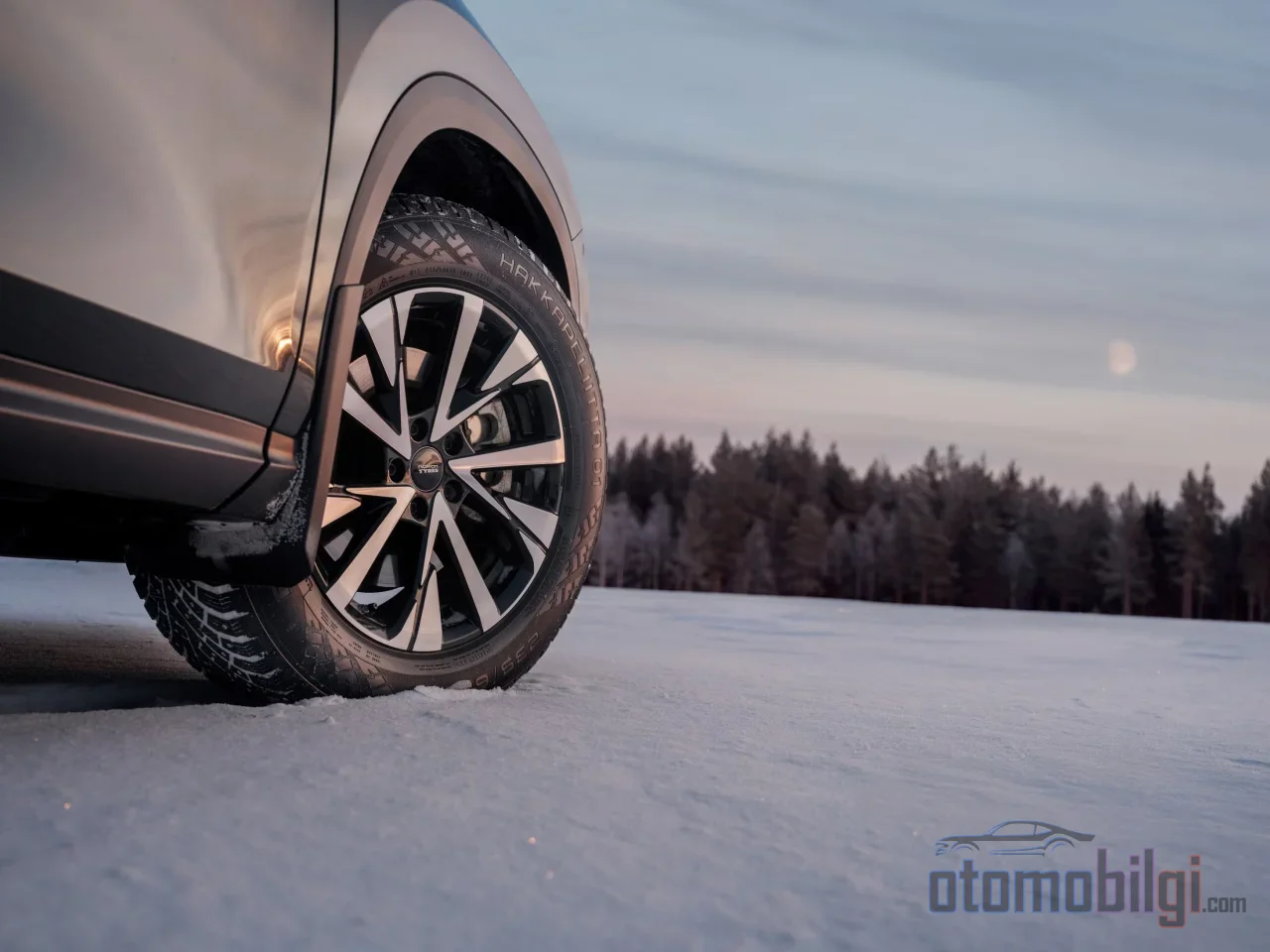
A tire is a rubber product, and every rubber compound is designed for a specific temperature range. The compound used in summer and all-season tires is a relatively hard mixture that balances warm and cold conditions. As the temperature approaches 7°C, this compound hardens; a hardened tire grips the road less, even on dry surfaces. Braking, cornering and acceleration are all affected. This is not a manufacturer's claim, but a technical fact widely accepted in the industry: below 7°C, all-season tires begin to lose a large portion of their grip forces.
In winter tires, the compound is different. It contains more natural rubber, and this prevents hardening when the temperature drops below 7°C. The result: as the temperature drops, the tire continues to adapt to the road surface. Alongside the compound, the tread pattern also does its job; winter tires have deep and pronounced grooves, large and irregular tread blocks, small sipes that form biting edges, and channels that evacuate snow, slush and water. So a winter tire is not just a "soft tire"; it is a product designed from the ground up for cold conditions.
Highlights
- When daily temperatures regularly drop below 7°C, winter tires perform better than all-season tires.
- All-season tire compound hardens at around 7°C; winter tire compound, thanks to natural rubber, stays flexible.
- The 7-7 rule: if temperatures stay below 7°C for 7 consecutive days, it is time to switch.
- All-season tires are designed for a wide range of approximately -10°C to +30°C.
- The 3PMSF symbol indicates that the tire has passed the standardized snow traction test; however, it is not a sufficient criterion on its own for the switch decision.
Does the Rule Apply to Those Using All-Season Tires?
This is where the heart of the debate lies. Some argue in forums that 7°C is a "magic temperature" used for the summer-winter transition but should not be applied to all-season tires; some even raise this criticism under the heading of "tire marketing." In contrast, manufacturers' statements paint a different picture: tire brands themselves state that all-season tires also begin to harden below 7°C, which means less grip, longer braking distances and reduced control.
The truth lies somewhere in between. All-season tires are designed to perform across a wide temperature range of approximately -10°C to +30°C; so they are not as specialized as winter tires, but they are not as narrowly calibrated as summer tires either. The main difference emerges in deep snow and ice: below 7°C, all-season tires offer weaker traction than winter tires in these conditions. On the other hand, in mild climates where snow is rarely seen, all-season tires can perform better than winter tires on wet and dry roads. The contradiction between the two views is misleading; because they describe different climate scenarios.
All-Season or Winter Tires?
The picture the industry has drawn is this: in regions that winter only visits briefly, all-season tires with 3PMSF certification (all-weather in marketing language) are a reasonable choice. In regions with genuine winter conditions, winter tires remain by far the safest option. In summary, the rule also covers those using all-season tires, but the "requirement" is different: for a driver with all-season tires, 7°C is not a danger threshold but the moment to know that vehicle performance is being limited.
Can a Decision Be Made Based on the Snowflake Symbol?
There is serious confusion about the symbols on tire sidewalls. The M+S marking indicates that the tire meets mud and snow performance requirements. The 3PMSF symbol, meaning the three-peaked mountain and snowflake, is stricter: it proves that the tire has passed the standardized snow traction test; this test is officially mandated in some countries and appears as a marking in government regulations. All-season tires carrying 3PMSF can meet severe snow service standards
However, the symbol and the switch decision are separate things. The symbol certifies: this tire has passed the snow traction test. It is the temperature that determines which tire set goes on the vehicle in which week. Looking at the symbol and saying "winter is covered" without tracking the temperature means ignoring the match between the vehicle's equipment and the season. The right approach is to use both together: the temperature calendar tells you when the time to switch is, and the symbol tells you whether the tire to be fitted is adequate. In tests conducted in 2026, even the models that achieved the best overall result in the all-weather class did not change this logic; although high-silica rubber compounds and studless ice tires keep improving, the 45°F/7°C threshold is still kept as the standard reference in 2026 guides.
How to Set Up a Practical Switch Calendar?
Relying on a single criterion for temperature tracking is misleading. Monitor not only the daily high, but both the daytime high and the nighttime low; when the highs hover around 7°C for about a week, that is the sign of the seasonal turning point. Following forecasts buys you extra time; because temperatures usually drop below 7°C weeks before the first snowfall. Also keep this in mind: shaded roads and bridges are colder than the air temperature. While the thermometer reads 8 degrees, the tires on a bridge may be in contact with a colder surface.
There are also legal frameworks that determine the switch date in your region. For example, in Quebec winter tires are mandatory between December 1 and March 15; in British Columbia, winter tires or chains are required on most designated highways between October 1 and April 30. For most drivers, the ideal switch is slightly ahead of these legal dates. In regions without a legal requirement, setting the switch window according to the first frost of autumn is a reasonable approach.
Pre-Switch Checklist
- Check the tire pressure; cold weather lowers pressure, which leads to reduced traction, longer braking distances and lower fuel efficiency.
- Look for irregular wear on the tread and sidewall, as well as cracks and bulges.
- On directional tires, make sure they are mounted the right way.
- Clean dirt and rust off the hub surface.
- Pick a dry weekend for the change; after snow falls, it gets harder to find a slot at the service shop.
Frequently Asked Decision Questions
Can winter tires be fitted before it snows?
They can, and they should be; because the snow itself has little to do with it. Winter tires show their advantage not in snow, but in the cold; as soon as temperatures drop below 7°C, the difference becomes measurable even on dry asphalt. Waiting for the first snow means wasting at least a few weeks of the safety window.
Is fitting only two winter tires enough?
No. Two winter tires cause uneven traction, loss of control in corners, rear-end sliding, or the front not turning as expected. Four tires provide a shorter braking distance; the same level of grip is critical for vehicles with all-wheel drive systems too. All-wheel drive does not compensate for the wrong tire choice.
When is it time to switch back in spring?
The same threshold applies, in the opposite direction: it is wise to return to summer or all-season tires when temperatures consistently stay above 7°C. Soft winter rubber wears out quickly on hot asphalt and provides less grip; running winter tires until May is harmful both in terms of safety and tire life.
Conclusion: Does the Rule Work?
The short answer is this: the 7-degree rule is a practical guideline with broad consensus, more a summary of rubber chemistry than a marketing slogan. Winter tires start performing better than all-season tires when daily temperatures consistently drop below 7°C; this holds true even when there is no snow on the ground. The rule's limits should also be known: a single cold morning is not a reason to switch, the seven-day trend is what matters; for those using all-season tires, 7°C is not a "switch now" command but a sign that the performance limit is approaching; the three-peak mountain snowflake symbol tells you the tire's certification, but it does not have to serve as your sole calendar guide. Watch the temperature for a week, use the symbol when buying tires, and plan the switch for a dry weekend. There is only one thing someone who has been in this business for thirty years will say: it is not the most expensive tire that wins, but the right tire fitted at the right time.
Sources
- Winter tires, how the rubber meets the road - Traffic Injury Research Foundation
- 7 Degree Rule for Winter Tires - Jack and Jill of All Tires
- Summer vs. Winter vs. All-Season Tires - Michelin USA
- Summer tires vs. winter tires - Continental Tires
- Using winter tires - Transport Canada
- What Is the Three-Peak Mountain Snowflake Symbol - Tire Rack
- All-season and all-weather tires - Nokian Tyres
- Tested: Best All-Weather Tires for 2026 - Car and Driver
- Drivers advised to use 7-7 rule - The Sun