In Which Countries Are Studded Winter Tires Banned and Why?
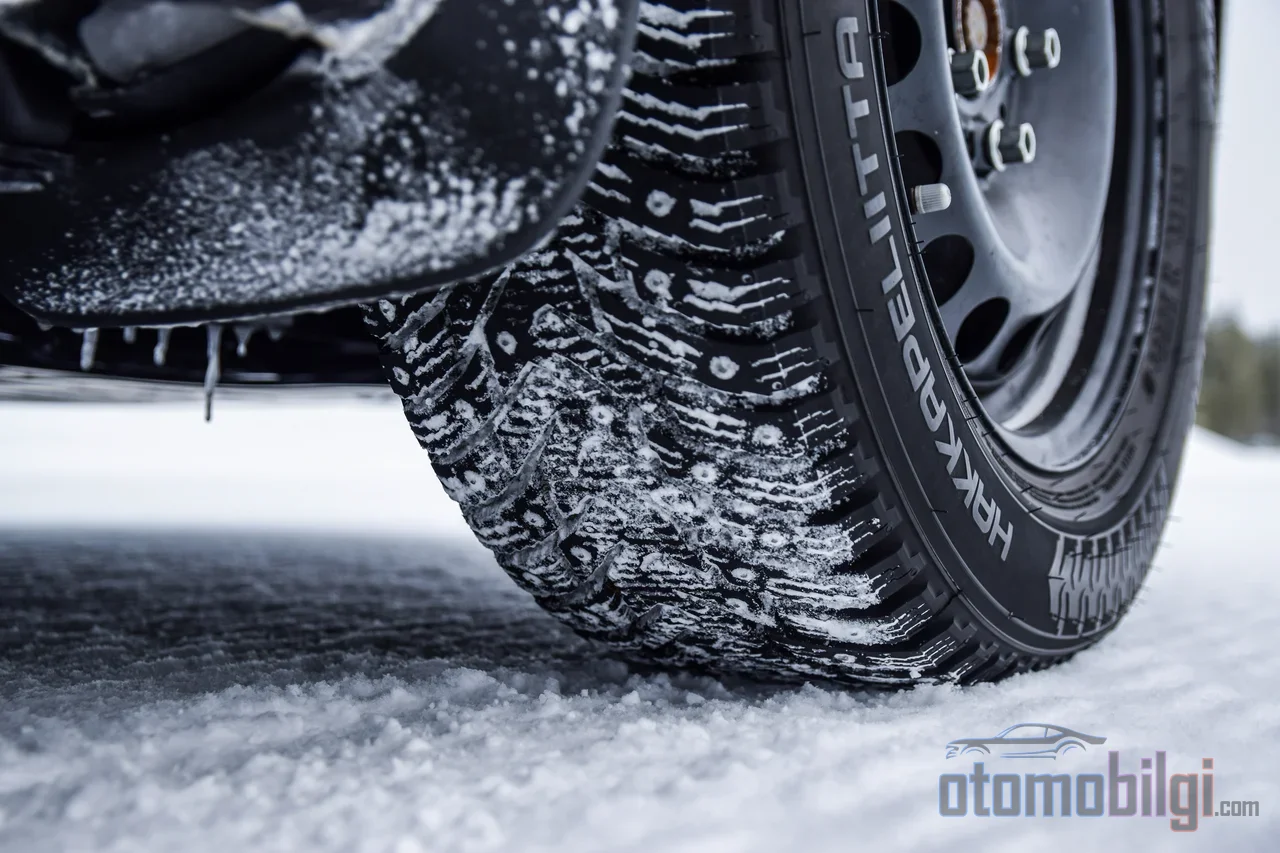
On an ice-covered Norwegian road in mid-January, studded tires are unrivaled when it comes to traction; but if you enter a German highway with the same tires in the same week, your vehicle is barred from traffic and you face a hefty fine. Studded winter tires are one of the most divisive topics in the automotive world: in one country they are considered a winter essential, while in another they are completely banned due to the damage they cause to road surfaces and the particles they release into the air. On this page, we will go through one by one which countries allow studded tires, why others ban them, the usage periods in permitted countries, and the toll system applied by Norwegian cities.
How Do Studded Tires Work, and When Do They Offer an Advantage?
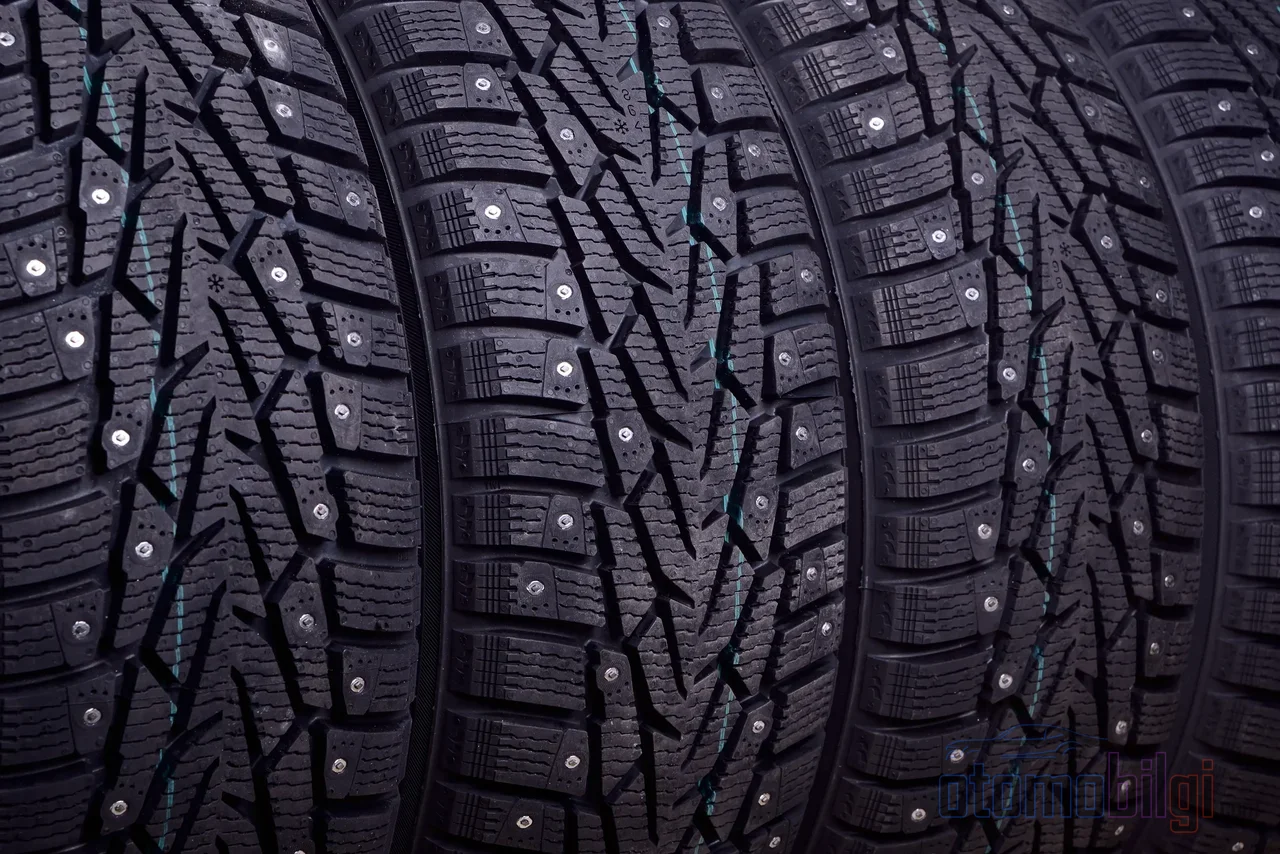
The working principle of the studded tire seems simple at first glance: metal pins embedded in the rubber blocks grip the ice surface by cutting small grooves into it. The pins are usually made of a very hard alloy such as tungsten carbide and sit suspended inside a softer metal jacket; thanks to this jacket, which wears down as the tire rolls, the pin keeps protruding about 1 mm at all times. This detail matters, because the stud's effect depends entirely on this micro-protrusion. Alongside metal, there are also versions with ceramic pins, but the most common application is the metal stud.
The advantage zone is quite clear: on a thin layer of ice and packed snow, studded tires grip noticeably better than studless winter tires. A 2025 evaluation published by Sweden's road administration confirms this; however, the same evaluation shows that studless tires are at least as good as studded ones on snowy and bare roads. Norway's transport research institute found that the accident risk of vehicles with studded tires is 4% lower than with studless ones; on the other hand, it noted that the health cost of particulate matter and noise clearly exceeds this gain.
So why doesn't everyone use studs? Because when you look at the picture from the asphalt's perspective, it changes. While a studded vehicle wears away an average of 2.88 grams of road surface per kilometer, this figure is around 0.14 grams with studless tires; a difference of roughly twentyfold. Alaska's highway administration has calculated that studded tire use reduces asphalt lifespan from 15 years to 6-8 years depending on traffic density and mix. In Oregon, it has been shown that studded tires cause more than 10 million dollars of damage annually. On wet asphalt, the braking distance issue is nuanced: older experimental studies have shown that tire type and the presence of studs alone do not make a significant difference in stopping distance on wet surfaces. The real problem is that the wear grooves fill with water, increasing the risk of hydroplaning.
Highlights
- In Europe, 25 countries completely ban studded tires; 20 countries allow them within a dated window.
- Many countries, including Germany, the Netherlands, Poland and Czechia, impose a ban on the grounds of asphalt damage and air quality.
- In the Norwegian cities of Oslo and Bergen, the studded tire fee reaches up to 1,400 NOK per season.
- Studded tires are superior on ice; on snow and bare roads they are equivalent to unstudded winter tires.
- In the US, 6 states do not allow studs at all: Hawaii, Illinois, Michigan, Minnesota, Mississippi and Wisconsin.
The Difference Between Studded Tires, Unstudded Winter Tires and the Snowflake Symbol
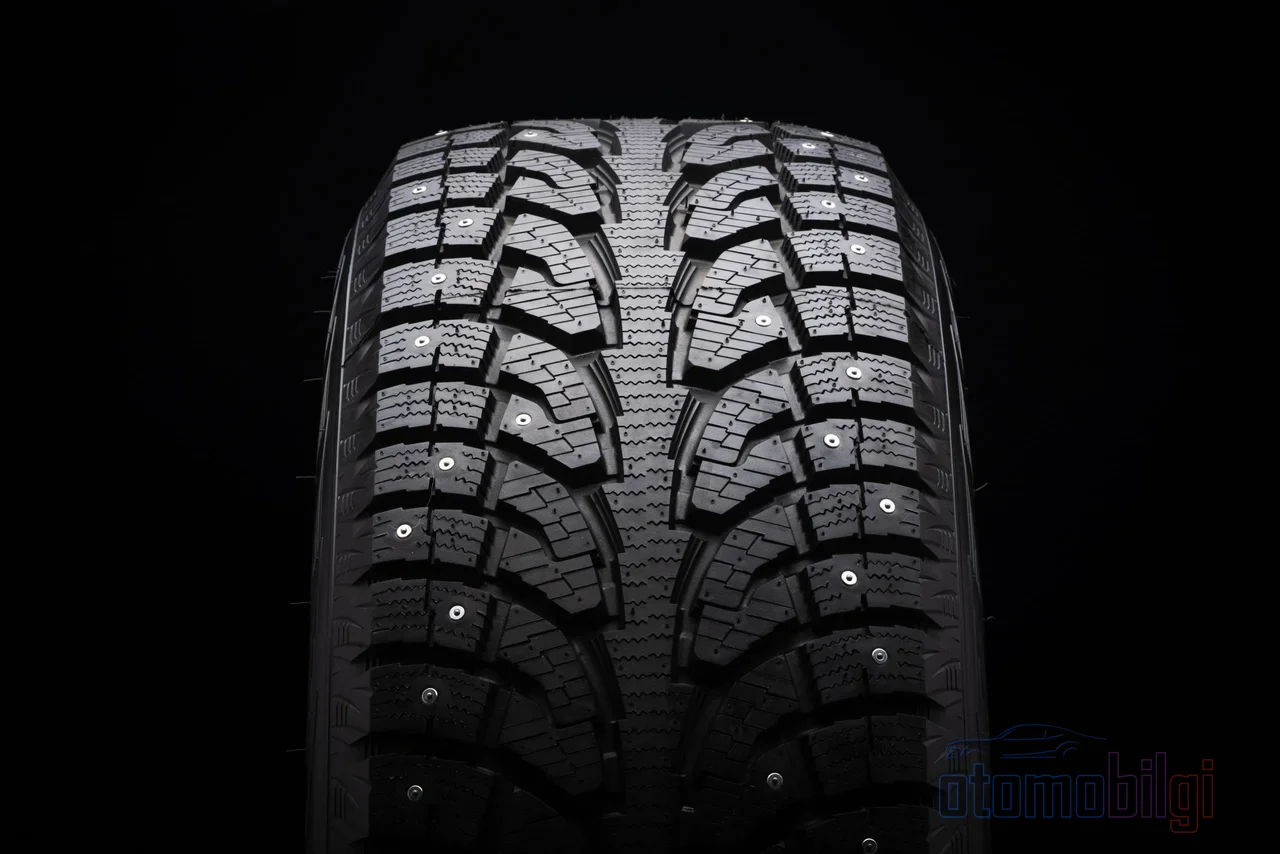
Confusing these two tire types is the most common mistake regarding the bans. An unstudded winter tire, as its name suggests, carries no studs; with advanced rubber compounds and a special tread pattern, it maintains grip in the cold. The mark that determines winter tire status is 3PMSF, that is, the mountain and snowflake symbol on the sidewall. This symbol distinguishes tires designed for regions where the temperature regularly drops below about 4-5 °C. The classic M+S mark is no longer sufficient on its own in many countries; in Germany, for example, tires stamped with M+S are not considered winter tires, and the 3PMSF symbol is required.
Including studded models, both factory-studded winter tires and winter tires that can be studded later carry the M+S and 3PMSF marks together. So a studded and an unstudded winter tire carry the same symbol family; the difference between them is the presence or absence of metal pins embedded in the rubber. The bans target exactly this point: most countries ban not the winter tire itself, but specifically the studs. In some countries such as Norway, it is mandated by rule that only winter tires bearing the M+S or 3PMSF mark may be studded and that all wheels must be studded.
Studded Tire Bans in Europe: What Applies in Which Country?
As of 2026, the European picture is divided into three groups: countries that allow studded tires without seasonal restrictions, countries that allow them within a dated window, and countries that ban them entirely. The rationale for the banned group is not climate, but asphalt damage and air quality. As evidence, Poland can be cited as being on the ban list despite its harsh winters; similarly, the Czech Republic and Slovenia have mandated winter tires while banning studs.
Countries Where They Are Completely Banned
Germany, Poland, the Netherlands, the Czech Republic, Slovenia, Hungary and Bulgaria do not accept studded tires under any circumstances. In the Netherlands, the scope of the ban is even broader: the use of snow chains is also banned on the grounds that they damage the road surface. There is no exception for vehicles in transit through these countries either; a vehicle rented with studded tires in Sweden or Norway cannot pass through Germany, the Netherlands or Poland. The United Kingdom and Ireland, technically, do not ban them; use is legally open provided it does not damage the road, but in practice almost no one uses them.
Countries That Allow Them Within Dated Windows
| Country | Studded Tire Period |
|---|---|
| Sweden | October 1 - April 15 |
| Norway (southern and central) | November 1 - April 4, 2027 |
| Norway (northern counties) | October 16 - April 30 |
| Denmark | November 1 - April 15 |
| Finland | November 1 - March 31 (extendable) |
| Iceland | November 1 - April 14 |
| Austria | October 1 - May 31 |
| Andorra | November 1 - May 15 |
| Latvia | Prohibited between May 1 and October 1 |
Some countries also add a speed limit on top of the period. In Austria, the limit with studded tires is 100 km/h on highways and 80 km/h outside urban areas. In Switzerland the limit is 80 km/h and motorways are generally closed to studded tires; the San Bernardino and Gotthard tunnel routes are exceptions. In Italy the limit is 90 km/h (120 on motorways), and in France a 90 km/h limit applies for passenger cars and light commercial vehicles, and the period may change by prefectural decisions. In Finland, the window can be extended if winter conditions persist; Andorra's November 1 - May 15 range is the longest studded tire season in Europe. A critical detail about Denmark: studded vehicles can only enter after November 1, so route planning is required when traveling south from Scandinavia.
North America: State-Based Regulations
In the USA there is no federal rule; regulation is in the hands of the states. The table breaks down into three parts: 30 states allow metal studs with date restrictions, 10 states impose no restrictions at all, 4 states allow only rubber studs, and 6 states do not allow any type of stud. The fully banned states are Hawaii, Illinois, Michigan, Minnesota, Mississippi and Wisconsin. Colorado, Kentucky, New Hampshire, New Mexico, Vermont and Wyoming allow them year-round.
Dated examples vary across the country: California November 1 - April 30, New York October 15 - May 1, Washington November 1 - March 31, and Alaska applies October 15 - April 30 north of the 60th parallel and October 1 - April 15 south of it. Some states also limit stud protrusion; in North and South Carolina, the pin cannot exceed 1/16 inch when compressed. In Canada, Quebec defines October 15 - May 1 as the studding window; this is a wider range than the province's winter tire mandate. PEI and Nova Scotia recommend the October 1 - May 31 period. Alberta allows them at the state level, but use that causes road damage can be penalized.
The state of Washington is a good indicator of where this issue is evolving. Until 1971, studded tires were free year-round; first they were compressed into a November 1 - April 1 window, then pulled back to March 31. The state's transportation commission now proposes a phased total ban: according to calculations, the ban would save 20-29 million dollars in road maintenance per year. The $5 fee currently collected from studded tires raises only an average of $315 thousand per year; it is stated that this figure falls far short of the road damage caused by the studs.
The Norwegian Model: How Does the Fee System Work?
Norway is the most advanced example of pricing studs instead of banning them. In the 2026-27 season, studded tires were released nationwide on November 1, 2026; they are legal in southern and central Norway until April 4, 2027, and in the provinces of Nordland, Troms and Finnmark between October 16 - April 30. The fee schedule for vehicles up to 3,500 kg in Oslo and Bergen is as follows: daily 35 NOK, monthly 450 NOK, seasonal 1,400 NOK; for heavier vehicles, the amounts double. Driving in Oslo with an invalid permit carries a 750 NOK fine. The three major cities operate in coordination: a permit purchased in one of Oslo, Bergen or Trondheim is also valid in the other two. Permits are obtained electronically through the cities' mobile apps. Transit traffic is not exempt; every studded vehicle passing through the city is subject to the fee, but in Oslo payment is made only for the days the vehicle is actually used.
The rationale for the system is environmental: The municipality of Bergen defines the fee as a measure to reduce particulate matter and protect air quality. In 2024, Oslo generated approximately 39 million NOK in revenue, Trondheim 32 million, and Bergen 16 million. At the political level, however, the system remains controversial; a proposal to abolish the fee was rejected in parliament in February 2026. A notable point is that Norway has never made studded or winter tires mandatory: the legal requirement is to provide sufficient grip for the weather conditions. In winter, vehicles under 3,500 kg must have a tread depth of at least 3 mm, and those above it 5 mm; for the rest of the year the limit is 1.6 mm. If ice arrives early, studs may be fitted before 1 November as well, and no fee is charged outside the season.
Do You Need Studded Tires? Summary Answer
The question can be answered as follows: Studded tires are completely banned in 25 European countries; Germany, Poland, the Netherlands and Czechia lead this group. The Nordic countries and the United Kingdom allow them without seasonal restrictions; countries such as Sweden, Denmark, Finland and Austria permit use within date-based windows; Norwegian cities allow them in exchange for a fee. On ice, studded tires are superior and are equivalent to studless winter tires on snow and bare roads.
The practical conclusion is this: If your driving route involves a genuine northern winter with ice and you do not drive a modern vehicle equipped with ESC, studs are still a defensible choice; it used to be clear-cut, but today electronic stability control systems compensate for most of the difference. In a winter dominated by snow or wet asphalt, a modern studless 3PMSF tire delivers the same performance without the risk of bans and the burden of fees. If you will cross a border, check your route in advance and inform the rental company of your itinerary and request studless winter tires; on a journey where you are forced to pass through Germany, studded tires cease to be the tire offering the best grip and become the most expensive mistake.
Sources
- Studded Tyre Laws 2026: 25 Countries Ban Them Outright
- Studded Tyres in Europe by Country: Bans, Dates and Speed Limits
- Studded tyres Norway 2026: dates, rules and city fees
- When Do Studded Tires Have to be Off by State Law
- Washington State Could Ban Studded Tires
- Winter tyres: where and when are they mandatory in Europe?
- Stockholm - Studded Tyre Ban - Urban Access Regulations
- Winter tires, chains: what are your obligations until March 31, 2027?