Are M+S and the Snowflake Symbol on Tires the Same Thing?
Share This Page
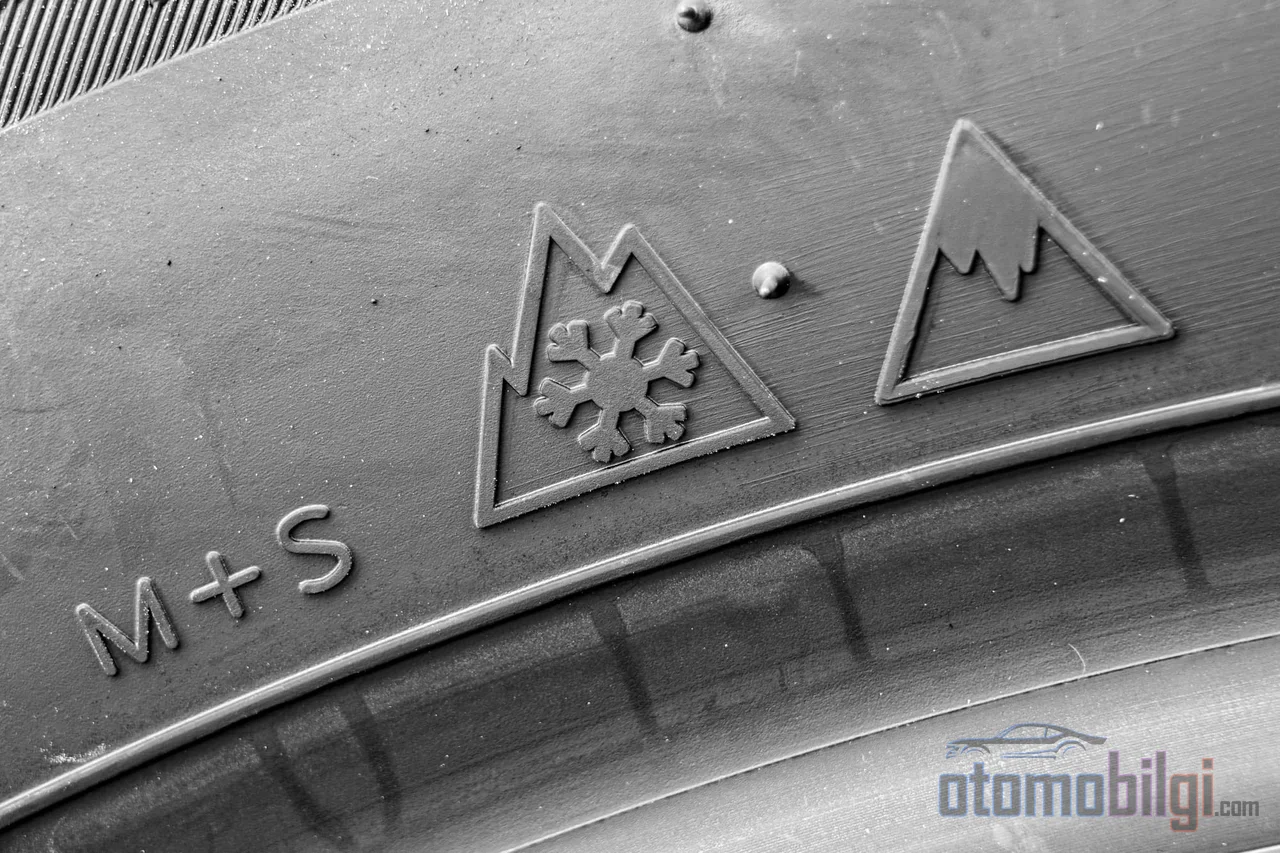
Seeing M+S written on a tire's sidewall can easily lead you to believe that this tire will also do the job in snow. Yet it comes as a solid lesson to most drivers to learn that, for more than thirty years of established practice in the automotive world, there has not even been a legal definition behind those two letters. A tire manufacturer can put the M+S marking on any model it likes without undergoing any test; by contrast, the three-peak mountain snowflake symbol cannot be added to a tire without passing a standardized snow traction test. This distinction may be the single detail that either saves you when buying winter tires or makes you waste your money.
So what is M+S, where did it come from, and why does it still appear everywhere we look? And what exactly does the symbol called 3PMSF prove - and what does it not prove? Let's take a look one by one.
Where Does the M+S Marking Come From, and What Does It Guarantee?
M+S stands for Mud and Snow, an abbreviation of those two words. The story of this definition goes back far earlier than today's winter tire debates: The aim was to distinguish the early mud/snow tires, which had coarse and protruding tread patterns, from classic car tires with plain treads. In other words, M+S is actually a description that specifies the geometry of the tire's tread pattern; it is not a certification that measures performance.
An EU directive in Europe defines M+S as a tire with a tread pattern and structure designed to perform better in snow than a normal tire. However, the same regulation openly admits the following: This performance has neither been defined nor measured. The manufacturer may, at its own discretion, mark a tire whose tread pattern it believes meets this description as M+S, M&S, M/S, or MS. There is no testing requirement in mud or on snow; braking, cornering grip, or wet-road performance is not measured. It also says not a single word about the tire's compound.
As someone with more than forty years in this business put it: In the past, M+S was a rough indication that a genuinely coarse-treaded tire existed. Now it has become one of the cheapest words in marketing. You can even see the M+S marking on high-performance summer tires in the Y speed rating.
What Exactly Does the 3PMSF Snowflake Symbol Test?
The 3PMSF, which depicts a snowflake inside a three-peaked mountain - also known as the Three-Peak Mountain Snowflake or the Alpine symbol - requires passing a standardized examination, unlike M+S. Under the ASTM F 1805 standard, the tire undergoes a traction test on medium-packed snow under standardized conditions. The reference tire receives 100 points; tires that achieve a traction index of 110 on a 14-inch reference tire or 112 on a 16-inch reference tire earn the symbol. The standard was established in 1999 by the U.S. Tire Manufacturers Association and the Tire and Rubber Association of Canada.
On the European side, the winter tire definition is set out in the ECE R117.02 regulation; snow traction is approved through the regulatory tests under ECE R117. In the EU context, a tire without 3PMSF cannot be marketed as a winter or snow tire.
Seeing the Difference Between M+S and 3PMSF in a Single Table
| Feature | M+S | 3PMSF |
|---|---|---|
| Basic basis | Geometry of the tread pattern, manufacturer's declaration | Standardized snow grip test (ASTM F 1805) |
| Testing requirement | None | Mandatory, regulated by regulation |
| Measured performance | No performance is measured | Minimum traction threshold on snow |
| Legal meaning (EU) | An undefined and unregulated term | The official basis of the winter tire (ECE R117.02) |
| Tires where it can be seen | On all kinds of tires, including summer tires | On winter and all-season tires |
| Weight in the purchase decision | Should not be considered decisive | The first marking to look for when searching for a winter tire |
Highlights
- No test is required for the M+S designation; the tire manufacturer places the marking at its own discretion.
- The 3PMSF symbol requires traction at least 10-12% higher than the reference tire in the standardized snow grip test.
- In Germany, as of October 1, 2024, only tires with 3PMSF are considered legal winter tires.
- Since November 1, 2024, France has required both 3PMSF and M+S together.
- The 3PMSF test only measures traction grip; it does not cover braking and ice performance.
What Symbol Does the Winter Tire Requirement in Europe Depend On?
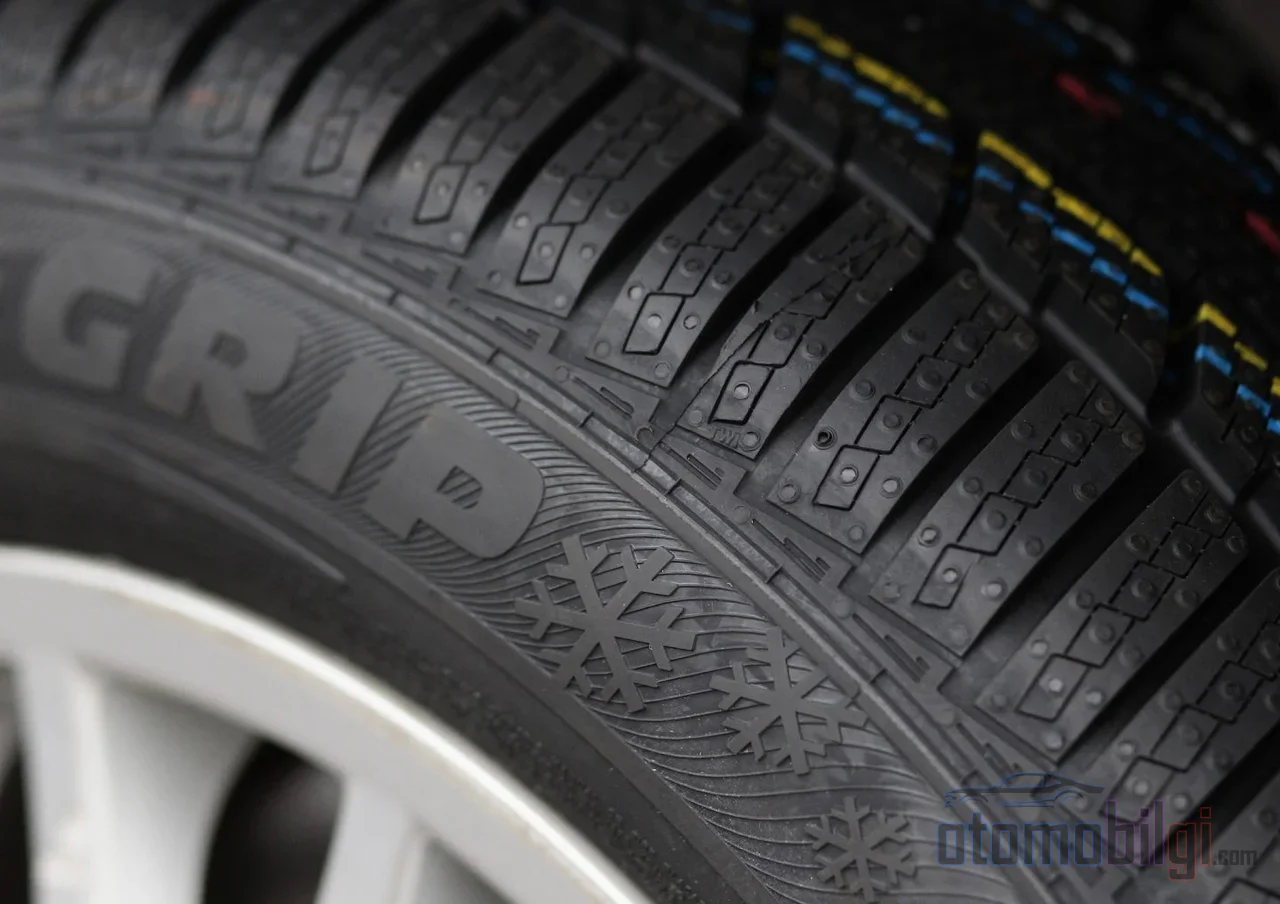
The basis of winter tire legislation in Europe clearly rests on the 3PMSF symbol. For winter and all-season tires produced from January 1, 2018 onwards, this symbol became mandatory; during the transition period ending on September 30, 2024, previously produced winter tires labeled only with M+S were accepted. That period has closed, and as of 2026, guides show only 3PMSF as the basis of winter legislation.
Situation Country by Country: Rules That Change at Every Border
Germany, since October 1, 2024, considers only tires carrying the Alpine symbol as legal winter tires; plain M+S is no longer sufficient. During the October-April period, this symbol is required. In neighboring Austria, however, the picture is different: Although winter tires are mandatory in winter conditions, the M+S symbol can still be sufficient under certain conditions. Since November 1, 2024, France has required 3PMSF and M+S together; its rationale is that 3PMSF is based on a standardized EU traction test.
Many European countries now look for 3PMSF-approved tires in the winter months, and in many countries tires with tread depth below 4 mm are considered summer tires. In Switzerland, the legal minimum tread depth is 1.6 mm; tires with 3PMSF are accepted as full winter tires, and a chain-tire incompatibility can cause loss of insurance coverage. In Canada, Transport Canada recognizes that the 3PMSF symbol meets certain snow traction requirements for tires designed for severe snow conditions. In short, this patchwork structure that changes at every border highlights 3PMSF as its single fixed point.
Why Can M+S Be Added to Almost Every Tire?
The reason M+S is so widespread in the market is simple: The marking is based solely on the manufacturer's declaration. The manufacturer claims that its product may perform better than its own normal models on mud and snow, and puts the marking on; no one verifies it by measurement. As a result of this freedom, M+S can appear on off-road and All-Terrain (AT) tires, on many summer-oriented all-season tires, and even on summer tires in high-speed classes.
To give an example: Many SUVs and off-road vehicles leave the factory with M+S-marked tires. The reason is not that the tire has exceptional winter capability, but that this habit originated in the North American market; there, all-season tires with M+S are very common. As a rule of thumb, it is appropriate to consider a tire that shows only M+S on the sidewall without 3PMSF as a three-season tire.
What Does 3PMSF Not Prove? The Limits of the Symbol
Before presenting 3PMSF as a gold standard, we should not overlook one of its limitations. The ASTM F 1805 test measures only acceleration, that is, traction grip. Braking and lateral grip on snow, as well as grip on ice, are not part of the test. For this reason, tires in many categories can pass the threshold; the symbol is not a guarantee of braking or cornering superiority. For the same reason, all winter tires have 3PMSF, but not every tire with 3PMSF is a winter tire.
There is also an innovation developed in response to this criticism: The ice grip certification, approved in 2021, is given to winter tires that provide an ice grip index of at least 1.18, meaning 18% more grip than the reference. It aims to fill this gap arising from 3PMSF not measuring ice performance at all. It should also be noted: All-weather tires with 3PMSF are no substitute for a dedicated winter tire; AT tires can also carry the symbol, but they are weak in terms of tread voids and are not considered winter tires.
Which Marking Should You Look for When Buying Winter Tires?
The stance I have repeated for years has not changed: When looking for a winter tire, what you should look for on the sidewall is the three-peak mountain snowflake symbol, not the M+S lettering. A tire showing only M+S may not protect you legally or practically on a snowy road. The following points will make your selection easier:
- Look for the 3PMSF symbol on the sidewall; it is the first requirement indicating the highest winter performance.
- In winter, use tires with 3PMSF and a tread depth of at least 4 mm.
- If temperatures in your climate regularly drop below 7 °C, consider winter-class tires; all-season compounds harden in the cold.
- Studded tire rules may differ in your region; check local regulations.
As for the M+S marking, it is merely a detail that must be evaluated together with the other information on the tire. It should not be seen as a decisive item in the winter tire purchase decision.
Conclusion: Same Markings, Two Different Worlds
To summarize: M+S is not a test result, but a manufacturer's declaration based on tread pattern and not verified by any measurement; performance is neither defined nor measured. 3PMSF, on the other hand, is the symbol on which European winter tire legislation is based, backed by a standardized snow grip test; although its test is limited to traction, it offers none of the guarantees that M+S carries. For anyone who wants to hit the road safely in winter, the symbol to look for is clear: 3PMSF. M+S, at best, is a reminder; at worst, a sales pitch.
Sources
- What are 3PMSF and M+S tires?
- Winter tire markings
- What is the Three-Peak Mountain Snowflake Symbol?
- 3PMSF winter tyres explained
- M+S Tire Rating vs Three Peak Mountain Snowflake
- Winter tire laws
- Is the M+S designation on tires a sales gimmick?
- Tire Markings Explained
- Goodyear Guide to Driving in Winter in Europe 2025/26
- Winter tires, chains: obligations
- Car Winter Tire Laws by Country 2026
- Winter Tyre Rules in Europe
- Winter tyre laws
- Check Your Winter Tires and Legal Requirements
- Winter Tyres in Switzerland 2026
- Winter Tire Laws in Germany 2026
- Snow Grip ECE R117.3 (Annex 7)
- Winter Tires Now Eligible for New Ice Rating Certification
- Winter Tire Buying Guide
- How to Choose Winter Tires