Winter Tires Will Be Mandatory for Commercial Vehicles Between November 15 and April 15
Share This Page
The winter tire requirement for commercial vehicles in Türkiye applies between November 15 and April 15; during this period, all commercial vehicles carrying passengers and goods on intercity highways are required to use winter tires, and the fine has been set at 6,000 TL starting from 2026. Although the requirement does not cover private passenger cars, the calendar and safety logic also directly concern private vehicle owners.
Highlights
- The requirement is in effect every year November 15 - April 15 ; the period was extended from 4 months to 5 months.
- 2026-2027 season It starts on November 15, 2026, and ends on April 15, 2027.
- The fine was set at 6,000 TL under Law No. 7574; the fine is not issued to the driver but to the vehicle operator.
- The tread depth limit is 4 mm for trucks and buses, and 1.6 mm for light commercial vehicles and passenger cars.
- There is no requirement for private vehicles; winter tires are strongly recommended below +7 °C.
When Does the Winter Tire Requirement Start and End?
The old calendar of this matter was as we all know: it used to start on December 1 and end on April 1. The Ministry of Transport and Infrastructure permanently changed this framework with the communiqué amendment published in the Official Gazette dated October 4, 2025. The requirement now starts every year on November 15 and ends on April 15 . This extended the application period from 4 months to 5 months; the rationale, as Minister Abdulkadir Uraloğlu also emphasized, was the fact that Türkiye's winter conditions are shaped by the weather, not the calendar.
The calendar for the next season is also clear: the 2026-2027 period starts on Sunday, November 15, 2026, and closes on April 15, 2027. This will be the second season of the 5-month period.
Let us note one detail from the start: governorships are authorized to start the application one month before or extend it one month beyond the date set by the Ministry, depending on climate conditions. Especially in the high elevations of Eastern Anatolia and the Black Sea, province-based announcements need to be followed; the date is fixed on paper but regional in practice.
Which Vehicles Are Covered, and Which Tires Count as Winter Tires?
The scope covers all commercial vehicles engaged in passenger and goods transport on intercity highways. Alongside trucks, tractors, tankers, and buses, light commercial vehicles such as minibuses, pickups, and panel vans, as well as passenger cars used for commercial purposes, are also within this framework. It does not matter whether they are registered in Türkiye; every vehicle carrying goods or passengers for commercial purposes is subject to inspection.
Where should the tires be fitted, and what is the depth limit?
The communiqué also clarifies the position of the required tires. On trucks, tractors, tankers, and buses, all tires on the driven axles must be winter tires; on pickups, minibuses, and commercial passenger cars, all tires of the vehicle. The same rule applies to spares fitted during a journey.
The minimum tread depth limits operate on two tracks depending on the vehicle class:
| Vehicle Type | Tread Depth Limit | Location of Required Tires |
|---|---|---|
| Truck, tractor, tanker, bus | 4 mm | All tires on driven axles |
| Pickup trucks, minibuses, commercial cars | 1.6 mm | All tires |
There are many questions about all-season tires; the penalty rule is simple. If the sidewall has M+S or a snowflake (3PMSF) marking, or at least one of them, the all-season tire counts as a winter tire during inspection. Studded tires are also accepted provided they are used only on icy surfaces.
What doesn't work?
Two of the most common mistakes in practice do not eliminate the enforcement requirement. Carrying a spare winter tire in the trunk does not exempt the vehicle if the mounted tires are not suitable. Likewise, carrying snow chains does not remove the winter tire obligation; chains, wheel chocks, and tow ropes are considered supplementary equipment.
How Much Is the Winter Tire Fine, and Who Gets Fined?
The main development on the penalty side in 2026 came with Law No. 7574, which entered into force on February 27, 2026. The administrative fine under Article 65/A of the Highway Traffic Law 6,000 TL was set at a fixed amount and made independent of the revaluation rate. The President is authorized to reduce the amount or increase it by up to twofold. For comparison: in 2024 the fine was 4,069 TL, and in 2025 it was 5,856 TL.
The fine is issued not to the driver but to the vehicle operator. Those who deal with fleet management know the importance of this distinction; responsibility knocks on the door of the party who will have the tires fitted. A vehicle that has been fined may continue on its way to the nearest settlement where it can make its tires compliant. The appeal route is also open: an application can be made to the criminal court of peace within 15 days of notification.
Snow chain fines
The same law provides for two separate penalties on the chain side. Truck, tractor, and bus drivers face a 6,000 TL fine for not carrying or not using chains in snowy or icy weather. The amount imposed on those who block traffic flow by not fitting chains is 24,000 TL. The queue that forms behind a truck stuck at a mountain pass explains why this difference is so high.
Where and By Whom Are Inspections Carried Out?
Inspections are not conducted by a single authority. Officials of the Ministry of Transport and Infrastructure, the General Directorate of Security, the Gendarmerie General Command, the Ministry of Trade's border gate units, and municipal teams are all in the field. The concentrated points are also predictable: fixed points on intercity routes, areas around bus terminals, highway connections, and mountain roads with heavy passes in winter. As someone who has been following this matter for years, let me add: the focus of enforcement is always in the same place - a vehicle is talked about not when it is standing still, but when it leaves its load in the middle of the road. So it is no surprise that checks intensify at mountain passes.
Is It Mandatory for Private Vehicles, and When Should You Switch to Summer Tires?
Short answer: no. The mandate only covers commercial transport vehicles; no legal obligation has been imposed on private passenger cars. The Ministry also recommends that private vehicle owners use winter tires below +7 °C. In the past, this recommendation was a note most drivers put off until it snowed; now, with the growing number of drivers who understand what braking distance means on wet and cold surfaces, the tone of that note has changed.
The calendar's reference point for switching back to summer tires is April 15. The mandate ends on that date; however, in regions where winter conditions last a long time, governorships can extend the period. In other words, it is the regulation, not the weather in that region, that determines the deadline.
The +7 Degrees Rule: Why Temperature, Not Snow?
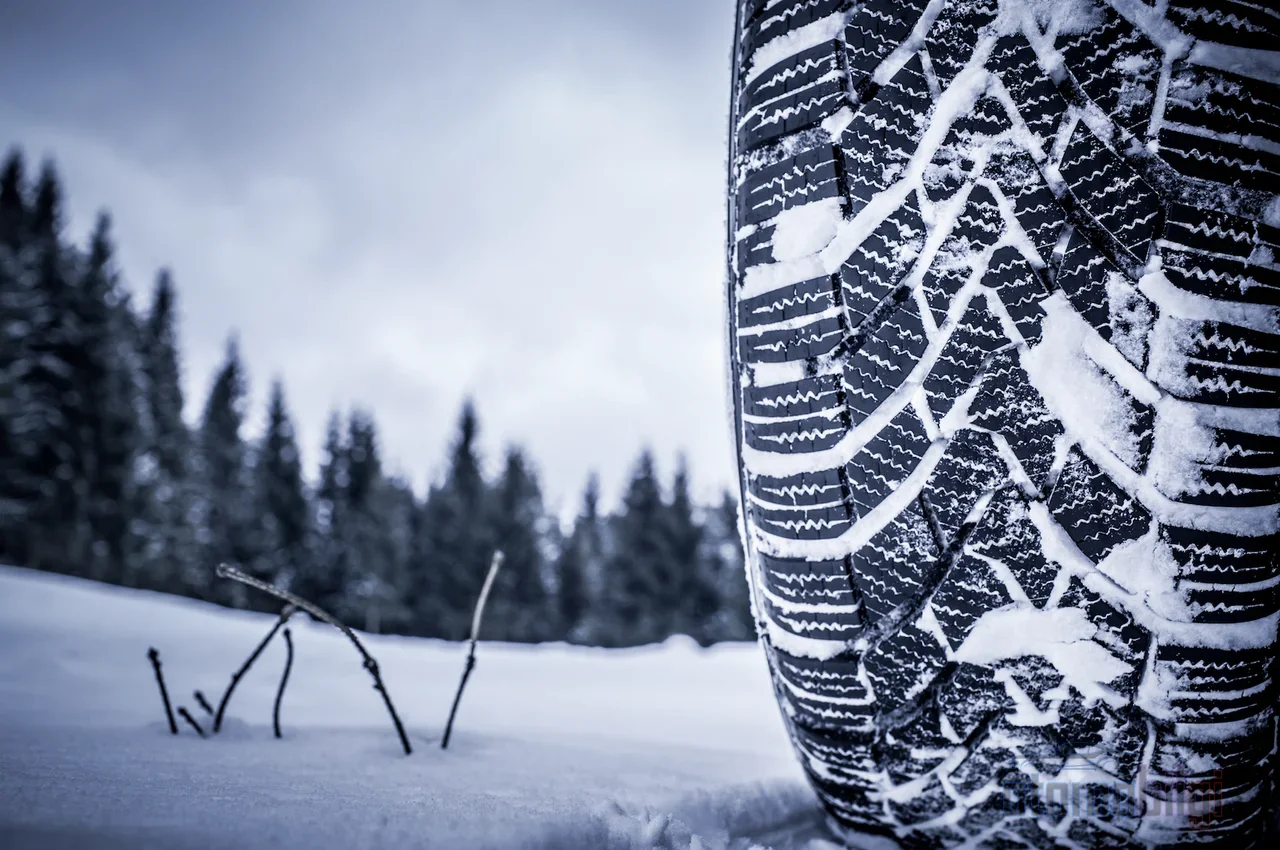
What separates winter tires from summer tires is not the tread pattern but the compound. Winter tires have a soft compound that prevents hardening at temperatures between +7 and -40 °C; this is the classic balance of tire engineering. When the temperature drops below +7 °C, summer tires harden and their grip on wet surfaces deteriorates; winter tires deliver superior performance not only on snow and ice but also on wet and dry surfaces below +7 °C. That is why the recommendation the industry has repeated for years is built on not waiting for snow: when the air temperature drops below +7 °C, it is time to make the switch.
All-season tires occupy an intermediate position in this equation. If they carry the M+S or 3PMSF marking, they are legally accepted; the performance debate is a separate matter. While they may make sense for a driver living in a temperate climate who sees snow a few times a year, in a region with harsh winters the limits of the same tire are clear. The route of the person buying the tire matters more than the marking on the sidewall.
Conclusion: Both the Calendar and the Responsibility Are Clear
For commercial vehicle owners the picture is clear: between November 15 and April 15, all tires (driven axles on heavy vehicles) must be winter tires, and the fine for non-compliance has been set at 6,000 TL. For private vehicle users there is no mandate; but the +7 °C rule stands as a safety calculation independent of the risk of a fine. Changing tires on time is what both the regulation and common sense recommend.
Sources
- Mandatory Winter Tire Application Starts on November 15
- Mandatory Winter Tire Application Extended to 5 Months
- Regulation on the Procedures and Principles Regarding the Mandatory Use of Winter Tires
- Winter Tire Mandate 2026-2027: Starts on November 15
- Winter Tire Fine 2026: How Much and to Whom Is It Issued?
- Winter Tire Fine | Mandate Dates, Who Gets Fined
- When Does the Winter Tire Application Start?
- Winter Tires Recommended Below 7 Degrees for Road and Driving Safety
- When Should I Change My Winter Tires?
- What Is the Winter Tire Application? Which Vehicles Does It Apply To?
- Fine for Not Fitting Winter Tires