How Do Tread Depth, Age, and Pressure Determine Tire Life?
Share This Page
The three things that determine a tire's lifespan are tread depth, manufacturing date, and pressure: When tread depth drops below the legal minimum of 1.6 mm, the tire can no longer be used legally, a tire that has reached 10 years of age must be retired regardless of tread depth, and a tire below the recommended pressure both increases braking distance and raises fuel consumption. None of these three parameters appears on the odometer; what matters is not how many kilometers a tire has covered, but how long it has existed and how deep a tread it started out with.
Highlights
- The manufacturing date is written in the last four digits of the DOT code on the sidewall; the 4223 code stands for the 42nd week of 2023. of 2023.
- A new tire has a tread depth of 8-9 mm; the legal minimum for passenger cars is 1.6 mm.
- Worn tires may require up to 30-45% longer stopping distances even on dry surfaces.
- The mandatory winter tire requirement will be in effect between November 15, 2026 - April 15, 2027 for the 2026-27 season.
- Pressure should be checked at least once a month, while the tires are cold.
Where is the tire manufacturing date written, and how do you read the DOT code?
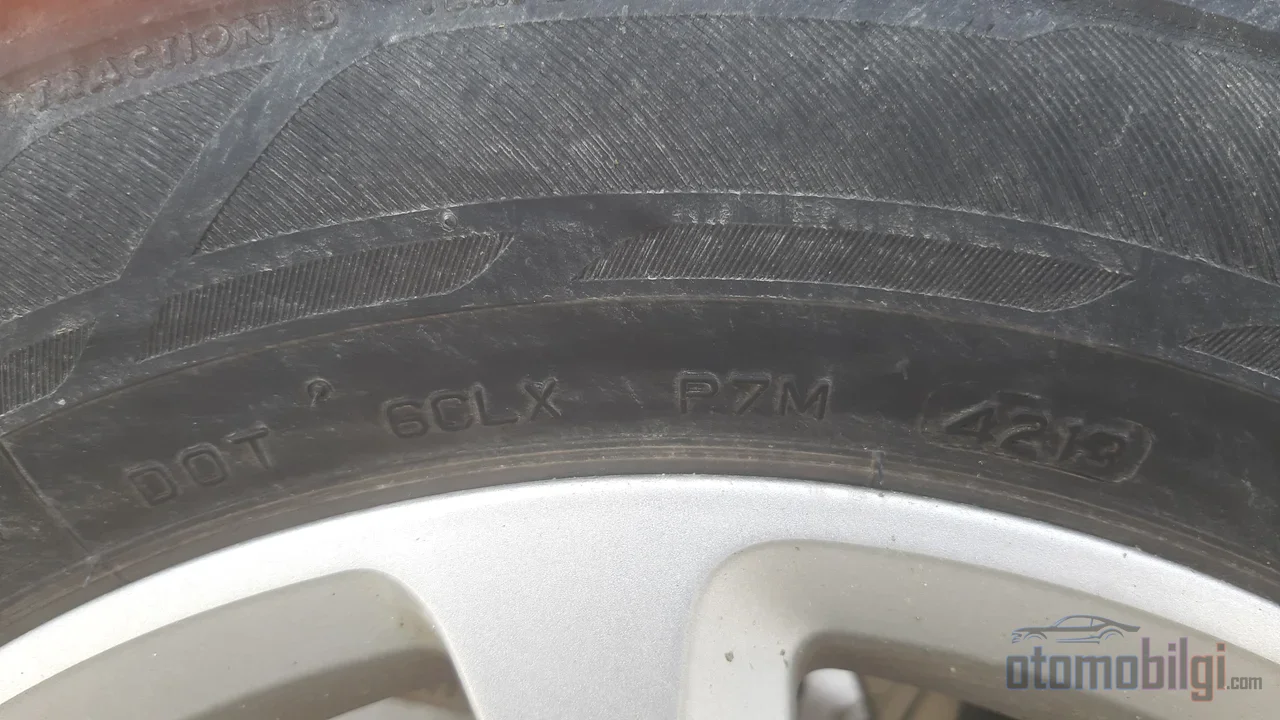
The only reliable way to learn a tire's age is the DOT code embedded in the sidewall. The acronym DOT comes from the name of the U.S. Department of Transportation; in the U.S. this code is legally required, while it is not mandatory for tires manufactured in Türkiye. Nevertheless, nearly all of the world's leading manufacturers use the code, so it is almost always possible to find this sequence on the sidewall of a tire sold in Türkiye.
The code consists of 12-13 characters and includes the manufacturer, the factory, the place of production, and the date. The part that matters to the reader is the last four digits: the first two digits indicate the week of production (01-53), and the last two digits indicate the year of production. Let's clarify the rule with a few examples:
- 4223 - the 42nd week of 2023 of 2023, meaning mid-October.
- 2716 - the 27th week of 2016 of 2016, late June.
- 3619 - the 36th week of 2019 of 2019, early September.
If you see a three-digit code, the tire you have dates from before the year 2000; such a tire is unquestionably a candidate for replacement today. There are also logical explanations for an unreadable code: the dated portion may sometimes be mounted on the tire's inner sidewall, in which case you need to turn the steering wheel fully to the limit and check the inner sidewall. If the code has completely faded on both sides, first try cleaning it with a dry cloth; if it still isn't there, hairline cracks and tread depth can give an indirect idea but not an exact date. At this point, getting professional help is better than driving on guesswork.
How many years should a tire be used - do kilometers or the date determine it?
The most common mistake in maintenance schedules is evaluating a tire by kilometers alone. An average tire can travel approximately 50,000 km, but the safe usage period is considered to be in the 6-10 years range. These two measures do not run out at the same time: the tire of a rarely used vehicle can age before it reaches the mileage mark. Rubber continues to degrade chemically even when it is not mounted; a tire produced three to four years ago but never mounted may have lost its properties even if it looks flawless.
The approaches among manufacturers do not exactly overlap: some recommend removing a tire from service after 10 years regardless of tread depth, while some manufacturers and safety organizations favor replacing tires that exceed 5 years. Taking the conservative end is not an expensive choice when you consider the difference of a tire braking on wet surfaces. Since storage conditions, climate, road conditions and driving habits can shift this period in both directions, the most balanced approach is to treat the production date not as a standalone prohibitive criterion but as a reference to be read together with the tire's physical condition.
The same calculation applies when buying new tires as well: the tire has already spent part of its shelf life by the time it reaches the point of sale from the factory. New tires produced less than 5 years ago can be used after a brief inspection; if they have exceeded their shelf life, replacement is recommended even if they have never been used. There is no tire more expensive than the wrong size for your vehicle.
How much does tread depth extend braking distance?
The relationship between tread depth and braking distance is the most measurable aspect of tire safety. On a new tire, the tread depth is 8–9 mm; the legal minimum for automobiles is 1.6 mm. A tire just above this limit is not legally problematic but is considered technically exhausted: in independent braking tests, it has been measured that tires whose tread depth drops to 3 mm have a noticeably longer stopping distance compared to tires with 5 mm; it has been determined that worn tires generally require a 30–45% longer stopping distance. In a comparison conducted in the US, a vehicle with a tread depth of 4/32 inch was able to stop at an additional distance of 8 car lengths while braking at 60 mph.
The reason is simple physics: tread channels move water away from the contact surface. As depth decreases, water drainage becomes harder, a layer of water enters between the rubber and the asphalt, and grip drops. The wet-surface stopping distance of a tire whose tread depth has dropped to the 2/32 inch level rises sharply; this is why the legal limit corresponds to 1.6 mm, which is this level. Scientific studies also show that tire age directly affects the coefficient of friction and that pressure falling below the recommended level extends braking distance - three variables working for the worse in the same direction.
Wear indicators and practical measurement methods
Wear indicators (TWI) are hard rubber protrusions about 1.6 mm (2/32 inch) high placed in the channels of the tire tread. When the tread wears down to this level, the indicator becomes flush with the tread and is visible to the eye - this is the moment the whistle announcing replacement blows. On the circumferential ribs of new tires, some manufacturers repeat this warning, printing "Replacement Tyre Monitor" three times. The options for measuring are listed from practical to technical: a tread depth gauge gives the clearest result, the matchstick or coin test gives a rough idea, and mobile scanning apps offer a digital alternative. The legal limit and the technical reality should not be confused: 1.6 mm is the bottom of the law, not the bottom of safety.
What do shoulder wear and irregular wear herald?
A tire's wear pattern is like a diagnostic report on the vehicle's mechanical condition. There are a few readable patterns, and each one points to a different fault:
- Center wear: The tire is overinflated.
- Wear on both edges: The pressure has remained low.
- Wear only on the inner or outer edge: This is the classic sign of an alignment (balance) and camber problem; underneath it may lie worn suspension parts - shock absorbers, bushings - or faulty wheel geometry.
- Rapid edge wear only on the front tires: This can point to an aggressive cornering habit; the blame is not always on the vehicle.
Other contributing factors include an unbalanced rim, rotation that is never done, and worn suspension components. There are three main signs that reveal an unbalanced rim: vibration felt in the steering wheel or seat, increased fuel consumption, and the vehicle pulling to one side. This is also the most silent indicator of a suspension failure: a faulty shock absorber forces the tire to press into the ground, and the tire pays for it with irregular wear. Beyond replacing the tire, the root cause must be sought on the suspension and geometry side; otherwise the new tire will wear in the same pattern.
What are pressure habits costing you in fuel?
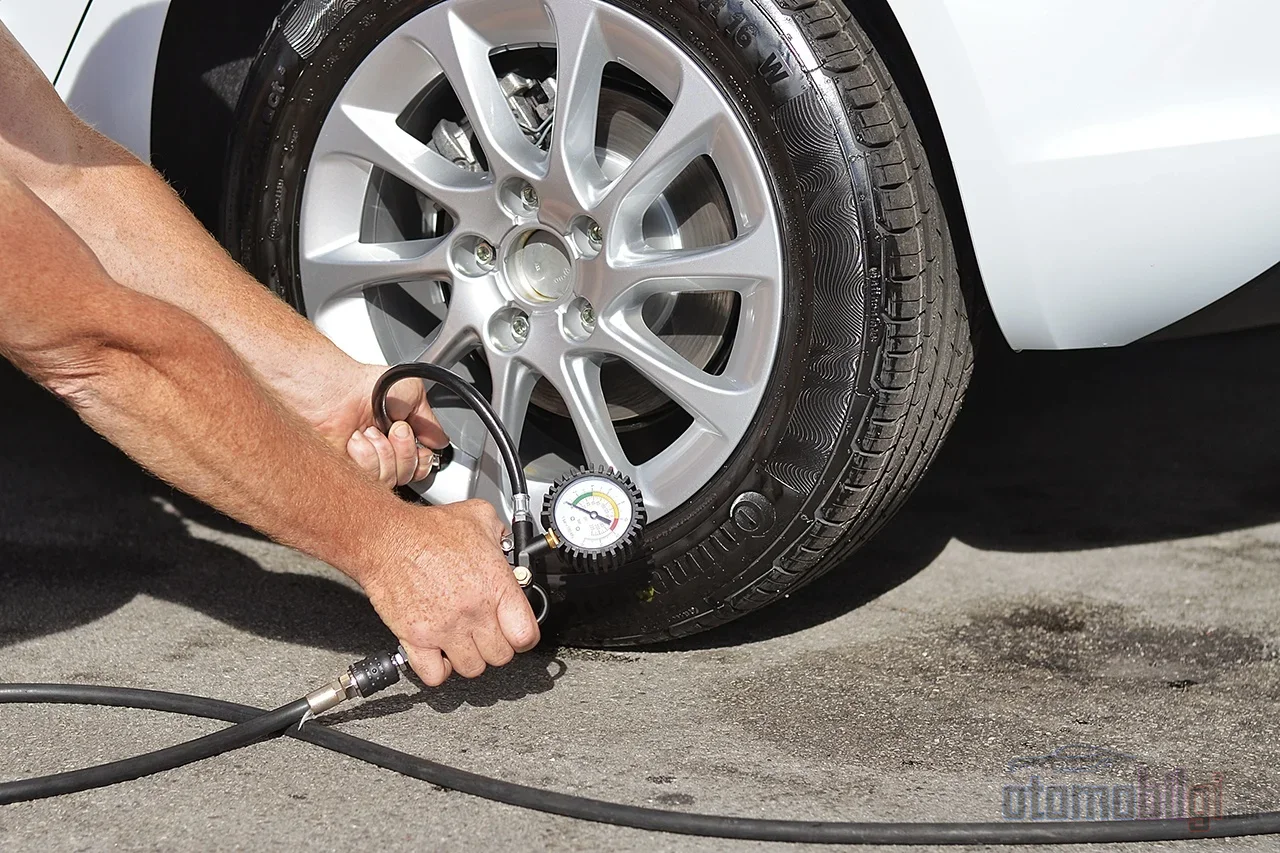
Pressure is the cheapest and most neglected item in tire maintenance. Pressure below the recommended value reduces performance, wears the tire prematurely, increases the risk of a blowout, and raises fuel consumption; a tire with its tread depth used up burns fuel the same way. In other words, a tire that has reached the end of its life or is underinflated is quietly issuing a fuel bill with every kilometer. If the pressure keeps dropping, there may be a valve or tire leak behind it; with repeated drops, a leak check should be performed.
The practical schedule consists of these three habits: checking the pressure at least once a month; rotating regularly, knowing that on front-wheel-drive vehicles the front tires, and on rear-wheel-drive ones the rear tires, wear faster; having the alignment checked twice a year. The spare tire can also be included in the rotation. These three habits protect both tire life and the fuel budget in measurable ways.
Winter tire requirements and tread depth rules in Türkiye
The mandatory winter tire requirement in Türkiye is set by the Ministry of Transport and Infrastructure. With the Official Gazette decision dated October 4, 2025, the 2025-2026 period application began on November 15, 2025 and ends on April 15, 2026 - the duration was extended from 4 months to 5 months for the first time. For the 2026-27 season, the application will be valid between November 15, 2026 - April 15, 2027; governorships can extend this period by one month at each end. Trucks, tractors, tankers, and buses require a tread depth of at least 4 mm; vans, minibuses, and passenger cars require at least 1.6 mm. Commercial intercity vehicles are also required to have winter tires on their spare tires.
The critical distinction here is the difference between the legal minimum and the technical recommendation. For passenger cars, the law says 1.6 mm, but in winter conditions the experts' common recommendation is at least 4 mm: grip on snow and mud drops at the 1.6 mm level, and it is possible to get through the winter with a tire that is legal but unsafe. Rather than waiting for the mandatory calendar, evaluating the winter tire by tread depth as well is a more sound engineering approach.
Risks of retreaded tires and signs it's time for a change
Aftermarket and retreaded (recapped) tires are an alternative frequently considered due to their price advantage; but their safety depends directly on the manufacturing standard and the quality of the materials used. Retreading applications exist in Türkiye and Europe, but the quality range is wide. For car use where high-speed and wet-surface performance is desired, certified products from original brands should be preferred; among the established manufacturers in the Turkish market are brands under Brisa (Bridgestone, Lassa, Dayton, Firestone, Kinesis) and manufacturers such as Özka. Paying attention to the legibility of the DOT code at the time of purchase is valid here as well, for the reasons explained in the previous sections.
A check sequence that can be done at home: A 5-minute tire inspection
- Pressure: Check the recommended value on cold tires; at least once a month.
- DOT date: Read the last four digits on the sidewall of each tire; if the code is on the inner side, turn the steering wheel to see it.
- Tread depth: Check with a gauge or the TWI indicators; consider anything below 4 mm a warning before entering winter.
- Wear pattern: If there is wear in the center, on the edges, or on one side only, think about pressure and geometry problems.
- Sidewall damage: Look for cracks, cuts, and bulges; a bulge is a sign of internal frame damage and definitely requires replacement.
- Wheel behavior: If there is steering wheel vibration, the vehicle pulling to one side, or unexplained rapid air loss, consult a service center.
- Spare tire: Before a long trip, also check the pressure and condition of the spare tire.
Two final practical rules for the replacement decision: If two tires are being replaced, the new ones should be mounted on the rear axle; if four tires cannot be replaced at once, tires of the same category and specifications should be selected. Rather than trying to repair a tire with a nail, stone, or glass puncture based on your own judgment, show it to a specialist; for sidewall damage, replacement is unquestionably the only option.
Conclusion: Write the age and millimeters on your calendar
Stop tying tire maintenance to mileage and evaluating it with three criteria instead - it is the simplest change that improves both safety and your budget. The production date read from the DOT code, the tread depth verified with a gauge, and pressure checked monthly - these three pieces of data directly determine braking distance and fuel consumption. The tires of rarely used vehicles age out before reaching the mileage limit; when heading into winter, think with the technical threshold of 4 mm rather than the legal 1.6 mm. A five-minute check at home is the cheapest insurance against being stranded on the road.
Sources
- Where Is the Tire Production Date Written? - Continental Türkiye
- Where Is the Tire Production Date Written and How to Read the DOT Code? - Bridgestone Türkiye
- Where Is the Tire Production Date Written? - Lassa
- Where Is the Tire Date Written? - SuperOTO
- Communiqué on the Mandatory Use of Winter Tires - Ministry of Transport and Infrastructure
- Mandatory Winter Tire Application Begins on November 15 - KGM
- Tire Tread Depth and Legal Wear Limit - Michelin Türkiye
- Tire Wear Indicator - Michelin Türkiye
- Tire Tread Wear - Hankook
- Regular Tire Pressure Checks - Koluman
- Tread Depth Testing Shows Longer Wet Stops - TireReview
- The Effect of Tire Age and ABS on Braking - Lorenčič, 2023, MDPI
- Analysis of Effects of Tire Tread Deterioration on Safety - Matthews, 2018, ROSA P
- Why Do Tires Wear Unevenly? - Monroe
- What Is a Retreaded Tire? - Lastiğim Burada
- Our Tire Brands - Brisa