Long-Term Parking Period: How Do You Protect Your Vehicle in the Garage?

Share This Page
A long-term parking period refers to a situation where the vehicle usually remains 3-4 months or longer without moving. Short waits of one or two weeks are generally harmless; however, once immobility exceeds three weeks, a separate wear process begins, such as battery drain, tire flat spots, rusting of brake discs, and the engine oil losing its protective properties. Understanding the mechanism of this process, preparing the vehicle properly before it goes into the garage, and applying the right checklist when hitting the road again prevent serious expenses months later.
Highlights
- Most vehicles can sit without issues for about 2 weeks ; after 3-4 months, battery, tire, and fuel problems become noticeable.
- Flat spots that form on tires are mostly temporary; they disappear within a few kilometers once the tire warms up.
- Since brake discs are bare cast iron, surface rust can form in humid air even overnight .
- Do not leave the parking brake engaged; use a wheel chock to prevent the brake pads from sticking to the disc.
- Before setting off again, checking fluid levels, tire pressure, brake pedal feel, and cables-hoses is essential.
What Breaks Down and When in an Idle Vehicle?
Classic maintenance logic is built around mileage: oil, filters, spark plugs, brake pads. Yet in an engine that doesn't turn at all for weeks, the problem depends not on the odometer but on the calendar. The timeline roughly works like this: the first two weeks are usually trouble-free. The most visible sign during this period is the light surface rust that forms on the brake discs, and it cleans itself off with the first few braking actions.
From the third week onward, battery voltage approaches the critical zone; the battery drains because the alarm system, central locking, and some electronic modules continue to consume energy constantly while the vehicle is off, and the alternator cannot charge. With three to four months, the picture grows: tire flat spots, fuel degradation, contaminant buildup in the oil. In other words, damage comes with the calendar, not with the mileage.
| Duration | What happens | What to do |
|---|---|---|
| Up to 2 weeks | Surface rust on brake discs | A short drive is enough |
| 2-4 weeks | Battery voltage drops | The battery should be left fully charged |
| 1-2 months | Flat spots begin to form on tires | Increase the pressure, the vehicle can be partially lifted |
| 3-4 months and beyond | Dead battery, risk of permanent flat spots, degraded fuel | Full storage preparation is required |
Why Does the Battery Drain and How Can It Be Protected?
The battery is the earliest casualty in an idle vehicle. The mechanism is simple: since the engine is not running, the alternator cannot produce a charge, yet the vehicle constantly draws a small discharge. The alarm system, central locking, clock, and memory-keeping electronic modules consume energy non-stop. In a fully discharged battery, sulfation forms on the lead plates, and this permanently shortens the battery's lifespan.
The order of precautions is clear:
- Leave the battery fully charged before storing the vehicle.
- If possible, connect a smart maintenance charger (battery tender). These devices do not charge continuously; they kick in when the voltage drops, and otherwise remain on standby.
- If you don't have a device, remove the battery and charge it separately, or at least disconnect the terminals to slow down corrosion and discharge.
Preventing corrosion while disconnecting the terminals is also important; clean, greased terminals delay oxidation during long periods of inactivity. For waits exceeding a few months, the safest approach is to remove the battery from the vehicle and charge it occasionally.
Do Tires Develop Flat Spots, and Are They Temporary or Permanent?
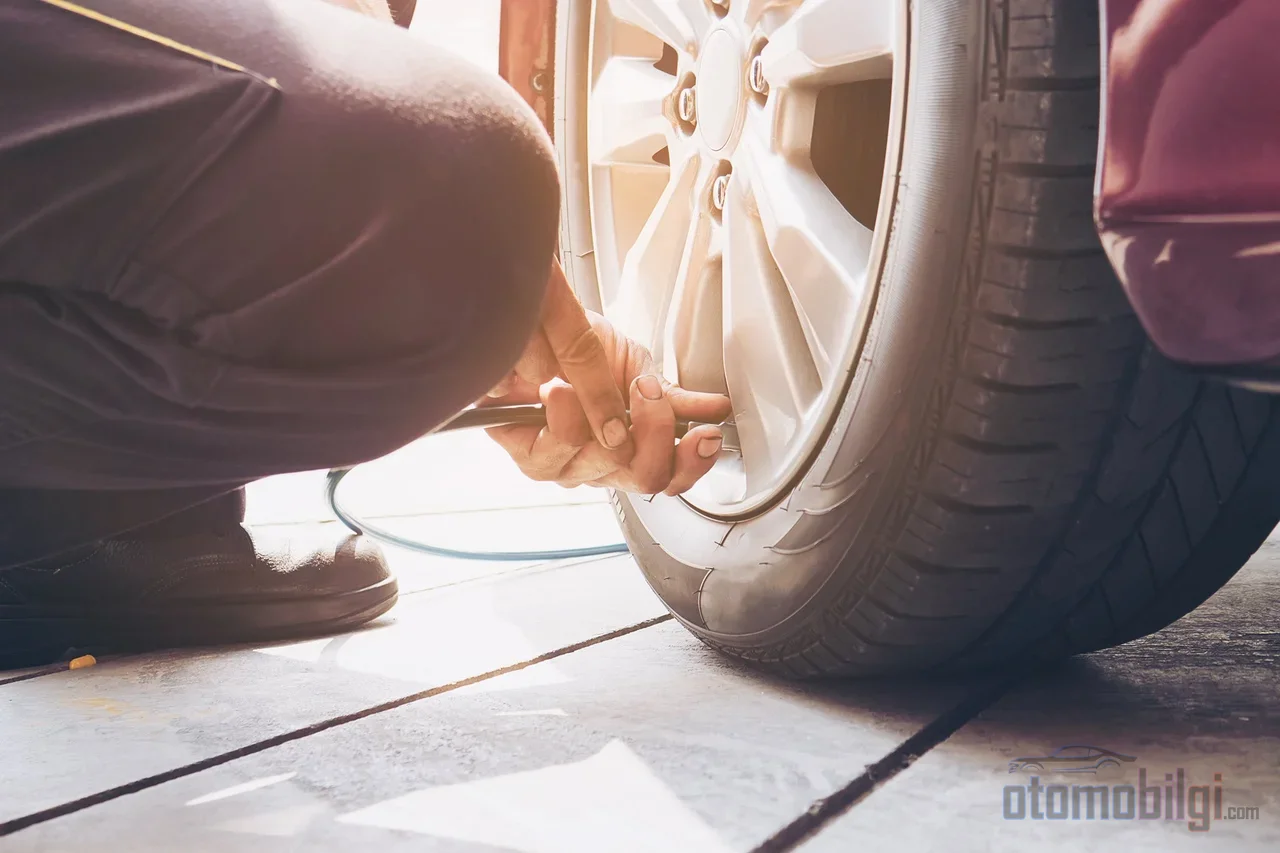
Flat spotting is the flattening of the tire body at the point where it remains stationary under the vehicle's weight for a long time. Three variables affect it: the duration of inactivity, ambient temperature fluctuations, and tire pressure. In a garage that cools at night and warms during the day, the tire body hardens and deforms at a certain point along with these cycles.
The good news is that the resulting flatness is mostly temporary. The tire heats up once on the road, the material softens, and the flatness disappears within a few kilometers; the slight vibration felt in the first minutes of cold mornings can also pass within a few minutes of driving. The risk of it becoming permanent rises when a heavy vehicle is parked for a long time on a cold surface. For waits exceeding three to four months, permanent deformation is a real possibility.
The precautions are simple but sequential:
- Inflate the tires slightly above the recommended pressure.
- As a partial solution, use chocks or a jack to distribute some of the weight.
- For waits exceeding 3-4 months, consider putting the vehicle on jack stands and storing the wheels separately, upright, in a cool place.
What should not be done should also be listed: parking with low pressure, not moving the vehicle even a centimeter for months, leaving it in sunlight, and parking on ground where chemicals have spilled all rapidly consume tire life. In earlier times, raising vehicles on brick blocks was a habit; however, with modern radial tires, fully unloading the suspension can cause the shock absorber rods to rust. The middle ground is partial lifting with chocks or a jack.
Brake Discs: Rust Overnight, Crust in Six Weeks
Brake discs are bare cast iron, and iron rusts in any environment where it comes into contact with humid air. In humid regions, a thin layer of surface rust (flash rust) can form even overnight; this appearance after a few days of parking is completely normal and is cleaned within a few minutes of braking during normal driving.
The critical distinction is time. Six weeks of inactivity can cause serious problems in the brakes; prolonged rust can turn into a crust. Since regular braking cleans surface rust, rust develops quickly in rarely used vehicles; it is a vicious cycle. The practical formula for keeping the rotating rotors clean is a 10-15 minute short drive once a week. Also check whether the brake pedal is hard and unyielding before setting off; a hard pedal can be a sign of a rusty or seized brake system.
Do Fuel and Engine Oil Deteriorate During Inactivity?
On the fuel side, the rule seems contradictory but is logical: keep the tank full empty. A full tank reduces the amount of moisture condensing on the inner surface and thus prevents the tank from rusting. For waits lasting months, adding fuel stabilizer delays gasoline degradation; the stabilizer prevents light fractions from evaporating and residue from forming. After applying it, running the engine for about 5 minutes ensures the stabilized gasoline reaches the entire fuel line. For very long storage periods, draining the old fuel and putting in fresh fuel is the best solution.
The situation with engine oil is a bit more nuanced. An oil change before storage ensures the internal metal parts are coated with a clean oil film; even oil that sits still contains contaminants, and as the oil reacts with moisture and oxygen, additives can settle over time and protection diminishes. Synthetic oil extends this period. With standard oil, acidic residue can accumulate in the sump; if synthetic and new oil is used, a change may not be mandatory. Practical rule: for any layover exceeding a few months, renewing the oil before the vehicle hits the road both protects the engine and provides a clean start for the next storage period.
Small but Critical Precautions to Keep in Mind
Alongside the big headings, there is a series of details that cause surprise expenses when neglected. When applied on storage day, the vehicle comes out months later in much better condition:
- Do not leave the parking brake engaged; the brake pads can stick to the discs. Use wheel chocks instead.
- To prevent the wiper blades from sticking to the glass, place plastic or cloth between them; removing the wipers entirely is also an option for long waits.
- Block the exhaust outlet and air intake with steel wool, a plug, or aluminum foil to prevent rodents and pests from entering.
- Park the vehicle on concrete or asphalt, not on grass or damp soil; if necessary, lay a tarp underneath.
- Empty and clean the interior completely, wash and wax the exterior; use a breathable car cover.
- Place a moisture-absorbing desiccant inside the cabin.
- Check whether your insurance covers long-term storage periods.
Whether it is beneficial to occasionally start the vehicle and let it idle during storage is debatable. Short runs cannot fully charge the battery and create condensation in the engine; if you do not have the opportunity to do a real drive lasting at least half an hour, not starting the engine at all is the better approach. A short 10-15 minute drive once every two weeks, however, charges the battery, circulates the fluids, and prevents flat spots on the tires; in other words, the issue is not the starting itself, but whether the drive is long enough.
Checklist Before Getting Back on the Road After Months
Departure requires as much discipline as storage. The order matters; completing the checks before start-up lets you hit the road without risking the engine:
- Visual inspection: pest nests and droppings, fluid leaks, the condition of openings sealed during storage. If the exhaust plug has been opened, an animal may have entered.
- Under the hood: check for chewed wires and the presence of rodents.
- Fluid levels: oil, coolant, brake fluid, power steering fluid. For a car that has been sitting for months, an oil change is recommended.
- Battery: reconnect, clean corrosion, test the charge status.
- Tires: pressure, flat spots, and crack inspection.
- Belts and hoses: check for cracking and hardening.
- Brake test: is the pedal firm, and what is the rust condition of the pads and discs?
- Inspection of the electrical and lighting systems.
There is one more advanced technique: remove the fuel pump fuse and crank the engine dry until oil pressure builds. This prevents stale gasoline from being injected into the injectors and ensures that the oil reaches critical surfaces before the first ignition. After starting, do a brief listen, then keep the first drive short, on a safe route near your home.
A Note on Türkiye for Those Storing a Car in a Summer Region or an Idle Second Vehicle
In Türkiye, this scenario is more common than you might think: a car left in the city for the summer, an automobile parked in the garage because its owner cannot drive due to a license suspension, or a second vehicle that doesn't even get turned over once a week. In coastal regions with harsh temperature fluctuations, tire deformation and battery discharge develop faster; in humid weather, rust on the brake discs can appear overnight. In such cases, professional vehicle storage services are also an option; logistics companies offering short- and long-term secure storage are available in Türkiye. If you are keeping your car in your own garage, the checklist on this page is the most economical way to preserve your second vehicle's like-new condition.
Conclusion: The Calendar Matters More Than the Mileage
Wear on an idle vehicle remains invisible because the odometer stands still, but it does not stop. Leaving the battery fully charged, filling the fuel tank, increasing tire pressure, releasing the parking brake, and taking at least one real drive per month - these five items are the difference between a repair bill three months later and a week of preparation. Before hitting the road, apply the list in reverse: first check by eye, then by hand.
Sources
- Long-Term Vehicle Storage: Best Practices to Protect Your Car
- Preparing your car for long-term storage: dos and don'ts
- Flat-spotting
- Tire Flat Spotting: Causes, Prevention, and Solutions
- Just Six Weeks of Sitting Played Havoc on My Car's Brakes
- How to Prevent Brake Rotor Surface Rust
- Engine Oil Storage Conditions and Shelf Life
- Why Does a Car Battery Drain While the Vehicle Is Parked?