Should Tires Be Rotated Front-to-Back or Crisscross?

Share This Page
There is no single correct answer to the question of whether tire rotation should be done front-to-back or crosswise; the correct pattern is determined by your vehicle's drive type, the tire's tread design, and the wear condition of your tires. In front-wheel-drive vehicles, the most common practice is to move the front tires straight back and the rear tires crosswise to the front; in rear-wheel-drive vehicles this arrangement works in reverse, while in all-wheel-drive vehicles a crosswise pattern is preferred. Rotating regularly every 8,000 to 13,000 kilometers is the most practical way to ensure even tire wear and maintain balanced road holding.
Highlights
- General rule: 8,000-13,000 km or every 6 months rotation.
- On a new tire, the first rotation ≈8,000 km should be done at
- Directional tires are only rotated front-to-back on the same side .
- If the front-rear tread depth difference is more than 2/32 inch , do not delay.
- A professional rotation takes 15-30 minutes .
Why Doesn't Every Tire Wear Evenly?
I have been in this business for over thirty years; the thing drivers most frequently overlook is still the fact that the four tires do not do the same job. Each wheel position demands something different from the tire. In a front-wheel-drive vehicle, the front tires handle steering, provide traction, and bear the braking load all at the same time; the result is wear at a pace the rear tires never endure. In rear-wheel-drive vehicles the picture reverses: since the rear tires take on traction, they are the ones that reach the end of their life first.
The purpose of rotation is precisely to break this imbalance. When tires change positions in specific patterns, wear is shared among all four tires; this means longer tire life, consistency in braking and road holding, a lower risk of hydroplaning, and more balanced rolling resistance. Consistency in rolling resistance also reflects on fuel consumption. In all-wheel-drive vehicles, even wear has an additional benefit: it reduces stress on the drivetrain. And there is a tedious but important side to the job - regular rotation is a prerequisite for most tire manufacturers' warranties.
One note: Years ago, service centers would not perform rotation when you said it seemed easy to you; now even tires produced on computerized manufacturing lines cannot achieve even wear on their own. Technology has changed, physics has not.
The Correct Pattern for a Front-Wheel-Drive Vehicle: Forward Cross
The accepted pattern for front-wheel-drive vehicles Forward Cross, meaning a forward cross. The application is simple: the rear tires go crosswise to the opposite front positions, while the front tires move straight back on the same side. This way, the front tires, which wear fastest, are continuously reinforced by the rear tires, which still have deep tread.
If you ever wonder why this pattern is applied in this direction and not the reverse, the answer lies in the direction of wear: the tread depth of the tire carrying the drive load wears down quickly, and the logic of rotation is to bring the deeply treaded tire into the toughest position. The debate on forums about whether cross or straight patterns are better has gone on for years; as far as I can see, any consistently applied pattern is better than none at all. The only rule is that once you have chosen a pattern, you should stick with it in subsequent rotations - mixing patterns eliminates the benefit.
How Is Rotation Done on Rear-Wheel Drive and Four-Wheel Drive Vehicles?
The pattern used on rear-wheel drive vehicles Rearward Cross: the rear tires move straight forward on the same side, and the front tires move crosswise to the opposite rear positions. Since the rear tires wear faster due to traction, freshly treaded front tires take their place at every rotation.
In four-wheel drive (4WD/AWD) vehicles, since all tires are exposed to similar stress, the cross X pattern is widely recommended: all four tires move to diagonal opposite positions. On some AWD vehicles, side-to-side swapping is also acceptable, but it is less effective than the cross pattern. In addition, the organizations that dominate the industry define multiple valid patterns for AWD; the safest approach is to follow the recommendation in your vehicle's owner's manual. If your vehicle has a full-size spare tire, including it in the rotation - especially on AWD/4WD - is a smart move. If the spare has a TPMS sensor, the system must relearn the sensor positions after rotation.
A small warning for pickup truck owners: due to heavy loads and suspension geometry, the shoulder area of the front tires on some light trucks can wear unexpectedly fast. Rather than memorizing rules, checking tread depth and proceeding according to it is always the most honest approach.
Rotation Rules for Directional and Asymmetric Tires
The patterns I have described so far are based on the assumption that every tire can be mounted in every position. This assumption does not always hold.
Directional tires
Directional tires, whose tread is drawn in a V shape, are designed to rotate in only one direction; they evacuate water through those V-shaped channels. For this reason, they cannot be moved to the opposite side without being removed from the rim. In practice, rotation is done front to rear on the same side: right front to the rear, left front to the rear, with each tire staying on its own side. To move them to the opposite side, the tire must be removed from the rim and remounted in reverse; due to labor costs, this is generally not done. If you use a directional patterned tire, common on winter tires, plan your rotation accordingly.
Asymmetric tires
Asymmetric tires, whose sidewalls feature two different tread patterns, optimize wet and dry performance together; their inner and outer surfaces do different jobs, but this does not restrict the direction of rotation. As long as they are not directional, asymmetric tires can be rotated crosswise and do not need to be removed from the rim and remounted. In short, look at the outside/inside marking on your tire's sidewall: if outer stays outer, cross rotation is fine.
Different sizes and run-flat tires
On vehicles with different tire sizes on the front and rear axles (staggered setup), a full rotation is not possible; tires cannot cross to the opposite axle at all, at most a left-right swap can be done on the same axle. For run-flat tires, the interval is roughly the same: the 8,000–13,000 km band, the general rule, or 6,000–8,000 miles (≈9,500–13,000 km) depending on the manufacturer, is recommended. If there is a front-rear size difference, only a left-right swap comes into play for run-flats as well. Let us also add that there is no consensus among manufacturers regarding the repairability of run-flats, and that the repair-or-replace decision is generally based on the vehicle manufacturer's recommendations - these sidewall-supported tires are not as forgiving as standard tires.
At How Many Kilometers Should Rotation Be Done?
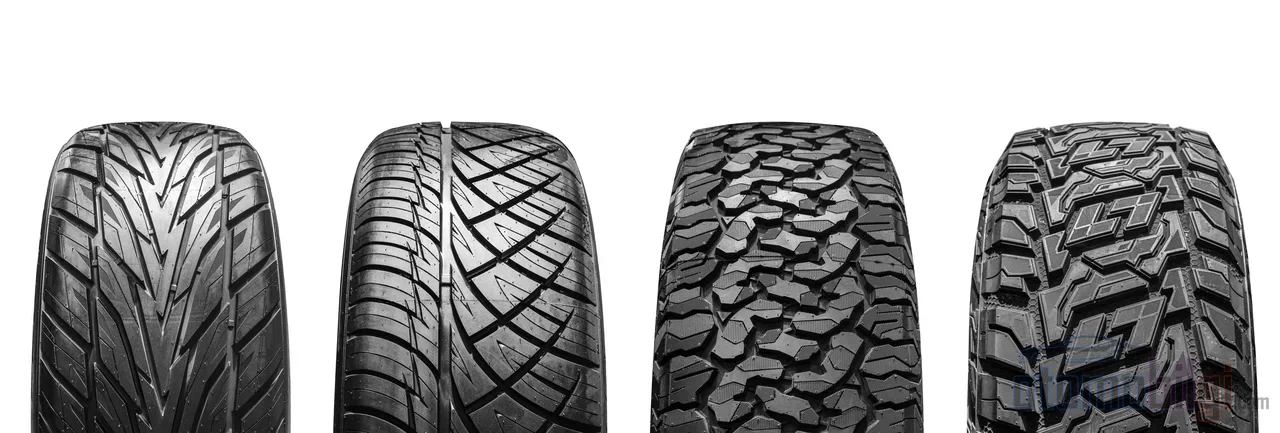
The general rule is clear: Every 8,000–13,000 km, or at the latest every 6 months. Depending on the vehicle type, this interval can narrow and widen:
| Vehicle type | Recommended interval |
|---|---|
| Sedan / coupe | 8,000–11,000 km |
| SUV | 8,000–12,000 km |
| Electric vehicle | 8,000–10,000 km |
| Performance vehicle | 5,000–8,000 km |
| Light truck / AWD-4WD | 8,000 km and below |
The reason electric vehicles are pulled forward in the list is instant torque: sudden and high torque consumes tread depth faster than in a conventionally powered vehicle. In performance vehicles, the soft tire compound and aggressive use do the same job. Let me especially emphasize one detail: the first rotation is the most important. A new tire with deep tread is at its most vulnerable period to uneven wear; doing the first swap at around 8,000 km lays the foundation for the entire following period.
There are also signs that require you to make an early decision without waiting for the mileage: if the difference between front and rear tread depth has grown beyond 2/32 of an inch, if one-sided wear has started on the front tires, if the vehicle pulls slightly to one side, or if increasing road noise from the front tires has begun to be heard, trust the tire, not the calendar. Irregular wear on only a single tire is a different matter: it usually indicates a balancing or suspension problem rather than a rotation need - the cause must be addressed first.
The question of whether balancing is needed during rotation comes up often; it is not needed. Balancing is done when there is vibration, when new tires are fitted, or during annual maintenance. And rest assured about TPMS when you do it along with rotation: the sensors move with the tires, and the vehicle computer detects the positions on its own within a few kilometers of driving.
The Cost of Postponing Rotation
Skipping rotation looks like an innocent oversight at first glance; the price, however, comes out of the tire wallet you have already paid more into than your income before. When wear concentrates on a single axle, you have to replace that axle's tires before the others are worn out - meaning you reduce the life of four tires to that of two, and lose money. More importantly, it is about safety: axles with different tread depths cause unstable braking on wet surfaces and increase the risk of hydroplaning. And the warranty issue I mentioned above: if you cannot document periodic rotation, your hand is weak when complaining about premature wear.
The same logic applies when you have to buy two new tires: regardless of drivetrain type, the new tires must be fitted to the rear axle. The rear axle is the critical one in hydroplaning and oversteer; having the newer tires there keeps the car manageable. In the past, very few people cared about this detail; even today, half the service counter asks for the opposite - just know the right way.
On the cost side, we can breathe easy: professional rotation is in the range of 20-50 dollars (meal money on the local scale) and takes 15-30 minutes. If you want to do it yourself, the equipment investment including a jack, chocks, and a torque wrench is around 150-300 dollars; with two or three rotations a year, this investment pays for itself.
In short: Which Pattern, When?
Let me summarize. If you are front-wheel drive, Forward Cross; if rear-wheel drive, Rearward Cross; if you have an all-wheel drive vehicle, the X pattern; if your tires are directional, only front to rear on the same side; if you have a front-rear size difference, only left-right. When your odometer shows 8,000 or six months have passed, don't put it off. Determine your pattern once, then follow the same pattern every time, and don't postpone the first rotation and ruin the system you have established from the start. This much discipline ensures that you make full use of every last millimeter of tread on all four of your tires.
Sources
- How Often to Rotate Tires? - Bridgestone Tire
- Tire Rotation: Why, When, and the Right Pattern for Your Drivetrain - Continental Tire
- What is the Right Tire Rotation Pattern For My Vehicle? - Go Rancho
- Tire Care & Safety Guide - U.S. Tire Manufacturers Association
- Tire Rotation - Tire Industry Association
- How Often Should You Rotate Your Tires? - Consumer Reports
- Proper Mounting of Directional and Asymmetrical Tires - Goodyear
- Run-Flat Tires: Safe Driving Distance Guide & Limitations - Tires-Easy