If Your Steering Wheel Shakes, Who's to Blame: Wheel Alignment or Balancing?
Share This Page
If the steering wheel vibrates, the most likely culprit is unbalanced wheel balancing; if the vehicle pulls to one side, or the steering wheel sits crooked while driving straight, the job falls to wheel alignment (toe) adjustment. In short, the formula is: balancing deals with weights, alignment deals with angles. Balancing smooths out the wheel's rotation, while alignment corrects the direction in which the tire contacts the road; the two do not affect each other and their symptoms are different.
Highlights
- Balancing corrects rotational balance by adding small weights to the wheel; alignment does not touch the tire but the suspension angles.
- Above 70-80 km/h the vibration you feel is usually a balancing issue, while pulling on a straight road points to an alignment problem.
- Vibration only during braking is a sign of warped brake discs.
- Balancing is recommended roughly every 8,000-10,000 km, and an alignment check at least once a year.
- Alignment prices range from 50-100 dollars for the front axle, and 100-200 dollars for all four wheels.
What Is the Difference Between Alignment and Balancing?

I have been in this business for more than thirty years, and I still see the same scene in front of the service shop: a driver comes in complaining of vibration, saying "I'm getting an alignment done," when the problem is actually wheel balance. The confusion has a fair reason, because both procedures are associated with the word "wheel" but they have nothing in common.
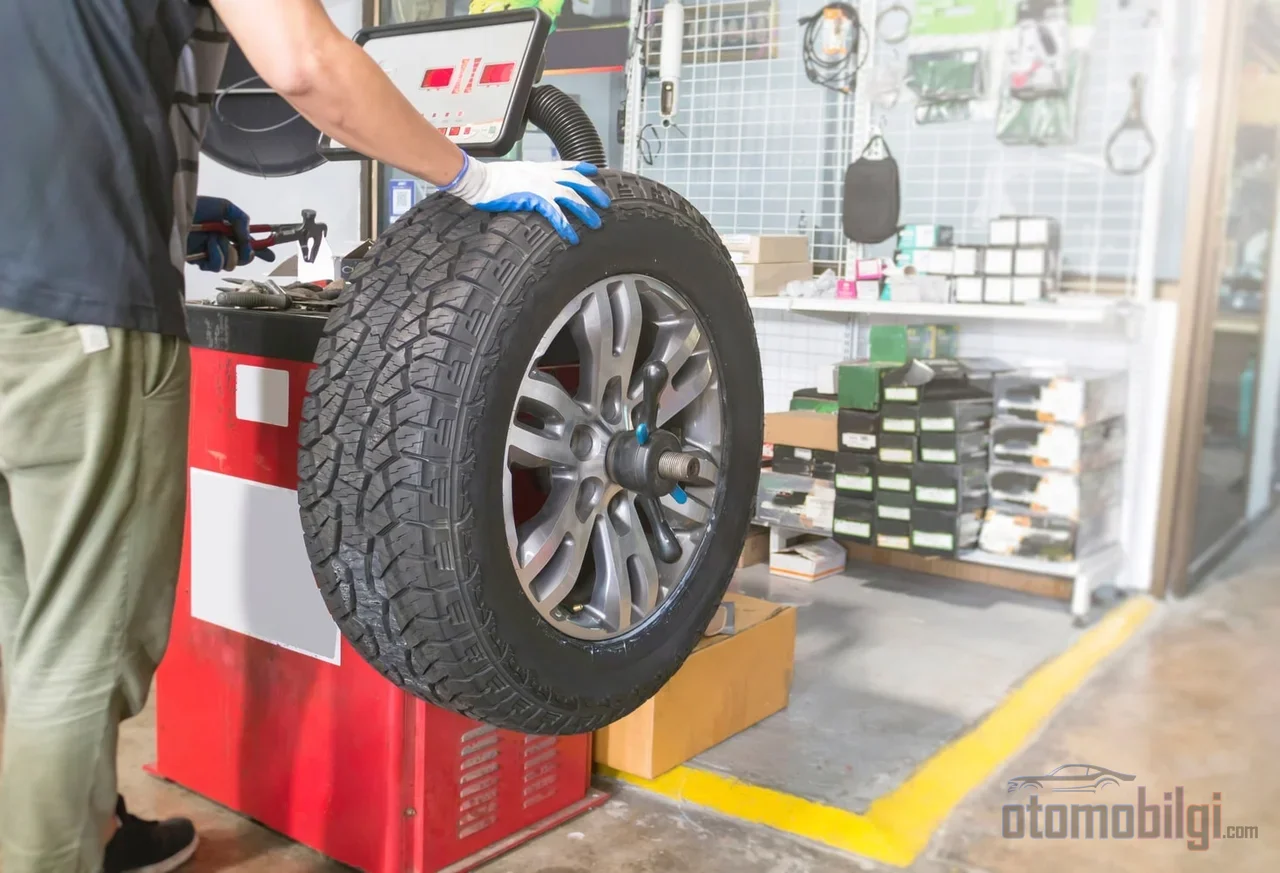
Balancing is the process of eliminating the weight imbalance of the tire and wheel assembly. Tires are not perfectly flawless by nature; manufacturing tolerances, pothole impacts, curb scrapes, and even the tire flattening in one spot when the vehicle is parked in the same place for a long time can throw off the balance. The shop mounts the wheel on a balancing machine and places small weights at the points where a deficit is detected. It is that simple: the subject of the process is weight.
Alignment - the procedure technicians call wheel alignment - never touches the tire or the rim. The angles of the suspension and steering system are adjusted; the goal is to optimize the tire's contact with the road. There are three fundamental angles, and it is useful for every driver to at least know their names:
- Camber: The inward or outward tilt of the tire when viewed from the front or rear.
- Toe: Whether the tires point inward (toe-in) or outward (toe-out) when viewed from above.
- Caster: The angle the steering components make with the wheel axis; it is likened to how the front swiveling wheel of a shopping cart trails behind.
The two procedures do not interfere with each other: adding balance weights does not change the camber, caster, or toe values, and alignment does not add or remove weight from the wheel. That is why one cannot replace the other.
| Feature | Balancing | Alignment |
|---|---|---|
| What it corrects | Weight imbalance | Suspension angles |
| Typical symptom | Vibration at high speed | Pulling, crooked steering |
| Wear pattern | Spotted, patchy | Inner/outer edge wear |
| Contact with the wheel | Adds weights | Does not touch, corrects angles |
Diagnosis by Symptoms: You Can Identify the Problem Yourself
A good technician performs most of the diagnosis just by listening to the story before putting the car on the lift. The driver can apply the same method; three questions are enough.
At what speed and where is the vibration felt?
At highway speeds - roughly above 70-80 km/h - vibration appearing in the steering wheel, under the door or in the seat is the classic sign of an unbalanced wheel. A rough localization is also possible: if the vibration concentrates in the steering wheel, the problem is most likely in the front wheels; if it is felt in the seat, it is in the rear wheels. A typical detail is that the vibration comes with a specific speed range and disappears outside it; the steering wheel that bothers you at 90 may calm down at 110. Even a very slight imbalance in a wheel is enough to cause vibration while moving - this is the most common cause of steering wheel vibration.
If the vibration appears only when you press the brake, the story changes: unfortunately, deformed brake discs come to mind. If the car pulls to one side during braking, that also points to the brake system; a sticking caliper or uneven pad wear may be involved. In neither of these cases will spending money on balancing or alignment solve the problem.
Is the steering wheel straight, or does the car pull?
If the car constantly drifts to one side when released on a straight road, the steering wheel sits at an angle while driving straight, or you see uneven wear on the tires, wheel alignment is the first candidate. Vibration is a secondary symptom here; the main issue is direction and tilt.
What does the tire wear say?
Reading the tire surface is an old technician's habit and still holds its validity. Wear concentrated on the inner or outer edges points to a camber or toe problem - that is, wheel alignment. In contrast, a spotted, patchy, wavy wear pattern on the tread surface is the work of an unbalanced wheel and impacts while stationary. If the edges are worn, think alignment; if the surface is spotted, think balancing.
There are other causes of vibration as well, and the healthiest way to diagnose is to establish the speed-behavior relationship: uneven road surfaces, tire flat spots from long parking periods, and worn suspension components can also create the same complaint. Steering wheel vibration at highway speeds is one of the most frequently misdiagnosed symptoms in this industry; that is why it is wiser to describe the symptoms to the service rather than saying "do an alignment."
If Both Procedures Are Needed, Which One Comes First?
If both vibration and pulling are present, set the order like this: first have the balancing done and eliminate the vibration; then correct the angles with the alignment. An alignment done while vibration is present can distort the resulting readings and things get confusing. Keep in mind that some drivers who book an alignment appointment for a vibration complaint actually need balancing - an unbalanced wheel feels like a steering problem, and the reverse is also true; a faulty alignment grinds its teeth and makes noise, appearing like a balancing problem. One practical tip: when fitting new tires or doing suspension work, having both procedures done in the same visit saves both time and an extra trip to the service.
How Often Should Balancing and Alignment Be Done?
The golden rule for balancing is to have it done at every new tire installation. Beyond that, it is repeated when you have a rotation done, after a flat tire repair, and as required by the manufacturer's maintenance schedule; technical experts consider a balance appropriate roughly every 8,000-10,000 km.
For alignment, there is a range among authorities: some recommend checking twice a year or every 10,000 km, while most manufacturer dealers check once a year or every 12,000-15,000 miles. In practice, the right approach is to base it on your vehicle's maintenance calendar. For vehicles driven on rough, pothole-filled roads, two checks per year would be wise.
There are also situations where you should not wait for the interval:
- Immediately after installing new tires,
- After a hard pothole or curb impact,
- When you have suspension repair done (lower arms, tie rods).
Let me also add this: alignment is not a fixed attribute but a setting prone to degradation. Impacts, aggressive driving, neglected suspension maintenance, and upgrade/lowering procedures done without updating suspension components disrupt the angles. Monthly tire pressure checks and scheduled rotations are also small but effective habits that extend the life of your alignment.
What Happens If You Don't? Tire Life and Fuel Consumption
The price a driver who postpones alignment pays is often deducted from the tires without their realizing it. An untreated alignment problem can shorten tire life by thousands of kilometers; moreover, the problem does not end with the tires - it also spreads to steering and suspension components. Driving with unbalanced wheels cuts the same invoice: extra load is placed on shock absorbers and struts, and steering precision decreases.
The math is clear on the fuel side as well. Misaligned or unbalanced wheels increase rolling resistance; the engine works harder to maintain the same speed, and consumption rises. The nuance must also be noted: there is a distinction among the angles. While camber and caster do not measurably affect fuel economy, total toe affects it noticeably - meaning a slight camber deviation eats away at the tire edge but barely moves the number at the pump; toe hits both at once.
How Much Do Alignment and Balancing Cost?
Prices vary according to the vehicle's class and the shop's equipment, but the general picture as of 2026 is as follows: front (two-wheel) alignment 50-100 dollars, four-wheel alignment 100-200 dollars range. Brand dealers usually charge a premium of 150-250 dollars. At the upper end, on luxury vehicles requiring ADAS calibration, the figure can exceed 700 dollars; remember that a four-wheel alignment also covers the thrust angle along with the front and rear wheels. This is why prices vary so widely: on a vehicle with a sensor-equipped steering system, calibration is a separate procedure after the alignment is done.
Balancing is a more modest procedure than wheel alignment and is usually done together with tire rotation or tire mounting. When evaluating price-performance, keep this measure in mind: a 100-dollar wheel alignment costs far less than a set of tires ruined by edge wear. I have seen this math for years; there is no losing side.
Why Does Vibration Continue After a Wheel Alignment?
Let me answer a complaint I often hear from readers here. If you had an alignment done but the vibration persists, two possibilities stand out: either the wheels were never balanced, or a bent rim or a damaged tire cannot be balanced properly. An irregular or patched tire keeps telling the same story on the road, whether or not it takes weights on the machine. On the other hand, the prejudice that "alignment does not cause vibration" is not absolute either: a severely out-of-spec toe can chew up the tread and cause a loud vibration through friction - but the root cause there, too, is not weight, it is the angle. Whether you encounter vibration or pulling, read the symptoms according to speed and behavior; understanding which procedure is speaking before telling the car to "get an alignment" protects both your wallet and the life of your tires.
Sources
- Tire Balance vs. Alignment: Which One Do You Need?
- Wheel Balance vs. Alignment: What's the Difference and Why It Matters
- Wheel Balancing vs Wheel Alignment: the Clear Difference
- 6 Things That Can Cause Your Steering Wheel To Shake
- What You Need to Know About Tire Alignment
- Alignment Symptoms & Causes
- How to Diagnose a Shaking Steering Wheel
- What Causes the Steering Wheel to Shake?
- Wheel Alignment Cost in 2026
- How Much Does Wheel Alignment Cost in 2026
- Why Proper Alignment Is Important for Your Tires