How Does Bolt Circle (PCD) Determine Wheel Selection?
If that patterned alloy wheel that caught your eye in the wheel catalog cannot be fitted to your car, the reason is most likely not its looks but a matter of geometry that differs by just a few millimeters. I have been in this business for over thirty years; almost all customers who come in with the wrong wheels start by saying, I checked the number of holes, I have five, and this one has five too. Yet two five-hole wheels can be completely different from each other. The measurement that comes into play here is PCD - that is, the diameter of the imaginary circle passing through the centers of the bolt holes - and it is the subject of this article.
In the past, wheel selection; was a dilemma: easy-to-repair steel, or good-looking alloy? Today the real question is far more technical: do the measurements match? This compatibility question, which overrides visual taste, saves both money and lives when properly understood.
What is PCD and how is an expression like 5x112 read?
PCD, Pitch Circle Diameter, or bolt pattern, is the diameter in millimeters of an imaginary circle passing through the exact centers of the bolt holes on the hub disc of a wheel or vehicle. The same measurement is also referred to in English literature as bolt circle, bolt circle diameter, or BCD; besides automobiles, the same concept is used for steering wheels, bicycle sprockets, and flange mountings.
The expression is written with two numbers and is easy to read: the first number gives the number of bolts, the second gives the diameter of the circle on which these holes sit. When you say 5x112, you are talking about five bolts and a 112-millimeter circle. If there is a diameter difference between two wheels with the same number of bolts, the wheel physically will not fit; a 5x112 wheel cannot be fitted to a 5x120 hub. Even a deviation of a few millimeters between the holes eliminates any chance of alignment.
The most common bolt patterns on modern cars are 100 mm, 112 mm, and 114.3 mm. Manufacturers have used more than thirty different patterns over the years, and most of them are incompatible with one another. So the bolt pattern is not a preference, it is a compatibility rule.
Highlights
- The PCD expression states the number of bolts first, then the bolt pattern: 5x112 = 5 bolts, 112 mm bolt pattern.
- The most common bolt patterns: 5x100, 5x112, 5x114.3; a 5x112 wheel cannot be fitted to a 5x120 hub.
- A single measurement is not enough for compatibility: along with the bolt pattern, the center bore and bolt length must also match.
- A wrong bolt pattern or mismatched bolts; means vibration, loosening connections, and a serious safety risk.
How is the wheel's bolt pattern measured?
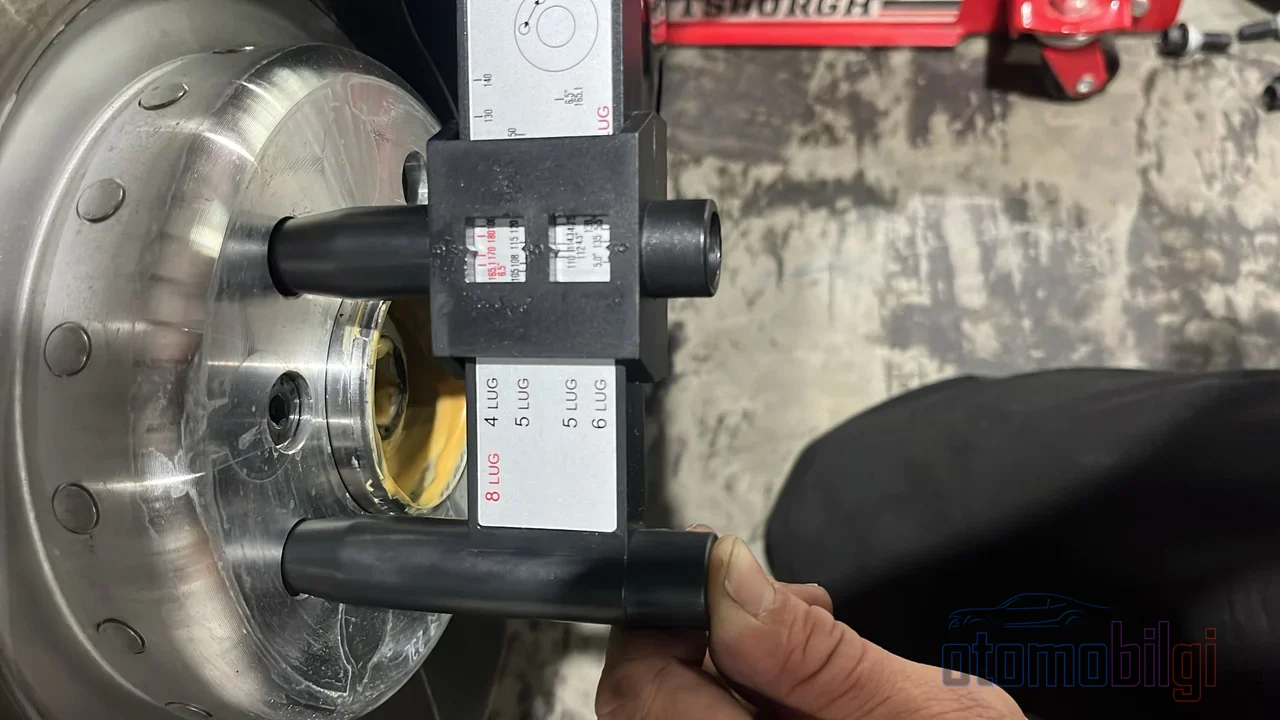
If you have a ruler or caliper at hand, this job is easier than you think. The method changes depending on whether the number of bolt holes is odd or even - and this is exactly the most common reason for measuring a five-hole wheel incorrectly.
Even-numbered bolt holes: direct measurement
On a wheel with four or six bolt holes, opposite holes are perfectly aligned. When you measure from the center of one hole to the center of the hole directly across from it, the value you find is the bolt pattern itself. To reinforce the point: it can also be calculated from the distance between adjacent holes; on a four-lug wheel this distance is divided by 0.7071, on a five-lug wheel by 0.5878, and on a six-lug wheel by 0.5.
Five-lug wheel: indirect measurement
On a five-lug pattern, opposing holes do not align perfectly. In this case, you measure from the center of one hole to the outer edge of the hole opposite it, then round the result to the nearest standard size. If your measurement comes out to roughly 112 mm, the bolt pattern is 5x112; if roughly 114.3 mm, it is 5x114.3; and if roughly 120 mm, it is 5x120. The difference between these three values is only a few millimeters, so don't rely on eyeballing - decide by measuring.
Hub circle: the often-forgotten partner of the bolt pattern
The large opening in the center of the wheel, i.e. the center bore, sits on the protrusion at the vehicle's hub. This protrusion keeps the wheel centered while rotating and helps carry the vehicle's weight. If the hub circle diameter is smaller than that of the wheel, the wheel won't fit at all; if it is larger, the wheel hangs without being centered, and the result is vibration.
Aftermarket wheels are manufactured with a wide hub circle to fit different vehicles. In this case, the solution is to use a centering ring, i.e. a hub centric ring; for example, a ring marked 73-67.1 is meant to seat a wheel with a 73 mm hub opening onto a vehicle hub of 67.1 mm. For proper fit, all three dimensions must match: the vehicle's bolt pattern, the hub's center diameter, and the layout of the wheel's lug holes. If any one of them is wrong, the wheel won't seat properly.
Let me also add this: the reason two wheels with matching bolt patterns don't fit every vehicle is usually this second and third measurement. Offset, hub diameter, and lug type can all differ; the bolt pattern alone is not enough.
Common bolt patterns and differences between brands
A table is better than a long explanation to make the values concrete. The examples below cover current and recent models:
| Bolt pattern (PCD) | Typical applications |
|---|---|
| 5x112 | Mercedes-Benz, Audi, VW; BMW G-series (2019+) |
| 5x120 | BMW E/F-series (pre-2019) |
| 5x114.3 | Toyota, Honda, most Ferrari models |
| 5x100 | Subaru, Toyota, some VWs |
| 5x10⁸ | Ford, Volvo, Jaguar |
| 5x110 | Alfa Romeo Giulia/Stelvio, Saab, Opel |
| 5x130 | Porsche 911, Boxster, Cayman |
| 4x100 | Old Honda Civic, Toyota Corolla (1987-2002), Golf (1985-1998) |
The lesson from the table: even different generations of the same manufacturer can switch to different bolt patterns. While BMW used 5x120 on the classic E and F series, it switched to 5x112 on the G series after 2019. McLaren's 650S and 720S are 5x112 with a narrow hub; the Artura, meanwhile, is also 5x112 but comes with a wider hub circle. While Aston Martin used 5x114.3 on classic models, the new generation has moved to 5x128. So if you're thinking of fitting an old wheel you have onto your new vehicle, trust the measurements, not the manufacturer's word.
Wrong bolt pattern and fake lug adapters: a real safety risk
If I've described this so far as a matter of technical fit, the other side of the coin is safety. A wheel with the wrong bolt spacing will not fit properly; the result is vibration, lug bolts that loosen over time, and a serious risk of accident. Even a slightly imperfect circular contact can have fatal consequences - that is not an exaggeration, it is a mechanical fact.
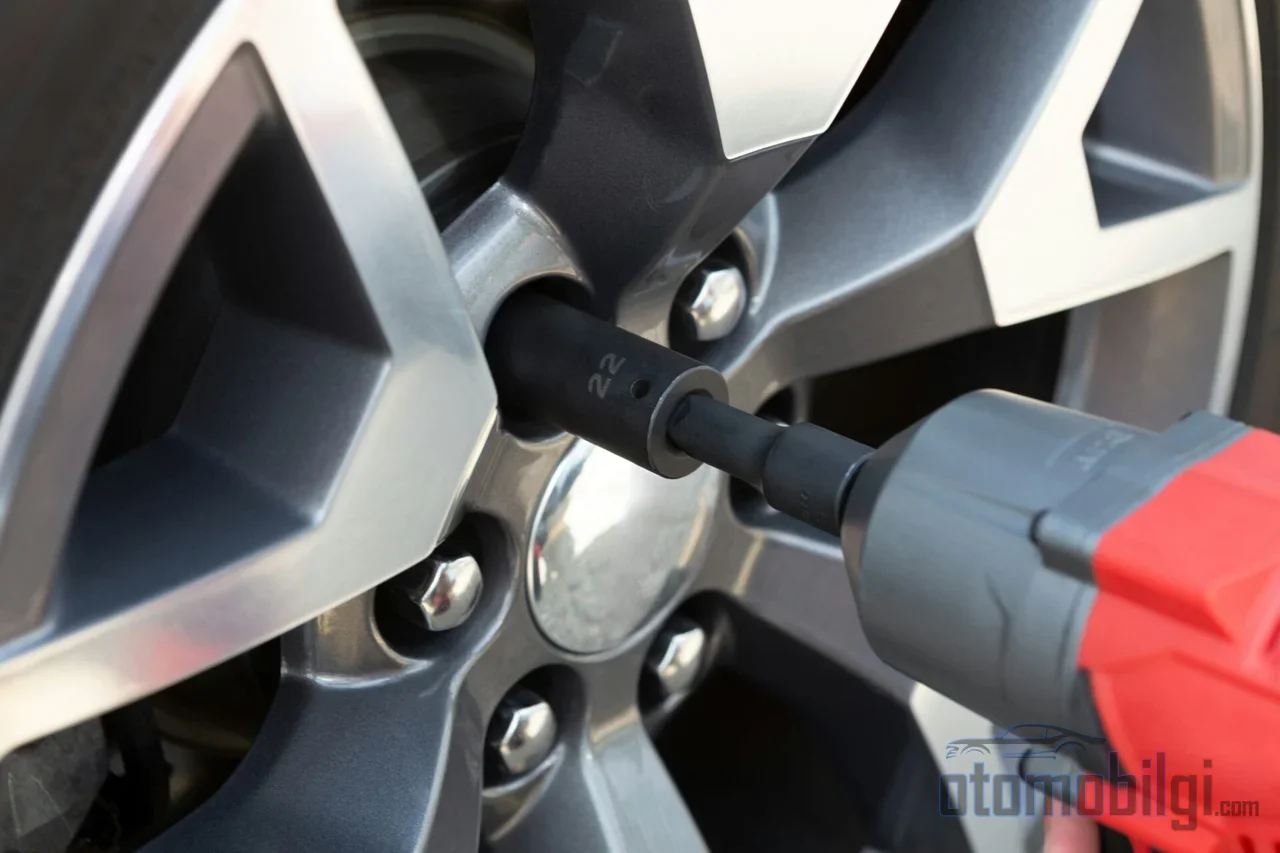
Bolt length is at least as critical as bolt spacing. A bolt that is too short leaves insufficient thread engagement; the wheel could come off on the road. A bolt that is too long, on the other hand, bottoms out or touches and damages the brake and handbrake mechanism behind it. When spacers are fitted, the original bolts are often not long enough; using bolts of the correct length and good quality is a necessity.
Adapters and spacers: a controversial territory
Changing the bolt spacing is technically possible: adapters are mounted to the hub with the original bolt pattern and offer a different bolt pattern on the outer face. Parts that keep the same bolt pattern and merely push the wheel outward are also called spacers. Opinions on the safety of these parts are divided. Critics say that adapters put extra load on the hub and bearings, and that thin slip-on spacers reduce thread engagement. Advocates argue that a correctly fitted, quality adapter is as safe as a wheel without spacers, and that its fatigue life is very long. The point both sides agree on is this: cheap material, faulty installation, and careless torque application make these parts risky. For spacers exceeding 15 mm, a one-piece bolt-on adapter is preferred over the thin slip-on type.
So what determines wheel selection: the short answer
The summary of the summary is this: when choosing wheels, bolt spacing comes before the steel-vs-alloy choice; the number of bolts and circle diameter must match your vehicle exactly, the hub circle must provide centering, and the bolts must be of the correct length. A wheel whose bolt spacing does not match cannot be fitted; and if the bolt spacing matches but the centering and bolt measurements are wrong, the fitted wheel endangers your safety. Do not buy any wheel without verifying these three measurements; the image you see in the catalog does not catch up with the millimeters.
Thirty years ago, the question asked when buying wheels was what brand it was; today, the question that should be asked is how many millimeters. Once you accept this change, your job becomes much easier both in the wheel aisle and on the road.
Sources
- Meaning of PCD: What Pitch Circle Diameter Means and How to Measure It
- Bolt circle
- What is a Wheel PCD and How to Measure
- Wheel PCD: What It Is, What It Means and Why It Matters
- What Are Hub Centric Rings
- Can Wheel Bolts Be Too Long?
- Are Wheel Adapters Safe
- What Wheels from Other Vehicles Will Fit your Car