How Much Does Low Tire Pressure Increase Fuel Consumption?
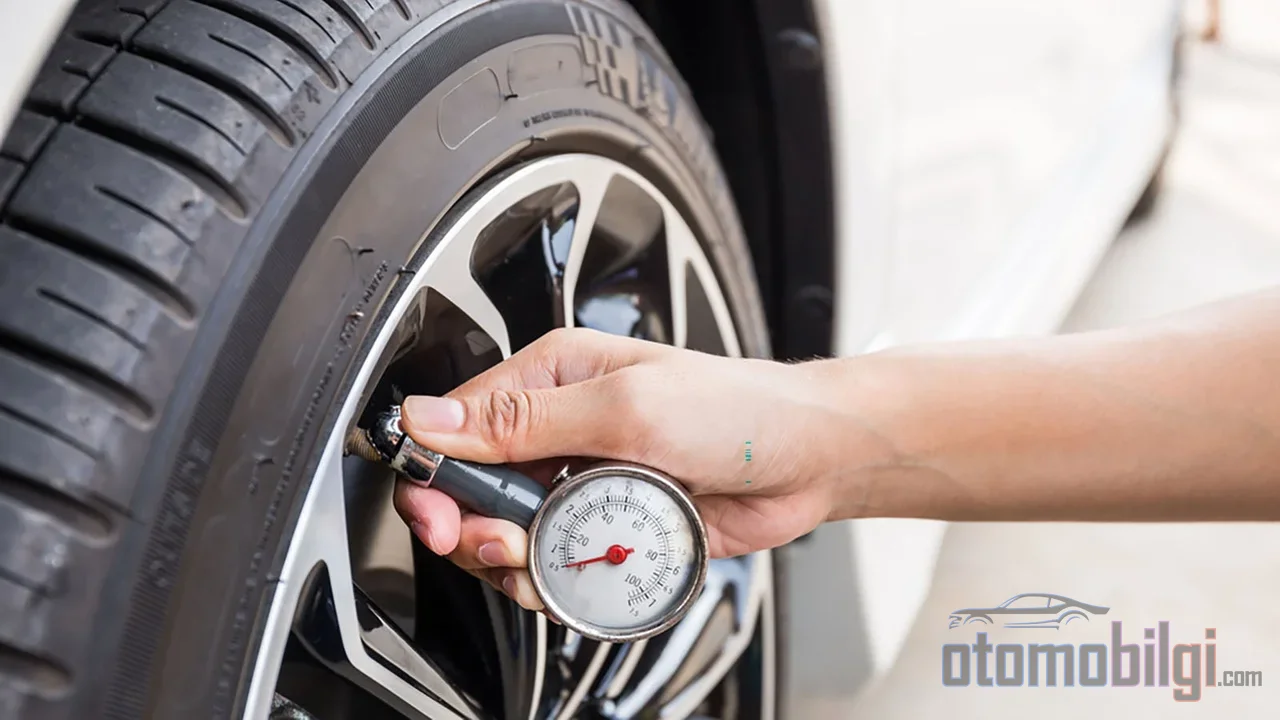
Tire pressure is the most frequently skipped item in service maintenance; yet a small drop on the gauge directly affects your wallet and your safety. As someone who has been around this business for over thirty years, let me tell you: drivers know by heart what the correct pressure should be, but they can rarely even guess what they lose when pressure drops. The numbers are clearer than you might think.
Low pressure does not only increase fuel consumption; it distorts the tire's wear pattern, accelerates heating, increases the risk of a blowout, and lengthens braking distance. On this page we will approach the subject not with guesses, but with measured values.
Why Does Rolling Resistance Increase?
There are five fundamental forces that must be overcome for a vehicle to move forward: gravity, aerodynamic drag, inertia, mechanical friction, and the tires' rolling resistance. The mechanism at work when pressure drops is this: the tire flexes at every point where it contacts the road, and within this flexing, part of the energy is converted into heat and lost. This loss is called hysteresis and it alone accounts for 85-90% of rolling resistance.
As pressure decreases, the tire flexes more, more energy turns into heat, and the engine burns more fuel to cover the same distance. The measured values are striking: on a tire with a 22.5-inch rim, a 20% pressure deficiency increases rolling resistance by roughly 6%. Viewed in bar terms, a 0.3 bar pressure deficiency leads to a notable increase, while a 1 bar deficiency raises rolling resistance by as much as 30%.
Key Highlights
- On four tires, every 1 psi (approximately 0.07 bar) drop reduces fuel efficiency by ~0.2%.
- A 1 bar pressure deficiency means an increase of up to 30% in rolling resistance.
- An underinflated tire wears unevenly from the shoulder area and heats up more.
- Tires naturally lose about 2 psi per month of air; a monthly check is essential.
- Once pressure falls below 20 psi, driving carries the risk of permanent damage to the internal structure.
How Much Does Fuel Consumption Increase?
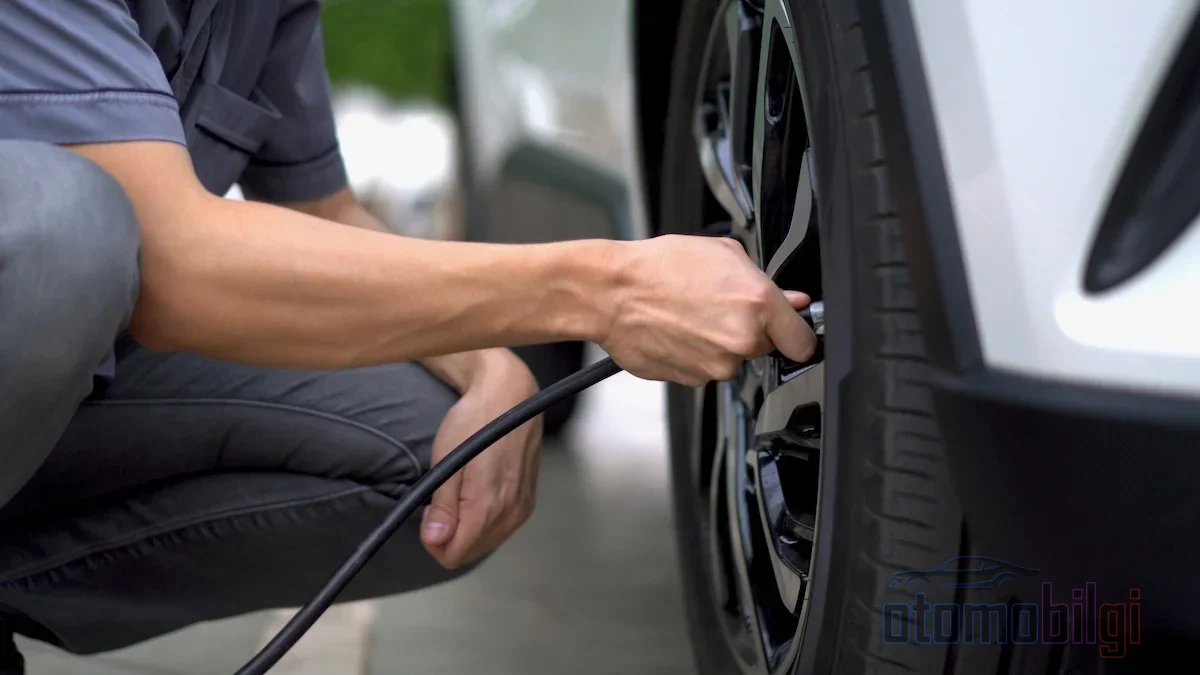
The impact of low pressure on fuel economy is the most extensively measured area. Data from the U.S. Department of Energy provides a clear threshold: every 1 psi drop in the average pressure of all four tires reduces fuel efficiency by about 0.2%. What this means is: driving with a 10 psi pressure deficiency results in fuel losses of up to 2%. According to general findings, low pressure can increase consumption by more than 3% as well; the increase observed in light commercial fleets falls within the 0.5-1.0% range.
To grasp the scale, one must look at the total effect: rolling resistance's contribution to fuel consumption can reach up to 20% in passenger cars and up to 30-40% in light commercial vehicles. Read in reverse, the same relationship promises improvement: a 10% reduction in rolling resistance yields a 1-2% improvement in fuel economy. The scale of fuel waste caused by underinflated tires has been estimated at approximately 5 million gallons per day (about 19 million liters) in the United States alone.
The Loss Is Not Linear
In practice, there is an important nuance: A loss of 0.2% per psi is a valid approximation as long as the pressure stays within a reasonable range. When the pressure drops below a certain level, the tire's sidewalls begin to flex and the loss accelerates dramatically. In other words, the difference between a vehicle driven with 2 psi missing and one driven with 10 psi missing is far too large to be calculated with simple multiplication.
The Wear Pattern Is Disrupted and Heating Begins
The most visible cost of insufficient pressure to the tire is the wear pattern. At the correct pressure, the load is distributed evenly across the tread surface. As pressure drops, the load shifts from the center of the tread to the shoulder areas; the result is that the outer edges (the shoulder region) wear faster than the center of the tread. With overinflation, the picture reverses and the center of the tread wears out. Both cause irregular wear; the difference lies in their consequences.
Underinflation is the more dangerous of the two because of the extra heat it produces. A tire rolling at low pressure heats up more than normal; this heat both accelerates the chemical aging of the tire's structure and, when it reaches critical levels, creates the risk of a blowout. The story of many of the tire fragments seen on roadsides in summer is rooted in this simple cause.
Grip and Braking Distance Are Affected
Some drivers believe that grip improves, based on the belief that low pressure creates a larger contact surface. This view is a popular belief carried over from track experience and is questioned in terms of overall performance. Low pressure disrupts the quality of the contact between the tire and the road; it reduces traction, weakens directional stability, and can extend stopping distance. Manufacturer manuals point in the same direction: low pressure extends braking distance.
Moreover, this illusion of a grip gain is paid for with fuel economy, tire life, and the risk of the tire coming off the rim during hard maneuvers (bead unseating). In daily use, the calculation is clear: the recommended pressure is the balance of grip, wear, and consumption, already made by the manufacturer.
Pressure Loss Is Natural - But It Has Thresholds
Even a tire that looks sound lets air through. Under normal conditions, tires lose approximately 2 psi per month of air; some observations mention a drop of 1-2 psi in two weeks. So pressure loss is not a sign of malfunction; it is the tire's physiology. The real issue is being aware of the loss and knowing when to intervene.
Practical thresholds can be summarized as follows:
- For most vehicles, the appropriate pressure range falls within the 32-35 psi (about 2.2-2.4 bar) band.
- On a cold tire, being 1-2 psi below the door label value is considered normal.
- Continuing to drive when the pressure has dropped below 20 psi can cause permanent damage to the tire's internal structure and damage to the rim.
- Tire pressure should be checked at least once a month, with cold tires and before setting off on a long journey.
The TPMS (tire pressure monitoring system) warnings in modern vehicles should be taken seriously; however, pressure loss has already begun before the system triggers at its threshold. Therefore, TPMS should be seen not as a safety net but as a last line of warning.
Is Overinflation or Underinflation Worse?
That is the endless debate in driver forums. The truth is that both cause irregular wear: overinflation eats the center of the tread, reduces traction and accelerates wear; underinflation eats the shoulders and lowers fuel efficiency. However, underinflation is evaluated in a heavier category in terms of safety, due to the heat it generates and the blowout risk it entails. The correct answer is neither: the value on the door label is the single correct reference, calculated according to the vehicle's load and conditions.
Short Answer: How Much Does Low Pressure Increase Fuel Consumption?
The one-sentence answer that can be given to anyone who asks is this: every 1 psi of pressure loss across four tires reduces fuel efficiency by about 0.2%; 1 bar of missing pressure increases rolling resistance by up to 30%, and typical underinflation scenarios raise consumption by around 2-3% - moreover, this loss is not linear; it accelerates as pressure erodes.
These figures may not seem frightening on their own. But fuel loss is only the visible face of underinflation; shoulder wear, overheating, blowout risk and extended braking distance are the silent items on the same bill. A five-minute check once a month, with cold tires, cancels this entire bill. What I have been saying for thirty years has not changed: tire pressure is the cheapest and most neglected item of maintenance.
Sources
- Why rolling resistance matters - Continental Tires
- What impact does tyre rolling resistance have on fuel efficiency - Michelin
- Gas-Saving Tips - Alternative Fuels Data Center, U.S. Department of Energy
- Does Low Tire Pressure Really Hurt Your Fuel Economy? - Firestone Complete Autocare
- Tire Pressure Inflation - NACFE
- How Low Is Too Low for Tire Pressure? - J.D. Power
- Can I Still Drive My Car If It Has Low Tire Pressure? - Modern Toyota of Boone
- How Does Tire Pressure Affect Performance? - Petlas
- Low Rolling Resistance And Fuel Economy - TireBuyer
- Tire Safety Ratings and Awareness - NHTSA TireWise