How Does Tire Hardness Affect Grip and Lifespan?
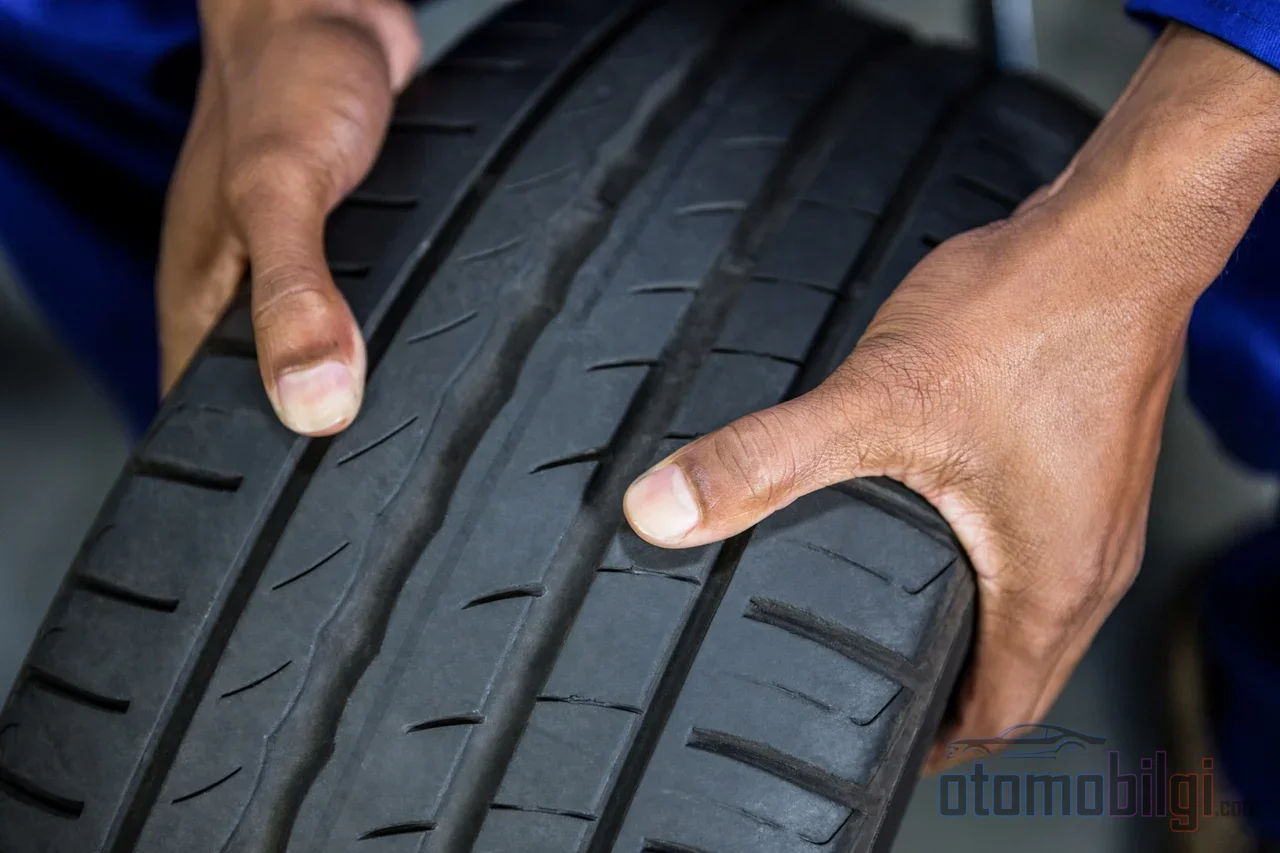
When you place two tires side by side, you cannot see the difference from the outside; the size is the same, the tread pattern is similar, the speed rating is the same. But one wears out at 20,000 kilometers, while the other lasts 80,000 kilometers. The difference between them is hidden in an invisible place: the rubber compound formulation, that is, the tire's hardness. A soft compound grips the road but gives something of itself away with every kilometer; a hard compound lives long but bargains away braking distance and grip. We have been talking about this balance for thirty years, yet most drivers still look only at size and price when choosing a tire. Yet the real decision that determines a tire's character is made in the chemistry laboratory on the production line.
On this page, we will explain how tire compound hardness affects road grip, braking distance, noise, and wear life, with compound formulation at the center. Because the essence of the matter is this: when you buy a tire, you are actually not buying rubber, but a balanced package of compromises.
What Is Tire Compound, and How Is Hardness Determined?
Tire compound is the specific rubber formula the manufacturer uses when producing that tire. It consists of a combination of natural rubber, synthetic materials, silica, carbon black, and oils in specific proportions. Each component affects traction, durability, and heat resistance in different ways; the formulation is the final mixture of these materials. In other words, the difference between a "hard tire" and a "soft tire" is not so much the rubber itself as an engineering choice about how much filler material and chemical additives are put into it.
Hard compounds contain more carbon black and silica. These materials reinforce the rubber structure, allowing the tire to maintain its shape under friction and pressure. The result is a noticeably longer wear life and lower rolling resistance. In a soft compound, the proportion of flexible rubber is high and performance-oriented additives dominate; the tire makes broader contact with the road, adapts to the small irregularities of the surface, and traction and steering precision improve. The price is noticeably faster wear under normal use.
Highlights
- A tire of the same brand with a 400 treadwear rating is designed to wear approximately twice as slowly as a model rated 200.
- A 30% increase in rolling resistance means 3-5% extra fuel consumption.
- Up to 15% of a vehicle's fuel can be spent just to overcome rolling resistance.
- In wet grip, tread pattern and silica chemistry are more decisive than hardness.
- A soft compound hardens over time through thermal cycles; grip drops even where tread depth remains intact.
The Physics of Grip: How Does Soft Rubber Stick to the Road?
Tire grip arises from two separate mechanisms. The first is mechanical interlocking: the tread blocks fit into the microscopic texture of the surface and physically lock in. The second is molecular adhesion: the rubber polymer chains form temporary bonds with the surface at the moment of contact. Soft compounds have the advantage in both mechanisms, because they deform more easily under load and maximize the contact surface.
But this conformability comes at a price, and the price is paid with every deformation: the rubber heats up as it compresses and expands, and with every contact cycle a microscopic layer of material tears away. Grip itself is also the engine of wear. This is why the same physical law explains both the tire that clings to the road in a corner and its short lifespan.
Thermal Cycling and the Temperature Window
A lesser-known characteristic of the soft compound is the way it ages. Rubber that heats up and cools down during hard driving permanently hardens slightly with every cycle; the reason is that the oils and resins in the compound oxidize and evaporate over time. New tires deliver their best grip in the first few thermal cycles; after that, final grip decreases even if the tread depth still looks good. In the racing world, everyone knows this: race tires generally reach peak grip within a temperature window of 82-110°C. Below the window, grip is weak; above it, it drops again due to overheating. The moment a tire fails to reach the right temperature, it turns into an expensive pile of rubber.
Treadwear Rating: Hardness's Signature on Paper
The most tangible indicator of compound hardness we can see as consumers is the treadwear, that is, the wear rating, within the UTQG system assigned to every DOT-approved tire in the USA. Ranging roughly between 60 and 800, this value is a comparative index; a manufacturer's tire rated 400 is designed to wear approximately twice as slowly as its model rated 200. As the number drops, grip increases; as it rises, lifespan extends. The softer the rubber, the better the grip; that is the golden rule of the business.
There are two important warnings. The first: treadwear is not a mileage promise; it cannot tell you how many miles you will get; it should be read as a comparative score obtained on a government test track under controlled conditions. The second: manufacturers test and report the values themselves, so they cannot be used as an absolute scale across different brands. But within the product range of the same brand, it is the most reliable indicator of compound softness and therefore of grip.
Typical Values by Class
| Typical Treadwear | Tire Class | Character |
|---|---|---|
| 500-800 | Family and touring tires | Hard, long-lasting compound; 50,000-80,000 mile lifespan target |
| 400-700 | All-season tires | Balance of lifespan and comfort |
| 300-500 | Performance all-season, light summer | 30,000-40,000 miles; balance leaning toward grip |
| 100-300 | Ultra-high-performance summer | Factory choice for most sports cars |
| Below 200 (40-100) | R-compound track tires | Maximum grip, very short lifespan |
The table should also be read the other way around: a high treadwear does not mean a "better tire". A high value usually means a harder compound, and a hard compound can harden and lose grip in the cold, and braking distance can lengthen on wet surfaces. The value is the tire's character description; not a quality certificate.
Wet Grip and Braking Distance: The Truth Buried Inside a Common Belief
Here we come to the most misunderstood part of the matter. The idea that a soft compound always grips better in the wet is widespread and misleading. Wet performance depends far less on compound hardness and far more on tread pattern, that is, the geometry of the channels and sipes that evacuate water, and on a rubber chemistry rich in silica. A well-engineered summer tire can outperform a partially worn slick tire on wet surfaces. For example, racing slicks have no water evacuation channels, so grip drops dramatically in the wet; no matter how sticky the rubber is.
On the braking side, the picture is clearer: soft compounds offer short braking distances and superior wet traction; the braking force coefficient is regarded as the primary performance indicator of a tire's wet slip resistance. In return, a hard compound carries the risk of longer stopping distances in the wet and in the cold. This is where the three fundamental trade-offs show themselves: grip versus wear life, road holding versus comfort, high-speed performance versus low rolling resistance. You gain one, you give up the other. Generally, as the speed rating rises, grip and stopping power increase while tread life decreases.
Silica and Carbon Black: The Two Rivals in the Formulation
At the center of modern compound engineering are two fillers. Carbon black provides structural strength and wear resistance; it used to be almost the only option as a reinforcing filler. Precipitated silica became widespread because it offers more balanced properties among rolling resistance, wet grip, and wear resistance. Silica compounds reinforced with a chemical coupling agent improved wet grip and softened the old hardness-based balance. So today, the answer to the question "soft or hard" has also become tied to the question "with which filler." Still, silica alone does not determine the finished tire's braking, wear, or rolling performance; too much silica can increase wet grip while making the tire wear out faster. The formula is a whole.
Rolling Resistance and Fuel: The Quiet Advantage of the Hard Compound
The most overlooked gain of the hard compound lies on the fuel side. A 30% increase in rolling resistance creates between 3-5% extra fuel consumption; conversely, a 3% reduction in resistance provides roughly 1% fuel savings. Up to 15% of a vehicle's fuel can be spent just to overcome rolling resistance. On the EU tire label, a class A tire in rolling resistance can bring roughly 0.5 liters of fuel savings per 100 kilometers compared to class E. Pressure makes the compound's job harder: incorrect tire pressure increases rolling resistance by roughly 6%.
These figures look small at first glance, but when accumulated over the life of the tire, a long-lasting tire with a hard compound can come out ahead both in terms of tread and wallet. A soft tire performs better initially; but as two tires wear down, this picture reverses over time.
What to Consider When Choosing Tires of the Same Size but Different Hardness?
When the size is right, the decision is not over; the compound's character will determine whether the tire suits your use or not. Three criteria are decisive:
- Driving habits: With predominantly long highway use, the extra grip of a soft compound is often never used; the loss in lifespan and fuel offers no return. In city stop-and-go and dynamic use, the value of grip increases.
- Climate: In regions with real winters, a soft compound should be avoided on daily-driven vehicles; in the cold, both grip and tread life suffer. In hot regions, a heat-resistant compound is the right choice, while in cold regions a flexible compound is the way to go.
- Performance expectations: The wrong compound choice results in early wear or reduced grip; for a genuine sports car driven on dry roads at maximum performance, the short lifespan of a summer tire can be worth it.
As for the R-compound class: most are DOT approved and legally usable on the road, but they are a poor choice for daily use. Until they warm up, their wet grip is mediocre; they wear quickly, are noisy, and harsh. A logic from track culture also works here: on smooth, low-abrasiveness tracks, a soft compound is the right choice, while on rough and abrasive surfaces, a medium or hard compound is smarter; most rental track operators already prioritize tire life over maximum grip, finding the balance in a medium-hard compound.
Short Answer: Which Hardness Is Right for Whom?
Let's summarize: a soft compound offers shorter braking distance and higher grip but wears quickly and has higher rolling resistance; a hard compound delivers long life and fuel efficiency but compromises grip. There is no magic formula to break this chain of trade-offs; silica technology improved the balance but did not eliminate it. For most drivers, a quality all-season tire, with its compounds in the moderate use band between 200-500, is the most reasonable answer to this balance. A maximum performance summer tire makes sense when you are buying grip you will actually use; buying it just to burn it up on the highway is an expensive hobby. Choose your tire's character knowingly, because under the same size you may be riding in two very different vehicles.
Sources
- Tire Compounds Explained: Street vs Track vs Race
- Tire Safety Ratings and Awareness - TireWise
- Understanding Tire Compound Differences Explained Simply
- Tyre Rolling Resistance and Fuel Efficiency - Michelin
- How OEM Requirements Influence Tire Compound and Construction - Maxxis Europe
- Soft vs. Hard Tire Compounds
- Tire Performance Trade-Offs
- Decoding Treadwear Rating
- Tire Speed Rating Chart and Tire Tread Life - BFGoodrich
- How to Choose the Right Compound for Racing Tires - Hankook Motorsports