The Difference Between A and E on the Tire Label: 18 Meters
Two tires of the same size, the same speed and load index sit side by side on the shelf; one costs half the price of the other. Visually they are indistinguishable - even the tread patterns look similar. Yet when you brake from 80 km/h on wet asphalt, the difference between them amounts, according to some test data, to nearly two car lengths. The distance between a budget tire and a premium tire is measured precisely in these meters; not by the price tag.
Having followed tire tests for more than thirty years, I can say: this segment difference is one of the least understood topics in the automotive world. Some drivers think the premium brand is just a marketing product, while others fit the cheapest tire and hit the road. Neither is wrong, yet both are wrong. Where, when and for whom the difference is real - that is the subject of this article.
The Difference Does Not Start on the Surface, It Starts in the Compound
A tire's character is largely determined by the composition of its rubber compound. Premium manufacturers use silica-rich compounds and engineered polymers; the tangible payoff is better wet grip, a structure that retains flexibility in the cold, and lower rolling resistance. Budget tires, on the other hand, rely mostly on carbon black filler. The result is a stiffer rubber, loss of flexibility in the cold, more heat build-up, faster wear and weak wet grip.
The testing infrastructure is every bit as decisive. Manufacturers such as Michelin, Bridgestone and Continental put their products through extensive programs ranging from Arizona heat to Minnesota winter mud, from wet braking tracks to aquaplaning pools. Budget tires also meet the legal DOT safety standards; however, the certification process is carried out with limited regional testing and small sample sizes. In other words, the two are equal before the law, but not in limit performance.
Wet Braking Distance: What Do the Concrete Numbers Say?
This is the measurable heart of the matter. According to comparative data sets published by independent tire tests, across 132 separate tests premium tires stopped from 80 km/h on wet surfaces in an average of 40.7 meters, while the average for budget tires came out at 48.5 meters. The 7.8-meter gap means roughly 1.7 car lengths. In a broader series, across 151 wet braking comparisons, the premium average stopped at about 41.6 meters; the two data sets are consistent with each other.
Key Takeaways
- In 132 independent tests, the premium wet braking average was 40.7 m versus 48.5 m for budget; the difference is 1.7 car lengths
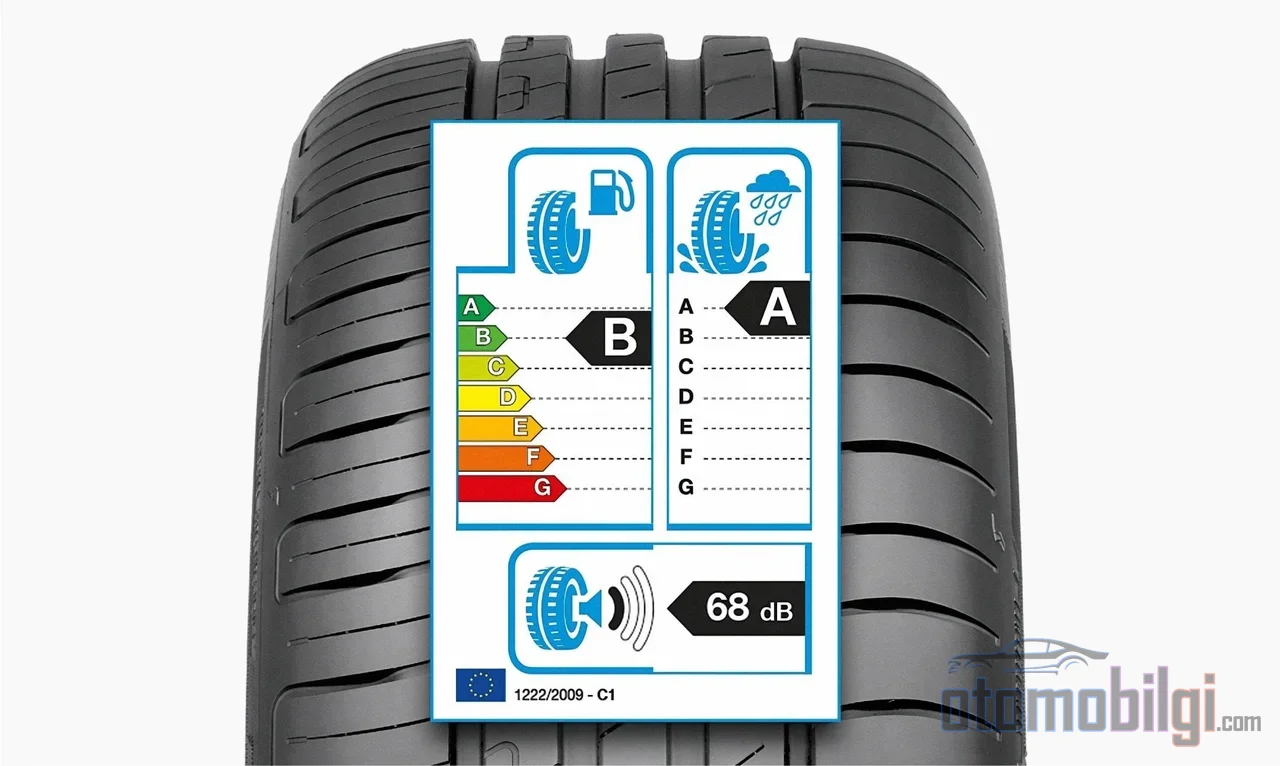
- On the EU label, the difference between wet grip class A and class E is 18 meters at 80 km/h
- Premium tread life is typically 40,000-60,000 miles, budget 20,000-30,000 miles
- In a cost-per-mile calculation, premium and budget come out nearly equal
- A quiet premium tire can be 4-6 dB quieter than a noisy budget tire
The European Union tire label is the official form of the same measurement. Every new tire carries three values: fuel efficiency (rolling resistance, A-E), wet grip (A-E) and external noise (decibels). The difference between an A and an E wet grip rating corresponds to an 18 meter stopping distance when braking from 80 km/h. Even the difference between class A and C is roughly 6-8 meters at 50 mph; again about a car length. In concrete model examples, there are also measurements showing that a premium all-season tire offers an 8-12 meter advantage over a budget product at the same speed; more conservative calculations put the same difference at around 4.5 meters.
One caveat is needed, though: the label's wet grip rating is the stopping distance measured on a controlled surface at a fixed water depth. It says nothing about dry braking, aquaplaning resistance, snow performance, tread life, or grip character. The label is a pointer, not the whole picture.
Not Always: A Counter Data Point
An honest evaluation should also show that the signs do not all point in one direction. In a comprehensive all-season tire test from 2019, new, high-priced tires did not perform significantly better on average than new, low-priced rivals in wet-road stopping distance and maximum performance. A single test certainly does not replace hundreds of comparisons, but it teaches this lesson: there is no law that says "premium is always superior." The difference is clear in cross-segment averages, but when choosing an individual product, checking the label and test results is a must.
Noise, Lifespan, and Cost Per Mile
Braking distance is the safety side; daily use also has a comfort and wallet side. A quiet premium tire can be 4-6 decibels quieter than a noisy budget tire at highway speed. Since decibels are a logarithmic scale, a 3 dB difference roughly doubles the perceived external noise volume; it is hard not to notice 4-6 dB on a long highway stretch.
The gap on the lifespan side is even wider. Premium compounds routinely last 40,000-60,000 miles while budget tires typically end at 20,000-30,000 miles, in some measurements below 20,000 miles. The warranty figures in the US market confirm the same picture: Michelin Defender T+H and Bridgestone Turanza QuietTrack are warranted for 80,000 miles and Goodyear Assurance MaxLife for 85,000 miles, while on the budget side Westlake RP18 is limited to 45,000 and Milestar MS932 to 50,000 miles.
| Criterion | Budget segment | Premium segment |
|---|---|---|
| Wet braking, 80 km/h (average) | 48.5 m | 40.7 m |
| Typical tread life | 20,000-30,000 miles | 40,000-60,000 miles |
| Highway noise difference | Reference | 4-6 dB quieter |
| EU label A-E braking difference | 18 m at 80 km/h | |
| Fuel effect (low rolling resistance) | - | 1-4% savings |
The real surprise is in the cost calculation. When lifespan and price are calculated together, the cost per mile comes out almost equal between the two segments: Using US data, a premium set costs about 760 dollars, corresponding to an 80,000-mile lifespan and about 0.0095 dollars per mile, while a budget set runs 320 dollars and 35,000 miles, coming to 0.0091 dollars per mile. A European sample gives a similar result; in the 205/55 R16 size, the per-mile costs of the three segments are stuck together in the 0.24-0.25 pence band. Moreover, budget means buying a second set, the cost of double mounting and balancing, and the weak performance period in between. So premium is expensive "per change," but not always in terms of total cost. The fact that a low rolling resistance premium tire delivers 1-4% fuel savings is a small but cumulative item in this balance.
One more point: a worn premium tire retains its performance longer as it nears the end of its life than a worn budget tire. On cheap compounds, wet grip drops faster as tread wears down.
When Is a Budget Tire Enough?
Segment classes are roughly drawn as follows: on the budget side, brands like Sailun, Landsail, Kumho, Nankang, Rovelo, Roadstone; in the mid segment, Falken, Hankook, Toyo, Uniroyal, Vredestein, Yokohama; in premium, Michelin, Continental, Bridgestone, Goodyear and Pirelli. Despite the price difference, it is the same size, the same speed and load index; the compound and construction make the difference.
Scenarios where a budget tire is justifiable are clear:
- A second vehicle driven less than 4,000 miles a year
- An old vehicle that has largely completed its life and will not receive further investment
- Use only on short local roads where high speeds never come into play
- A small-engined city car where extreme grip will never be tested
The critical rule here is this: a budget tire with a wet grip rating of B on the label is a genuinely usable product; an E-class wet grip rating, however, is cheap on paper but an expensive miscalculation on the road. A well-rated mid-segment tire is often the smartest choice for a low-mileage city car; a mid-segment tire with a strong wet grip rating is frequently the ideal balance for a family car.
Where Premium Makes the Difference
There is a flip side, too. In vehicles with high annual mileage, on long highway stretches, and in heavy or powerful vehicles, the safety difference of the premium segment becomes clear. Especially for high-torque vehicles and electric cars, the situation is sharper: high lateral loads wear cheap compounds down quickly, and the wet grip difference becomes safety-critical at high speeds. Going below the mid segment on these vehicles does no favors to either your wallet or your safety. Except for a low-mileage driver seeking a temporary cash-flow solution, mid-tier brands like Falken, Yokohama, Hankook and Kumho are a reasonable bridge between the two worlds.
Short Answer: Which Tire, for Whom?
For the driver with high annual mileage, who travels on highways and in heavy vehicles and does not shy away from high-speed use, the premium segment's wet braking advantage is a genuine safety difference; 7-8 meters - the difference between one car's length and the gap between you and the car behind you. For a second vehicle driven a few thousand miles a year, a well-rated budget or mid-segment tire does the job. Since the cost per mile is close between the two segments, the real question is not "which is cheaper," but "under what conditions will I push this tire to its limits." Start your answer with the wet grip letter on the tire label; When you see the letter E, get up from the table.
Sources
- Are Cheap Tyres Worth It? - Tyre Reviews
- Budget vs Premium Tyres UK: Is Michelin Worth It? (2026)
- Premium vs Budget Tires: Safety, Performance & Cost - Neo Tires
- Budget vs Premium Tyres: Are Premium Worth It? - Fast Tyre
- Tyres - European Commission
- AAA All-Season Tire Study Report (2019)
- Budget vs Mid-Range vs Premium Tyres - Street Tyres Redhill