How Many Kilometers Can You Drive on a Thin Spare Tire?
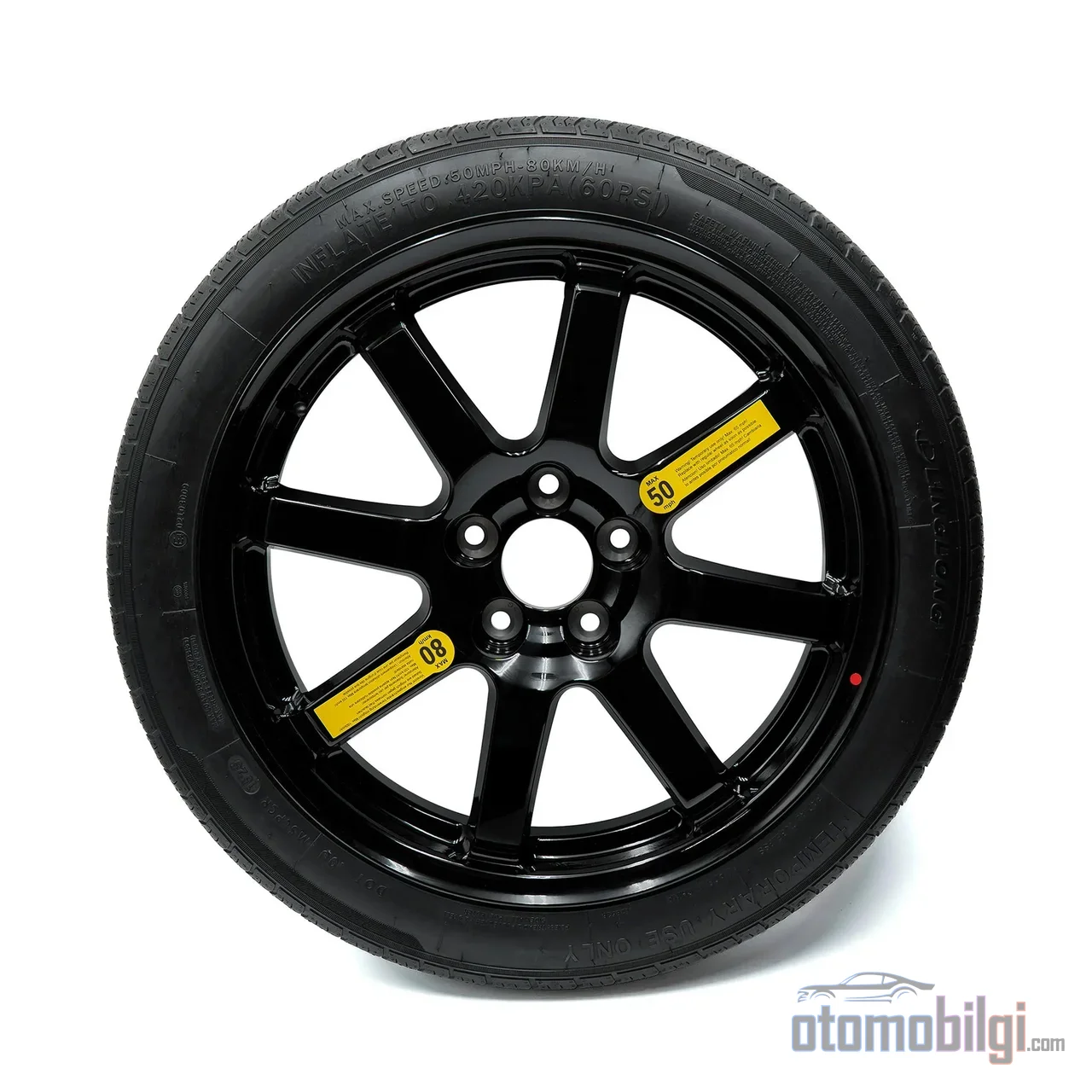
The last thing on your mind when you pop the hood and lay the cover on the ground is usually the spare tire. Yet on the day a tire goes flat, if nobody has ever told you the few rules about that narrow, bulging spare you pull out of the trunk, the rest of the journey can be quite stressful. I have been in this business for over thirty years, and the sentence I hear most often is still the same: why would you ever need to use it anyway. You do need it, but along with its rules.
How Many Kilometers Can You Drive on a Thin Spare Tire, and When Should You Stop
The compact spare tire, commonly known as the thin spare, is designed not to replace a full-size tire on the day it leaves the factory, but to get you to the nearest tire shop. The distance limit it carries is usually around 80 kilometers; some manufacturers tolerate up to 110 kilometers in unavoidable situations, but this tolerance should not be seen as a right. The limit is measured in kilometers, not days; that means putting on the spare and continuing your normal life for weeks means exceeding the limits, even if you use the car little.
Behind these limits there is not an arbitrary decision, but physics. The thin spare is noticeably narrower and lighter than a standard tire; its tread pattern is shallow, its contact patch is narrow, and its construction was never designed for the long haul under the load it carries on the road. Driven beyond the limit, the tread wears out quickly and the risk of tire blowout increases. An even lesser-known aspect is this: because the small tire on one corner of the vehicle rotates at a different speed than the other three, it places extra strain on the differential and drivetrain. This can have serious consequences especially in all-wheel-drive (AWD/4WD) vehicles; some models do not allow driving with a compact spare at all, which is why the owner's manual should be read above all else.
On the speed side the picture is clear: major tire manufacturers recommend a maximum speed of about 80 km/h for compact spares, and this value is written directly on the tire's sidewall. Run-flat tires have a similar range after a puncture; typically, after about 80 kilometers traveled, the tire must be replaced, meaning a run-flat is not a full-size equivalent.
Key Takeaways
- With a compact spare, the maximum speed is ≈80 km/h and the recommended range is about 80 km.
- The thin spare usually requires a pressure of 60 psi; a standard tire operates at about 35 psi.
- While the spare is fitted, ABS, ESP, or brake warning lights may come on; the speedometer may give inaccurate readings.
- Even if unused, the spare ages; tires should be replaced after 6-10 years.
The Pressure Misconception: Why Does the Spare Tire Need 60 Psi?
This is where the most critical misconception begins. Many drivers assume that the spare, like other tires, should be inflated to around 30-35 psi. For compact spares, this assumption is dangerous: these tires get their load capacity from a narrow cross-section and high internal pressure. That is why most thin spares are stored inflated at 60 psi; almost twice the pressure of a standard road tire. The value may vary from model to model, so the reference is always the maximum pressure label on the tire's sidewall or the vehicle's owner's manual.
The story of the full-size spare is different: if it carries the same specifications as the other tires, it is used at the same pressure. The practical advice here is the sentence the public has been repeating for years and is still the most overlooked item: check your tire pressures at least once a month, including the spare. A spare forgotten at 60 psi in the trunk for years may send you off with half the pressure at the moment of need; then both the speed limit and the range are reduced even further.
Why Do the Lights Come On When the Spare Is Mounted: ABS, ESP and the Instrument Panel
A significant portion of drivers who mount the thin spare and set off notice that the ABS, traction control or brake warning lights come on and panic. There is nothing to panic about; the logic is simple. The wheel speed sensors expect the four wheels to rotate in perfect alignment. A narrow spare rotates at a noticeably different speed than the others at the same body speed, and the system interprets this difference as a fault. Besides the brake and ABS warning lights coming on, in some vehicles acceleration above certain speeds may also be restricted.
A less visible but equally important result: the speedometer may give an incorrect reading. While your gauge shows 70, your actual speed may be different. That is why the golden rule of driving with a spare mounted is this: leave extra following distance, brake early, and if possible refuse to enter the highway. If you must enter, use the right lane, obey the spare's speed limit, and turn on your hazard lights when you are moving noticeably slower than the rest of traffic. These lights coming on does not make the spare itself faulty; once the spare is removed, most vehicles turn the lights off on their own.
Why Does the Steering Feel Change: Tread Depth and Wet Surface Risk
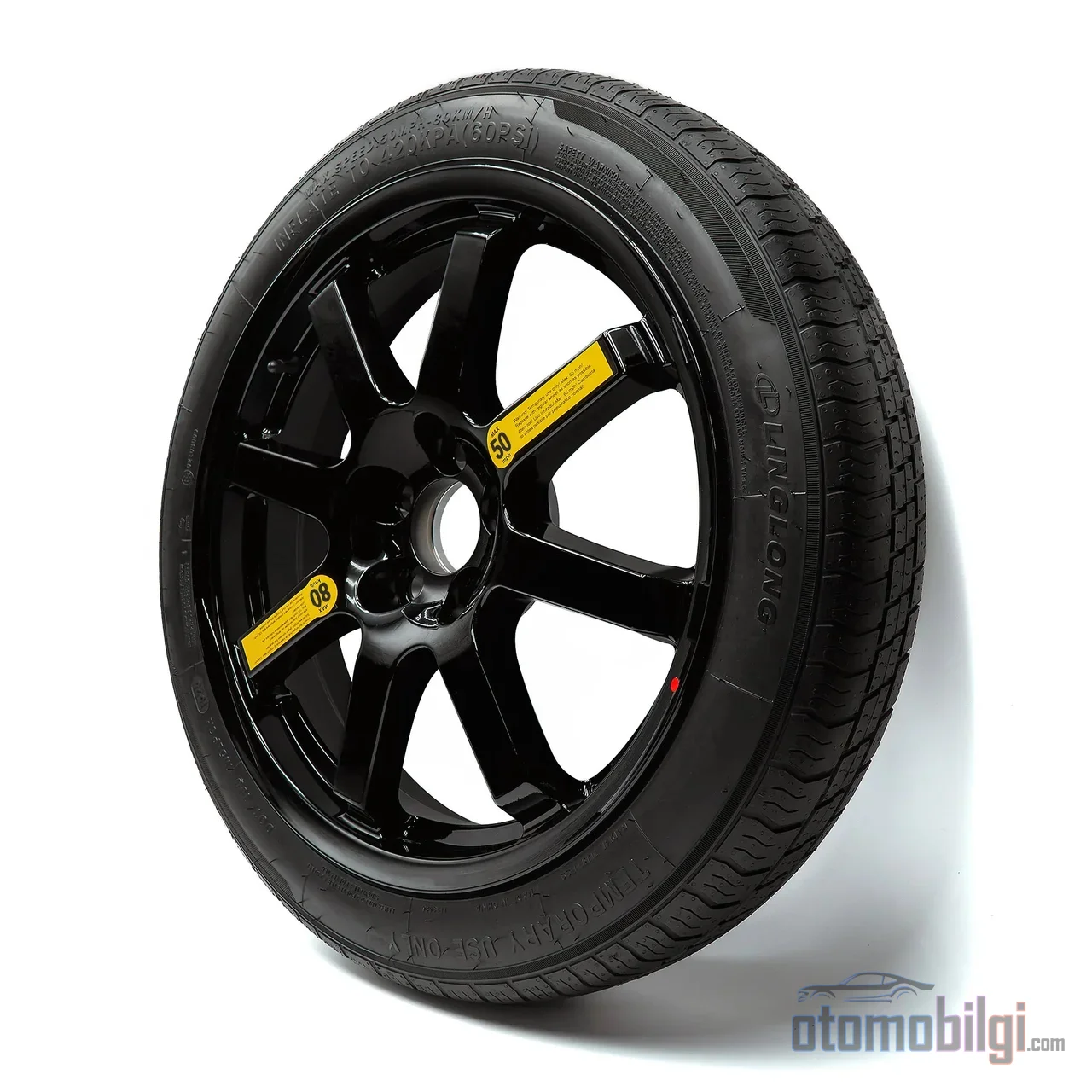
In the past, the spare in the trunk was no different from the other four tires; you never felt any difference when it took over. Today, the moment a compact spare is mounted, the vehicle's character changes, and this is no coincidence. A shallow tread pattern, a narrow contact patch and a light body significantly reduce grip and stability. The steering feel changes, and the braking distance increases. On wet surfaces, the matter is even more serious: the thin spare does not offer an advanced tread pattern, tends to gather water beneath it rather than channeling it away, and the risk of hydroplaning increases.
Then there is the age of the rest of the set. The combination of a new spare with three worn tires creates a diameter difference between the axles; this difference affects road holding and is particularly unfavorable for the central differential or clutch in AWD systems. That is where the rule comes from that tread depth differences on the same axle must be kept very limited. In short, take both the spare itself and every surprising difference in driving feel seriously; both are temporary, and being temporary is not an excuse for neglect.
Does an Unused Spare Deteriorate? The Reality of Aging
The second big misconception is that an unused tire will wait forever. Rubber compounds age even when they are not used; they harden over the years, and dry cracks form. The industry's common recommendation is to replace spare tires after 6-10 years even if they have never been used; unless stated otherwise, 10 years is a reasonable upper limit. A spare tire that has been waiting in the trunk for ten years can fail at the very moment you need it most, which is the worst possible time to have a tire chosen for you.
Finding out the age of a spare tire is easier than you think: the last four digits of the DOT code on the sidewall give the week and year of production. For example, code 2219 means the tire was produced in the 22nd week of 2019. week of 2019. Once a year, preferably twice, taking the spare out of the trunk to check its pressure and look for dry cracks on the sidewalls is a five-minute task. And do not forget after the punctured tire has been repaired and put back in place: return the spare to its spot right away; the next puncture should not have to wait for it.
Full-Size Spare or Repair Kit: A Comparison of Three Options
To lighten vehicles and reduce fuel consumption, manufacturers over the years first shrank the spare, then removed it entirely and replaced it with a repair kit. It is estimated that only about two-thirds of vehicles sold today come with a spare tire. The strengths and weaknesses of the three options separate clearly:
| Option | How far it takes you | Strength | Weakness |
|---|---|---|---|
| Full-size spare | Normal speed and range if it matches the other tires | Covers every type of damage, plus a lifespan advantage through five-wheel rotation | Adds weight, slightly reduces fuel efficiency |
| Compact spare | About 80 km, with a speed limit of about 80 km/h | Very light, easy to remove from the trunk | Intended only for getting to a repair shop; ABS/ESP are affected |
| Repair kit | Usually under 100 km | Almost no weight, no fuel cost | Seals only small punctures in the tread |
A pragmatic summary for the compact spare still holds: one way, to the wheel repair shop. The limits of the repair kit are even narrower; it is of no use against sidewall damage, large cuts, or wheel damage. If you drive long distances, park in tight spaces, or use a four-wheel-drive vehicle, the full-size spare is worth the weight it carries at first glance; it buys you the time to get to a repair shop.
Summary of Practical Rules: Guide to Driving on a Spare Tire
The question is frankly simple: how many kilometers can you drive on a compact spare? On its own, the answer in a single sentence is this: On a compact spare you should drive at most about 80 kilometers, at a speed not exceeding 80 kilometers per hour, and the tire should be repaired or replaced and put back in place within that time. The rules behind this answer, taken together, are as follows:
- Check the inflation pressure of the spare on the sidewall label; most compact spares require 60 psi.
- Aim to complete the journey as soon as possible; ideally the tire should be repaired within a day or two.
- Avoid the highway if possible; if it is unavoidable, use the right lane, keep your speed limited, and use your hazard lights if necessary.
- Be prepared for the ABS/ESP lights that come on with the spare tire installed and increase your braking distance.
- Do not continue driving on a flat tire; it damages the wheel, the suspension, and brake components.
- Check the pressure and sidewalls of the spare tire in the trunk at least once a year.
A driver who experienced a puncture 90 miles from home in the Rocky Mountains, left behind by its 50-mile limit and wondering what to do, is the most typical real-world scenario of this situation. The entire distance should not be covered on the spare tire; if the road is long, the nearest repair shop should be the plan itself. The spare tire is not a solution for you; it is a short bridge to a solution, and every bridge has a load capacity. When you know that capacity, the moment of a puncture stops turning into panic and becomes routine. The calmest drivers I have seen in thirty years have been the ones who remembered their spare tires; the rest was left to chance.
Sources
- How Far and How Fast Can You Drive on a Spare Tire?
- How Long Can I Drive on a Spare Tire?
- How Long Can You Drive on a Spare Tire?
- What is the proper tire pressure for my spare tire?
- Why Check Spare Tire Air Pressure?
- How Long Does a Spare Tire Last in the Trunk?
- Does a Spare Tire Expire?
- Tech Tip: Spare Tire May Set ABS Warning Light
- Do you need a full-size spare wheel?
- Do spare tires only last for 50 miles?