Why Should Tire Pressure Be Checked Once a Month?
Share This Page
Tire pressure should be checked once a month, because losses caused by air temperature and use quietly accumulate: a mere 1 PSI average shortfall reduces fuel economy by about 0.2% extends braking distance and shortens tire life. Since the TPMS warning light only kicks in when the shortage is serious, there is still no system that can replace regular manual checks.
Highlights
- A 1 PSI drop in average pressure reduces fuel economy by about 0.2% .
- Tire pressure loses 1–2 PSI when the air temperature drops by 10°F (about 5.5°C) .
- Proper pressure maintenance can extend tire life by about 5,000 miles .
- The reference value is written on the label on the vehicle door; the value on the tire sidewall is only the upper limit.
- Measurement should always be done on cold tires, before setting off.
After spending more than thirty years in this business, I can comfortably say this: tire pressure is the cheapest and most overlooked item in vehicle maintenance. Nobody delays an oil change, everyone feels anxious when the battery weakens; but the job of adding air, which can be done in seconds when needed, gets postponed for months. Yet those few PSI above your four tires have a steady share in many things, from your vehicle's fuel consumption to its braking distance. In this article I will cover the why, the measure, and the practical checking habit.
How much does tire pressure affect fuel consumption and tire life?
The numbers need no exaggeration. The figure given by the US Department of Energy is this: for every 1 PSI of shortfall in the average pressure across the four tires, fuel economy drops by about 0.2% . Let's make it concrete: tires averaging 10 PSI underinflated mean roughly 2% of your fuel going to waste. On its own it seems trivial; but since a pressure check is free and a two-minute job, it is more accurate to think of it as an efficiency loss with a price close to zero.
Other measurements point the same way. A pressure 8 PSI below the recommendation increases fuel consumption by 4% . Looked at from a wider perspective, within the 24–36 PSI range, every 1 PSI drop increases rolling resistance by 1.4% ; in other words, the softer the tire, the more effort the car expends to roll it along the road. Tires set to the correct pressure alone can improve efficiency by up to 3%.
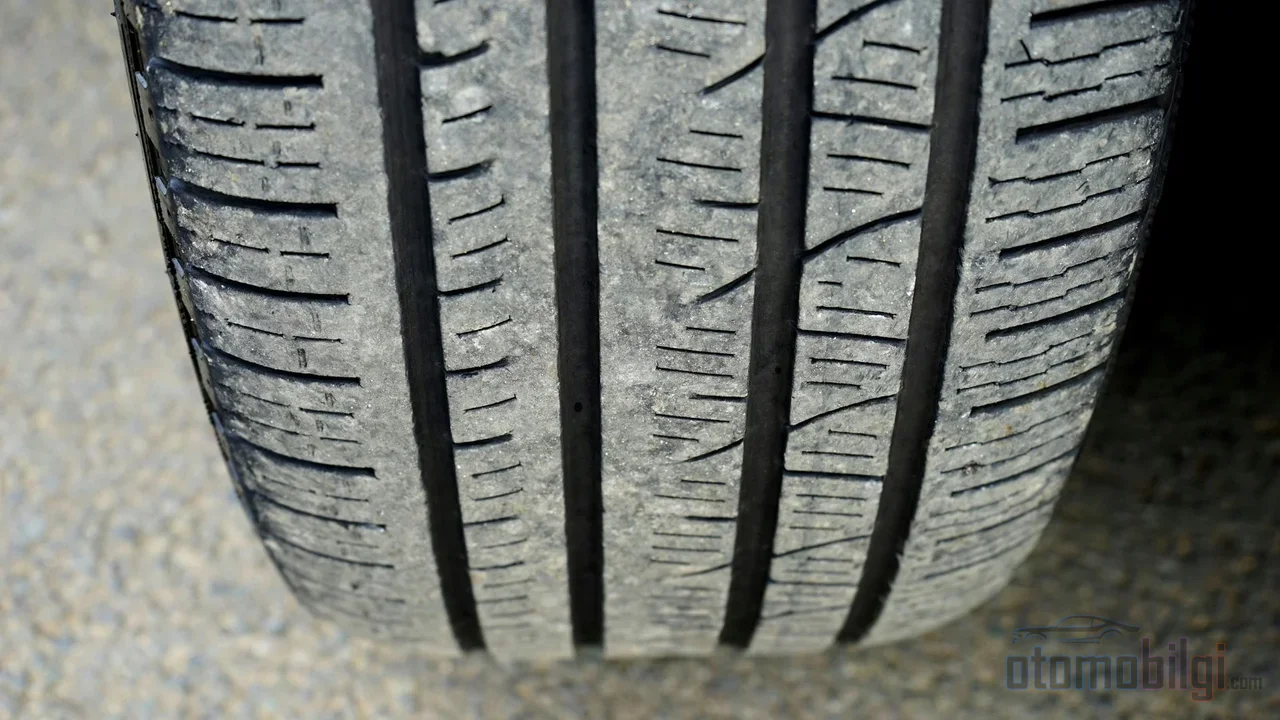
The tire life side is even more striking. Regular pressure maintenance can extend average tire life by about 5,000 miles . Wear patterns also tell the story of pressure on their own: an underinflated tire wears on the shoulders, that is, the edges; an overinflated tire wears in the middle of the tread. In the old days the tire man at the gas station would fix this; now everyone should have a small compressor or at least a pressure gauge in their trunk, because that is enough and there is nothing cheaper.
Does incorrect pressure extend braking distance?
Extends it, and does so in at least two separate ways. The foundation of grip is the tire's contact patch with the road; pressure directly changes the size and distribution of this patch. At low pressure, the tire's sidewalls flex more than they should, brake response is delayed, and stopping distance increases. At high pressure, the center of the tire bulges outward, the contact patch shrinks, and friction decreases; slipping becomes easier during sudden stops.
Then add ABS on top. The anti-lock braking system works by continuously measuring wheel speed and grip; incorrect pressure disrupts these measurements and braking efficiency drops in both extreme cases. Low pressure has another cost: increased rolling resistance raises the tire's internal temperature, which increases the risk of heat-related damage over long distances. The likelihood of hydroplaning on wet surfaces also rises. When we add that a worn tire extends braking distance even further on wet roads, the picture becomes clear: pressure is the first link in the safety chain, and the cheapest one.
Which value should you pump to: the door label or the tire sidewalls?
This is the most common mistake, and it causes tens of thousands of drivers to overinflate their tires every year. The PSI value written on the tire's sidewalls is the maximum pressure, not the recommended operating pressure for the vehicle. The actual driving pressure is written on the label that the manufacturer has affixed to the driver's door pillar or inside the fuel cap. The owner's manual gives the same value.
The difference is large enough that a misreading may not be noticed immediately: in one car, the door label recommends 32 PSI while the tire's sidewalls may state an upper limit of 44 PSI. This means the tire is overinflated by 12 PSI every day; wear in the center of the tread, a harsh ride, and reduced friction are the natural consequences. The rule is simple and has no exceptions: the reference is always the vehicle label, not the tire sidewalls. For most passenger cars, the recommended value falls in the 30-35 PSI range, but checking your own vehicle's own label is always the most accurate approach.
What does cold tire pressure mean, and why is it important?
"Cold pressure" is the pressure measured before the tire has been driven on, in an unwarmed state. The physics is simple: driving heats the tire; the warmed air expands and the pressure temporarily rises. A tire you measure at 32 PSI before leaving home in the morning will read visibly higher after an hour-long highway trip. This reading is misleading; if you add air at that moment, the tire will be underinflated once it cools down. Take the measurement when the tires have been stationary for at least a few hours or immediately after a short and gentle drive; the most practical time is in the morning, before leaving the garage.
During seasonal transitions, this matter becomes even more important. As a rule, every 10°F (about 5.5°C) drop in outside temperature lowers tire pressure by 1-2 PSI reduces it. In other words, even if no tire has leaked any air on the cool mornings of autumn, the pressure will have measurably dropped; it is no coincidence that the TPMS light comes on precisely on those mornings. In spring the opposite happens and the pressure comes back; but the autumn drop is real and air needs to be added. Waiting in winter thinking "it will fix itself by summer anyway" means accepting months of driving with insufficient pressure.
When is the TPMS warning light reliable?
Most of today's vehicles have a tire pressure monitoring system (TPMS) as standard; in the past there was no such light on the dashboard at all, now almost every vehicle has one and this is a good development. Still, it is essential to know this light's limits. The moment the light comes on, it means that at least one tire is seriously underinflated or overinflated; the system does not catch minor losses. This is the warning AAA also conveys to drivers: TPMS is not a substitute for regularly checking the displayed pressure, it only kicks in with major deviations.
What does the shape of the light tell you?
- Steady illumination: It usually indicates low pressure; the pressure should be checked in a short time.
- Flashing: It usually indicates a sensor, battery, or system fault; the system should be inspected even if the pressure is normal.
- A light that stays on despite correct pressure, a faulty reading, or no warning at all: are typical symptoms of a TPMS malfunction.
There is also a behavioral question: should I stop immediately when the light comes on? No; this light is not a command but a warning, and it does not require pulling over instantly. But you also should not fudge the difference between "in a short time" and "whenever you get around to it": measure every tire cold the same day, or within a few days at the latest, and make up the shortfall.
How does monthly checking become a habit?
The common advice of manufacturers and tire experts is clear: at least once a month check the pressure on cold tires; plus one extra check before long trips and major weather changes. Some find measuring every two weeks ideal; the pragmatism my decades have given me says this: if you say every two weeks but actually do it, it is better than saying once a month and actually doing it. In summer the frequency does not change; just make the measurement early in the morning, before the tires have taken on the day's heat.
In practice, the job consists of three steps:
- Pick a specific day of the month, for example the morning of the first weekend; an easy-to-remember ritual is the cure for most lapses.
- Measure all four tires and the spare cold, and compare with the value on the door label.
- Fill the shortfall; if overinflated, release air and return to the label value.
The return on this few-minute habit is clear: less fuel, longer tire life, measurably shorter braking distances, and instead of the surprise of a yellow light appearing on cold mornings, an indicator you can trust. This is the cheapest insurance I have seen in thirty years; what is more, nobody sells you the policy, you simply measure and inflate.
One final note: even on vehicles with TPMS, don't give up the habit of checking manually. The electronics' job is to warn you; keeping the pressure correct is still your job.
Sources
- Understanding the Impact of Tire Pressure on Your Vehicle's ...
- How Tire Pressure Affects Braking Distance
- TPMS Light On? What it Means and What You Need to Do
- TPMS Light On? Here's What It Means and What to Do Next.
- Don't Let Your Tire Pressure Monitoring System Leave You ...
- Should I Inflate My Tires in Cold Weather?
- Why Does Your Tire Pressure Drop in the Cold?
- Tire pressure in winter
- A Study on Vehicle Tire Inflation and Fuel Consumption
- Tire Pressure and Fuel Economy
- How tire maintenance influences fuel efficiency
- Do I Really Need To Check My Tire Pressure Every Month?
- How To Check Tire Pressure
- What Should My Tire Pressure Be?
- Finding the Right Tire Pressure
- Sidewall Max PSI vs Placard
- The Impact of Tire Wear on Driving Safety
- How Often Should I Check My Tire Pressure?