Signs Your Car Gives Before the Brake Pads Wear Out
Share This Page
The clearest sign that your brake pads are wearing down isn't a warning lamp on the dashboard or a digital screen at the garage; it's the vehicle's own behavior. Squeaking, a soft or vibrating pedal, a noticeably longer braking distance, and the thin pad layer visible through the wheel are the four basic signals given when the pads are running out. Reading these signals early results in nothing more than a pad replacement; being late means a bill that can extend all the way to disc replacement.
Key Takeaways
- Average pad lifespan varies by usage 30,000-100,000 km city stop-and-go traffic pushes this toward the lower end of the range.
- Friction layer 3-4 mm replacement is strongly recommended when it reaches; 2.5 mm is accepted as the service limit.
- A metallic grinding sound indicates that the friction material is gone and the steel backing is touching the disc; rotor damage is almost certain from that point on.
- Ignoring the warnings can increase the pad replacement cost by up to four times.
What Is the Average Lifespan of Brake Pads in Kilometers?
There is no single kilometer figure for pad replacement; there is a wide band between guide values and usage conditions. Manufacturer guidelines usually give an average lifespan of around 30,000-50,000 km while for drivers who mostly drive on highways and brake gently, this figure 100,000 km can even exceed. The reason the range is so wide is simple: it's not kilometers but the number of stops that determines pad life.
When two different drivers use the same vehicle, the difference is striking. Someone driving on the highway brakes rarely and gently, with long distances between braking; someone who stops at every intersection brakes dozens of times over the same distance. City stop-and-go traffic significantly shortens pad life; it is known that frequent braking and heavy traffic use in compact-class vehicles can pull the lifespan 30,000-80,000 km down to the band. A city driver should have their pads checked at least twice as often as a highway driver.
The practical approach is this: keep the figure in your mileage maintenance log, but don't rely blindly on the number. Replace the pads not when they run out, but when they approach the guide value; take the early warning sound as a signal, and base the decision on measurement.
When Should Brake Pad Thickness Be Replaced? Visual Inspection Method
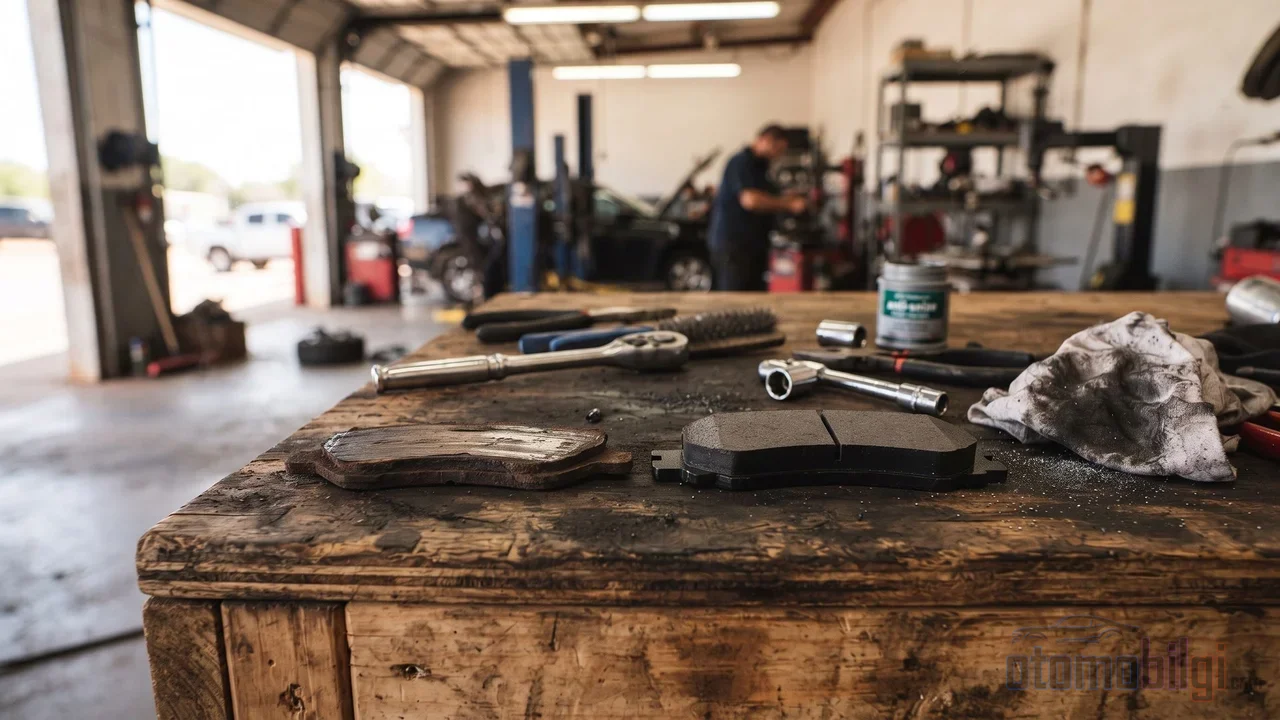
The pad's friction material is about the thickness of a pencil eraser when newly installed; 6 mm when it drops below (¼ inch), you enter the danger zone, 3-4 mm replacement is strongly recommended at, and about 2.5 mm is accepted as the service limit. In other words, you can decide by measuring without waiting to hear a squeak.
For this, there's no need to remove the wheel. Park on level ground, engage the parking brake, turn the front wheel fully left or right, and look with a flashlight through the wheel gap at the outer pad on the caliper. Comparing the thickness with a pencil eraser gives a sufficient rough measurement. This two-minute check is the most practical method for showing the condition of the pads.
Pay attention to a small detail: the pad you can see through the wheel is the outer pad. Inner pads generally wear faster; a pad that looks solid from the outside may be noticeably thinner on the inside. For a final check, it makes sense to take advantage of a tire rotation or professional service appointment.
Squealing: What Sound Does the Pad Warn You With?
Most modern pads have a built-in wear indicator: a small metal tab embedded in the friction material. When the pad wears thin and this tab touches the disc, a high-pitched whistle or squeal is heard with every braking. This sound is not a defect but a designed warning; it is there so you can catch it with your ears before the pad is finished.
However, not every squeal means wear. Short squeals after rain or after the car has been washed are normal and disappear once it dries. If you have just replaced the pads, a slight squeal may be heard for a few hundred kilometers; this is the bedding-in period for the surface. The distinction is this: squealing linked to rain or washing that passes after a few stops is normal; a whistle that repeats at every stop indicates the pad has fallen below the safe threshold and can last for weeks.
The transition point from squeal to grinding
The cost of postponement becomes clear here. If the squealing stage is skipped, the friction material is completely used up and the pad's steel backing plate makes direct contact with the disc. At this stage the character of the sound also changes: the high-pitched whistle gives way to a rough, metallic grinding noise. Stopping power drops suddenly, the system overheats, the calipers can be damaged and rotor damage is almost certain; from that point on, the conversation is no longer about pad replacement but disc replacement. You can continue driving when you hear a squeal; if grinding has started, you should slow down, keep the trip short and get to a service center the same day.
Soft Pedal, Vibration and Lengthening Braking Distance
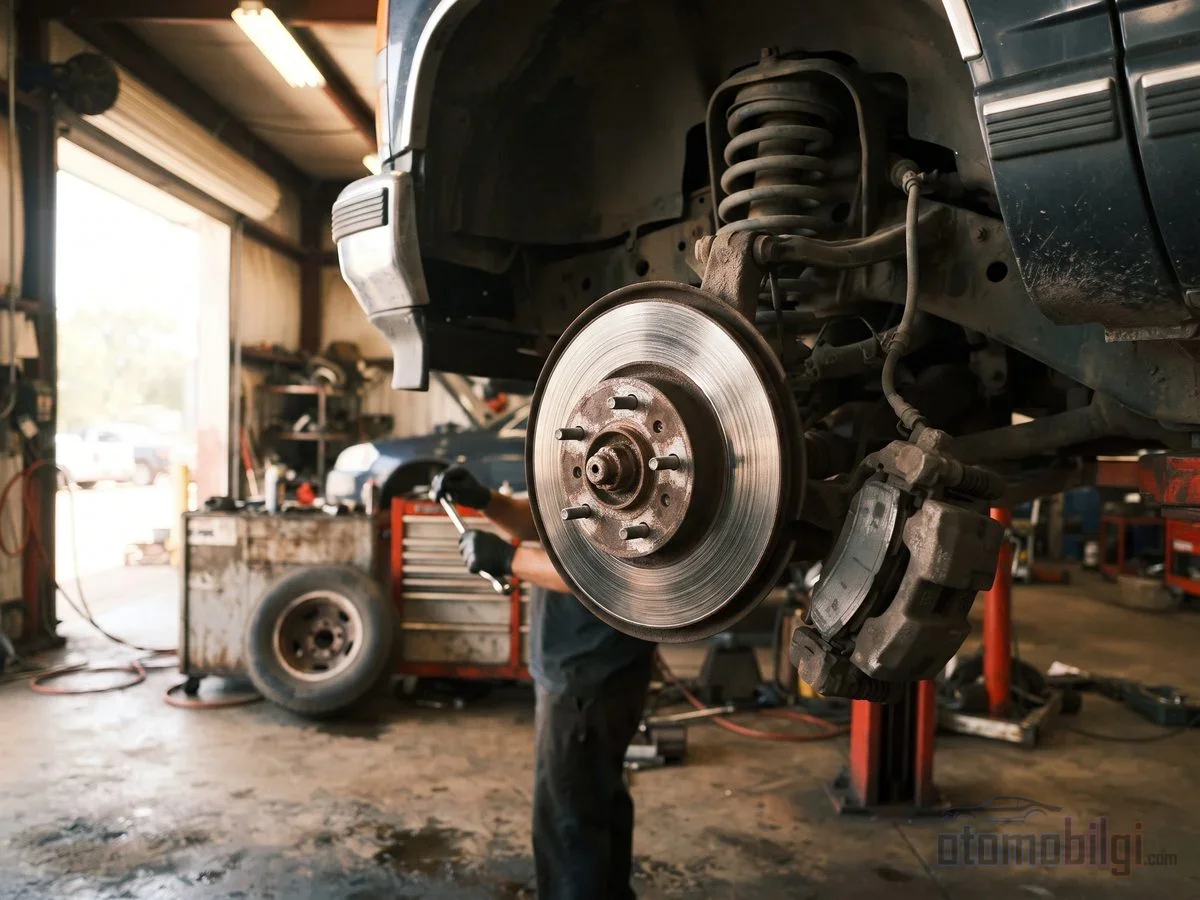
Your foot is a better diagnostic device than your hand. The three distinct sensations the pedal gives point to three distinct problems, and telling them apart is the difference between unnecessary spending and safe driving.
- Rhythmic vibration in the pedal: Uneven wear of the pads or high-low spots that form on the disc create feedback through the hydraulic system; it is felt in the pedal and, when braking from high speed, in the steering wheel. The most common cause is warped discs; it develops due to heat and aggressive braking habits.
- Soft, spongy pedal: The most frequent cause is the hydraulics - air in the brake line, moist or dirty fluid, overheated fluid, or a leak. Pad wear can also give the appearance of a soft pedal, but low brake fluid produces the same symptom; the fluid level and condition should be checked first.
- Lengthening braking distance: When the friction material thins, or the surface is polished and glazes over due to heat, grip on the disc decreases and more force on the pedal is needed for the same stop.
There is a simple test to measure braking distance: in an empty parking lot, at approximately 32 km/h Accelerate to speed and brake firmly, and note the distance the car takes to come to a rolling stop. When you measure this distance several times over a period and notice a significant increase, it is time for a professional inspection. Noting the speed, pedal pressure and conditions when the vibration starts will seriously speed up the technician's diagnosis.
It is also worth addressing a common confusion: in sudden stops, when ABS kicks in, the rapid, machine-gun-like pulsing felt in the pedal is normal and should not be confused with pedal vibration. One indicates the system is working, the other indicates a sign of wear.
What Is the Difference Between Vehicles With and Without Wear Sensors?
How the warning is delivered varies from vehicle to vehicle. In vehicles without sensors, that is, most older models and some economy trim levels, the only warning relies on the mechanical tab we described above: when the pad wears thin, the metal tab rubs against the disc and produces a squeal. This method is simple, cheap and robust; however, it may go unnoticed with the radio on or the windows closed.
In vehicles with electronic sensors, a thin wire ring carrying a low current replaces the tab. When the pad wears down, the wire touches the disc and breaks, grounding the circuit and illuminating a warning light on the dashboard. Newer two-stage (dual-stage) sensors use two resistance circuits at different depths; as the wire wears, the resistance value changes and the system provides more detailed information about the remaining pad life. Some premium vehicles can even display the remaining pad life as a percentage.
Let us note two practical points. First, in a vehicle with an electronic sensor, the warning light can mean more than one thing: a wear sensor, low brake fluid, an ABS fault or the handbrake being engaged. When the light comes on, the cause in question may be the pads, but do not jump to conclusions on its own. Second, when the pads are replaced, the worn sensor must also be renewed; the most frequently failing part of the sensor is the connector. Even in vehicles with sensors, nothing replaces a two-minute visual inspection from behind the wheel.
Should Pads and Discs Be Replaced Together or Separately?
On this question, there is no single common answer among practitioners; the honest approach is to present the picture as it is.
For new pads to seat properly on the disc (bedding-in), a flat and homogeneous disc surface is required; replacing them together improves braking performance and part life. For this reason, the general recommendation is to renew the pads and disc together. On the other hand, the pad and disc are technically two separate parts and wear at different rates; if the disc is in good condition, only the pads can be replaced. It is a recommendation, not a requirement.
There is a separate rule regarding the single-disc issue: regardless of their condition, discs must be replaced in pairs on the same axle. Replacing them one wheel at a time creates an uneven braking force during braking. Although there is a school of practice in the field that replaces a single disc and leaves the other, most manufacturers insist on replacement in pairs; at a controversial point, following the manufacturer's directive is the safest path.
There is also a separate criterion on the disc: each disc has a minimum thickness value (MIN TH) stamped by the manufacturer. If the disc's thickness drops below this value, it must be replaced to prevent extra damage to the brake system, even if it appears intact on its own.
On the cost side, the math is clear. A timely brake pad replacement is a job that comes to roughly 300 $ while ignoring the warnings can push the bill above 1,000 $ with rotor damage. That is exactly why someone who wakes up late once does not do so twice.
Final Word: Ear, Foot and Eye
Brake pads are one of the easiest parts to maintain, because the car itself gives the warning. A two-minute glance between the wheel spokes, a whistle that repeats with each stop, vibration in the pedal, or a lengthening stopping distance - none of these are things to learn at the service shop; they are signs the driver can catch on their own. A driver who adopts the rule of making an appointment within a few days for squealing and going to the service the same day for grinding will never face an expensive surprise in the brake system.
Sources
- Worn Out Brake Pads: 7 Warning Signs to Watch For
- Brake Warning Signs You Shouldn't Ignore
- Signs of Bad Brake Pads & What to do Next
- Squeaky brakes: causes and solutions
- Minimum brake rotor thickness
- How to Tell If You Need New Brake Rotors
- When Should You Replace Brake Rotors Along With Your Pads
- How Long Brake Pads Typically Last in City and Highway Driving
- How Long Do Brake Pads Last? Definitive Guide 2025