How to Determine Tire Age Using the DOT Code?
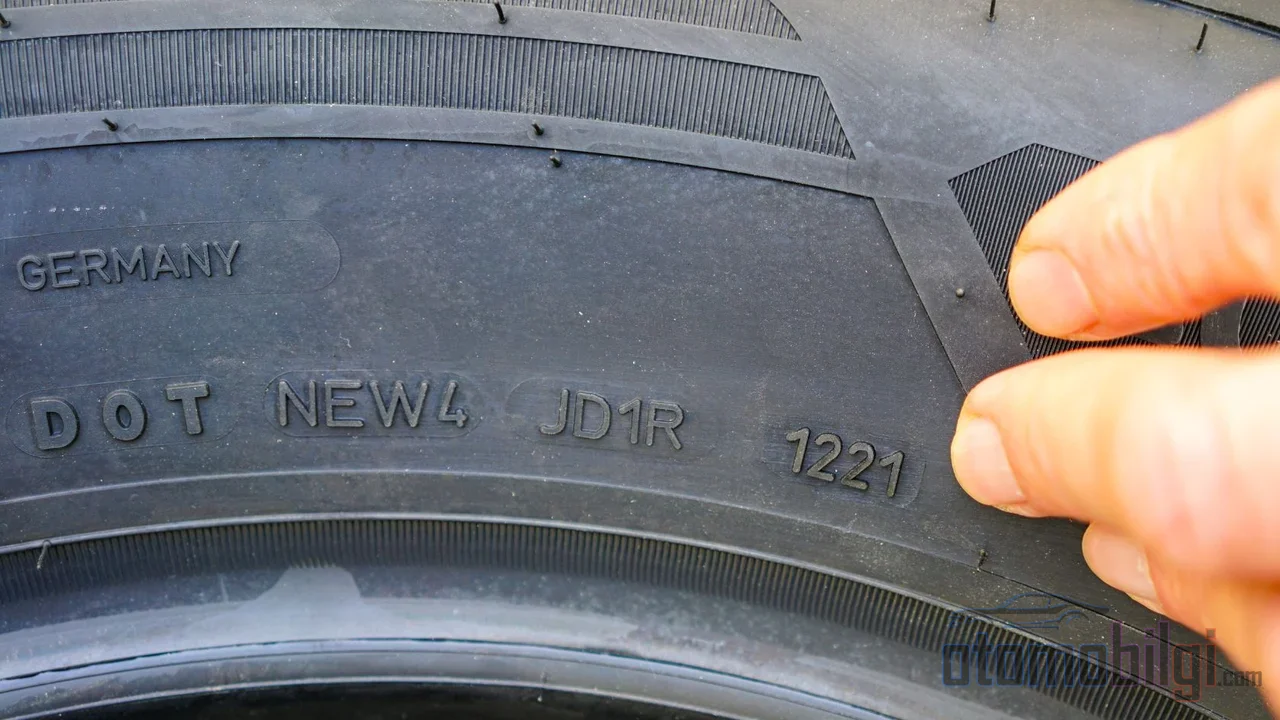
When taking over a used vehicle, the first thing you usually check is tread depth. If the tread looks like new, the tires are assumed to be trouble-free; yet rubber ages with the calendar, independent of mileage. On the sidewall, there is a small stamp that is easy to miss, and it clearly tells this calendar: the DOT code. A driver who knows how to read this code can tell you in thirty seconds how many weeks ago, and in which year, the tire was produced. In this article, I will explain how to decode that code and why it may matter more than tread depth.
What Is the DOT Code and Where Is It Found on the Sidewall?
The letters DOT are a certification mark showing that the tire complies with the tire safety standards of the U.S. Department of Transportation. Immediately after it comes the Tire Identification Number, that is, the serial number; it consists of 8 to 13 letters and digits in total. While the characters at the start of this number encode which factory produced the tire, the last four digits give the production week and year. In other words, the entire code is an identity card; its age, however, is hidden only in the last four digits.
In practice, there is a small difficulty: this stamp is printed on only one side of the tire, and on tires produced for the U.S. market it usually ends up on the inner side facing the rim after being mounted on the vehicle. If you cannot find the code, it is often enough to turn the steering wheel to one side and look at the inner sidewall of the front tire, or to open the trunk and examine the rear tire from the outside.
Key Takeaways
- The last four digits of the DOT code show the production week and year: the first two digits are the week, the last two digits are the year.
- Manufacturers recommend replacing the tire after 10 years regardless of tread condition.
- A three-digit DOT code indicates that the tire was produced before January 2000 and should not be used.
- A spare tire waiting in the trunk ages at the same rate; after 10 years it should be replaced.
How to Read the Production Date Step by Step?
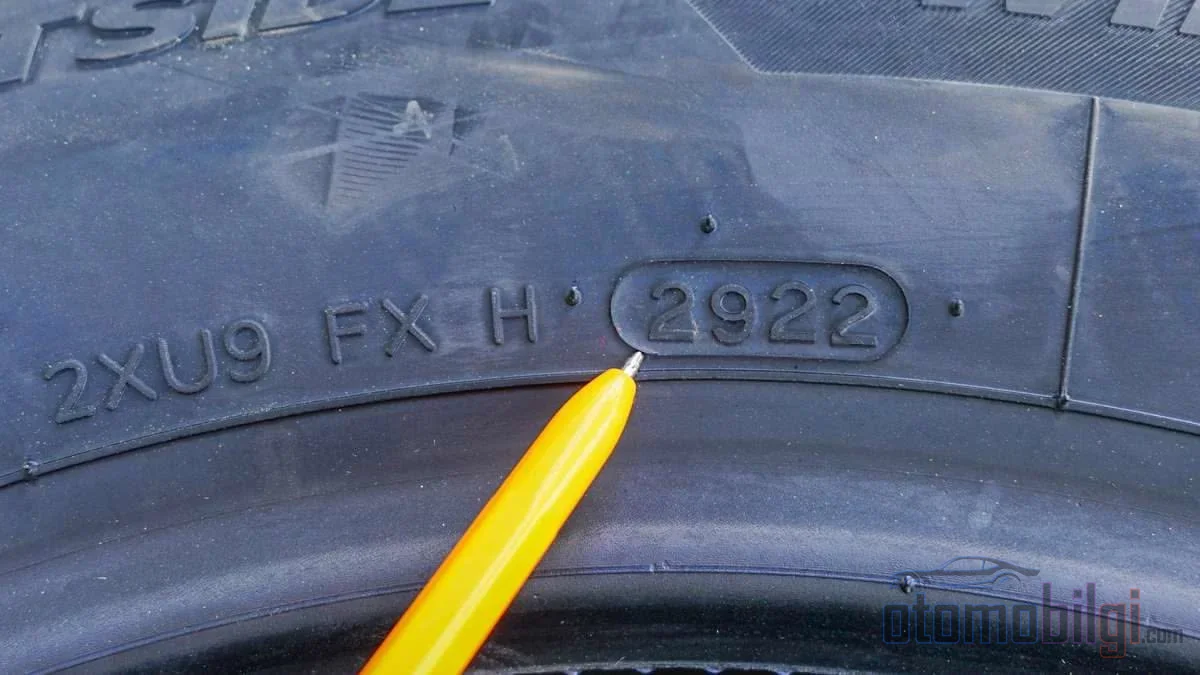
The process is actually just a few steps:
- Find the code block on the sidewall that starts with DOT.
- Focus on the last four digits of the code; the preceding letters and digits are production location and size information.
- Read the first two digits as the week: the valid range extends from 01 to 52, rarely up to 53.
- The last two digits give the last two digits of the year.
A few examples make it easier to grasp. code 2524 means the 25th week of 2024; while 4714 means the 47th week of 2014. if you see 3815, you're looking at the 38th week of 2015. Today, in 2026, a code like 4714 means twelve years have passed since production; I will discuss what that means below.
Two Common Special Cases
The first is the 53rd week: DOT week numbers are counted starting from 1 with the first full week of the year, so some tires produced at the end of the year may show the number 53. This is not an error. The second is more important: if the code ends with three digits, that tire was produced before January 2000. A tire of this age should never hit the road, no matter how many kilometers it has covered; it should be retired outright.
If Tread Depth Is Sufficient, Why Does Age Still Matter?
A tire's wear bars mark the minimum limit at 2/32 inch, or roughly 1.6 mm of tread depth, and most drivers equate the tire's life with this limit. Yet the real problem in an aging tire is the chemical change of the rubber. Over time, oxidation, heat, and ultraviolet rays cause the rubber to harden, lose its flexibility, and develop surface cracks. Hardened rubber visibly reduces grip on wet or icy surfaces; during hard braking, the difference shows up as measurable meters.
A large-scale safety test conducted in 2018 revealed that worn tires significantly extended the average stopping distance on wet roads at highway speeds; tread worn down to 4/32 inch could produce a stopping distance roughly 24 meters longer than a new tire. Although this data concerns tread depth, the same picture applies to an old tire: hardened rubber pays the price on the same surfaces even if the tread looks intact. The most current scientific review in the industry also confirms the same mechanism: rubber hardening through oxidation and thermal degradation reduces wet-road grip.
Moreover, cracks in an old tire are not merely a cosmetic problem. Over time, these cracks can lead to the tread separating from the carcass, that is, tread separation; this is a serious form of damage that can result in a sudden loss of control on the road. The danger of an old tire therefore lies not only in a blowout, but also in braking and handling performance that quietly deteriorates.
How Many Years of Life Do Manufacturers and Industry Bodies Assign?
There is no official expiration date on a tire; the decision is determined jointly by the calendar, tread condition, and overall appearance. But manufacturers' guidelines are surprisingly consistent. Michelin recommends that, five years after the production date, the tire be closely inspected regardless of tread depth, and that at ten years it be replaced under all circumstances. Toyo shares the same upper limit: tires in use for more than ten years must be replaced. Recommendations from sellers and service providers in the market are more cautious; some advise their customers to replace tires after six years of age.
| Situation | Recommendation |
|---|---|
| 3-digit DOT code (manufactured before 2000) | Scrap it immediately |
| Tire over 5 years old | Close inspection regardless of tread condition |
| Tire over 6 years old | Seriously consider replacement |
| Tire 10 years old | Replace it no matter the tread |
| Spare tire | The same upper limit: renew at 10 years |
There is no genuine disagreement between the six- and ten-year figures here; the difference is one of approach. Ten years is the firm upper limit set by manufacturers. Six years is a more defensive recommendation from cautious service practice, accounting for usage conditions and the inability to know the tire's history. A properly stored and correctly used tire can safely serve for up to ten years; a tire stored improperly, however, can age before that time. The calendar does not determine everything on its own, but it cannot be ignored.
The Spare Tire Ages Too
The spare tire lying in the trunk or under the body rarely crosses most drivers' minds; yet like every piece of rubber on a garage shelf, it too ages according to the calendar. Consumer testing organizations and manufacturers are clear on this matter: even if never used, a spare tire ages at the same rate as normal tires and should be replaced after 10 years unless stated otherwise. The same logic applies to the space-saver and full-size spare; a full-size spare older than six years should be carefully inspected every year, and most manufacturers recommend replacement even if it has never been used. Regularly checking the spare tire's air pressure is a second detail that is forgotten just as often as tire age.
For Whom Does the Calendar Matter, and for Whom Does Tread Depth?
A typical driver covers 19,000-24,000 kilometers a year, and at this pace a good tire's tread wears out in roughly three to five years. So for most drivers, the tread wears out before the calendar becomes an issue; the tire retires not by spending money, but by working. The problem lies with those who drive few kilometers: short-distance drivers, weekend vehicles, classics waiting in the garage, and second cars. An eight-year-old vehicle that has driven only 30,000 kilometers may have tires that look comfortable in terms of tread, but as rubber they have long passed retirement age. For such a vehicle, the DOT code on the sidewall, not tread depth, should top the checklist.
The same logic applies when buying used tires: a set purchased without checking its production date may have sat in a warehouse for years and be significantly aged at the moment of purchase. A tire stored in a cool, dry environment away from sunlight lasts longer; but no matter how good the storage conditions, the calendar keeps ticking.
Short Answer: How to Determine Tire Age Using the DOT Code?
Find the code on the sidewall that begins with the letters DOT; of the last four digits, the first two indicate the week of production and the last two the year of production. For example, the code 2524 means the tire was produced in the 25th week of 2024. indicating it was produced in the week. If you see this age exceeds five years, inspect the tire closely, and if it is over ten years old, replace it no matter how good the tread looks; evaluate the spare tire by the same standard. If you use your vehicle sparingly, it is not the mileage but the calendar that determines the tire's fate - and that calendar is written on the sidewall right in front of your eyes.
Sources
- How to Read Tire Markings and Sidewall Codes - Michelin
- DOT Tire Identification Number - Discount Tire
- How to Read Your Tire's DOT Code - Continental Tires
- How to Read a Tire Date - Mastercraft Tires
- Tire Aging: A State-of-the-Art Review - ScienceDirect (Stabile, 2025)
- Tread Lightly: Worn Tires Put Drivers at Risk - AAA Newsroom
- How Old – and Dangerous – Are Your Tires? – Edmunds
- Does a Spare Tire Expire? – Consumer Reports