Do Run-Flat Tires Keep You on the Road if They Blow Out, or Should They Be Replaced?
Share This Page
Yes, a run-flat tire keeps going after a puncture - but it's a conditional yes. Thanks to its reinforced sidewalls that carry the vehicle's weight without air pressure, the tire takes you to a safe spot even at zero pressure, with a maximum of 80 kilometers and 80 km/h speed limit. At the end of that distance, what awaits is not a repair but, in almost every case, a replacement.
Highlights
- Maximum 80 km of range after a puncture, maximum 80 km/h speed
- Run-flat tires are 20-35% more expensive than standard tires
- A run-flat driven at zero pressure is usually not repairable, it is replaced
- When the spare tire is eliminated, it saves about 18-23 kg of weight in the trunk
- Can only be used on vehicles with TPMS (tire pressure monitoring system)
How Does a Run-Flat Tire Carry On With No Air?
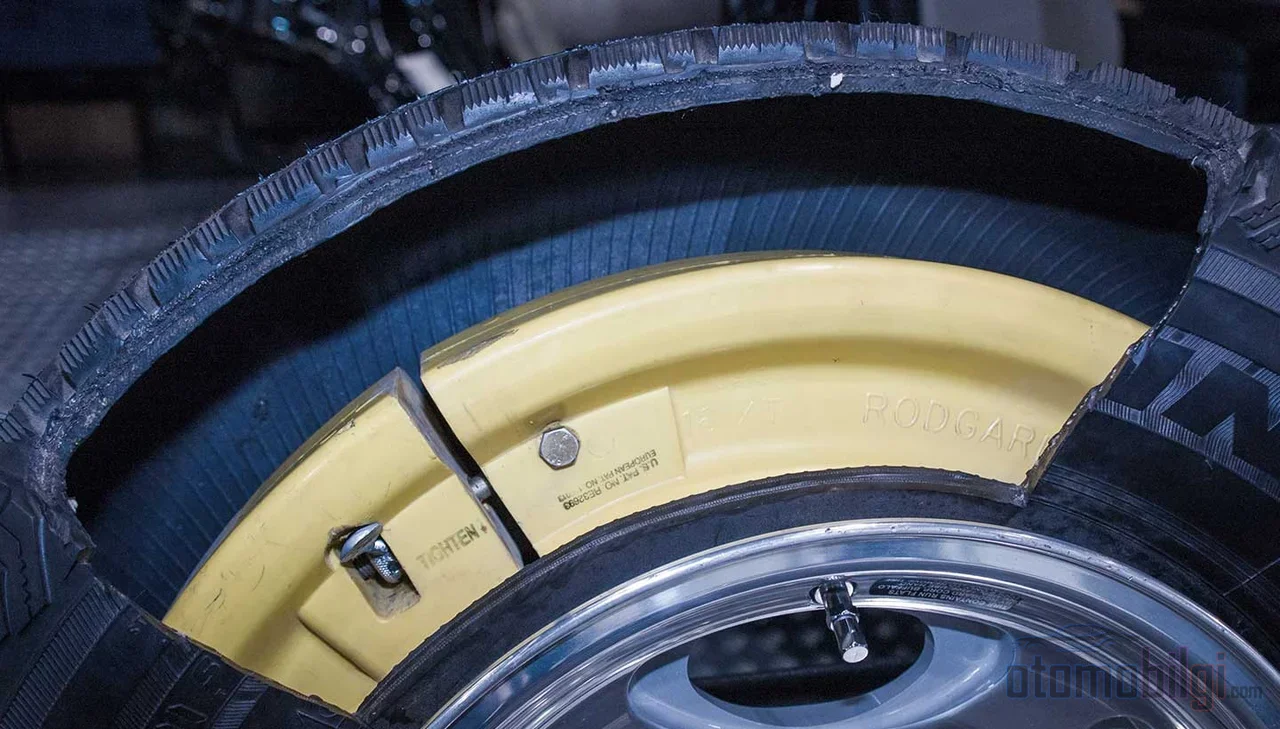
What keeps a tire standing is pressurized air; when the air escapes, a standard tire collapses under the vehicle's weight, its sidewalls buckle, and it falls apart on the wheel rim. This is where the run-flat comes in. Its heat-resistant sidewalls, noticeably thicker and stiffer than those of a standard tire, maintain the tire's shape when it has no air and keep carrying the vehicle. To give you a sense of scale, while the sidewall thickness of a standard tire is around 3 millimeters, in a self-supporting type run-flat this thickness can be close to 19 millimeters. Materials such as polyimide, fiberglass, and aramid are used in the construction.
A second detail escapes most people's attention: the design of the wheel bead seat area. The edge where the run-flat tire meets the wheel is engineered so that even when the tire has no air, it does not come off and unseat from the rim. The deflated tire staying on the wheel is the prerequisite for driving to continue.
Two systems, two different worlds
Run-flats on the market fall into two main groups. The common one is self-supporting, that is, the self-supporting structure; it is based on the thick sidewall logic I described above, and the tires you see on consumer vehicles are almost always this type. The second is the support ring system: a hard rubber or composite ring placed under the tread carries the vehicle's weight when there is no air. This system is heavier, more expensive, and requires special wheels; it is encountered mainly in armored vehicles and the luxury segment.
The history of the technology is also worth noting for the curious. Its origins go back to military vehicles of the 1930s; the first consumer run-flat was introduced in 1987 for the Porsche 959. Its widespread adoption came in the mid-2000s - TPMS becoming mandatory in the US in 2007 and especially BMW offering it as standard from the factory determined this momentum. was introduced. Its widespread adoption came in the mid-2000s - TPMS becoming mandatory in the US in 2007 and especially BMW offering it as standard from the factory determined this momentum.
How Far Can I Go on a Punctured Run-Flat?
The industry standard is clear: after a puncture, a maximum of 80 kilometers, at a maximum of 80 km/h. Manufacturers commonly state this limit, and behind it lies not a mysterious figure but physics. The sidewalls of an airless tire flex with every rotation; this flexing generates friction, friction turns into heat, and heat weakens the steel and fabric layers embedded within the rubber. The cause of the limit is heat; if you keep wearing the tire out without letting it cool, its internal structure is damaged irreversibly.
I would especially like to emphasize the practical takeaway here: Driving slower does not extend the safe distance. There is no rule saying that dropping below 80 km/s delays fatigue; as the limit approaches, the tire consumes its lifespan no matter what you do. The real distance can also shrink depending on vehicle load, outside temperature, and road surface. With a heavy load, in daytime heat, on broken asphalt, that 80 kilometers must not be planned too generously.
Why Is TPMS Essential for This Technology?
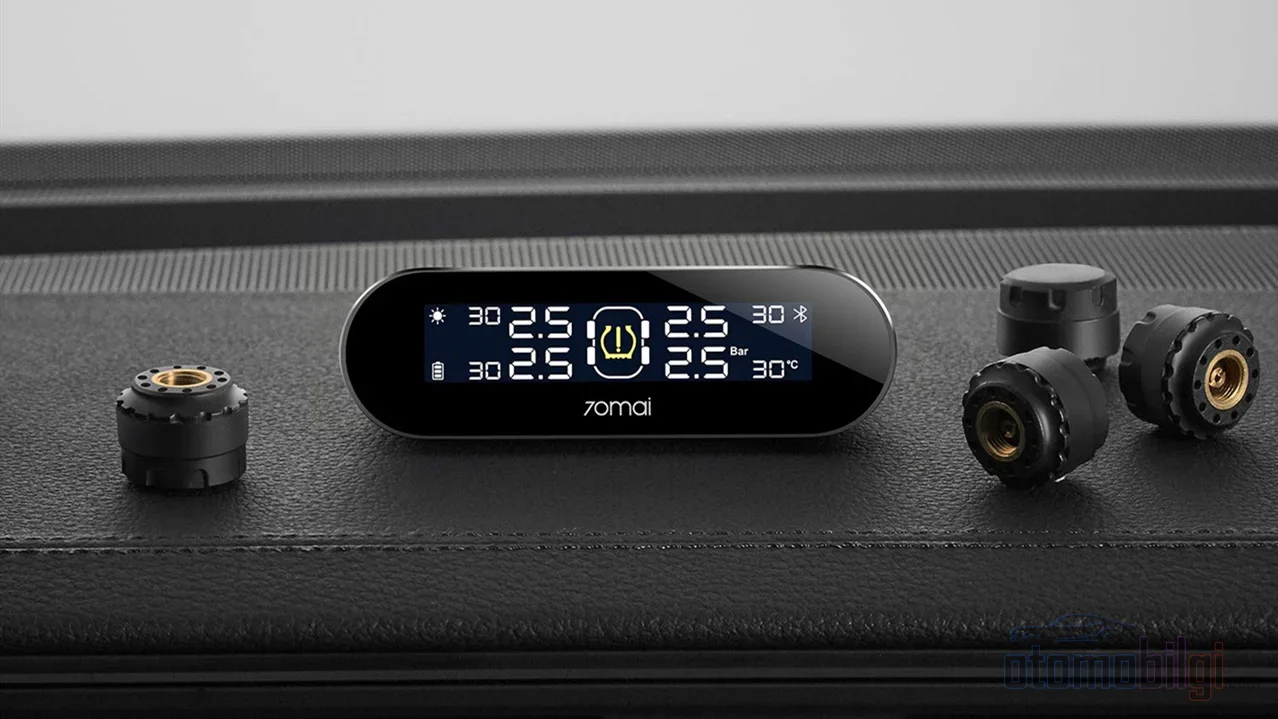
The most ironic aspect of a run-flat tire is this: it is nearly impossible to see that it has burst. When a standard tire loses pressure, it collapses and gives a warning; the run-flat's stiff sidewalls barely bulge at all under low pressure, and the car looks flawless from the outside. Because the driver cannot detect the pressure loss, they exceed the limits unknowingly; the result is irreversible tire damage and wheel damage.
That is why all run-flat manufacturers require these tires to be used only on vehicles equipped with TPMS. The system drops a warning to the dashboard the moment pressure falls, and the driver begins to consciously use the 80-kilometer allowance at hand. Since TPMS has been mandatory in new passenger cars in the USA since 2007, most current vehicles already meet this requirement; however, those considering fitting run-flats to an older vehicle must take this matter seriously.
Repair or Replace?
The short answer to the question is no in most cases. It is recommended to replace a run-flat tire that has been driven at zero pressure, because the internal damage caused by airless driving is invisible from the outside. Unless the tire is removed from the wheel and inspected inside and out by an expert, no one can verify what is going on inside a tire that appears perfectly intact.
Manufacturers' policies are not unanimous. Some brands clearly state in service bulletins that run-flat tires must never be repaired under any circumstances after a blowout. On the other side, manufacturers such as Michelin, Kumho, and Hankook indicate that repair may be allowed if certain inspection criteria are met. General tire repair rules also come into play: holes larger than 6 millimeters cannot be repaired, repair can only be done in the central area of the tread; shoulder and sidewall damage is outside the scope of repair. An externally plugged repair alone is insufficient; it must be applied together with an internal patch.
My settled opinion on this matter is this: the repair threshold for a run-flat is significantly higher than for a standard tire, and the decision must be made for safety, not to save money on the vehicle. Putting an airless-driven tire back on the road to save money is, in the long run, the most expensive way to economize.
Advantages and Disadvantages: A Balanced Comparison
The real promise of run-flat tires is safety. In the event of sudden air loss, the vehicle offers noticeably better stability and control than with a standard tire, and systems like ABS and DSC keep working. The hassle of changing a tire with a jack at the roadside, right in the middle of traffic, also becomes a thing of the past - the tire already contains enough reserve to carry you to a safe place. As a result, the spare tire, jack, and tools are removed from the vehicle; trunk space is gained, and approximately 18-23 kg of weight is saved. In my thirty years in this profession, I have never witnessed anyone admiring a spare tire rattling around in the trunk; though there is another side to it - not everyone can do without that tire.
| Aspect | Run-flat | Standard tire |
|---|---|---|
| Driving after a blowout | Up to 80 km / 80 km/h | Must stop immediately |
| Spare tire | Not required | Mandatory or repair kit |
| Price | 20-35% more expensive | More affordable |
| Ride comfort | Firmer | Softer |
| Wear | Earlier, typically lasting up to 50,000 km | Generally longer |
| Pressure monitoring | TPMS required | TPMS not required |
The disadvantages are not trivial either. The stiff sidewall transmits more road impacts into the cabin; someone accustomed to older comfort-oriented tires will notice the difference right away on the first drive. The price is generally 20-35% higher than standard tires. There are also question marks about lifespan: run-flat tires are said to wear out about 6,000 miles sooner than conventional tires, and under normal conditions their total lifespan can be summarized as 50,000-80,000 km and 3-5 years. Lower fuel economy, slightly vaguer steering response, and uneven wear are among the other drawbacks to take into account. There is also a practical problem: they are not available for every size and every vehicle, and some service shops do not stock them - finding a replacement after a blowout on a remote route may not be easy.
Can Run-Flat Tires Be Mounted on Standard Rims?
This is a frequently asked and frequently confused question. The answer: yes, run-flat tires can be mounted on standard rims as long as the size is correct. There is no such concept as a separate "run-flat rim"; modern run-flats do not require special rims. Only two conditions need to be remembered: the tire must be used on a vehicle equipped with TPMS, and systems with support rings are the exception - those heavy systems truly do require special rims.
Mixing run-flat and standard tires on the same vehicle, however, can compromise handling; it is recommended that all four tires be replaced together. For someone who wants to switch back to standard tires, the door is not closed, but this should be done with professional guidance, and a solution such as a spare tire, tire repair kit, or roadside assistance plan must always be carried. Unlike those who switch to run-flats, the person returning to standard tires must remember that in the event of a blowout there is no safety net at all.
How do I know if my tires are run-flats?
The sidewall labels give the clue. If you see one of the abbreviations such as RFT, ZP, SSR, ROF, DSST, HRS, ZPS, or XRP, you have a run-flat tire in your hands. Also keep in mind: run-flat tires still work with air; their performance depends directly on pressure, and regular air checks are a must for these tires too.
Final Word: Worth It or Not?
There is no single answer to this question, and honestly, there shouldn't be one. If safety and practicality are your priorities, you don't want to change a tire by the roadside, and you have a vehicle with TPMS, run-flat is a reasonable choice. On the other hand, the doubts of a driver who values comfort, wants to maximize mileage, and is sensitive to the price-wear balance are not unfounded - a harsher ride and earlier wear are things remembered every single day in daily use. The point I stand firm on is this: whichever you choose, know in advance what to do in case of a blowout and how many kilometers you have left. Lessons learned by the roadside are expensive lessons.
Sources
- What Are Run Flat Tires?
- What Are Run-Flat Tires? RFT Meaning and How They Work
- Run-Flat Tires: How They Work, Benefits, and Proper Care
- Can Run-Flat Tires Be Repaired?
- Tire Repairable Area
- Tire Repair Basics | USTMA
- Deciding to Repair or Replace Run-Flat Tires
- Product Service Bulletin
- Run Flat Tires Pros and Cons
- Run-Flat Tires: Pros and Cons
- How Run-Flat Tires Keep You Moving in a Crisis
- Run-Flat Tires: How They Work & When To Use
- Run Flat Tires: What They Are and How They Work
- Can You Replace Run Flat Tires with Regular Tires?