How Miami Vice Made the Ferrari Testarossa an Icon?
Share This Page
Do you know that moment when you're watching a police series, you freeze the screen, and just stare in awe at the car? In the mid-80s, millions of people did exactly that: they sat transfixed in front of the white Ferrari driven by a detective in pastel T-shirts. But you know what the funny part is? What brought that legendary car to the screen was actually a full-blown scandal: a fake Ferrari, a lawsuit, and the unexpected outcome of an angry decision by the Italians.
Miami Vice was on the air for five seasons, from September 1984 to January 1990, and gave the world one of the most recognizable cars in television history. But the story of this car isn't as straightforward as "Ferrari gave the show a car, the show made the car a star." The Miami Vice Ferrari Testarossa story begins with a lawsuit and turns into an adventure that influenced 80s luxury consumer culture, the collector market, and even the names of today's Ferrari models. If you're ready, let's get started.
He Drove a Fake Ferrari for Two Seasons: The Daytona Replica Affair
In the show's first two seasons, Sonny Crockett's garage housed a black 1972 Ferrari Daytona Spyder 365 GTS/4. Viewers loved it, the car became an icon... until someone popped the hood and looked. Because that car was not a real Ferrari. It was a replica built by McBurnie Coachcraft, with fiberglass body panels on a Chevrolet Corvette C3 chassis. In other words, an Italian costume draped over American muscles - or as we'd say today, a "wrapped" car.
Why was such a thing done? Because Ferrari North America had refused the show's request for a real Ferrari. The production team didn't sit idle either: they bought the replicas from Al Mardekian, a gray-market exotic car importer, for $49,000 apiece. In fact, in the first scene of the pilot episode, a real Daytona belonging to a doctor in Coconut Grove, Florida appeared for a few seconds - the viewers didn't notice, of course.
Then the show's writers made a decision: they blew up the Daytona in an illegal arms deal scene with a handheld Stinger missile launcher: they blew up the Daytona in an illegal arms deal scene with a handheld Stinger missile launcher. One of the most magnificent plot devices in screen history. But there was something else behind that explosion: Ferrari had sued the show's crew, McBurnie Coachcraft, and other replica manufacturers on the grounds of trademark and intellectual property infringement. Corvettes made by a carpenter's hands could not be Ferraris, and Maranello took this seriously.
Why Did Ferrari Give Miami Vice a Testarossa?
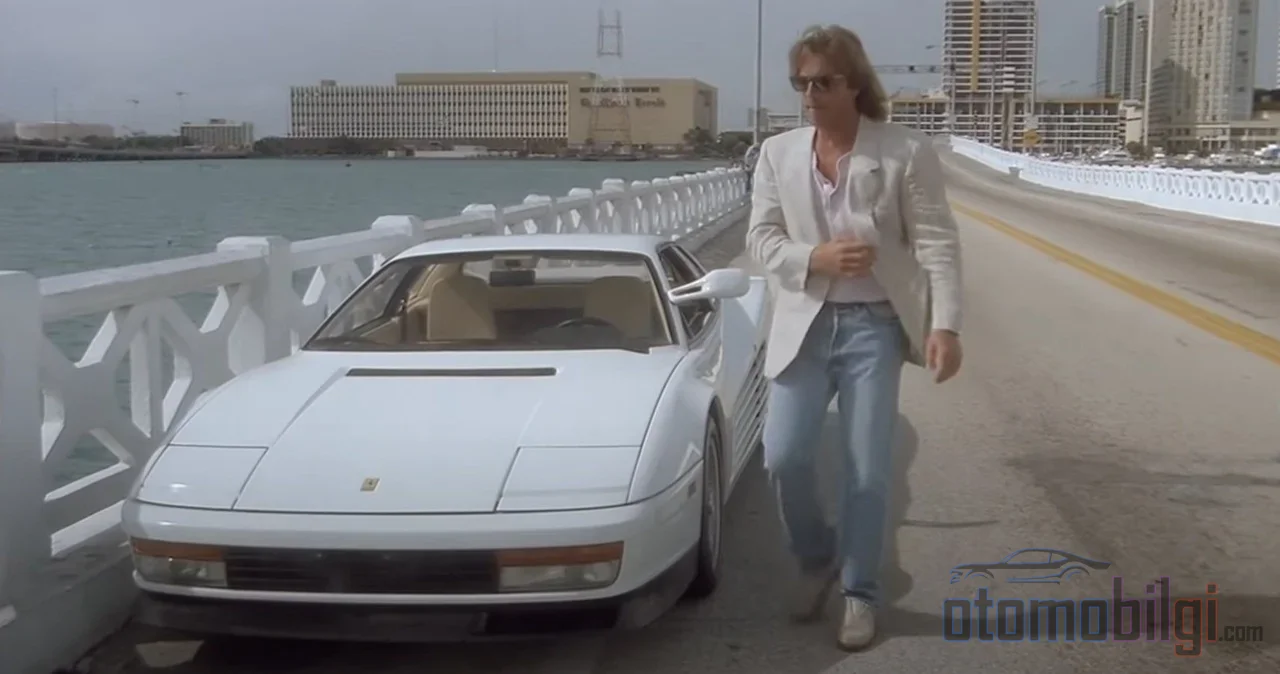
The lawsuit didn't end in court as everyone thought it would. Ferrari's solution was brilliant: it donated two brand-new 1986 Testarossa Monospecchio cars to the production team - two vehicles with black metallic bodies and beige leather interiors. The only condition? That those fake Daytona replicas be destroyed. Just imagine: "You made a fake, so here are two real ones." Perhaps the classiest cease-and-desist letter of the 80s.
But there was another surprise in the story: Ferrari had shipped the cars in black, yet they appeared on screen in white. Producer Michael Mann had them painted white so they would look better in night scenes. There is also an alternative story told about the series: that the car was repainted after actor Don Johnson had a driving accident on set. Which one is true and which is set legend is unclear - but the outcome is shared: that white body became the visual signature of Miami Vice. Neon lights, palm trees, Miami's nighttime skyline, and a white Testarossa gleaming beneath it all. This image is like an advertising poster for the end of the 80s.
From the Screen to the Dealers: How Did Testarossa Sales Skyrocket?
Now we come to the real question: did this visibility translate into actual sales? The short answer: it is hard to say no, because the numbers speak for themselves. In the midst of the economic boom of the late 1980s, the Testarossa became so popular that buyers were prepared to pay premiums of up to three times the list price. So waiting was not enough to get a Ferrari - you also had to put down a serious sum on top. In today's terms, one of the most legendary examples of the "price above MSRP" phenomenon.
Highlights
- The Daytona in the first two seasons of the show was a fake replica built on a Corvette C3 chassis.
- Ferrari filed a lawsuit; in the end it donated two 1986 Testarossas to the production team.
- The cars were painted white so they would look good in night scenes.
- During the series, buyers were prepared to pay a premium of up to three times the list price for a Testarossa.
- At the 2017 auction, a hero car sold for well below expectations at $151,800.
The Testarossa was, at the time, a symbol of a lifestyle rather than a brand. While Crockett and Tubbs's pastel t-shirt-and-linen combinations directly shaped fashion, the Testarossa - together with the Ferraris and Lamborghinis of the drug dealers in the show, their Armani jackets and Ferragamo shoes - became part of the luxury aesthetic of the 80s. This consumer culture coincided with Wall Street's years of ascent; although the concept of "conspicuous wealth" had not yet been invented, it was living out on screen exactly as such.
In my view the most interesting detail is this: the Testarossa's appeal in the show came less from the car's own engineering achievement than from pairing it with a lifestyle. The viewer did not want to buy the car's suspension; they wanted to buy the state of the car. This was something far more powerful than product placement in the classic sense - because the show was not trying to sell the car. The car was part of the story.
A Stunt Star Behind the Screen: The Pantera-Based Testarossa
There was a second hero behind the camera as well: the stunt car. Those gleaming white Testarossas seen on camera could not even take on the tough scenes in the fourth season; for this job, Carl Roberts built a Testarossa body on the chassis of a 1972 De Tomaso Pantera. Both cars shared the same wheelbase, which made the body conversion possible. The chassis got a 1.5-inch lift, a reinforcement cage, an auxiliary braking system, and even hard-core fun extras like a NOS nitrous system.
Meanwhile, let's also mention a debate: There are claims circulating that Roberts' business partner's father-in-law, Art Gooding, actually built the replica and that Roberts did not have that skill. This rumor, lacking definitive proof, shows that it is still unclear who exactly owned the stunt car. Such details mean serious money in the collector world - because the "who did it" question affects the vehicle's originality report.
How Much Is the Miami Vice Testarossa Worth Today?
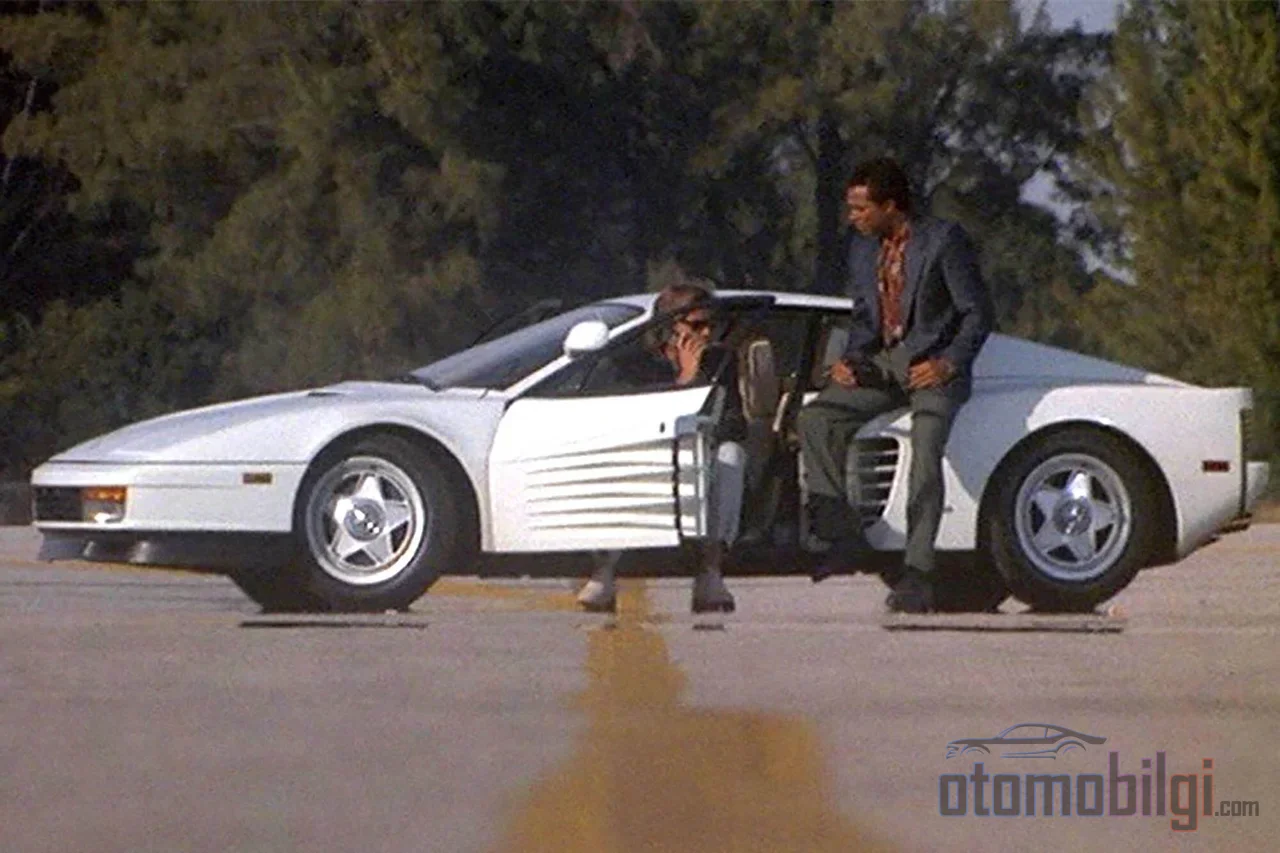
Here comes the bittersweet part of the story. The white Testarossa stayed on screen until the series ended in 1990 and maintained its legendary status among viewers. But legendary status does not always mean money at auction. In my opinion, this is one of the most interesting lessons in TV car collecting.
The Journey of the Hero Cars
One of the two main cars used in the series - the one with chassis number #63631 - is Ferrari Classiche certified and today is in the Adams Classic & Collector Cars collection in Buford, Georgia. The other hero car was purchased from NBC by the owner of the Fort Lauderdale Swap Shop for $750,000; it is also said that offers of $1,000,000 to him were turned down. Another one belonged to Peter Lima and was listed on eBay in December 2014 for $1.75 million. But beware: this listing price never became a verified sale - as of October 2026, there is no recorded sale at that price.
The Auction Result Shattered Expectations
At the 2017 Barrett-Jackson Scottsdale auction, a "genuine Miami Vice hero car" went up for sale: V12 engine, 5-speed transmission, Ferrari Classiche certification, and freshly completed $8,000 worth of maintenance. The expectation was between $1.5-1.75 million. The result? The highest bid was only $151,800. Yes, you read that right: not even a tenth of the target. This may be the clearest example refuting the thesis that "a TV car multiplies its price tenfold."
So why? I think the reasons are simple: collectors love a car's genuine engineering heritage and chain of originality; the story of cars prepared, painted, and mixed with stunt versions for filming on a series set is emotionally powerful but technically complicated. In some cases, hero car status cannot beat a well-documented normal production car.
| Vehicle / Sale | Price / Status |
|---|---|
| Hero car, sale from NBC to Swap Shop | $750,000 |
| Peter Lima's Testarossa, 2014 eBay listing | $1.75 M (sale not verified) |
| Barrett-Jackson 2017 hero car, expected | $1.5-1.75 M |
| Barrett-Jackson 2017 hero car, actual result | $151,800 |
| Normal 1986 Testarossa, 2026 auction | $144,653 |
| Original Testarossa, 2025 market range | $150,000-250,000 |
So the realistic picture is this: an ordinary 1986 Testarossa trades today for roughly $144,000-250,000, with exceptional examples climbing above $500,000. The Miami Vice connection doesn't skyrocket the price in every case - at least not in the auction halls. For dedicated collectors who believe the story, the car remains priceless.
Why Is It Still Being Talked About? The Payoff of a Legend
Let's come to the conclusion - and give a clear answer to the question at the start. What made Miami Vice's white Testarossa legendary wasn't the on-screen appearance of the car, but the chain of stories behind that appearance: a fake replica, an intellectual property lawsuit, two conditional real Testarossas, and the decision to paint them white for night shoots. This combination fueled the car's real market success and created one of the iconic faces of 1980s luxury consumption culture. But in the collector market, that icon status remains a limited premium: at the most recent auction on September 27, 2026, a 1986 Testarossa changed hands for $144,653.
The name isn't aging either: Ferrari is offering the 2027 849 Testarossa in a price range of $565,685-633,677 - meaning Maranello is still making use of the legacy that name carries. What's more, small remnants of this story are still alive: 1/24-scale Miami Vice Testarossa model kits are still on sale, and one of the Daytona replicas is on display at the Volo Auto Museum, another at the Petersen Automotive Museum. What do you think the price would be if a television car had kept its legend this alive for 40 years? In my opinion, the answer isn't hidden in the auction catalog, but in the viewer's memory.
Sources
- Cars in Miami Vice
- The Story Behind The Miami Vice Ferrari Testarossa - ROSSOautomobili
- 1986 Ferrari Testarossa 'Miami Vice Car' - Barrett-Jackson
- 1986 Ferrari Testarossa Base Value - Hagerty
- Miami Vice to Wall Street - The Testarossa's Cultural Impact - Curated
- Miami Vice, Entourage & Melrose Place Cars: What They're Really Worth - Beverly Loan
- 'Miami Vice' Ferrari Testarossa listed on eBay for $1.75 million - Fox Sports
- 2027 Ferrari 849 Testarossa Review, Pricing, and Specs - Car and Driver
- Influence of Miami Vice