DeLorean DMC-12: A Car With a Story Even Without the Time Machine
Share This Page
The DeLorean DMC-12 is a sports car that was produced for only two years between 1981 and 1983, with a production run of about 9,000 units that turned it into a commercial failure, yet thanks to its stainless steel body and gull-wing doors it became one of the most recognizable vehicles in automotive history. The striking part of the story is this: long before this car entered the cinema, it had already written the story of the downfall of a vision, a factory, and a legendary engineer. So, what had happened to DeLorean before the film's magical touch arrived? Let's tell the story.
Highlights
- Total production: approximately 9,000 units (1981-1983)
- Design: Giorgetto Giugiaro, brushed stainless steel body and gull-wing doors
- Engine: the PRV V6 of the Peugeot-Renault-Volvo partnership, with chassis design from Lotus
- Bankruptcy in 1982 with a debt of 175 million dollars, John DeLorean's cocaine trial and his acquittal in 1984
- Today's collector value is roughly in the range of 40,000-100,000 dollars
Who Was John DeLorean and Why Did He Leave GM?
Like every great story, this one begins with a dreamer. John Zachary DeLorean was born in Detroit on January 6, 1925; he came from a family of Romanian descent on his father's side and Hungarian on his mother's. After a brief experience at Packard, he joined General Motors' Pontiac division in 1956, where he signed off on dozens of patented innovations. He became chief engineer in 1961 - and the real boom came in those years.
The vehicle that made him a legend was the Pontiac GTO, born in 1964 as an option package for the Tempest/LeMans. Known today as the first "muscle car," this vehicle made DeLorean's name known across all of America. His career ladder climbed rapidly: In 1969 he took over Chevrolet, and at 40 he earned the title of the youngest division head in GM history. With his classic suits, watches and cool image, he was an automotive star; in today's terms, he was like a rock star rather than a CEO.
But DeLorean had something bigger in mind: making his own car, building his own company. He left GM on April 2, 1973, and rolled up his sleeves to make his dream come true. The departure made such an impact that "On a Clear Day You Can See General Motors," a book based on his experiences, sold about 1.6 million copies in 1979. In other words, the man was already the hero of a legendary story before he had even produced his car.
How Was the DMC-12 Born? Design, Engine and Those Famous Doors
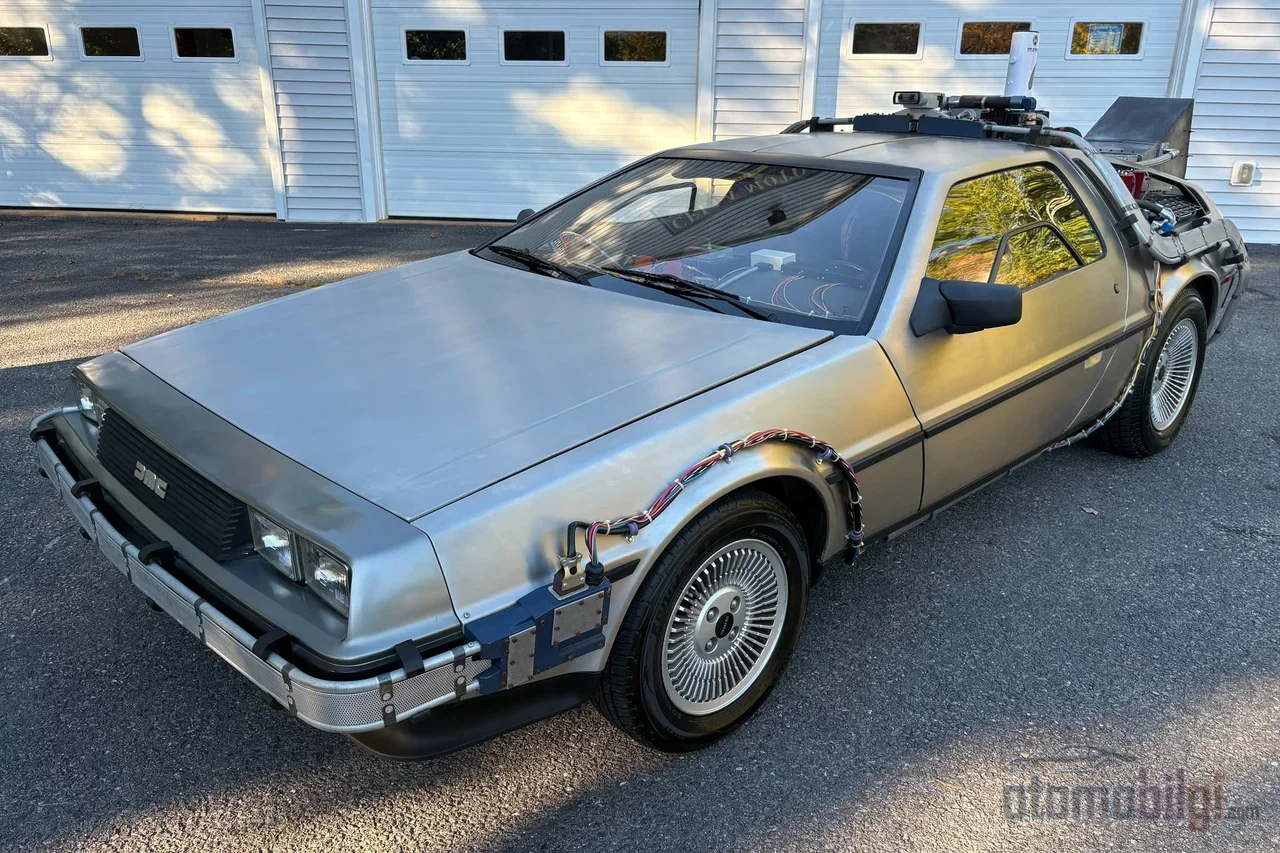
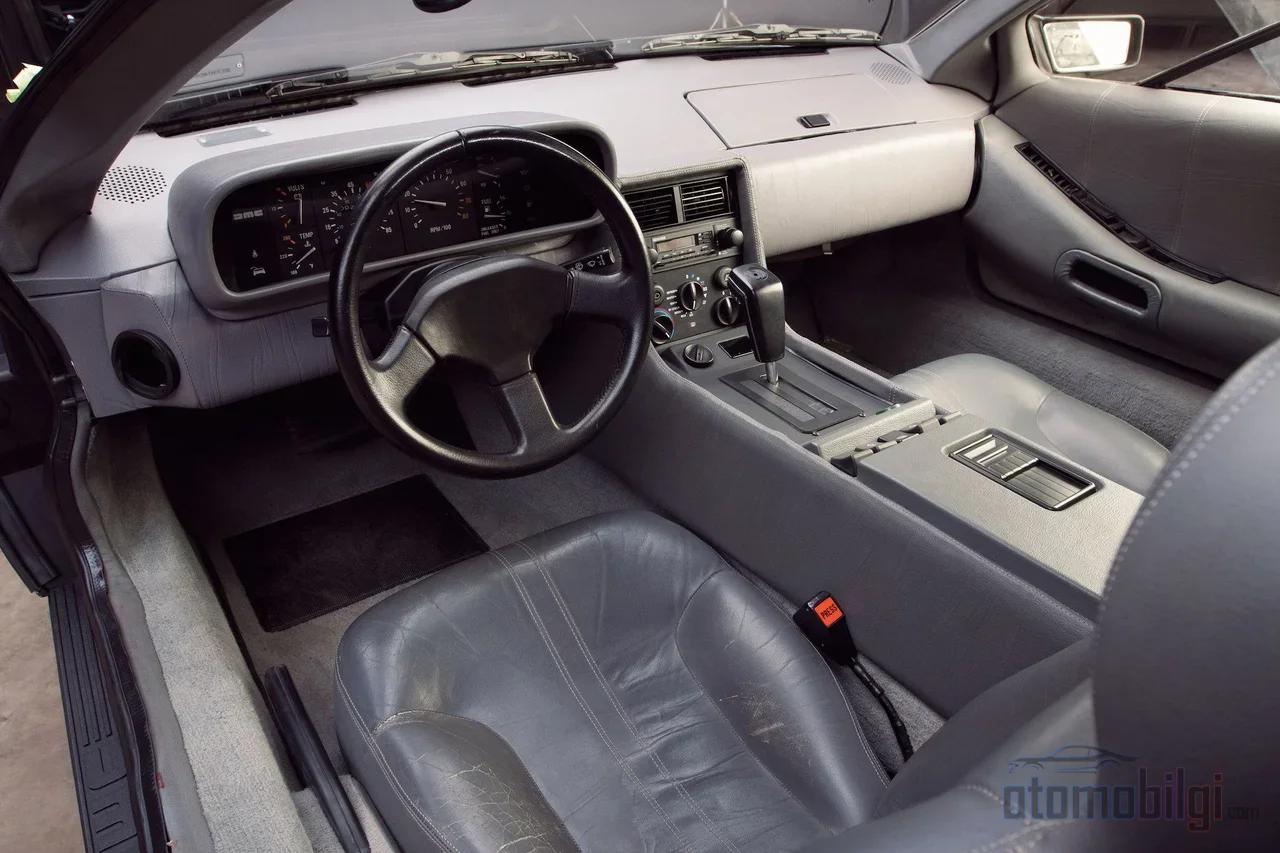
For the DeLorean Motor Company, founded in 1973, approximately 200 million dollars was raised - about 4 million dollars of which came from John DeLorean's own pocket. Now it was time for the car, and the best in the business got involved. The design was undertaken by the Italian legend Giorgetto Giugiaro and the ItalDesign studio. The result is a silhouette that would still make you turn your head if you saw it on the street today: brushed stainless steel body panels and upward-opening gull-wing doors. Imagine, a car that doesn't rust like a dish sponge - a body of gleaming steel right out of the cupboard! On the technical side, Colin Chapman's Lotus Cars designed the chassis and body details; As for the engine, the PRV V6, known as "Douvrin," jointly developed by Peugeot, Renault and Volvo, was chosen.
A great formula on paper, right? Exotic design, British sports car engineering, stainless steel body. But this is exactly where reality kicks in: drawing a beautiful car and manufacturing it on time, on budget and with quality are two entirely different things. The DMC-12's development process was marked by delays, budget overruns and quality control problems. It is reported that more than 3,000 changes were made during production - in other words, the car was literally rediscovering itself even as it hit the road.
The Factory in Northern Ireland: From Great Hopes to Receivership
The factory's location was an interesting choice: Dunmurry near Belfast, Northern Ireland. The Local Development Agency offered around 100 million pounds in incentives, and Renault built the factory. At the peak of production, more than 2,000 workers were employed. So this was not a garage project, but a massive state-backed industrial initiative.
Due to production delays, the first vehicles only reached the market in January 1981. And things did not get going right away. The 1980 US recession crushed sales; critics said the price was high but the horsepower was low. Now the question is: what happens if a car is good-looking but slow? The answer: cars left sitting on the shelves. By the end of 1981, the Dunmurry factory had produced 7,500 vehicles, but only 3,000 of them had been sold. As of February 1982, more than half of the roughly 7,000 cars produced remained unsold, and DMC was struggling under a debt of 175 million dollars. That same month, the factory went into receivership, that is, into enforcement administration.
Not Treasure, But a Gold-Plated Advertisement
There is a striking example showing just how difficult sales were: In 1980, even before the vehicle hit the roads, an ad in the American Express catalog offered a DeLorean with 24-karat gold plating, a run of 100 units at 85,000 dollars apiece. Strange but true: only 4 of them were sold. Even gold was not enough to drum up interest in this car - cinema's savior was coming, but it was still five years away.
Bankruptcy and the Cocaine Trial: The Downfall of John DeLorean
Here comes the darkest chapter of the story. In January 1982, the British government revealed that 23 million pounds - roughly half of the funds received in 1974 - had been transferred to an account in Panama; at the head of the investigation, Lotus chief Colin Chapman lost his life. The company was on the verge of collapse - and its founder's name began to be associated with an unimaginable scandal.
On October 19, 1982, John DeLorean was charged with cocaine trafficking following a recorded FBI sting operation in which he was documented agreeing to finance the sale of 220 pounds (100 kg) of cocaine worth about 24 million dollars. At the time, DMC was close to bankruptcy with a debt of 17 million dollars. The interesting part is this: It is stated that the FBI informant offered the deal to DeLorean himself, and that DeLorean had no prior criminal record.
In court, DeLorean was acquitted on August 16, 1984, with an "entrapment" defense. But it was too late: the company had already gone under. In September 1985, he was tried again for defrauding investors and evading taxes, and was once again cleared of all charges. His answer to that famous question asked after his acquittal went down in history: "Would you buy a used car from me?" This case is still debated; on one side are those who say "John was morally corrupt," and on the other are those who blame the trap itself for making him look guilty. The court ruled entrapment, but the mark on public opinion was never erased.
How Back to the Future Turned a Failed Car Into a Cult Icon?
Now our hero's savior enters the scene. In Robert Zemeckis's 1985 film Back to the Future, a retrofitted DMC DeLorean was used as the time machine. And the magic began: this car, with its short-lived, failed sales story, instantly became synonymous with time travel itself. DeLorean, a symbol of 1980s pop culture, could it have achieved this popularity today without the film? In my opinion, no. Joking aside, the car became so iconic that it is said some young viewers do not even know it was actually a mass-produced car - it looks like it could not be anything other than a spaceship from a movie!
We are talking about a car whose production lasted only two years (1981-1983), and it is estimated that there are still about 6,000 DeLoreans in the world. Short production, striking design, and a massive film legacy: you can guess what this trio means in the eyes of collectors.
How Much Is a DeLorean Today? The Collector Market in 2026
So how much does owning this icon cost today? The short answer: it varies depending on condition and originality, but the direction is always upward. Original DMC-12 collector values are roughly in the $40,000-100,000 range; limited production and the cultural story keep this value standing. Recently, on September 30, 2026, a 1983 DMC-12 sold at auction for $49,350; average sale prices are shown at around £44,215.
The trend was already pointing upward: in 2016, the average "excellent" condition value was around $24,200, while in 2019 it nearly doubled to $46,300. So DeLorean is more than reaping the financial rewards of the honor that followed the film. If you look at buyer's guides, the points to watch are clear: fuel blockages, fragile plastic injector pipes, corroded electrical sensors, and the rust condition of the X-shaped chassis. One more warning: there are cars on the market with non-original, repainted bodies - identity documents and an unbroken ownership history are the factors that determine value. And as for that classic question: "Is the DeLorean fast?" The honest answer is no; contemporary reviews noted that its acceleration was weak compared to its rivals, and that it offered floaty handling at high speeds. But since it was a time machine, who cares about 88 mph? (Okay, we know that last line from the movie - the car was made famous by the film, but speed was never the real star of this story.)
| Feature | Info |
|---|---|
| Production years | 1981-1983 |
| Total production | Approximately 9,000 units |
| Design | Giorgetto Giugiaro (ItalDesign) |
| Engine | PRV (Peugeot-Renault-Volvo) V6 |
| Chassis design | Colin Chapman / Lotus |
| Factory | Dunmurry, Northern Ireland |
| Surviving today | Approximately 6,000 cars |
What Is the Brand Doing Today?
Instead of an ending, there is also a new beginning: The original DeLorean Motor Company name was bought by a Texas-based company that sells spare parts and offers restoration services - John DeLorean had no connection with this business. What's more, the company is working on a new model: the DeLorean Alpha5. So a brand that a film saved forty years ago is now reaching for an electric future. Time travel can sometimes be achieved just by keeping a name alive.
Why Is the Pre-Film Story So Important?
Describing the DeLorean merely as "that time machine car" means skipping the most interesting part of the story. This car is the story of a dream, a brilliant engineer trying to make it come true, and a factory; plus a salvation story that came from the movies on top of it all. We are talking about a car that hit rock bottom commercially, was tried at the pinnacle of the law, and was immortalized culturally. If it were up to you, which part would you tell? In my opinion, both of them - because the real magic of the DeLorean is that it managed to travel through time even without being a time machine.
Sources
- John DeLorean
- DMC DeLorean
- DeLorean time machine
- DMC 12 - ItalDesign
- 1981 DeLorean DMC 12
- DeLorean DMC-12 - Ulster Transport Museum
- DeLorean Manufacture
- John Z. DeLorean is arrested in $24 million cocaine deal
- The Trial of John DeLorean - Los Angeles Times
- The true story behind Back to the Future's DMC-12
- How "Back to the Future" Made the DeLorean Famous
- 5 fun facts about the DeLorean
- The DeLorean DMC-12 in 2026 - TheArsenale
- 1983 DeLorean DMC-12 valuation - Hagerty
- DeLorean DMC-12 Buyer's Guide - The Classic Valuer
- Buyer's guide: DeLorean DMC-12 - Classic & Sports Car
- 1981-82 DeLorean - IndieAuto
- Back To The Future Made DeLorean Famous - Motor1