How Did Christine Become Everyone's Nightmare?
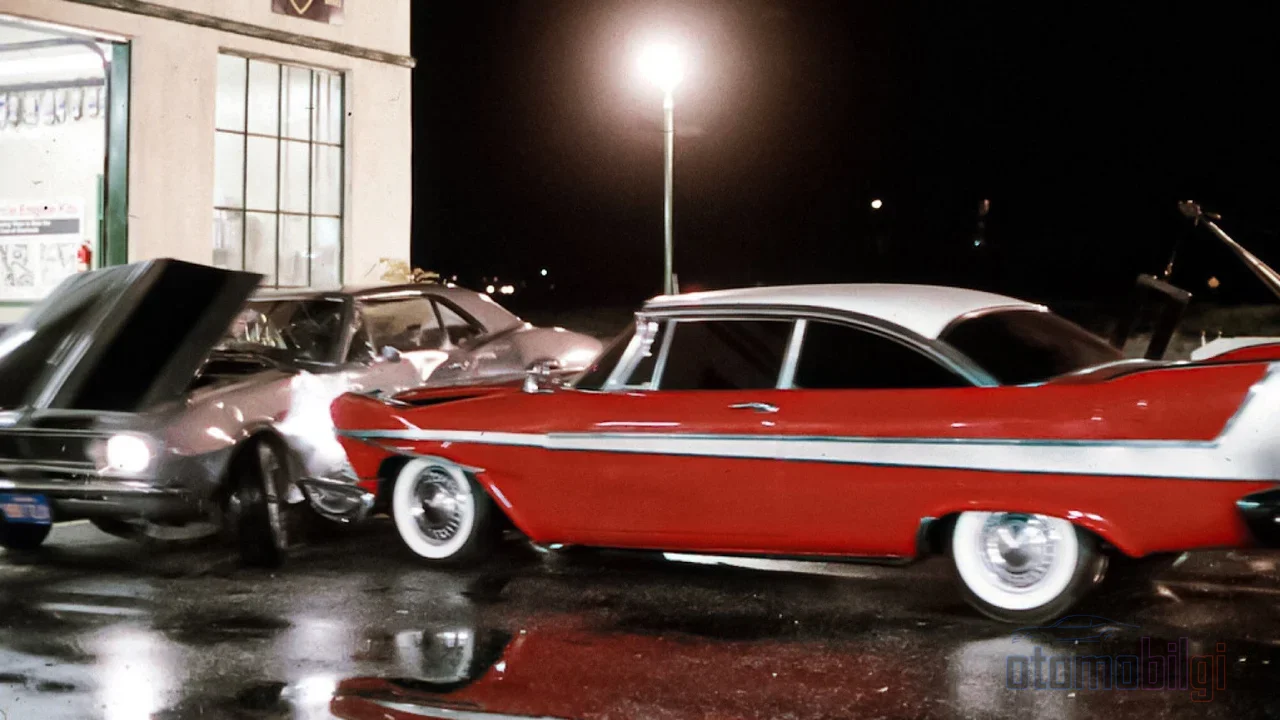
Share This Page
The name of the self-healing, jealous and murderous 1958 Plymouth Fury from John Carpenter's 1983 horror film. This black-and-white giant car, adapted from Stephen King's novel published the same year, gradually became one of the most recognizable cult cars of horror cinema despite its weak box office performance. So how did a Plymouth Fury turn into such a creepy and such a beloved legend? Let's tell the story.
Highlights
- For the film, 24 Plymouths were purchased and approximately 15% of the budget was spent on the cars
- By the end of filming, only two or three cars remained undamaged
- One of the film's cars sold for $198,000; an ordinary 1958 Fury is worth an average of $47,700 valued at
- The car's self-repair effect was filmed with hydraulics and reversed footage; no CGI at all
- The novel and the film were published the same year, in 1983 published
What Was Christine Actually Like as a Car: 1958 Plymouth Fury
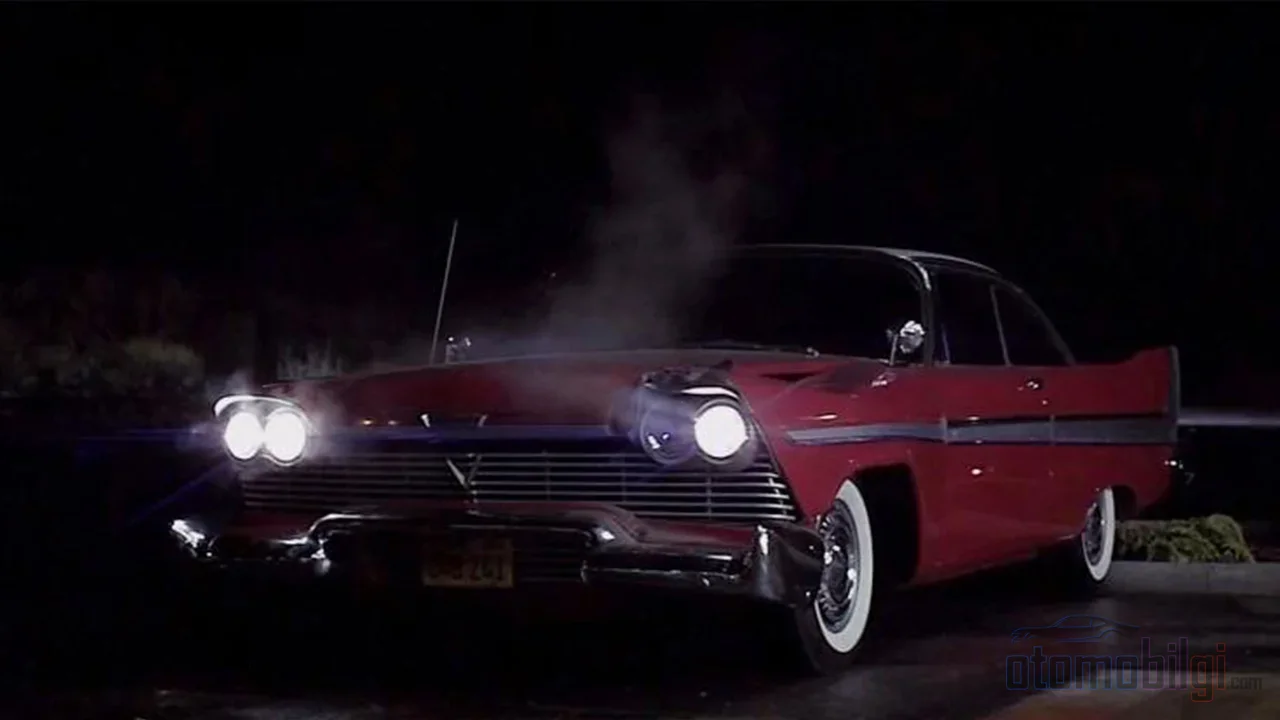
The star of the story is, in real life, a completely ordinary car: the 1958 Plymouth Fury. With its hardtop body, automatic transmission and 350 V8 engine, this vehicle was one of the stylish models of its era with its silver trim. It was Plymouth's upper-segment representative that year, so it doesn't exactly look like horror movie material, does it?
Have you ever wondered why Stephen King chose this car? Here's the interesting part: by the '80s, the 1958 Fury had become a forgotten model, hardly ever seen on the streets anymore. That's precisely why King placed it at the center of the story. Imagine a car nobody recognizes, one that doesn't stick in the mind of those who see it - and then one day it rolls out of a painted garage and starts talking to you... For viewers of that time, Christine was a truly foreign and eerie machine. Even though we look at it today through the eyes of a classic collector, in 1983 this choice was spot on.
Now let me ask you a question you'll hear a lot: Why do we love cars so much? Christine answers exactly this question in the darkest way possible. Because the car in the film takes the loyalty and obsession felt for an owner all the way to its lethal extreme.
From the Book to the Screen: The Same Year, Two Different Monsters
One of the sweet details: Stephen King's novel and John Carpenter's film were both released in the same year, 1983. A publishing house and a movie theater selling the same monster at the same time - it sounds crazy, but that's what happened.
The essence of the story is similar in both versions: Arnie Cunningham, a bullied teenager lacking self-confidence, buys a rusting 1958 Plymouth Fury and his life takes a completely different path along with it. As the car returns to its former days, Arnie changes too; you can guess how dark that transformation is.
But there is one very critical difference between the two versions, and it's exactly the point most debated by those who really love the story.
The source of the car's evil: the novel says it openly, the film stays silent
The novel clearly explains Christine's murderous nature: the malevolent spirit of the car's previous owner, Roland D. LeBay, continues to live within the vehicle. In other words, King offers us an almost dialectical explanation; the source of the curse is a human being, and its carrier is an automobile. In the film, however, this explanation disappears entirely. Carpenter does not tie the car to any justification; it simply exists, it is evil, and it takes what it wants. I think this is one of the screenplay's boldest decisions: a horror film that refuses to ask "why" lingers in the viewer's mind far longer.
There is also a difference in setting. The novel takes place in Libertyville, Pennsylvania, a suburb of Pittsburgh; the film has been moved to the Californian town of Rockbridge. A small but, for those who love the story, significant detail.
| Feature | Stephen King Novel | John Carpenter Film |
|---|---|---|
| Year of release | 1983 | 1983 |
| Source of evil | The spirit of the previous owner, Roland D. LeBay | Never explained |
| Setting | Libertyville, Pennsylvania | Rockbridge, California |
| Approach | A more indirect, introspective narrative | More direct, active horror |
How Many Christine Cars Were Used in the Film and What Happened to Them?
Now we come to the part I love the most: behind the scenes. To weave the film around a black-and-white Fury, the crew placed ads across the country and allocated a budget of 500,000 dollars for the vehicles. In total, 24 cars were purchased. And I don't want to confuse you here, but I have to tell the truth: most of these 24 cars were actually '57 and '58 Plymouth Savoys and Belvederes, in other words sister models resembling the Fury. They had been converted for use in the film's copy shots. Only a very small number of real Furies made it to the set.
So why so many cars? The answer is simple and brutal: because most of them would be wrecked. The vehicles would be damaged, crushed, and crashed throughout the film, and a separate example was needed for each stage. Approximately 15 percent of the production budget went just to these cars. In the industry this is called the "picture car" logic; a movie car is sometimes bought purely to be sacrificed for a single scene.
How was the self-repairing car filmed?
You know Christine's most iconic scene: the crushed, shattered car repairing itself in a corner at midnight where no one can see it. This effect was done not with computers but entirely with practical methods. The panels crushing inward were achieved with hydraulic pumps and cables, and the footage was later played in reverse. In other words, the "healing" you see on screen is actually a controlled crushing process played backward. So much effort went into something that could be done today with two clicks that once you know it, your view of the scene changes.
The survivors
At the end of filming, it is estimated that at least 17 Plymouths were completely destroyed; some of the remainder were dismantled for spare parts. The exact number of undamaged cars is not known for certain, and there is a discrepancy of a few vehicles in published figures; the most widely accepted number is two or three around. Among the survivors, one of the two stunt cars from the 24 Plymouths bought for the film that could actually be used in filming is on display at an automobile museum today. Another survivor was sold at an auction and found its home in a car museum. The rest and the parts went to a junkyard in Fontana, California; even today, there are restorers still collecting "used on set" parts from that scrapyard. So Christine's siblings are still alive, at least piece by piece.
From Weak Box Office to Cult Status: Why Did Christine Grow?
Here is the most striking part: When the film was released in December 1983, critics didn't take to it warmly, and the box office didn't deliver the expected explosion. On paper, the idea of a "bad car that kills people" might even seem comical; but Carpenter's cold, unsettling tone gave the idea a sense of seriousness. Over the years, it was watched again and again on television, on tape, then on DVD, and it became an icon at that rare point where horror and car culture intersect.
What do you think makes Christine special? I think there are three things. First, the fact that the car's evil is never explained. Second, the heavy, angular, almost face-like front appearance of 1950s car design; the headlights read as eyes, the grille as a mouth. And third, Arnie's transformation: The car is actually the dark mirror of a coming-of-age story. The confidence of a bullied kid comes back through a car, in the most dangerous way.
How Much Does the Christine Car Cost Today and What's Happening in the Market?
The most tangible proof of cult status is in the price tags. One of the cars from the film found a buyer for 198,000 dollars; whereas the average value of a perfectly condition, ordinary 1958 Plymouth Fury is around 47,700 dollars or so. So Christine's story's effect on the price is roughly fourfold. A legendary car is worth far more than a classic car.
One of the original film cars went to a major auction in January 2020; the estimate was around 500,000 dollars but at the requested 285,000 dollars, no buyer came forward and the vehicle was pulled from the stage without being sold. So even knowingly buying a monster takes serious money and courage.
There are also Christine clones, which are a subculture in their own right. The film's popularity triggered the production of countless Fury replicas; some, beyond mere wraps, were converted into Christine through meticulous restorations involving complete disassembly and reassembly, and taken to auctions. But honestly, very few of these clones can truly claim to be from the vehicles used in the film. You can also still find dozens of 1958 Fury listings, Christine-themed die-cast models, and merchandise on secondhand and collector platforms. Even putting a small-scale Christine model on your desk is now possible; if it were on my desk, I probably couldn't sleep at night, but that's another matter.
Let's add a tour car to the list: there's a special Christine, restored with set parts rescued from the junkyard, that travels around the world; its owner has dedicated a garage room to it and has even had the chance to meet people from the film crew. In short, for over 40 years this car hasn't been treated as just a movie prop, but as a living character.
Was Christine Really a Bad Car? A Counterargument
Now here's a question that will gnaw at your mind: If a car is a monster that gets jealous of its owner and makes everyone else's life miserable, who is the real culprit? Some automotive writers look at Christine from a different angle: in their view, this car isn't one of the "worst" vehicles in film history, but one of the hardest to own. In other words, the car isn't bad; the problem is the person who builds a relationship with it. This reading reminds me of the smartest side of horror films; Christine is actually a story about a relationship, and just like a bad relationship, a person slowly loses themselves in it.
And of course there's the book-versus-movie debate. Classic King readers love the novel's deeper, more winding narrative; Carpenter fans defend the film's clear, direct horror. I think both are right, but if a car could fight, I swear on the name of the cars on set that the movie side is more fun.
Let me leave you with one last question: If it were in your hands, would you get into Christine? I think I would start the engine, look at that silver trim, and listen to the sound of the 350 V8. But if the headlights came on by themselves, I'd drop the keys and walk away. Too cowardly? I don't think so; everyone who talks about Christine has had that thought at least once.
Sources
- Christine (1983 film)
- Fear on wheels: 10 things you may not know about Christine
- This 1958 Plymouth Fury is the Ultimate Christine Tribute Car
- Original 'Christine' '58 Plymouth Fury to cross Mecum block
- Christine (1983) - Trivia
- About | Plymouth 1958 Fury Car Christine Movie
- Christine at 20 - the Famous 1958 Plymouth Fury
- This Car Goes Down in Horror Movie History...The Plymouth Fury, also known as Christine