How the Peugeot 406 of the Taxi Series Dominated French Cinema?
Share This Page
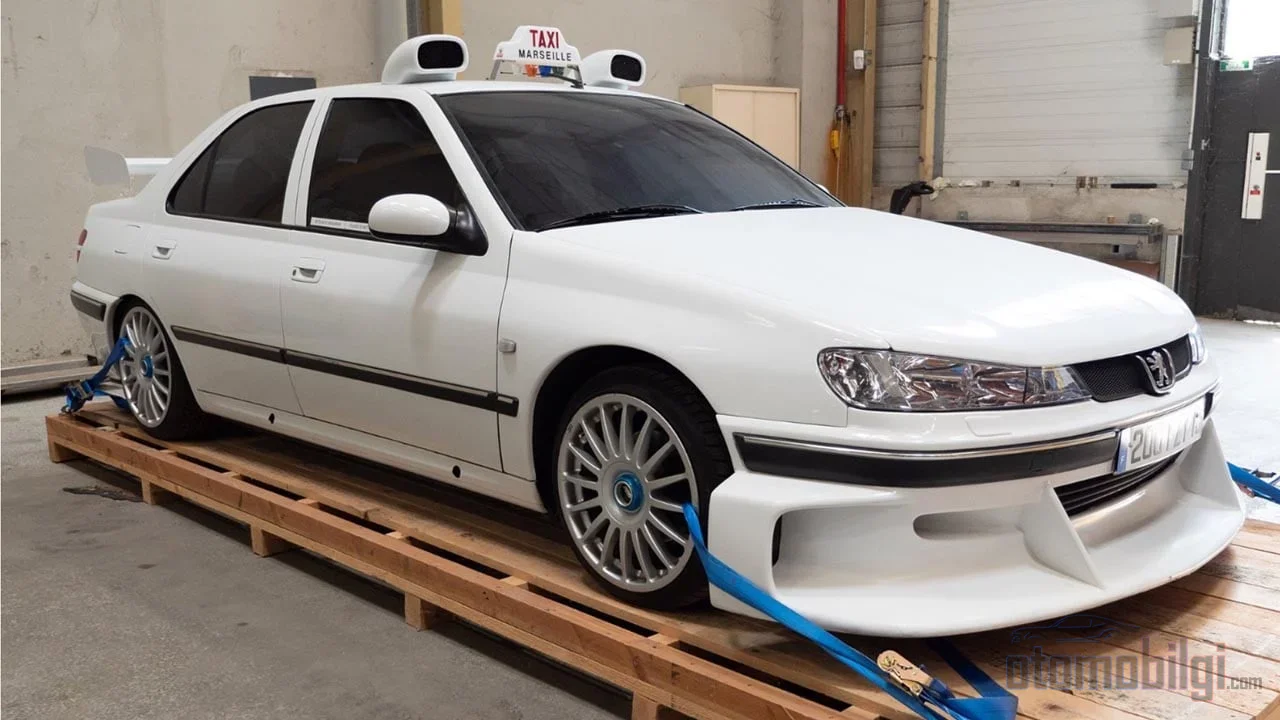
The one with the orange body, crazy body kit, and magical modifications triggered at the push of a button Peugeot 406, the Taxi series' heart: an ordinary family sedan in France, it became one of cinema history's most beloved street racing heroes thanks to a script penned by Luc Besson. Over five films, this taxi battled Ferraris through the streets of Marseille; today it stands as one of the most recognizable icons of European tuning culture and shares the same shelf as luxury sports cars at auctions. So how did an ordinary V6 sedan become this? Let's uncover the tricks and truths behind the film together.
Highlights
- The series started in 1998 and ran for a total of five films ; the final installment, Taxi 5 , hit theaters in 2018
- The 406 in the film had a real V6 engine producing around 200-210 hp it was producing
- For the Taxi 1 taxi, six different copies were prepared, each for a different task
- The key driving scenes were driven by rally legend Jean Ragnotti drove
- Taxi 2's original stunt car sold at auction for €95,200 was sold
How Was the Peugeot 406 of the Taxi Series Born?
It all began in 1998 with the first Taxi film, directed by Gérard Pirès and written by Luc Besson. Daniel Morales, played by Samy Naceri, is a taxi driver in Marseille with a passionate devotion to his car. His white Peugeot 406 looks like an ordinary taxi at first; but as the film progresses, the car transforms into a racing machine to help a police inspector hunting down German bank robbers. In short, that is the essence of the film: a hidden giant inside an ordinary-looking car.
The film was so beloved that the series extended with four sequels: Taxi 2 (2000), Taxi 3 (2003), Taxi 4 (2007) and Taxi 5 (2018). Interestingly, while the series is relatively little known in America, which got the remake in 2004, it achieved full cult status in Europe. The reason is probably the car itself. Not a red sports coupe or a bloated muscle car, but a family sedan you could see on every street corner back then, the kind your neighbor drove. Viewers could much more easily imagine themselves behind the wheel.
The Car's Reality: How Powerful Was the 406 in Stock Form?
Now let's get to the crucial point. In the film, the 406 turns into a monster that goes toe-to-toe with Ferraris; but how powerful was this car in reality? The most powerful factory version of the Peugeot 406 had a 2.9-liter PSA V6 engine, and this engine produced around 200-210 hp . Paired with a 5-speed manual transmission, that output was quite a good figure for the time, but honestly not something that would conquer the world. Think of it like this: a car like your high school gym teacher - fit, fast, but not an Olympic champion.
That's exactly where the magic of the film comes into play. The production team added an extreme body kit to the 406 and, in the edit, made it look like a turbo-boosted race car. Daniel can activate different race modifications in an instant by touching the buttons and levers inside the car, which gives the car a bit more flair in every new chase scene. In the famous chase in the first film, the 406 skillfully weaves through traffic and, against two Mercedes 500E V8s, establishes superiority. Doing that with a roughly 200 hp sedan is something else indeed.
Were the Transformation Scenes Real? The Six Copy Taxis Behind the Film
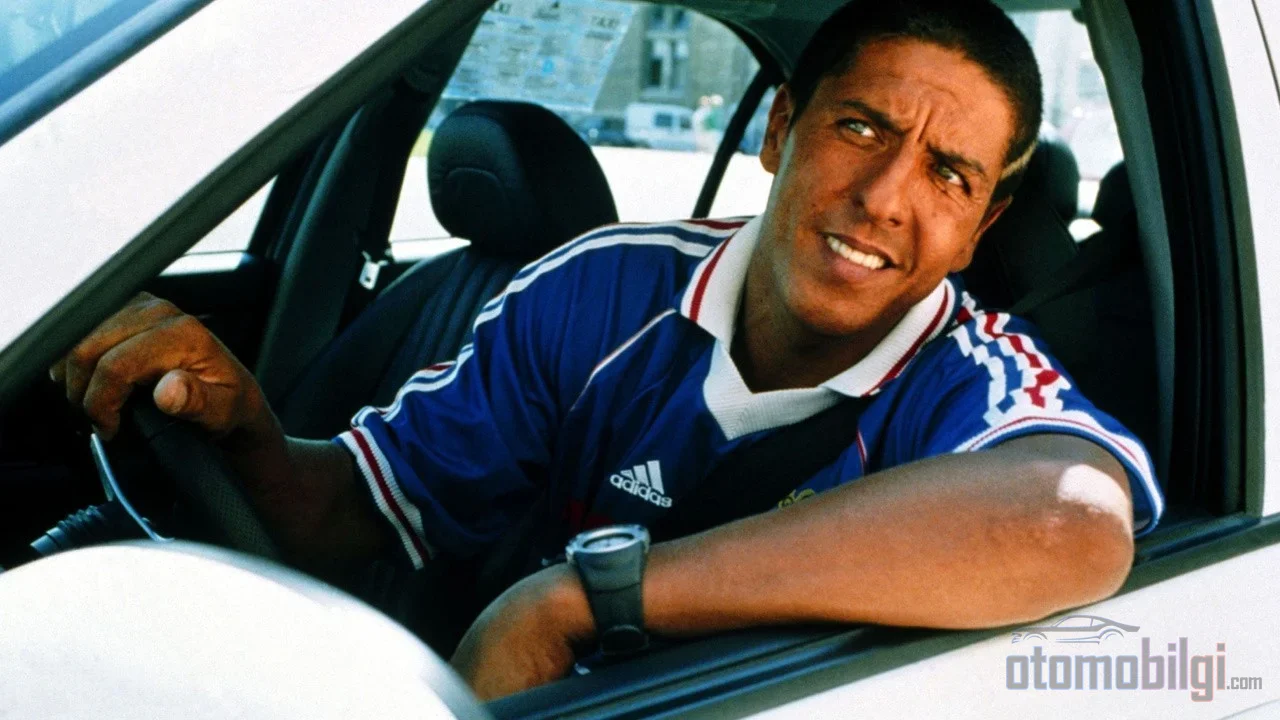
A frequently asked question: Did the car really transform when Daniel pressed the button? The answer is no - it was entirely a film trick. Behind the curtain, the famous orange taxi was not a single car but six different copies, each prepared for completely different purposes:
- One of the vehicles was used for filming in its normal, everyday form
- The second was designed to show the famous transformation scene
- The third allowed filming from inside the vehicle
- The fourth had extra steering: while Samy Naceri put on a steering show, a professional driver could actually drive the car from the right side
- The fifth was built as a genuinely very fast race car
- The sixth was a 406 super-touring from the Super Tourenwagen Cup and served as the camera car
The name behind preparing these six copies was Christian Bonnichon. And the sweetest part: there is no CGI in the films. The chases feature real engine sound and real stunt driving. Luc Besson's team entrusted the film's key driving scenes to the world-famous rally driver Jean Ragnotti. Those who follow rally know that Ragnotti was like a wizard at the wheel - the hands sliding that taxi through the narrow streets of Marseille were his hands. Also, the stunts burned through so many 406s during filming that it wouldn't be an exaggeration to say the film's contribution to Peugeot history was also a demolition campaign.
Taxi 2's Flying 406 and Bones Broken on Set
As the series progressed, the cars' jobs got increasingly wild. Taxi 2 The 406 V6 in it had wings attached to its sides and yes, the car really could fly in the film. But the behind-the-scenes story isn't always glamorous: during the filming of the famous parking scene, a stunt driver lost control and crashed the car into the sidewalk, forcing filming to stop. Behind those smooth, flawless scenes shown in cinemas, there are such accidents and retakes - just like how the question that looks easy in a math exam actually demands six pages of calculation.
One of these stunt cars has not been lost either. The vehicle displayed at Movie Cars Central is a real stunt car from Taxi 2: used by Ragnotti and even signed by him. The company also offers this car for rental and location services; so the dream of truly being side by side with the famous taxi one day is even possible.
A Story Evolving Across Five Films: From the First Film to Taxi 5
The formula stayed much the same throughout the series, but the car's role kept growing bigger and bigger. In the first film, the taxi was a secret hero who joined in chasing bank robbers. In the later films it set out from Marseille and appeared before us with crazy scenes in different countries; the chases became more exaggerated, the body kit more ambitious, and the transformations more showy. Taxi 5 on the other hand was released in April 2018 and carried the series to five films. This final film was described by critics as France's answer to Fast & Furious; the sedan was like a superhero that could transform itself according to the driver's needs.
Nevertheless, toward the end of the series some criticisms also emerged. During the Taxi 5 era, some thought that Peugeot could no longer have the same impact in the market and that the brand could not recapture its former brilliance. Still, the 406's film legacy had long since solidified: even though the series had ended, the orange taxi's cult status never lost its place.
A Peugeot 406 at Auctions: Why Is It So Expensive?
Now let me tell you something crazy: can you imagine a Peugeot 406 going to auction with an estimate of £110,000 ? Normally this car is a sedan bought with pocket change on the second-hand market; but the moment it becomes a movie car, the rules change. History proved it: the original 406 V6 stunt car actually used in Taxi 2 changed hands at an auction for €95,200 . Even a 407 replica made with original film parts fetched €53,760 - despite being a replica! Bonhams also offered a 1999 406 V6(chassis number VF38BXFZE80843171) at auction; the listing served as a document confirming that the film's key driving scenes belonged to Ragnotti.
So who is willing to pay these sums? Fans. Not just collectors, but ordinary enthusiasts who want to bring the car's soul into their home are also producing replicas. One of the best examples of this is a video series in which a craftsman describes the process of building the most accurate 1:1 scale replica of the 1998 hero car, with a real V6 engine. Likewise, someone else recreated a 1996 Peugeot 605 to resemble the iconic taxi. The replica trend is still going strong, and this is the most tangible proof of how much the car touched people.
Its Impact on European Tuning Culture: The Orange Spirit on the Streets
The 406's cult doesn't just live in auction halls. In the late 90s it became a symbol of European car culture; thanks to the high-speed chases in Marseille and that crazy body kit, the car became almost synonymous with the Taxi films. Young people started going to their garages to look for a kit similar to their own 406s; even today you encounter modified Peugeots on social media that pay homage to the series. Street racing culture meeting a film so organically is a rare thing - because while the film glorified the car, it also kept it accessible.
Of course, not everyone sees it the same way. On some car forums, the 406 is mocked as an ordinary and even old car; in other words, some ask "is it ironic that this became a legend?" Yet at the same time, thousands of people sincerely celebrate the car as a cinema legend and an icon of the 90s. To me, this contradiction is the very essence of the car's charm: both a cheap, ordinary sedan and a film hero worth up to a hundred thousand euros. Few other cars have such a gap between the two.
There are also debates circulating on social media claiming that part of the famous police car chain crash scene from the series is not the actual film scene but a fan reenactment. As the legend grows, urban legends grow around it too, of course - which is another sign of its cult status.
Final Word: Why Are We Still Talking About It?
It is easy to turn a Ferrari or an Aston Martin into a film star; they are already expensive and fast. But taking an ordinary family sedan and winning the hearts of a generation across five films is another talent. The orange Peugeot 406, even though its real engine 200-210 hp was limited, pushed the boundaries with its six stunt copies behind the camera, Ragnotti's mastery at the wheel, and the hard work of Bonnichon's team. Today it fetching hundreds of thousands of euros at auctions, its replicas still roaming the streets, and it living on even in toy collections - this may be the best thing that can happen to a movie car. If it were you, would you turn your own car into a famous film classic? I would certainly try.
Sources
- Taxi (1998 film)
- Taxi (1998)
- Location 406 Taxi
- 1999 Peugeot 406 V6 Chassis no. VF38BXFZE80843171
- This Epic Movie Car Chase Stars An Unexpected Modified Taxi
- Relive a Modern Day Classic Film With the Peugeot 406 From Taxi
- Taxi 5 Is France's Answer To Fast & Furious
- Fifth Installment In The TAXI Movie Franchise Coming This Year
- Peugeot 406 "Taxi": The Unexpected Heroine of French Cinema
- BUILDING THE 406 TAXI WITH REAL V6 IN 15 MINUTES
- Did The Peugeots in The Taxi Movies Actually Transform?
- Hard Up Garage - Taxi 2 flying 406 V6
- GoodwoodRRC - Peugeot 406 £110,000 estimate
- Peugeot 406 Taxi auctions & Bonnichon