Why Is the Eleanor the Only Car That Cannot Be Copied?
Share This Page
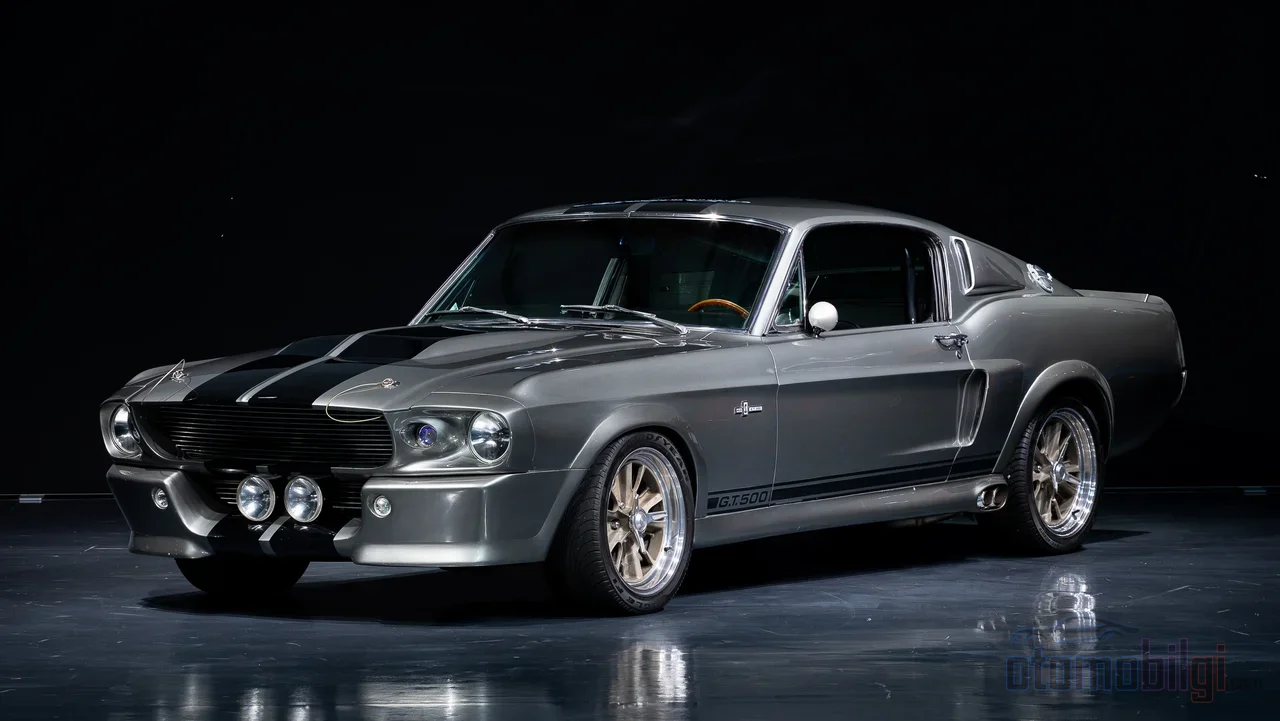
Eleanor, the most famous copyright-unprotectable movie car in cinema history: On May 27, 2025, a US appellate court Gone in 60 Seconds ruled definitively that the film's legendary Mustang is not a character but merely a film prop - in other words, an object in a scene - and that copying it is therefore legal. So you can build that grey Shelby in your own garage, and no one can come knocking at your door. But why did a car spend 20 years in court? Let me tell the story from the beginning.
Highlights
- The original 1974 Eleanor was based on a 1971 Ford Mustang Sportsroof; it was never proven to be a Mach 1
- For the 2000 remake, 11-12 vehicles were produced; only seven survived filming
- One Eleanor sold at the 2013 Mecum Indianapolis auction for $1,000,000 was sold with
- May 27, 2025: The US Court of Appeals for the 9th Circuit ruled that Eleanor cannot be protected by copyright ruled
- The appeal was rejected in June 2025 - all replicas are legal
What Is Eleanor? Two Different Cars From 1974 to 2000
Here's the fun part: there are actually two Eleanors, and they are not the same car. The first Eleanor was the code name given to the target vehicles in H.B. Halicki's 1974 film Gone in 60 Seconds . The film depicted four "Eleanor" targets, but only two cars circulated on set: plates and tires were swapped as needed. One was prepared for the chase scenes and took quite a beating during filming; the other was kept spotless for the "beauty shots."
So what was this first Eleanor? Most people will tell you "a 1971 Mach 1," but here's the surprise: that was never proven. The information we have is that two 1971 Mustang Sportsroofs were purchased in 1971 and modified for hero and stunt scenes. Since the film took three years to find funding, the cars were fitted with 1973 grilles. And my favorite detail: in a 1974 interview, Halicki admitted that instead of Ford's stylish Medium Yellow Gold color, he had the cars painted "generic school bus yellow" to save money. A budget as legendary as the film itself, right?
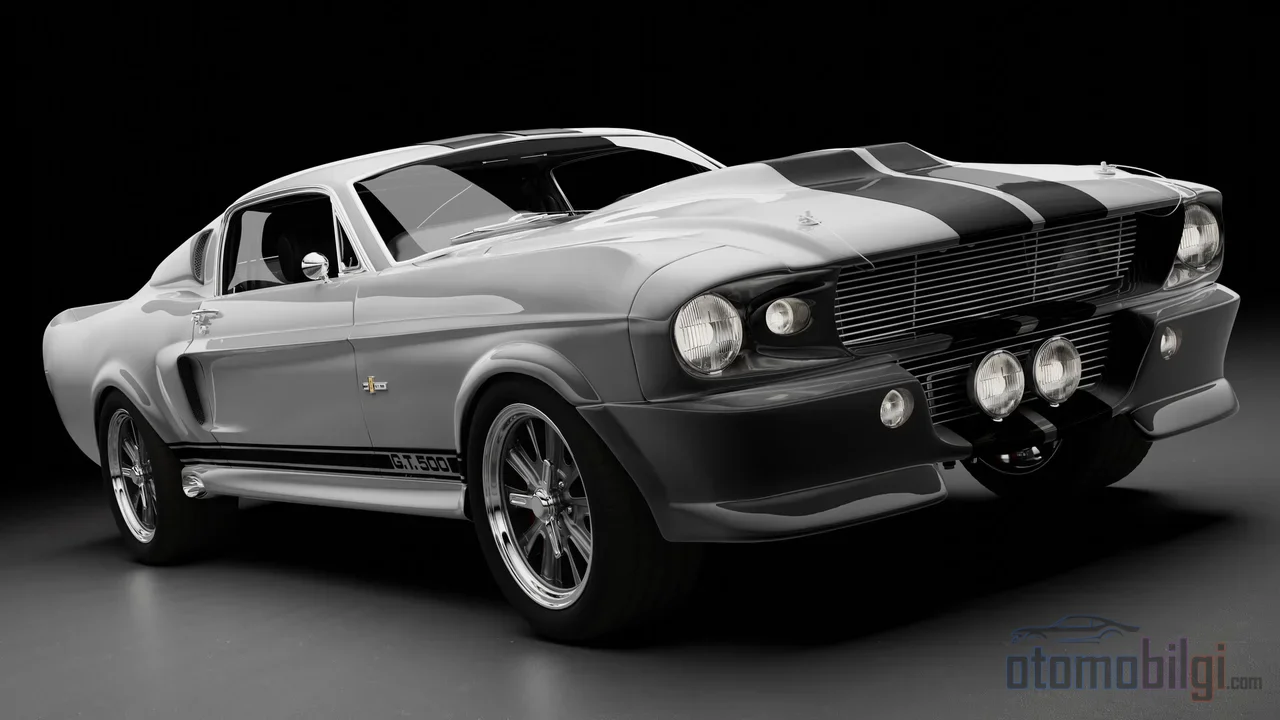
The 2000 remake, on the other hand, was an entirely different beast. Denice Halicki licensed the rights to the original film to Disney in 1995; Jerry Bruckheimer produced it, and Nicolas Cage got behind the wheel as "Memphis" Raines. This new Eleanor was a Dupont Pepper Grey painted 1967 Shelby GT500 fastback. The body kit was drawn by hot rod illustrator Steve Stanford and brought to life by legendary designer Chip Foose.
Behind the Scenes: 15 Cars, 7 Weeks
How are Hollywood chase scenes filmed? By starting to smash cars! For the 2000 film, Cinema Vehicle Services produced 11 or 12 vehicles depending on the source; one was an extra clone with a Ford 428 engine made for Bruckheimer. Three were fully functional, nine were shell chassis, and only seven managed to survive filming. According to Chip Foose, production required 15 cars to be delivered in 7 weeks, and each Eleanor had to be matched to specific scenes to maintain damage continuity in the chase.
Even the 1974 set was not calm. Halicki passed out after a steering accident during the lane-changing scene; the first words when he came to were "Did we get the coverage?" After the 128-foot jump in the finale, he suffered multiple compressed vertebrae in his spine. This man truly lived for cars. Meanwhile, a small record: Eleanor is noted as the only Ford Mustang to appear in a film's star title credits. A car's name on the same screen as the actors - imagine that!
Copies and Licensed Manufacturers: The Official Eleanor Market
When a car becomes this famous, everyone wants their own Eleanor. But was it possible to make one? For many years the answer was: only with a license. Between 2007 and 2009, Classic Recreations produced licensed replicas of the 2000 film's Eleanor (the 535 and 750 models); two years later the licensing agreement ended. As of 2020, the license was in the hands of Fusion Motor Company.
Here's the complicated part: Carroll Shelby had no direct involvement in the film, yet he still licensed his brand to companies producing "continuation Shelby GT500" cars. The first licensed company was Unique Performance in Dallas - until it was shut down for fraud over "title ringing" claims, that is, transferring VINs. So even the "official" label was not always a guarantee. This market was like a swamp full of name and label games, and the seeds of the legal battles were planted right here.
Why 20 Years in Court? A Timeline of the Eleanor Copyright Battle
Now we come to the legal side, and this is where it gets really interesting. The Halicki side's thesis was simple: Eleanor is not a car, but a copyright-protected "character" - just like a movie hero. Why does it matter? Because if a character has a copyright, you can sue anyone who makes a copy of it. With a simple prop, copyright protection is much harder to obtain.
- 2004: Halicki sued Unique Performance, but the judge ruled that the copyright belonged not to Halicki but to Disney, and dismissed the case; afterwards a Disney-Halicki agreement was reached.
- 2008: In the case brought against Carroll Shelby, the 9th Circuit ruled in Halicki's favor this time. The wind was blowing in Halicki's direction.
- 2020: Halicki sued YouTube content creator Chris Steinbacher of "B is for Build" - the man was building a 1967 Shelby replica based on a 2015 Mustang. The case ended in Halicki's favor and Steinbacher was forced to hand over the vehicle. Yes, a YouTuber building a car in his own garage lost his car.
- 2022: This time the tide turned: Carroll Shelby Licensing (along with Classic Recreations) sued Halicki, and the court, describing the claim that Eleanor was "a distinctive character" as "an invention of overly enthusiastic lawyering," invalidated the copyright claims.
- May 2025: The 9th Circuit Court of Appeals issued its final ruling: Eleanor is a prop, not a character, and cannot be protected by copyright.
- June 2025: The appeal was denied. The roughly 20-year battle was over.
What Is the Towle Test and Why Couldn't It Catch Eleanor?
The court used a three-pronged test to measure whether a character qualifies for copyright protection: does the vehicle have anthropomorphic (human-like) qualities, does it display consistent characteristics across multiple works, and does it have unique, distinctive traits? The court's finding was clear: Eleanor meets none of these three prongs. In other words, it does not follow the path of "characterized" vehicles like the General Lee or the Batmobile - it is merely a very good-looking movie prop.
Eleanor is not a character entitled to independent copyright protection under the law; it is a prop.
There is also a nuance to the story: in an earlier case, the same court had made non-binding statements suggesting that Eleanor could theoretically be a character eligible for copyright protection. This contradiction was long debated in legal circles, but the final ruling took precedence over those earlier statements, and Halicki was left with no further legal avenue to pursue in the Ninth Circuit.
What Does the Ruling Mean? Are Replicas Now Legal?
In short: yes. With the ruling, independent manufacturers can now build Eleanor replicas as they wish. To convey how significant this change is, let me put it this way: previously, not only manufacturers but even buyers of an "Eleanor clone" would receive cease-and-desist letters, and in some cases had to return their vehicles. Someone working on a project in their garage on YouTube could be forced to hand over their completed car by court order. This uncertainty was largely eliminated in May 2025.
Just one small caveat: the car itself is free, but the "Eleanor" name still sits in potentially contentious territory. The legal fine distinctions behind names like tribute, clone, and recreation, as well as name rights, remain issues that require attention. In other words, it is worth researching the name aspect before starting your project.
Where Are the Original Cars Today?
The fate of these vehicles, the apple of collectors' eyes, is just as striking as their stories. The first Eleanor of the series is on display at the Hollywood Star Cars museum in Gatlinburg, Tennessee. Three of the known surviving cars from the 2000 film have gone to auction, and the prices varied incredibly from car to car:
| VIN | Auction | Result |
|---|---|---|
| 7R02S211287 | Barrett-Jackson Scottsdale 2009 | $216,700 |
| 7R02C173895 | COYS Birmingham, January 2012 | £95,000; failed to meet reserve at $380,000 at Mecum Austin in 2014 |
| 7R02C179710 | Mecum Indianapolis, May 18, 2013 | $1,000,000 - marketed as the "main" hero car |
As for the 1974 set, the stunt car is known to still be standing. Let me also note this: the film rights today belong to Denice Halicki, who is cited as the owner of the 1974 film cars. But the path to claiming character copyright through "Eleanor" has now been closed by a court ruling.
Do You Think a Movie Car Can Be a Character?
What I loved most in this story was this very dilemma: can a car gain such a strong personality on screen that, like an actor, it deserves copyright protection? The Halicki side said "yes" for years; the court finally said "no." Perhaps the difference is this: a character is an entity that makes decisions within the story, while Eleanor is a star that simply looks magnificent in front of the camera. Whether being a star is enough is debatable - but from the law's perspective it is now clear: it is not enough.
Still, if I ever saw that Pepper Grey 1967 body and that body kit in my garage, believe me, I would stop talking and turn the key. If it were you, would you build the replica, or would you set your sights on the original film's yellow Sportsroof? I think both are the right answer.
Sources
- Eleanor (automobile)
- Carroll Shelby Licensing, Inc. v. Halicki (9th Cir. May 27, 2025)
- Ford Mustang 'Eleanor' from Gone in 60 Seconds Belongs to No One
- Ninth Circuit Rejects Copyright Protection for Iconic "Eleanor"
- Judge Kills 'Eleanor' Mustang Copyright Appeal. All Replicas Are Legal
- The Legal Trap Behind the "Eleanor" Mustang Name
- US Court of Appeals denies copyright claim for "Eleanor"
- Eleanor – prop or character?
- History of the "Eleanor" GT500 Mustang
- Was The Original 'Eleanor' A Mach 1?
- The Story of the Shelby GT500 "Eleanor"
- Eleanor Legacy
- Chip Foose shares the story behind one of the most famous movie cars ever built