How Did the Fast and Furious Series Transform Street Racing Culture?
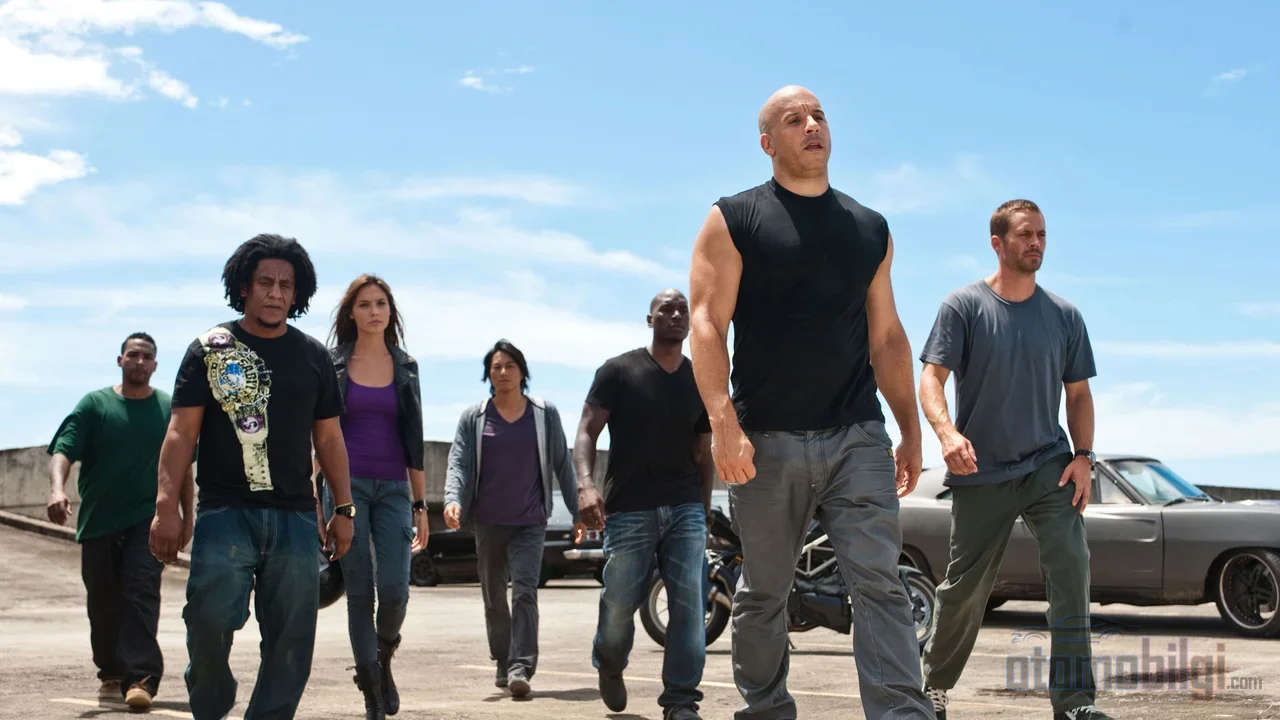
Share This Page
Released in theaters in 2001, The Fast and the Furious was the film that took modified Japanese cars out of being the hobby of a small subculture and turned them into a worldwide passion. The series' star vehicles, the Toyota Supra and the Dodge Charger , live on today on museum shelves, in auction catalogs, and in collectors' garages. So how did a two-hour film change real-life street racing culture so deeply?
Highlights
- The film is based on a 1998 magazine article and the story of a real street racer
- Brian's 1994 Toyota Supra, sold at a record price of $550,000 at a 2021 auction
- The orange Mazda RX-7 from Tokyo Drift found a buyer for over $1.2 million in July 2025
- Only three copies were built for the film of Dom's black 1970 Dodge Charger R/T only three copies were built for the film
- The franchise celebrates its 25th anniversary with a museum event in 2026
Was the Film Born from a True Story?
Surprisingly, yes. The film's foundation rests on a piece of journalism published in a magazine. Writer Ken Li had penned an article about the rising street racing scene in New York, focusing on a real racer's move into drag racing. So those midnight meetups, neon lights, and engine roars on screen were not entirely made up; they were carried from a real world into cinema.
That real world was a subculture known in English as the import scene or tuner scene. To put it briefly: a group of enthusiasts in the US took Japanese-made cars instead of European muscle cars and modified everything from the engine to the suspension. Think of it this way: instead of using a computer as-is, opening it up and upgrading the insides. Before 2001, this world was truly small, something only enthusiasts knew about. The film threw the door wide open for everyone.
Brian's Toyota Supra: The Car That Brought the Scene into the Spotlight
The legendary vehicle of Brian O'Conner, played by Paul Walker, is a 1994 Toyota Supra MK IV. It appears in the film after Brian's first car, the Mitsubishi Eclipse, is destroyed, and becomes almost the heart of the film. Among enthusiasts, it is known by the nickname "the 10-second car"; a moniker implying it was fast enough to finish a quarter-mile drag race in under 10 seconds.
The interesting thing is, that orange beauty in the film was not designed that way from the start. The car was a genuine 1994 Supra with a factory twin-turbo, targa top, and manual transmission; it was first white, then repainted with a catalog color from another brand. In the automotive press, this Supra is described as the vehicle that carried the street tuner scene into the spotlight, and it is known to have been used as the star car in the first two films as well.
Dom's Dodge Charger: The 900-Horsepower Legend
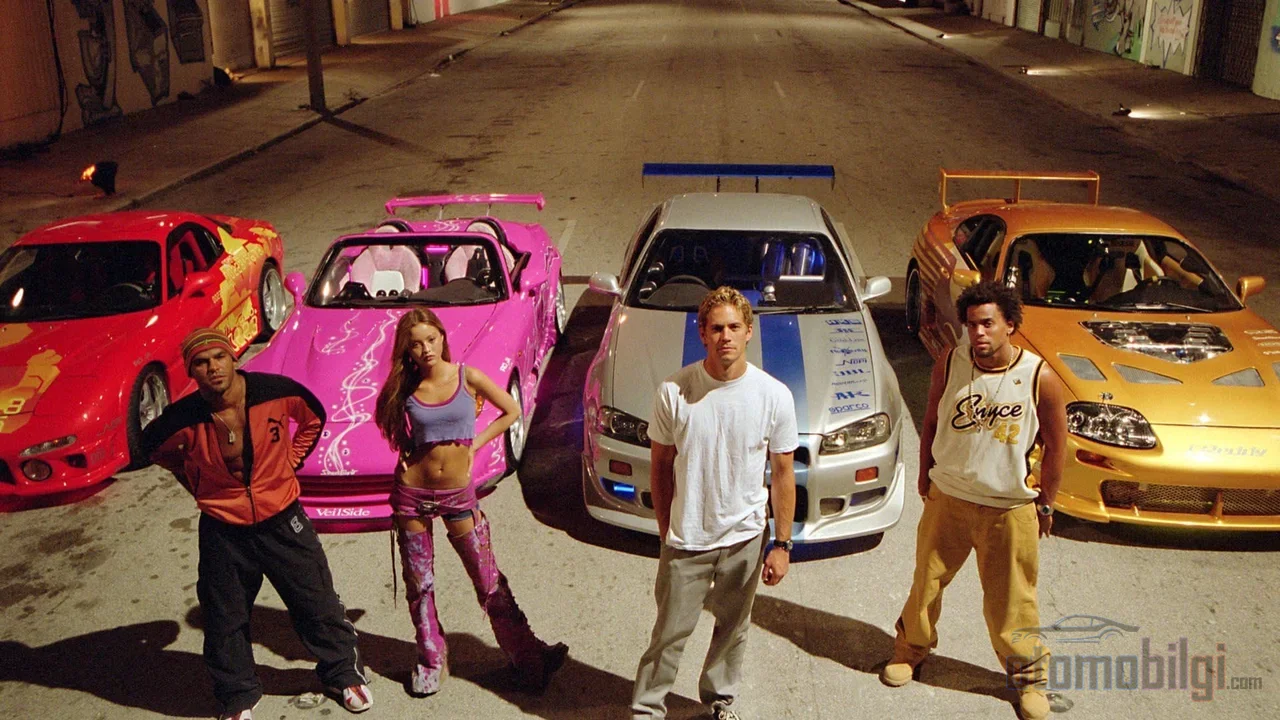
The signature car of Dominic Toretto, played by Vin Diesel, is a black 1970 Dodge Charger R/T with a massive supercharged V8 engine. In the film's fiction, this monster has 900 horsepower it produces and it becomes synonymous with Dom's father's 9-second quarter-mile record set in Los Angeles. Technically, it is depicted with a supercharged 426 Hemi V8 and a three-speed automatic transmission; there is a list equipped with named parts known from the exhaust to the suspension.
Only three Chargers were reportedly built for the film. The behind-the-scenes details are just as interesting as the film itself: there are claims circulating that the giant engine glowing under the hood in the garage scene was not a real race engine in the scene car; according to some accounts, one of the filming cars actually had a stock engine. Although this detail is not confirmed, it shows that Hollywood magic is sometimes completely different behind the curtain. In film history, this Charger is mentioned alongside legendary vehicles like the DeLorean, the Aston Martin DB5, or Bullitt's Mustang. In my opinion, this list is the very essence of a vehicle's cultural attachment test.
Modification Details: How Were the On-Screen Cars Built?
Each of the cars in the film was a showcase of the tuner aesthetics of that era. Take the example of Brian's first car, the 1995 Mitsubishi Eclipse : screen-exceeding paint, body kit, a large rear wing, and neon lighting spreading from below... You know how we say "the silhouette of an era," well, underglow is exactly that. But there is a surprising detail: the Eclipse, the star of the film, was running not with the turbo race engine enthusiasts expected, but with a rather ordinary base engine. In other words, the image had overtaken real performance; that's just how cinema is.
This aesthetic was so effective that the cars from the film were carried everywhere from the toy world to video games. From scale model collections to remote-controlled Supras, to in-game cult vehicle lists, the franchise built its own product universe. A film vehicle finding its place on diecast shelves is now the mark not of a niche hobby but of an industry.
Film Cars at Auction: From Niche Hobby to Millions of Dollars
The most striking journey of the franchise vehicles took place in auction halls. That Supra Paul Walker used in the film was sold at an auction in June 2021 for a record-breaking price of $550,000 . Even more surprising is the orange Mazda RX-7 from Tokyo Drift; at an auction in England in July 2025 it went for over $1.2 million , doubling the previous record. The Nissan Skyline R34 GT-R, another of Paul Walker's cars in the films, was also put up for sale at a separate auction.
So why do these cars appreciate so much? The logic is actually simple: the films' box office power, exceeding 6 billion dollars, pushes the status of those vehicles higher with every new film. The more iconic a film becomes, the more desirable the real car becomes. You can think of it like the story of a classic car; but here the story is written not by one generation, but by a global fanbase. This market isn't exclusive to the franchise either: a major classic car auction in 2026 generated over 47 million dollars in total sales, with every car offered finding a buyer. The collecting world is thriving, and film cars are among its stars.
How Did Real Street Racing Culture Change?
Here is the real question. The film influenced the tuner scene in two directions at once, and this influence is still debated. On one side, the automotive media emphasizes that the franchise has changed the automotive landscape for more than twenty years and that the cars carried the scene. On the other hand, there is a harsher view among fan communities: according to some, the film killed the 90s import scene that existed before it; because it commercialized that special, intimate world and opened everything up to everyone's access.
The picture as I read it is this: the film both grew and transformed the scene. A lost innocence for the old generation, an open door for the new one. Moreover, the franchise's influence wasn't limited to passion alone; before a new installment of the film series was released, law enforcement issued warnings about the real-life risks of illegal street racing. Pop culture being this powerful also means responsibility.
Its Impact on Legal Racing Events
Perhaps the film's least talked about but most positive legacy is how it moved enthusiasts onto legal ground. The story of the real racers who inspired the film was crowned with a sanctioned event in New Jersey: the region's first import-focused legal street drag race was held. The scene also grew into major car shows with a much broader scope than just drag racing; the roots of today's events extend exactly to that transformation. For me, the most beautiful part of the story is a feature film drawing people away from nighttime streets and toward sanctioned tracks and organized shows.
The 25th Anniversary: How Did a Cult Move Into the Museum?
In August 2026, an automobile museum in Orlando announced an event celebrating the franchise's 25th anniversary. The vehicles of a film series entering a museum display shows that the subject is no longer just about cinema or a hobby. If, a quarter century later, new generations still admire that orange Supra and that black Charger, it must be acknowledged that the franchise truly transformed street racing culture.
So if it were you, which side would you take: the one that killed the scene, or the one that created an icon? I think both are right, and it is exactly this tension that makes the franchise so interesting. I eagerly await to see which car will become the star in the next installment; perhaps the record-breaking car at the upcoming auctions will be one we see on screen today.
Sources
- 'Fast and Furious' Inspired by Street-Racing Story - Business Insider
- Import scene - Wikipedia
- Deep dive: Brian's Toyota Supra from "The Fast and the Furious" - Motor Authority
- 1994 TOYOTA SUPRA - 'FAST & FURIOUS' MOVIE CAR - Barrett-Jackson
- Fast and Furious Cars: 1970 Dodge Charger - Edmunds
- 1970 Dodge Charger - Volo Cars
- Mazda RX-7 From 'Fast And Furious' Movie Sells For Record $1.2 Million At Auction - Forbes
- The 7 most expensive Fast & Furious movie cars ever sold - Hagerty
- Fast and Furious at Bonhams - Bonhams
- 2026 Barrett-Jackson Palm Beach Sale (Auction Results) - Classic Car Auctions
- Celebrate 25 Years of Fast & Furious at the Orlando Auto Museum - Dezerland Park
- The 'Fast & Furious' Franchise Was Inspired by a Real... - Autoweek
- The Real Street Racers Who Inspired The Fast and The Furious - Jalopnik
- The Deep Impact of the Fast & Furious Franchise on Car Culture - Motor Trend