Were the Legendary Movie Cars Really That Fast?
Share This Page
Short answer: most of the time, no. Bond's DB5, the DeLorean, Trans Am and Mustang may look like monsters on screen, but their real production versions were often ordinary, even underpowered cars. Camera tricks, low frame rates and clever editing make the on-screen sense of 'speed' an illusion far beyond the car's actual power. Here's the story of that crazy gap between myth and reality.
Highlights
- Aston Martin DB5: 4.0-liter aluminum straight-six, 282 hp - genuinely fast, but the weapons and stunts in the film were pure movie magic.
- DeLorean DMC-12: 130 hp V6 and a speedometer that only went up to 85 mph- an ironic choice for a time machine.
- Smokey and the Bandit Trans Am: due to emissions regulations it had to make do with around 200 hp of net power.
- Undercranking: slowing the camera to half the normal frame rate to make cars look much faster than they really were.
Are Movie Cars Really That Fast?
Here's a question for you: if you've ever watched a car chase in a movie and thought 'wow, this car is flying!', you probably needed to get out of your seat and check the car's spec sheet to get the right answer. Because one of Hollywood's best-kept secrets is exactly this: much of the on-screen speed comes not from engine power but from the camera. In this article we'll put four iconic cars side by side, comparing their movie appearances with their real performance, and figure out how that thing we call 'speed' is actually produced. Ready? Let's get started.
Aston Martin DB5: Bond's Genuinely Fast Car
Let's start with an interesting detail: in Ian Fleming's novels, Bond's first car was a Bentley. The DB5 only entered the cinema in 1964 with Goldfinger and returned the following year in Thunderball. Then what happened? That car became Bond's signature; it reappeared in countless films up to the Ferrari F355 chase in GoldenEye during the Brosnan era, and kept its place in Daniel Craig's last four Bond films.
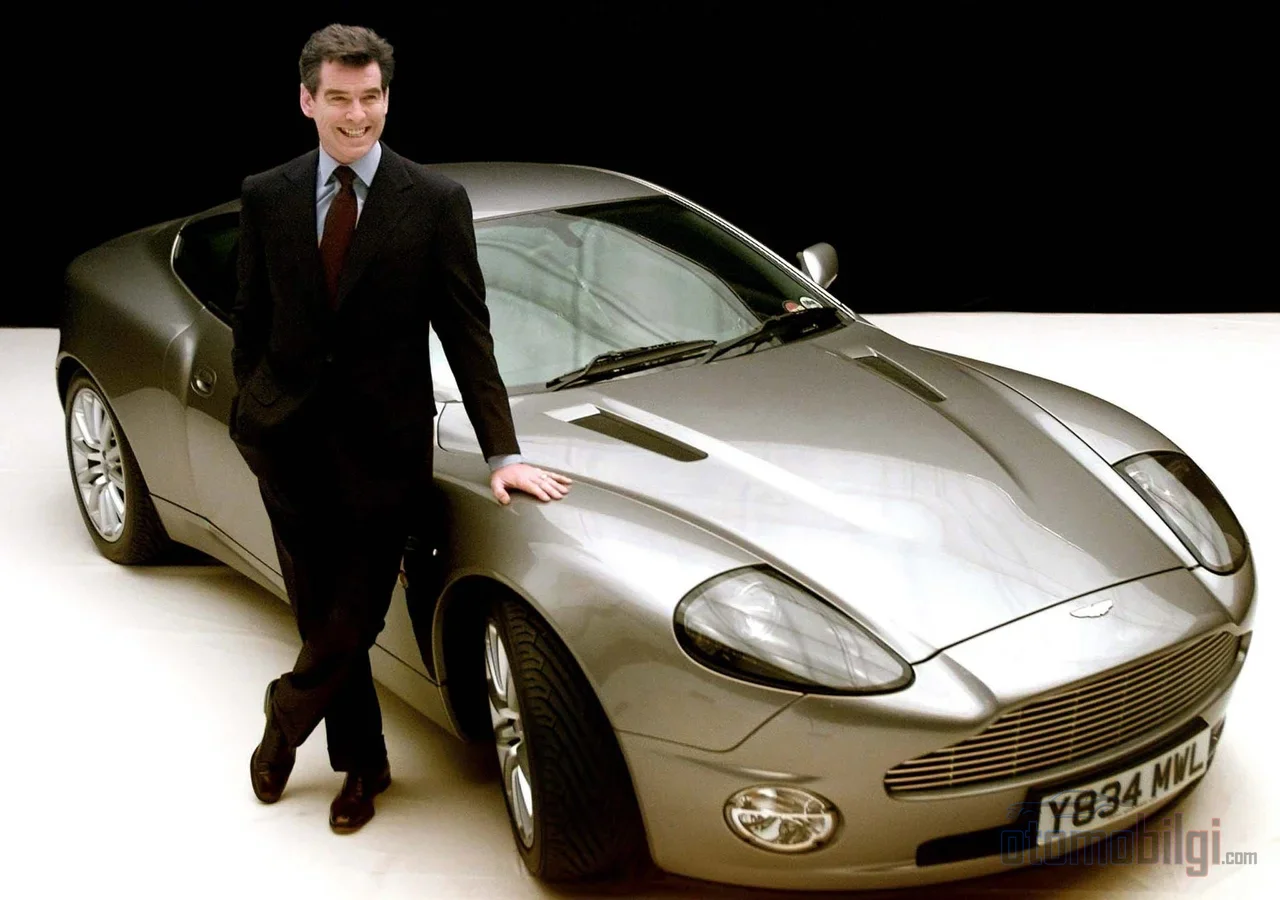
So what was the real DB5 like as a machine? The news here is good: an all-aluminum 4.0-liter straight-six engine, 282 hp and a 5-speed manual transmission. For the mid-1960s, that meant seriously good performance. So Bond's car was genuinely fast - but the revolving license plates, smoke systems and machine guns bursting from the sides in the film were, of course, cinematic inventions.
What About the Modern Bond Cars?
Over the years, Bond's garage has grown. Casino Royale's DBS V12, with its 6.0-liter V12 engine, produces 510 hp , does 0-100 km/h in 4.3 seconds and can reach up to 191 mph (approximately 307 km/h). Spectre 's DB10 is a complete collector's piece: only 10 were made, it had a carbon fiber body and carried a 4.7-liter V8; at the 2016 auction, the only public example sold for 2.4 million pounds. And then there's the Die Another Day's Vanquish is there, with a 6.0-liter V12 and 460 hp - but if you're expecting the 'invisibility' shield from the movie, bad news: it doesn't exist in real life.
No Time to Die (2020), on the other hand, is perhaps the most ambitious chapter of the DB5's cinematic life. Aston Martin prepared eight DB5 replicas at a secret facility in England; each one is worth approximately 3.5 million dollars. Two original vintage DB5s were used only for close-up and detail shots. The chase scenes were handled by British rally champion Mark Higgins - Craig's stunt double and the lead driver of the last four Bond films. So you might think 'Bond' is driving on screen, but the real hero behind the wheel comes from rally tracks. And that famous 'bullet' effect? Outside the camera frame, the crew was firing paint pellets filled with flammable material, called 'zirk balls', at the car. How does that sound? The most fun job on a film set, I suppose.
DeLorean DMC-12: Too Slow to Be a Time Machine?
Now things get complicated, because Back to the Future's DeLorean proves the opposite of the legend. In the film, you needed to reach 88 mph (about 142 km/h) for time travel. Without the barrier, this would be the world's most poetic speed threshold. But the real DeLorean DMC-12 was unfortunately far from ideal for this goal: it had a 2.8-liter V6 engine with only 130 hp of power, and its performance didn't match the expectations created by that futuristic stainless steel body at all. The 0-60 mph time was around 8.8 seconds - even today's family sedans are faster.
But here's the sweetest detail: the production DeLorean's speedometer only went up to 85 mph. So your car's dial couldn't even reach the speed the movie demanded! The crew tricked the camera to show that legendary 88 moment. That's the power of cinema - it turned a car on the verge of bankruptcy in the early 1980s into a pop icon. Today, thousands of fans are converting their DMC-12s into replicas faithful to the film, and this cult continues in 2025. A car can become a huge legend without actually being fast; the DeLorean is the most beautiful proof of that.
Trans Am and Mustang: How Power Figures Fooled Us
The Pontiac Trans Am, made iconic by 1977's Smokey and the Bandit , was one of the coolest muscle cars on screen. But the 400 cubic inch (6.6-liter) engine was crushed under the serious emission restrictions of the era, and net power was around 200 hp . Here's where we fall into a nice trap: the same engine was said to reach up to 355 hp according to the old 'gross' measurement standard. This difference between gross and net measurement clearly shows how much of the era's 'legendary power' perception was actually the work of the measurement method, not the engine itself. In my opinion, one of the most elegant misconceptions in all of automotive history.
A total of three Trans Ams were used in the film, and Burt Reynolds' personal 1977 Y82 version was put up for auction years later. The original 'Bandit' stunt car was equipped with a 455 V8 and a 4-speed manual transmission - only 110 units The LE Trans Am was produced. Meaning real-world collector pieces outside the screen are even rarer than the on-screen chase.
Mustang's Bullitt Legacy
1968 original Bullitt Mustangs today come up at auctions with examples reaching as much as 450,000 dollars. The modern side is a completely different league: the 2019-2020 Mustang Bullitt, with its 5.0-liter V8, 480 hp and 420 lb-ft of torque, comes with a 6-speed manual transmission and a dry weight of about 3,705 pounds. The 2009 Bullitt, on the other hand, made 315 hp with a 4.6-liter V8. The Mustang's real power has increased significantly over the years - this time real engineering chased the legend. And there are modern examples too: Fast & Furious 6 featured a 1969 Dodge Charger Daytona carrying a 430 hp 6.2-liter LS3 engine. Yes, some movie cars really do build muscle.
| Car | Film | Engine | Power |
|---|---|---|---|
| Aston Martin DB5 | Goldfinger (1964) | 4.0L inline-6 | 282 hp |
| DeLorean DMC-12 | Back to the Future (1985) | 2.8L V6 | 130 hp |
| Pontiac Trans Am | Smokey and the Bandit (1977) | 6.6L V8 | ~200 hp (net) |
| Mustang Bullitt | 2019-2020 | 5.0L V8 | 480 hp |
How Does Hollywood Fake Speed? Camera Tricks Explain
Here's the star of the segment: if your car is slow, let your camera be slow. This is called undercranking and filmmakers shot cars looking far faster than they really were by dropping the camera to as low as half its normal frame rate. While the camera records at low speed, playback at normal speed makes everything - engine revs, terrain passing, wheel rotation - appear sped up. This technique was almost standard in 1960s car chases in particular. When cameras are slowed by 30-40%, a sequence filmed at roughly 30 mph looks far more frantic on screen. Our brain, accustomed to 24 fps, automatically processes this image as 'real'; that's exactly why the trick works so well.
But frame rate alone isn't enough. Here's the rest of the trick box:
- Parallax maximization: Side streets, narrow country roads, stacked streetlights and telephone poles - objects passing by in tight spaces multiply the sensation of speed.
- Side angles: Shooting from the front never looks fast enough; side shots always feel faster because objects passing the vehicle flow across the lens much quicker.
- Wide-angle lens: With a roughly 14mm lens, bringing the car toward the camera and passing it close creates a 'small-to-big' explosive effect and gives the feeling of flying out of the screen.
- Editing: Short cuts, reaction shots and steering details are the final layer that convinces the viewer's brain there is 'extraordinary speed'.
By the way, the technique has a limit too: shooting at very low speeds disrupts the car's suspension and wheel dynamics - if the car is genuinely fast, the body and wheels behave completely differently. So sometimes a car needs to actually be driven fast to look genuinely fast. This is exactly why filmmakers depend on stunt drivers: at those kinds of 'demonic speeds' a stunt driver is almost always required, and they have to find ways to show the actor at the wheel. Dukes of Hazzard team even developed a new tow system to be able to really fling the cars around. Has the situation changed on the modern side? Partially. Baby Driver's chases were shot through a real, grueling and laborious process. Fast & Furious series, meanwhile, Michelle Rodriguez received performance driving training and repeated maneuvers like lane changes and fast merging herself. So today some actors really are at the wheel - but cinema still relies on the camera.
Legendary Cars Today: The Auction Market Madness
The real-life counterparts of these cars are talked about more for their collection values than their on-screen performances. Mecum's Kissimmee 2026 auction is being promoted as one of the world's largest collector car events, and Hagerty has published its list of 'smart and fun collector cars' for 2026. A movie car museum is putting 50 famous cars up for sale, including the Mustang from John Wick and the Evo from 2 Fast 2 Furious; Bonhams' 'Movie Cars Collection' auction has caught collectors' attention. And there is also Juliens' 'Movies and Motorcars' auction - featuring pieces from the collections of Steve McQueen, Paul Newman and Elvis Presley. So while the speeds of these cars may be debated, there is no sign of any slowdown in the market's interest in them. In my view, the clearest indicator of this is Aston Martin putting the Goldfinger gadget-filled DB5 replica up for pre-sale at 3.5 million dollars: 25 factory replicas, complete with everything from Browning machine guns to rotating plates, smoke and nail dispensers. Cinema is truly priceless.
Conclusion: Almost Legendary, But No
So let's sum up: Were movie cars really that fast? Some, like the DB5, yes - truly fast; Bond hadn't made a wrong choice for his garage. Others, like the DeLorean and Trans Am, fell far behind their on-screen images; one of them couldn't even reach the target speed on its odometer. And what we call screen speed is the combined work of frame rate, parallax, lens choice, and editing mastery. It's not the car's real performance but the camera's performance that impresses us. The next time you want to shout 'wow, so fast!' during a chase scene, pause for a second and ask the camera: 'How many fps were you actually shooting at?' I think that would be a much more fun question. Which movie car do you think could have been the biggest disappointment? My vote goes to the DeLorean, but I'd love to hear your thoughts.
Sources
- James Bond's Aston Martin Models
- Aston Martin DB5 | James Bond 007
- No Time to Die Release date, Aston Martin DB5, and Stunts
- Back to the Future DeLorean: Everything You Need to Know
- 5 things you may not know about the DeLorean from Back to the Future
- DeLorean time machine
- 'Back to the Future' Turned This Failing Car Into a Pop Icon
- The Legendary Trans Ams of 'Smokey and the Bandit'
- Smokey & The Bandit Trans-Am | Plus Automotive Network
- Ford Mustang Bullitt specs
- The Evolution of Making Car Chase Scenes in Hollywood
- How to Make Chase Scenes Look Fast
- Movies and Motorcars - Juliens Auctions
- Five Smart Collector-Car Buys in 2026