How Were Cinema's Legendary Car Chase Scenes Filmed?
Share This Page
The legendary car chases of cinema were shot by rigging cameras to real cars and letting real stunt drivers floor it on real roads; in cult scenes like Bullitt, The French Connection, Ronin and Mad Max: Fury Road, it is not CGI that speaks, but souped-up cars, stunt performers who never gave an inch, and masterfully crafted editing. In other words, those breathtaking minutes you see on screen are the product of physics, reflexes and sweaty palms from start to finish. How did they do it? Let's go behind the scenes.
Highlights
- Two 1968 Mustang GT 390s (each with 325 horsepower) were prepared for the Bullitt scene, facing off against 375-horsepower Dodge Charger R/Ts.
- In The French Connection, director William Friedkin personally directed the chase from the back seat.
- For Ronin, more than 300 stunt performers were employed, and around 80 vehicles were rendered unusable.
- Mad Max: Fury Road was designed primarily as one giant chase with practical effects.
- Bullitt's editing was an Oscar-winning job of cutting that gave the scene a sense of being "uninterrupted."
Bullitt: Those Ten Minutes That Wrote the Rules
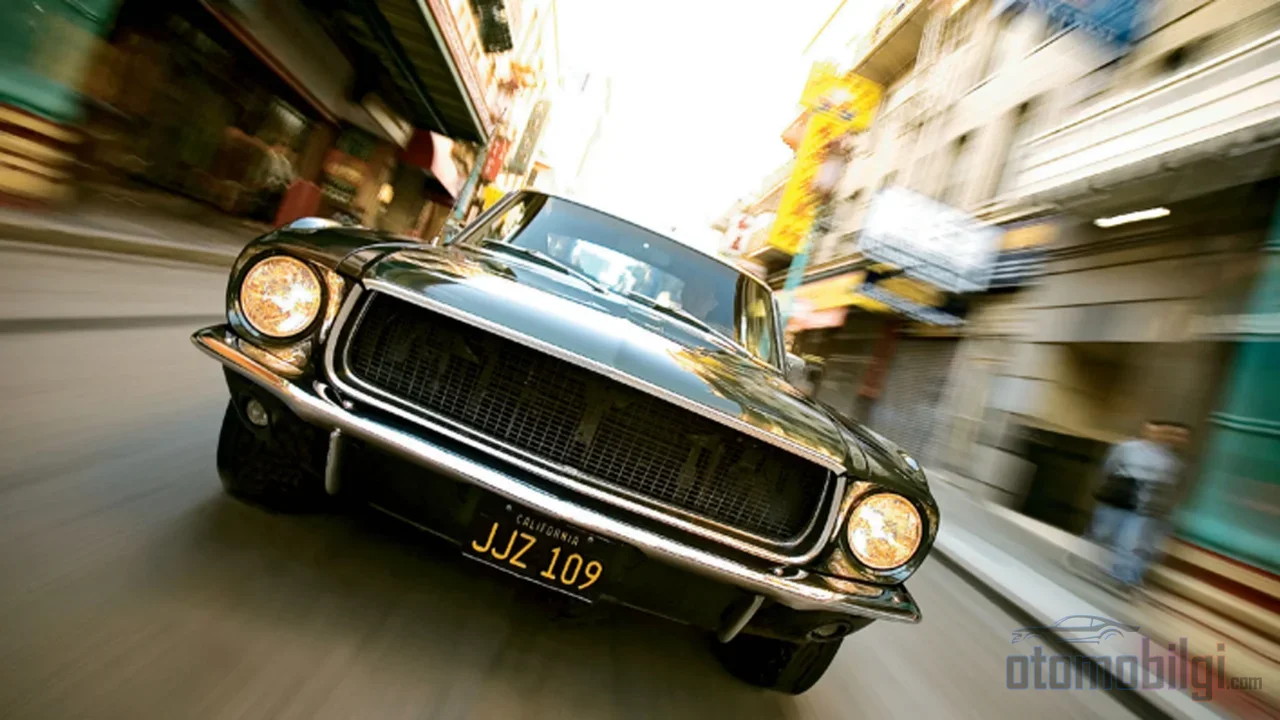
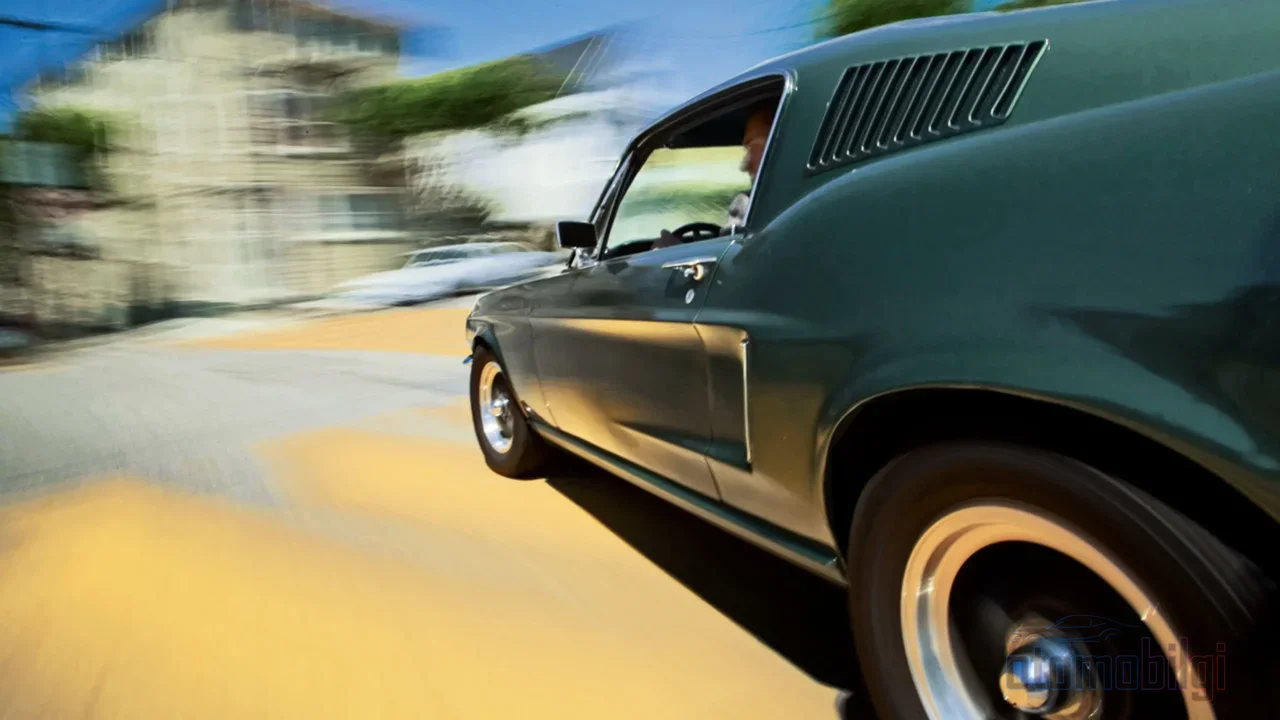
In 1968, in Peter Yates's Bullitt, Steve McQueen played San Francisco police detective Frank Bullitt. From the earliest stages of the screenplay, it was a requirement that the film include a car action scene. McQueen's demand was one word: realism. No speeded-up camera, CGI didn't exist anyway - the cars were genuinely driven, and the tires genuinely screamed.
The film's official vehicle supplier was Ford, and two 1968 Mustang GT 390s with consecutive serial numbers were prepared for the shoot. Both were in Highland Green Metallic, with big-block engines, four-speed gearboxes and 325 horsepower. The rumor that "one was actually a 302 automatic" was definitively disproven with the build codes. On the opposing side were two 1968 Dodge Charger R/Ts : 440 Magnum V8, 375 horsepower, four-speed. Their driver was mostly stuntman Bill Hickman.
The cars were not stock, but there was no Hollywood fantasy either. Race car builder Max Balchowsky reinforced the Mustangs' suspension and camera mounting points, fitted Koni adjustable shock absorbers, connected straight exhaust pipes, and added dozens of camera mounting points to the vehicles. No air conditioning, manual steering - not a luxury item, a work machine. On the Chargers, the intervention remained minimal: shortened torsion bars, reinforced arms, police-type rear springs. Engine and transmission were stock. Even the hubcaps being flung off throughout the scene was a deliberate choice: that "ordinary" look was one of the chase's most memorable details.
Did Steve McQueen really drive it himself?
Partly yes. McQueen spent most of the scenes behind the wheel, even doing side-by-side driving practice with his stunt double Bud Ekins at speeds over 100 mph on a track before filming. But in the riskiest passages, legendary stunt drivers like Carey Loftin and Bud Ekins took over. Ekins was also McQueen's stunt double in the famous motorcycle jump in The Great Escape. Stars sweat too, but they entrust their lives not to the cars but to the stunt performers.
Was the scene really shot in one continuous take?
That chase, flowing like an invisible thoroughbred through San Francisco's steep streets, is actually a product of editing. The locations are fragmented and the route is not drivable as one continuous stretch as it appears. Low-mounted cameras, long lenses, and car-mounted cameras provided unusually close footage for 1968; on the sound side there is almost no music, just the V8 growl, gear shifts, and tire screech. Hours of editing were done so that the same car sits in every frame - the film won the Oscar for editing. Proof of the power of editing: a scene whose story changes when you watch it second by second.
A small technical note: The Charger was faster than the Mustang on the straight, meaning the Mustang, wanting to keep the camera behind it, actually had to constantly play catch-up. Cars coming down the steep hills jumped far more than the script anticipated - and it was precisely these uncontrolled sudden leaps that gave the scene an adrenaline no screenwriter could have written. The scene was shot in May 1968 with crews of 50-60 people per scene; its duration, according to the edit, is roughly 10 minutes or so, reaching 13 minutes in extended versions.
The fate of the cars is straight out of a movie: The stunt Mustang was sold for scrap due to its damage and was found in a scrapyard in Mexico in 2017. The copy McQueen used was sold to the Kiernan family in 1974, stayed with them for 44 years, and returned to San Francisco in 2018 with a 50th anniversary celebration. The camera cable holes in its trunk and the studio label on the glass are still intact - the car itself is an archive, in other words.
The French Connection: The Director Who Plays by No Rules
Three years later, William Friedkin in 1971 raised the bar for chases one notch higher with The French Connection. Gene Hackman drove himself in the close-ups, but the extremely dangerous stunts were performed by stunt driver Bill Hickman - yes, the same Hickman who drove the Charger in Bullitt. Friedkin's working style was legendary: he spent weeks provoking and firing up his stunt driver, then transferred that dose of adrenaline onto the screen. He also mounted the camera in the back seat and, together with operator Enrique Bravo, shot right from the middle of the action.
Without closing the streets, every scene was filmed in a single take; two stunt vehicles waited along the route. The crashes were recorded externally with four or five cameras, using different lenses and angles. So the scene you see is not from a single point of view, but a mosaic woven with cinematic language. The margin of error in timing was close to zero; in some parts the stunt drivers had to pass the oncoming car by "grazing" it without a direct collision, and minor accidents became inevitable. A practical analogy: it's like trying to pass along a curb on a bicycle without scraping it, except the only difference is an extra 200 horsepower and New York traffic.
Ronin: The French Stunt School Takes the Stage
In 1998, with John Frankenheimer's Ronin, was the formula reused? Partially yes: real vehicles, real drivers, no CGI. But the scale is in a different league. The film features more than 300 a stunt driver was hired; over 300 stunt performers, including pedestrians and other drivers, worked on it, 100 of whom drove according to plan. Approximately 80 vehicles were rendered unusable - so the chase took a heavy toll on both the wallet and the bodywork.
The star cars were left-hand-drive Audi S8 (D2) models sourced from England; fake steering wheels were mounted on the left for the actors. The director entrusted the chase to experienced French stunt performers - the country's rally and racing tradition truly left its mark on the scene. And in the final chase, only one performer was allowed to do his own stunts: Skipp Sudduth. Without brakes. Yes, you read that right - without brakes. Unlike the other performers, Robert De Niro and Natascha McElhone also actually drove a portion of the chase themselves, then completed the close-ups by mimicking the stunt performers' movements.
Mad Max: Fury Road: The Physics of Engineered Chaos
In 2015, George Miller's Mad Max: Fury Road arrived, and the film was constructed essentially as one giant car chase. The difference here lies more in philosophy than scale: the scenes were built predominantly with practical effects, meaning real vehicles, real stunt performers, and real explosions. While stunt coordinator Guy Norris described the film's craziest stunts - including the pole-swinging Polecats - the crew truly pushed the limits. The "raw set footage" became a phenomenon of its own on the internet; even when the cameras stopped rolling, the scenes looked incredible.
Of course, there is a realistic side to it: Fury Road also contains a significant amount of CGI, and the film's magic actually comes from a masterful combination of the two. Practical effects give the scene its weight, texture, and physical realism; digital work provides safety and continuity. The stunts in the film couldn't have been shot on an ordinary studio green screen - but no stunt performer could fly without CGI in a nuclear desert either. Even in 2026, this film is praised for its practical craftsmanship that makes you say "wow" when compared to its far more CGI-heavy sequel structure. A short aside on trivia: in modern cinema, cars are now mounted on robotic motion platforms that can lift loads of up to 5,000 kilograms for some driving scenes. So the physics is still the same, it's just turning in a studio instead of on the street.
Cars or Editing: The Real Secret Behind the Iconic Scenes
I don't know if you've noticed, but the common denominator of these four films isn't horsepower, it's determination and editing. In Bullitt, the Mustang is already slow on a straight road; in The French Connection, you're careening like a bandit through the heart of New York; in Ronin, the Peugeots roll over who knows how many times; and in Fury Road, there's someone playing a guitar on top of a truck. The cars are actors in their own right; but what makes a scene a scene is where the camera stands and where the cuts are placed.
| Film | Year | Notable Cars | Behind-the-Scenes Detail |
|---|---|---|---|
| Bullitt | 1968 | Mustang GT 390, Dodge Charger R/T | McQueen drove most of it, the risky parts went to the stunt performers; the editing Oscar |
| The French Connection | 1971 | Pontiac | Friedkin pulled it off from the back seat, in a single take without closing the streets |
| Ronin | 1998 | Audi S8 (D2) | 300+ stunt drivers, around 80 cars were rendered unusable |
| Mad Max: Fury Road | 2015 | Customized war vehicles | Practical effects-focused, balanced out with CGI |
So if it were you, which one would you choose? A Mustang downshifting on the hills of San Francisco, S8s burning rubber in the underpasses of Paris, or a war vehicle going out of control in the desert? I think you have a favorite on your list too - see you in the comments.
Sources
- Retracing Steve McQueen's "Bullitt" Car Chase in San Francisco
- 'Bullitt' Mustang returns to San Francisco 50 years after iconic car chase
- At the movies: The making of The French Connection chase
- Photographing The French Connection
- William Friedkin Broke Laws To Film 'The French Connection's Car Chase
- How Ronin out-drove other action films
- The Porsche 911 Camera Cars of Ronin
- Stunt Drivers in Ronin
- Ronin - Trivia
- 'Mad Max: Fury Road': The Story Behind Its Most Insane Stunts