Cars Destroyed in Cinema: The Losses Behind the Scenes
Share This Page
You're watching a legendary car chase in a movie, the hero's car takes the final corner in flames, and you lean back in your seat and say: nice crash, must be CGI. Or... right? Well, one of the most touching secrets of cinema is this: most of those cars were real. Real metal, real glass, real engines - and machines that really ceased to exist when the screen went dark. So why, and how, do studios sacrifice so many valuable vehicles? Let's go behind the curtain.
How many cars are destroyed in a single movie? The numbers are dizzying
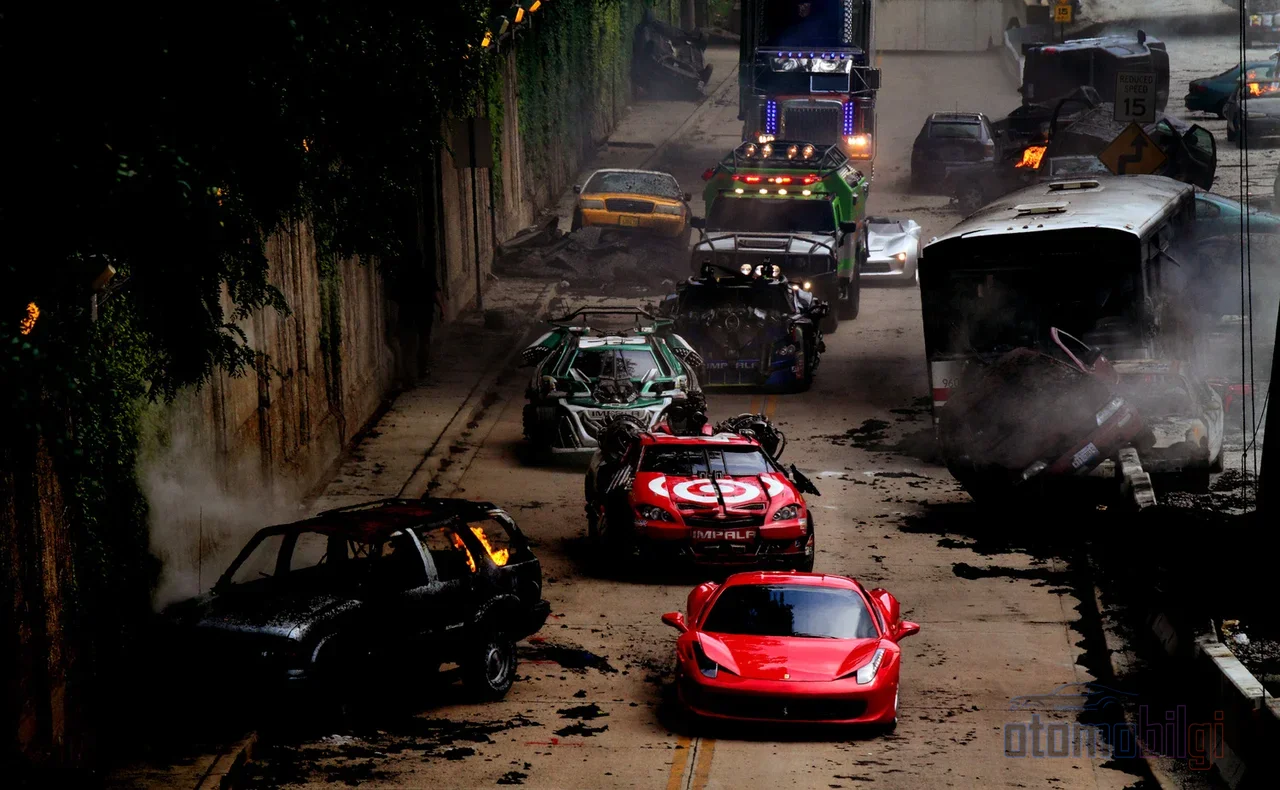
The list of films that destroyed the most vehicles in cinema history reads like an accident report. The name at the top will come as no surprise: Transformers: Dark of the Moon (2011), where giant robots reduce cities to dust and smoke, has entered the Guinness records with no fewer than 532 real vehicles. So what does that number of cars mean? Five hundred and thirty-two. In a single film. You can hold your head in both hands; I still am.
The rest of the list is anything but calm. Fast & Furious 6 is the ambitious name in second place with 350 vehicles, with The Matrix Reloaded right behind it with around 300. Fast Five paid a bill of 260, Tokyo Drift 249, and Furious 7 230 vehicles. The first sequel of the series managed 190, and 2 Fast 2 Furious made the list with 130 vehicles. Even the Die Hard series' A Good Day to Die Hard left a bill of 132 vehicles behind the curtain.
| Film | Number of vehicles destroyed |
|---|---|
| Transformers: Dark of the Moon (2011) | 532 |
| Fast & Furious 6 | 350 |
| The Matrix Reloaded (2003) | ~300 |
| Fast Five | 260 |
| Tokyo Drift | 249 |
| Furious 7 | 230 |
| The Junkman | 150 |
| A Good Day to Die Hard | 132 |
The Junkman, standing in a corner of the list, is a story of its own: director H.B. Halicki used up his own car collection for the shoot. In other words, a man who wrecked his own cars in front of the camera. This business is a matter of passion, no doubt about it.
Highlights
- 532 vehicles: The record for the most vehicles destroyed in a single film belongs to Transformers: Dark of the Moon.
- For The Matrix Reloaded's roughly 14-minute chase, 7 weeks of filming were done and ~300 vehicles were used up.
- The Blues Brothers shoot ended with a loss of 103-104 vehicles; 13 of them were the Bluesmobile Dodge Monaco.
- The Need For Speed movie tops the list with an estimated $13.3 million in vehicle damage.
Why was The Matrix's black Lincoln Continental so perfect?
In 1999, when Neo and the crew first glided across the screen, do you know what was underneath them? A black, suicide-door 1965 Lincoln Continental. The fourth-generation Continental (1961-69) was produced in an era when power wars were running wild, a luxury sedan talked about for its elegance. The body lines are dead straight, the doors open from the rear edge, and the car's whole calm, mysterious aura is exactly the aura of The Matrix. So this car was not chosen at random; it was practically written into the cast as a character.
But the real epic explodes in the highway chase of the third film, The Matrix Reloaded. The sequence you see on screen is about 14 minutes - but behind it lies a year of planning, 7 weeks of filming, and roughly 300 wrecked vehicles. General Motors had supplied the production with a large number of real vehicles, and nearly all of them were turned into scrap during filming. A fake road and a half long was even built specifically for the chase. Today, even the car you overtake while driving at 100 km/h on the highway gets you excited; these are 300 families who gave a year of their lives for the screen.
The Bluesmobile: 13 Dodge Monacos sacrificed for a single role
One of the most heartbreaking examples of the fate of cult cars is the 1980 film The Blues Brothers. By the time the film ended, 103 vehicles had been wrecked; different counts put it at 104, because there is no clear line as to what counts as "destroyed". That number meant the record for destroying the most vehicles in a single film at the time - in a sense, the ancestor of today's record lists.
The film's true automotive star, however, was the Bluesmobile: that massive, unpainted black 1974 Dodge Monaco. And here is the bittersweet detail - the "single car" never shown full-length on screen was actually 13 separate Dodge Monacos sacrificed one after another throughout filming. The production worked with a body shop that kept its doors open 24 hours a day: damaged cars went in for repairs at midnight and were back on set by morning. The studio had not bought hundreds of new vehicles; most of the police cars were damaged, repaired, and sent back to the screen again and again. So behind that famous chaos lies a recycling chain operating with eerie discipline.
Now, a question: was all this effort worth it for a film? John Landis's chaotic choreography of a chase is still considered worthy of the textbooks today. So the answer is most likely yes - but unfortunately, the sacrificed Dodges never got to hear it.
Which prized cars did Hollywood really sacrifice?
Setting aside ordinary sedans, names that keep collectors up at night are also on this list. The car dropped through the glass in the legendary scene of Ferris Bueller's Day Off was a genuine 1961 Ferrari 250 GT California. Today worth millions of dollars at auctions, it is a classic collectors only see in their dreams. In The Hangover, the 1969 Mercedes-Benz 280SE cabriolet shared the same fate. In The Wolf of Wall Street, the 1989 Lamborghini Countach Silver Anniversary was damaged; and in another film from that same year, a 2004 Maybach 57 was destroyed as well.
The list goes on: in The Dark Knight, the Lamborghini Murcielago LP640 - and the fact that it had a manual gearbox made it both rarer and more valuable. In Furious 7, the glittering name of the luxury-hypercar world, the Lykan Hypersport, was launched between skyscrapers. The Aston Martin DB10 from the James Bond universe is also among the rare cars destroyed on screen. Even the shooting of Steve McQueen's Le Mans (1971) ended with the loss of valuable vehicles. In some chases, as in the opening of Furious 7, fully equipped and customized real cars were actually dropped from a cargo plane - it is said that even the team of vehicle coordinator Dennis McCarthy was surprised by this.
So what is the monetary equivalent of this damage? The Need For Speed film sits at the top of this field with an estimated $13.3 million in vehicle damage; almost twice the bill of the film in second place. The Fast & Furious series also stands in the upper reaches of the list with its own massive figures. Don't think of these as million-dollar effect budgets - this money was the total value of real, once-existing cars that were driven around one morning.
How are cars designed for destruction?
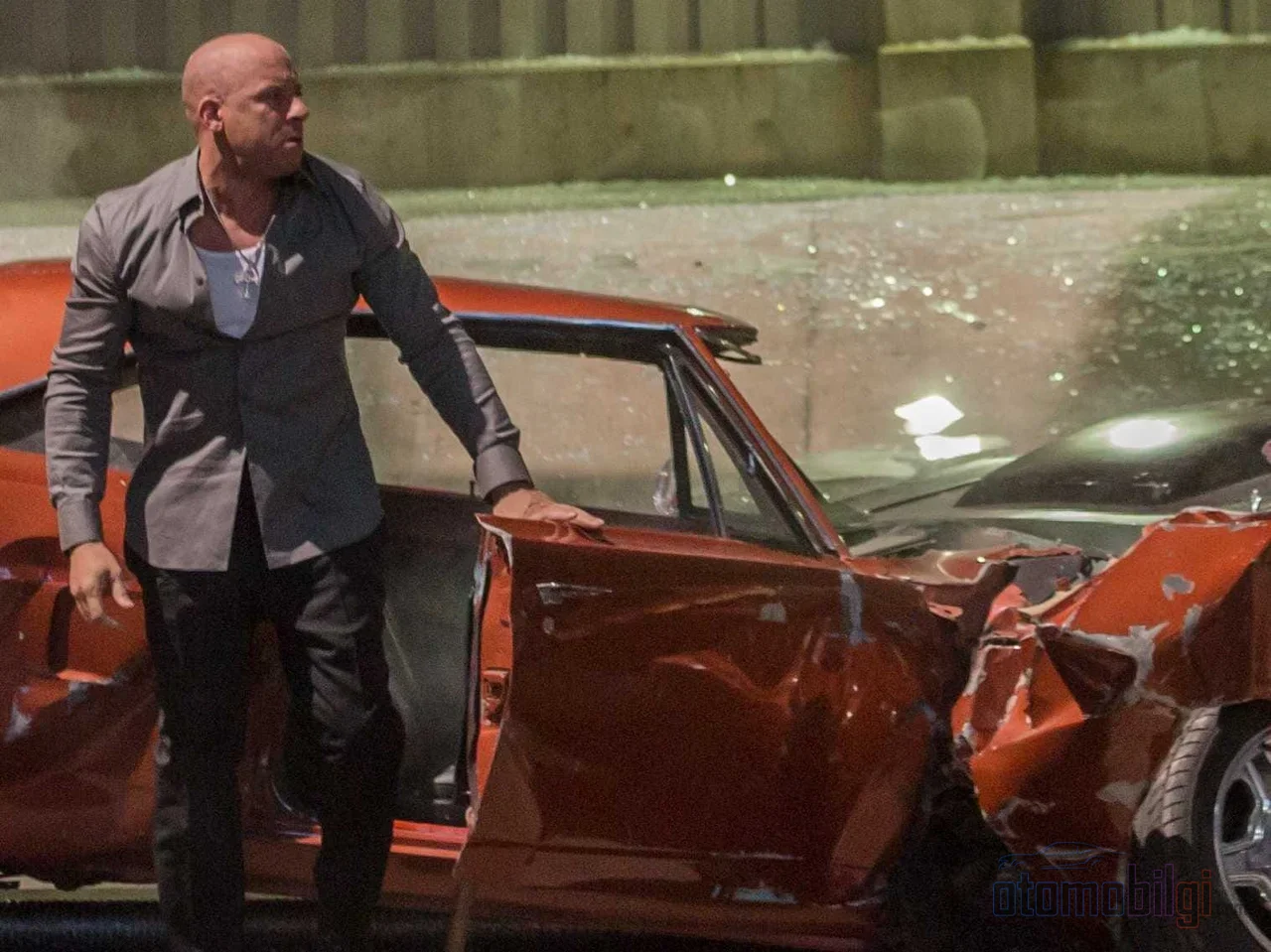
A perfect crash in front of the camera is no coincidence. Special effects teams prepare the vehicles in advance for destruction: the body is pre-conditioned to crumple exactly where and exactly how it is wanted - in other words, the car's fate is drawn before it is even born. The windows are set up to shatter in one go with small explosives. Let me sum up for you what happens in a movie chase: the chaos you see is actually an orchestra written note by note. Every crumple, every shattering window is planned; chance cannot enter the set.
So do studios really spend money on classics and supercars? This is where the picture has two layers. On one side stand the 532 vehicles verified by Guinness, the real fleet GM gave to Reloaded, and the real cars dropped from a cargo plane - the most concrete evidence of real destruction. On the other side, the entire defense system of the cinema world is at work: films are less destructive than assumed, and an ecosystem protecting valuable vehicles from being scrapped operates in full swing. Those "classics" destroyed in modern films are often repainted ordinary vehicles; studios cannot afford to bring expensive genuine classics onto the screen. The fact that only 2 of the vehicles used in the filming of Christine survive today tells on its own how rare these screen-cars have become.
The place of real destruction in the CGI era: digital crash or real metal?
In recent years, film sets have taken on a completely different look. LED wall technology, that is, virtual production, has made shooting realistic driving scenes inside the studio widespread; VFX teams can build crash scenes layer by layer, with incredible realism, digitally. This method, which carries no material or transportation costs, is almost a relief in the eyes of producers. But here the pulse of moviegoers also comes into play: many fans think that the CGI-heavy approach has weakened the hands-on craftsmanship that once built the scenes and has somewhat "diluted" the films. Indeed, the criticism that the car scenes in certain productions "look fake" is always contrasted with films that genuinely blew up real cars, cited as opposing examples of praise.
So the counter-current is also strong: some productions are still trying today to capture that "raw and dangerously real" feeling using real stunt cars with minimal CGI. The viewer's eye is now very sharp; it can tell a digital crash at a glance. So as technology advances, the value of real metal on screen strangely increases - much like vinyl records gaining renewed value in the age of digital music.
How do destroyed cars affect the collection market?
Here's the most interesting side of the matter: destruction also shapes the value of the survivors. First of all, any classic car having been in an accident, even minor damage, can seriously reduce its total value - in the collection world this is called "diminished value." So if a car is wrecked on screen or simply gets damaged, the price in the eyes of a collector checking its report immediately drops. Cars that appeared on screen and survived, however, tell another story: as we saw with the Christine example, if the number of cars used in filming was very small, the survivors automatically become scarce, and this scarcity indirectly pushes up their value. Of course, a film's glorious history alone doesn't determine the price - classic criteria like condition, originality, and damage history still speak. But the statement "this car was in that film and survived" is always the first step of the ladder in auction houses.
The market itself is changing too: the collector car world is undergoing a generational shift, with younger buyers adding newer cars to their collections. The classic car market didn't collapse but is transforming after the post-pandemic boom - and perhaps one day, screen cars that managed to survive in films will become one of the most talked-about segments. In my opinion, their chances aren't bad at all.
Do cars in movies really get destroyed - the short answer
Yes, cars really are destroyed in cinema - Guinness-verified record of 532 cars from Transformers, the 300-car highway massacre in Matrix Reloaded, and the filming tally of 103-104 cars for The Blues Brothers are indisputable proof of this. But that's not the whole picture: the "classics" destroyed in modern productions are mostly not genuine rare cars but ordinary or replica cars prepared in advance for destruction; valuable genuine classics are put at risk only in exceptional scenes. On the other hand, while CGI and LED wall technology are rapidly replacing real destruction, some productions continue to seek that "raw" feeling with real stunt cars. Conclusion: the screen monster is often fake, but for the real ones the bill runs into millions of dollars and the end of dozens of legends.
Sources
- Here are 10 movies that destroyed the most cars - Top Gear
- Bluesmobile - Wikipedia
- The Blues Brothers: How John Landis choreographed chaos - Hagerty
- 10 Facts About The Blues Brothers' Iconic 1974 Dodge Monaco - SlashGear
- The Matrix Reloaded Car Chase (Behind The Scenes)
- Why the Lincoln Continental Was the Perfect Car for 'The Matrix' - MotorBiscuit
- Lincoln Continental – The Matrix (1999) - Obsessed With Cars
- 10 Cars in Film That Don't Survive - Auto Europe
- 5 Times Hollywood smashed up seriously valuable cars - Driving.ca
- 25 Most Expensive Cars That Were Destroyed In Movies - HotCars
- The Movies With the Highest Car Damage Bills - Every Movie Has a Lesson
- How Cars Are Primed for Destruction in Movies and TV - Business Insider
- Why Do Movie Studios Destroy So Many Valuable Cars? - Carscoops
- The Collector Car Market Has Shifted To Newer Cars - Forbes
- How Does Diminished Value Work in Classic Cars? - Wreck Check Atlanta
- 5 Most Expensive Cars Destroyed In Hollywood Films - CarAndBike