How Did Herbie Become Everyone's Sweetheart?
Share This Page
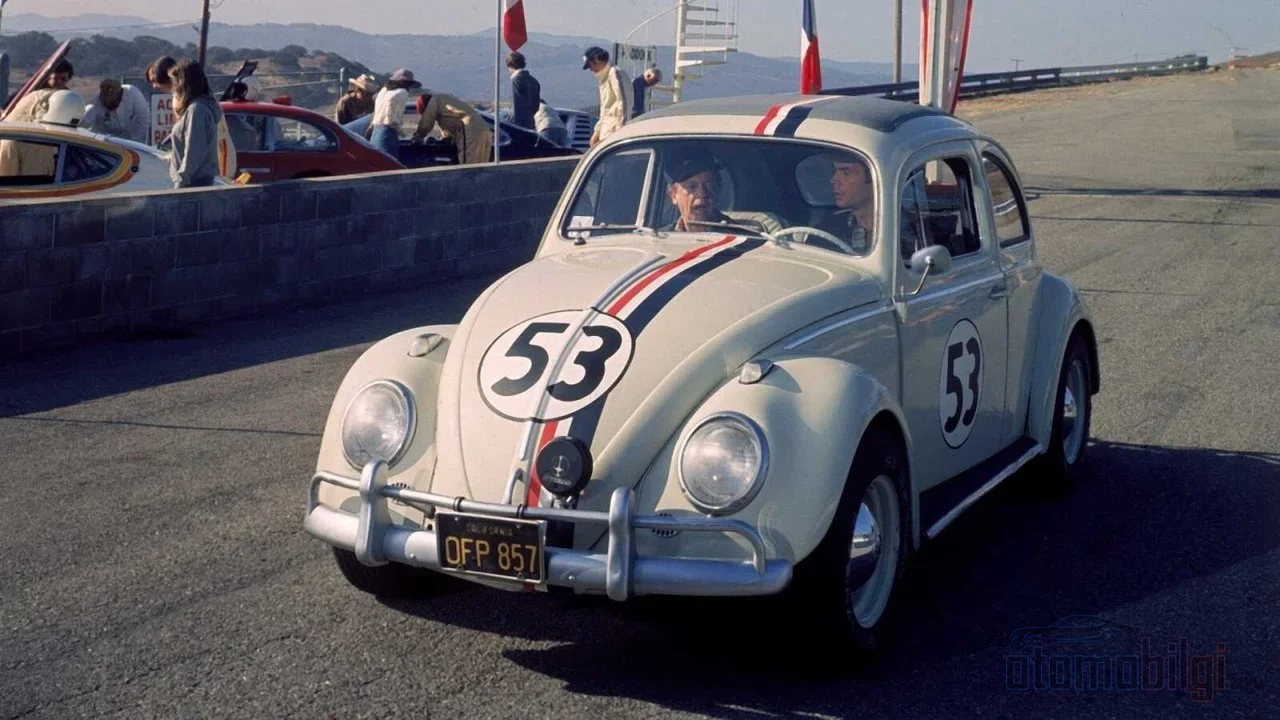
Herbie is a sentient 1963 Volkswagen Beetle race car capable of moving on its own, which appeared on the big screen with the 1968 film The Love Bug. The red-white-blue stripes on its body, the "53" number on it, and its winning races with its own mind made it one of the most lovable car characters in cinema history. But how did an ordinary people's car become so beloved? The answer lies in the Beetle's warm relationship with the public and Disney's highly creative filming tricks.
Highlights
- Herbie first hit the cinema screens on December 24, 1968 with The Love Bug.
- The "53" number comes from the jersey of Don Drysdale, a pitcher for the Los Angeles Dodgers baseball team.
- The series produced 5 theatrical films, one TV movie, and a short-lived TV series; its total box office exceeds $1 billion when adjusted for inflation.
- The self-driving scenes were not shot with CGI but with hidden drivers concealed in the back seat.
- One of the models used in the filming of Herbie Goes Bananas entered the record books as the first vehicle to pass through the Panama Canal.
How Did a Beetle Become a Star? Why Is Herbie a Volkswagen?
You'll be surprised, but Herbie didn't originally have to be a Beetle. The producers held a "car casting" for the character: A Toyota, a TVR, a Volvo, an MG, and a pearl-white VW Beetle were brought to the studio. The crews secretly watched how people reacted to these cars. While people sometimes kicked the other cars, they touched the VW as if it were a living friend. And at that moment, the choice became clear: the public's treatment of the car determined the heart of the story.
The Beetle had already become a symbol of individuality and freedom in the counterculture of the '60s. A cheap, humble people's car that could go anywhere. If you're going to fall in love with a car, it shouldn't be an arrogant super sports car, but rather like a neighbor everyone knows. Herbie's temperament matches this too: it holds grudges, gets jealous, and protects what it loves. Just like an old, grumpy but loyal friend.
The story of the name and the number
Its name? It comes from the character Tennessee Steinmetz's boxer uncle "Herb", whose nose resembled the shape of the Beetle's hood. As for the "53" number on the hood, it's a detail chosen by producer Bill Walsh while watching the jersey of Los Angeles Dodgers star pitcher Don Drysdale. The red-white-blue stripes on the bodywork and the yellow-black 1963 California license plate "OFP 857" became the character's signature.
The Love Bug (1968): A Classic Worth Watching Every Time Without Fail
In the first film, Herbie is bought from Thorndyke's dealership but is returned due to "reliability issues" - and by the way, blaming the car is very unfair; the real problem lies not with the car but with his own mistakes. Then Jim Douglas (Dean Jones) buys the car, enters it in races, and a romance begins with Carole Bennett (Michele Lee). In the El Dorado road race in the finale, Herbie wins despite being split in two. Yes, by splitting in two! If that's how a car's finale goes, why wouldn't audiences come back?
The film was adapted from Gordon Buford's 1961 book "Car, Boy, Girl." Directed by Robert Stevenson with a screenplay by Bill Walsh and Don DaGradi, it grossed $51.2 million at the box office - if you consider that this figure equates to roughly $450 million adjusted for inflation, we are looking at a serious blockbuster.
Chronology of the Sequels: From Monte Carlo to NASCAR
After the first film, Herbie did not retire; on the contrary, he began traveling the world. The series' main outline is as follows:
| Film | Year | Runtime | Box Office (adjusted for inflation) |
|---|---|---|---|
| The Love Bug | 1968 | 108 min | ~$450 million |
| Herbie Rides Again | 1974 | 88 min | ~$249.5 million |
| Herbie Goes to Monte Carlo | 1977 | 104 min | ~$152.3 million |
| Herbie Goes Bananas | 1980 | 98 min | ~$69.9 million |
| Herbie: Fully Loaded | 2005 | 100 min | $144.1 million (worldwide) |
The car in love in Monte Carlo
In Herbie Goes to Monte Carlo, where Jim returns and Don Knotts joins the cast, Herbie falls in love with a Lancia Scorpion named Giselle during the Trans-France Race. He also overcomes the smugglers to recover a diamond hidden in the fuel tank, and races his rival Bruno von Stickle by driving along the ceiling of the Monaco tunnel. Although critics criticized the film's predictability, audiences continued to love watching Herbie fall in love as a car movie.
From Brazil to NASCAR
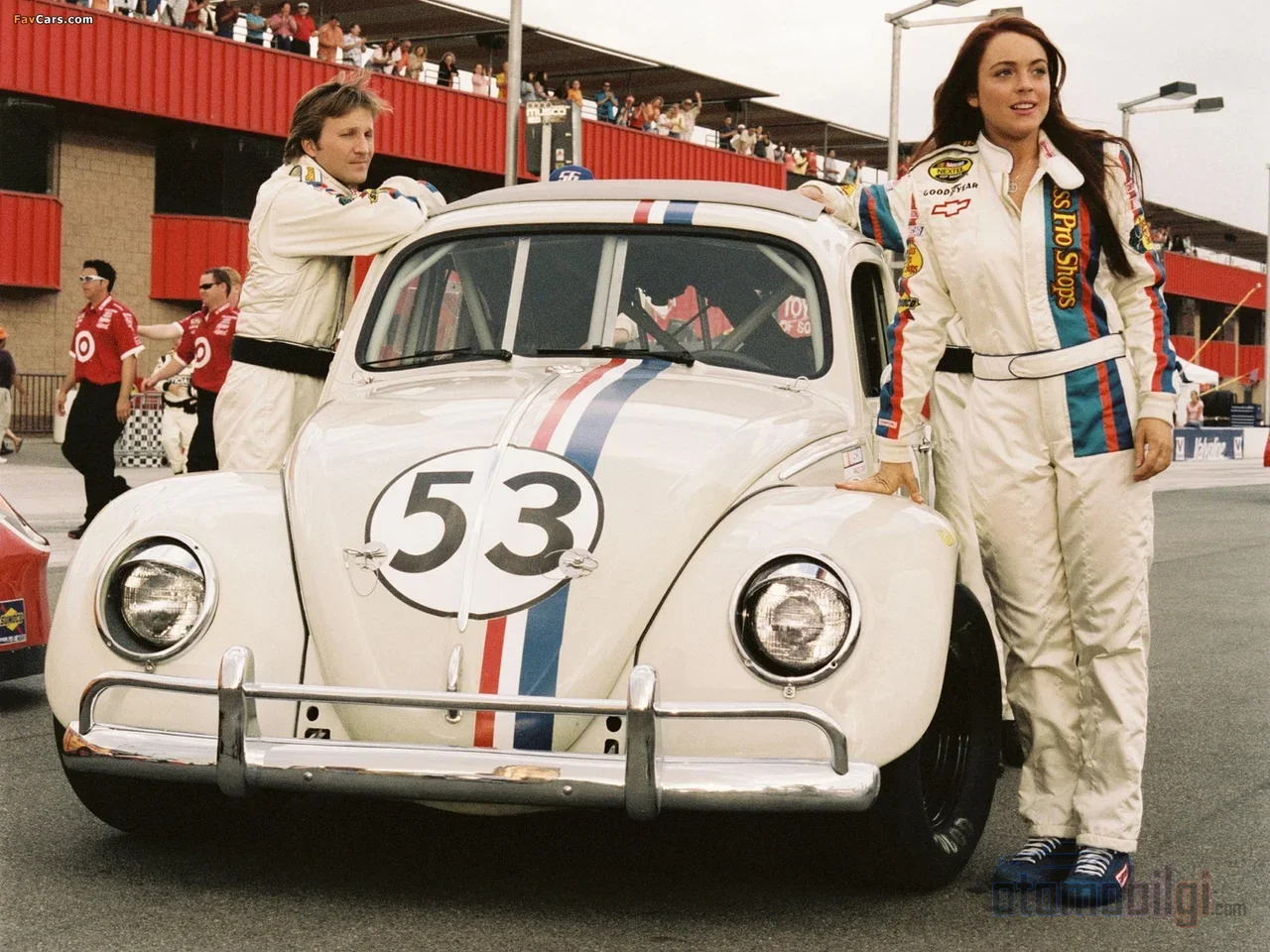
In Herbie Goes Bananas from 1980, Herbie, while preparing for a race in Brazil, meets an orphan named Paco and names him "Ocho" (5+3=8, from the number on the hood, of course). Then in 1997 came Peyton Reed's TV movie: Hank Cooper, played by Bruce Campbell, takes ownership of Herbie, the car's creator is revealed to be Dr. Gustav Stumpfel, and the evil twin "Horace" is destroyed in the final race. In the 2005 remake Herbie: Fully Loaded, Maggie Peyton, played by Lindsay Lohan, buys Herbie from a junkyard, beefs up his engine, and takes him all the way to the Nextel Cup Series finale. The film received mixed reviews from critics but earned $144.1 million worldwide. With five theatrical films, a TV movie, and a five-episode series broadcast on CBS in 1982, the total box office, adjusted for inflation, surpassed $1 billion.
No Driving Itself: Secret Drivers and Stunt Secrets
How did Herbie drive himself when CGI was still a dream? The answer is pure engineering and a bit of deception. Under the front seat were hidden gears, pulleys, a second steering wheel, second pedals, and a gear extension connected to a hidden driver sitting in the back seat. So there was actually always someone driving the car - you just couldn't see him. Wheeled systems connected with telephone cables and a fifth wheel mounted at the center of a vehicle allowed Herbie to spin on his axis. For the driving on dual wheels in the first film, the lower edge of the door was specially cut away.
The cleverest solution of the show was hidden in the hood: A small camera was hidden inside the Carello fog light mounted on the hood in Herbie Rides Again and Monte Carlo. The driver could see the road by watching the TV monitor inside the vehicle. The breathtaking driving stunts were performed by legendary stunt drivers of the era such as Carey Loftin, Bill Hickman, and Bud Ekins. One of the Herbies prepared for racing was equipped with a Porsche 356 engine, brakes, and KONI shock absorbers - a working movie car, a truly functioning machine.
How many Herbies were there?
There wasn't just one car, there were siblings: 9 VWs were used in Monte Carlo, and these cars returned to the screen for Bananas; a total of 26 Beetles were used in that film - the Herbie thrown into the sea, unfortunately, was never recovered. In 2005, more than 30 Herbies switched between "street racer", "demolition derby", and "NASCAR" looks throughout the film. And if you love trivia: In 1979, a Herbie model entered the record books as the first vehicle to cross the Panama Canal. The model was not launched from the "Sun Princess" ship but from the "M.N. Coromuel" ferry, and was a production with wooden parts.
The Beatles Era and the Beetle's Place in Popular Culture
Herbie emerged in the late 60s at a moment of shifting gears. The Volkswagen Beetle was already rising as a symbol of individuality, freedom, and counterculture in the cultural climate of the Beatles era. The appearance of a yellow Beetle in the Beatles' films during the same period cemented the car's iconic status. Herbie turned that iconic status into a character: the Beetle was no longer just a car, but a hero in its own right.
This popularity was so strong that it even spawned an imitation film series called "Superbug". After Herbie, the character appeared in Disney parks, Disney on Ice, and Disney on Parade shows; in the House of Mouse animated series, in two episodes of The Simpsons, in American Dad!, and even as a guest in Robot Chicken. On the video game side, there are the 2005 Disney's Herbie: Fully Loaded and the 2007 Herbie Rescue Rally; in addition, a racing game series offers a 60s Beetle paint option, and an online racing game features two paint options for the "BF Weevil" inspired by Herbie.
What Is Herbie Doing Today? A Legend with an Uncertain Future
Behind the camera, the surviving vehicles are in the hands of collectors and museums: The Volo Auto Museum in Illinois and the Petersen Automotive Museum in California display some examples, including the car from the 1997 TV movie and the NASCAR Herbie. The characteristic sounds, such as the horn honk and the oil-splatter effect, were created by Disney's sound supervisor Jimmy MacDonald - meaning even Herbie's voice was a carefully designed performance.
What about a new film? In 2017, it was announced that a new Herbie series was being developed for Disney XD, but the project eventually turned into "Fast Layne" without any Herbie reference. Since that day, the character's cinematic future has been uncertain. I think this gap is an opportunity: The nostalgia of Herbie gains value over time, just like the old models. If it were you, would you write a new story for the number 53 car? I would, without forgetting the tunnel scene.