How Did the Mini Coopers of The Italian Job Achieve Cult Status?
Share This Page
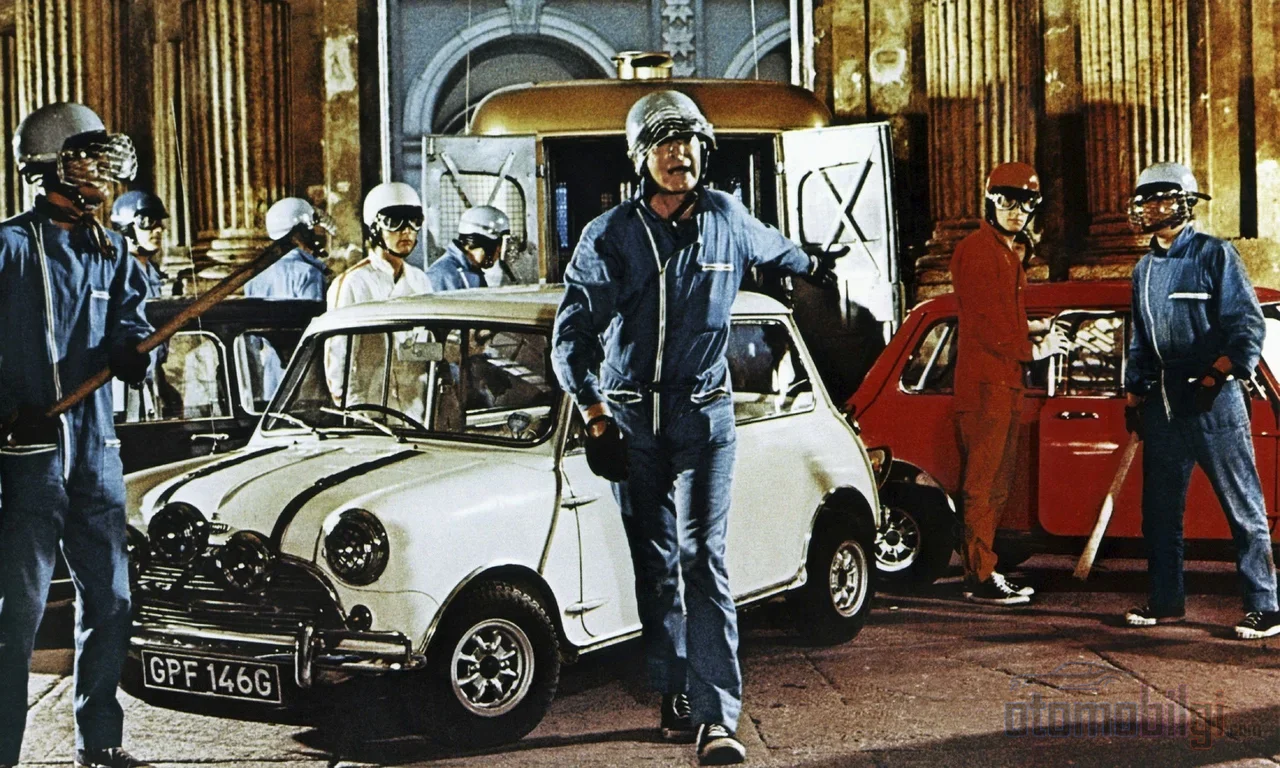
The Italian Job, both the 1969 original and the 2003 remake, is the film that turned the Mini Cooper into one of the most famous getaway cars in cinema history. Three red-white-and-blue Minis descending staircases, rooftop-hopping and even diving into the sewers of Turin turned a small economy car into a cult icon. But how does a car reach fame on the scale of a movie? The answer lies in cleverly crafted chase scenes, daring stunts, and the Mini's tiny size making it the perfect bargaining chip for the plot.
Highlights
- The 1969 film's budget was 3 million dollars and it grossed 9 million dollars.
- During filming, 16 Mini Coopers were either destroyed or rendered unfit for the road.
- While three MINIs appear on screen in the 2003 remake, 32 vehicles were used in production.
- The world's first electric MINIs were built for the Los Angeles Metro tunnels specifically for the film.
- After the film, MINI's sales in the US increased by roughly 20 percent.
Why Are The Italian Job's Mini Coopers So Legendary?
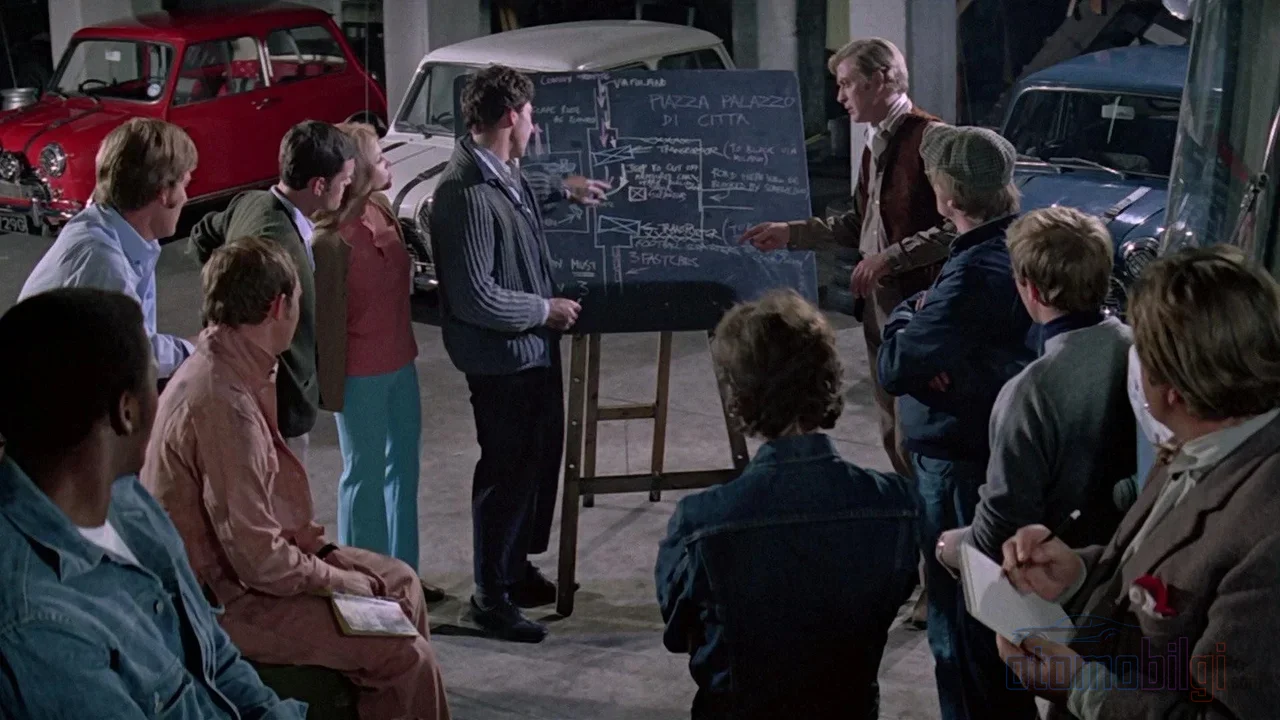
Here's the essence of it: The 1969 The Italian Job is a British heist comedy written by Troy Kennedy Martin, directed by Peter Collinson, and produced by Michael Deeley. The crew, led by Michael Caine as Charlie Croker, attempts a gold heist in Turin, sabotaging traffic and plunging the city into chaos. And where do they stash the gold? In the trunks of three Mini Coopers. From then on, the film turns into an unprecedented escape sequence: staircases, pedestrian streets, rooftops, and the sewer system. In classic car chases, wide boulevards and powerful engines usually take the spotlight; here, it's smallness that plays the lead role. The Mini fits wherever big cars can't go, and that's exactly what makes the escape plan plausible.
The film's cast is worth its weight in gold, too: Benny Hill, Raf Vallone, Tony Beckley, and Noël Coward in his final film before retiring from acting. The music was composed by Quincy Jones; Caine's voice can also be heard on "The Self-Preservation Society," the song playing during the chase. The film ranks high on the British Film Institute's lists of the best 100 British films. Caine's famous line and the bus teetering on the cliff's edge in an ending that is never resolved became cult symbols. The resolution of that ending was debated for years; Caine explained that the plan was to start the engine and wait for the fuel to run out. In fact, in 2008 the Royal Society of Chemistry even held a competition to find a scientific solution to the ending; the winner, John Godwin, stood out with a plan to smash the windows and deflate the tires to shift the weight balance.
Behind the Scenes of the 1969 Original: How Many Cars Were Sacrificed?
The price of the legendary chase was anything but small. It is reported that during filming, 16 Mini Coopers were either completely destroyed or rendered unfit for the road; in addition, nine replica vehicles are believed to have also been wrecked. With that many cars sacrificed, the number of survivors is still a matter of debate: some records state that six 848cc replicas made it out alive, while some automotive forums claim that the six Cooper S models given to the shoot survived. The fact that the two versions don't match is also a sign of just how powerful the legend behind the film is. Everyone has a story about the cars.
The sewer scene wasn't actually in Italy
Although the film is set in Turin, not every scene was shot there. The sewer escape was filmed in the Sowe Valley sewer system in the Stoke Aldermoor area of Coventry, England; so there was no need for Caine to be present at those shots. The jump sequence, one of the wildest moments of the chase, was performed by the team of famous Italian stunt coordinator Rémy Julienne. Julienne is described as someone who calculated everything down to the last mile, working almost like a scientist. Stunt driver David Salamone, who drove the red Mini, says the car was stripped out, magnesium oil pans and roll bars were added, but the engines remained absolutely standard. And there's a fun little detail: Salamone never went out for the river crossing because he couldn't swim. Smart kid.
The adventure didn't end when filming wrapped either. The Mini drivers drove the cars back to England themselves, and Barry Cox, the driver of the white Mini, was detained in Switzerland because his trunk was full of fake gold bars and fake plates. Another small tragedy occurred on the Aston Martin side: when the DB4 to be blown up in the mountain scene went early, the crew found a silver Lancia Flaminia 3C, changed its headlights, sprayed silver paint on it, and threw it off the cliff. Dear Italians, you could have been the bravest extras in your film.
The 2003 Remake: The Birth of the New MINI on the Silver Screen
The 2003 remake opened the door to a brand-new generation of MINIs with Mark Wahlberg, Charlize Theron and Jason Statham. An interesting detail: the new MINI's first cinema role wasn't actually this film, but 2002's Austin Powers in Goldmember. But The Italian Job gave the new MINI a role even bigger than its actors, which is why it's considered the most important showcase event in the brand's history. Director F. Gary Gray and cinematographer Wally Pfister built their visual language drawing inspiration from car commercials and classic chases. One critic described the film as the best car commercial ever made and a good film at the same time; that sentence sums up the essence of the remake quite well.
Although three MINIs (red, blue, white) appear on screen, a total of 32 vehicles were used in the shoot, and a repair team stood by ready on set at all times. The actors didn't sit idle either: Wahlberg, Theron and Statham received weeks of driving training and drove most of the scenes themselves. The most skilled driver turned out to be Charlize Theron, who performed the reverse 180-degree turn over and over without hitting anyone. Wahlberg's situation, however, wasn't bright at all; because he vomited inside the car after the first ten minutes, his side-seat scene was almost erased.
The world's first electric MINIs for the tunnels
The most striking behind-the-scenes story of the 2003 film comes from the Los Angeles Metro tunnel scenes. The cars working in the tunnel were not allowed to emit exhaust, and when BMW was asked about an electric MINI, there was no answer. Transportation coordinator John Carpenter built the world's first electric MINIs himself: two electric MINI Coopers and one MINI Cooper S for Theron's red one. A production electric MINI (the MINI Cooper SE) only went on sale more than a decade later. After the film's premiere, MINI's sales in the US market increased by about 20 percent; it would be hard to find a better statistic demonstrating the power of cinema.
The first Mini to appear in the film was the 1997 Mini Cooper Mk VII driven by Charlize Theron; a nod to the classic film. The modifications made for the scenes are striking: a second steering wheel, modified suspension for jumps, extra horsepower, and even cars cut in half. The cars we see on screen are not the same as the cars on the dealer's lot.
Are the Classic Mini and the Modern MINI the Same Car?
The short answer: no. The classic Mini is the original model produced from 1959 to 2000 during the BMC and BL era, and today it is known as the Mini Classic. The modern MINI, on the other hand, is an entirely new brand produced under Germany's BMW since 2001; even the spelling of MINI in capital letters points to the modern brand as a commercial name. The classic Mini sold more than 5 million units in the UK alone, becoming an icon used by everyone from The Beatles to the British royal family. The modern MINI was first introduced on April 26, 2001, and the 25th anniversary of the design's history is being celebrated by BMW in 2026. is being celebrated by BMW in 2026. Comparing the two cars:
| Feature | Classic Mini (BMC/BL) | Modern MINI (BMW) |
|---|---|---|
| Production years | 1959–2000 | 2001 to the present |
| Manufacturer | BMC / BL | BMW |
| Role in the film | the 1969 original | the 2003 remake |
| UK sales | more than 5 million | modern brand era |
This distinction is useful even when watching the films: the nimble, tiny cars of 1969 are the last trump cards of a British industry; the MINIs of 2003 are German engineering reinterpreting a British icon. The difference in identity between the two films is the very difference between the two cars.
The Impact of the Films on the Mini's Image
The Italian Job positioned the MINI as a symbol of style, agility, and adventure, and this effect is still felt today among drivers, collectors, and enthusiasts. The film is one of the few works that made the Mini a star twice, as both the classic car and the modern MINI. The chase has become so iconic that it has been referenced everywhere from television to video games. A video game adaptation came out in 2001, The Simpsons made a nod with "The Italian Bob" in 2005, and MacGyver's "Thief of Budapest" episode recreated the Mini chase. An annual charity event bearing the film's name has also been held since 1990.
In 2019, on the film's 50th anniversary, stunt drivers who had worked on the original shoot recreated the chase at MINI's Oxford factory with red, white, and blue Coopers; the BBC revisited the sewer shoot in Coventry and Rémy Julienne's contribution in 2025. The film has also left its mark on the collector market: 1:64 scale classic Mini Cooper S diecast sets find buyers, and a special Italian Job accessory kit was announced for the MINI Cooper and Cooper S in 2003. If a film can create such a broad cultural ecosystem around cars, it has truly achieved cult status in every sense of the word.
Remake or Original? Let's Look at It from the Mini's Perspective
In my view, the most honest approach is to discuss the matter through the cars themselves. The remake makes the chase look shinier, more crowded, and more professional; the original, however, draws all of its charm from that warm, handmade feel. Some critics assess the remake as a work that looks brighter but has lost its old magic. In forums, it is also pointed out that the mix of Cooper and Cooper S in the 2003 film is never explained, and that the three cars performed almost identical stunt work. Some enthusiasts claim that 1967-model Minis were actually used in the 1969 film; the evidence supporting this claim is weak, so it should be approached with caution. My opinion is this: the best way to enjoy the two films is not as rivals, but as two generations' tellings of the same story. The 1969 version shows what the Mini is, while the 2003 version shows what the MINI can be. Both deliver the most beautiful thing a car can give you on screen: an excitement that drags you down the stairs. If it were you, which one would you choose?
Sources
- The Italian Job - Wikipedia
- The secrets behind the cars and stunts in 'The Italian Job' - Top Gear
- Showstoppers. The MINIs of 2003's The Italian Job. - MINI.com
- The Italian Job Car Chase Scene - 1969 - Silodrome
- Unlocking the MINI: The Legacy of "The Italian Job" - MINI Ottawa
- How Coventry's sewers starred in The Italian Job - BBC
- MINI Cooper ITALIAN JOB release - BMW Press
- 25 years of MINI Design history - BMW Group
- MINI classic models - BMW Group Classic
- Mini - Wikipedia