Hollywood's Legendary Rentals: Behind the Scenes of the Movie Car Trap
Share This Page
Movie car legends are often not coincidence but the result of marketing deals between studios and car brands; rental cars, product placements and script tweaks in exchange for advertising actually turn cinema's legendary cars into a kind of 'rented star'. So of those legendary chases we see on screen, how much is genuine passion and how much is a signed contract? Let's take a look behind the curtain.
Highlights
- In 2021, the total value of deals between brands and film and TV productions exceeded 20 billion dollars.
- Heineken paid 45 million dollars for an estimated 7 seconds of screen time in the Bond film Skyfall.
- Ford introduced the Mustang in 1964 with simultaneous 30-minute program blocks on three major television networks.
- Product placements in Bond films are noticed by more than 90% of viewers.
- An automobile manufacturer saw a sales increase of 240 million dollars as a result of a single placement.
Was the Mustang Really a 'Spontaneous Legend'?
Just think about it: A car is introduced and the following week everyone is talking about it. We say 'Wow, it took off on its own!' But that's not exactly how the story of the Ford Mustang began. The Mustang was introduced to the public at the New York World's Fair on April 17, 1964, and Ford had prepared a media blitz unlike anything ever seen for a car launch up to that point.
More than a dozen ads were planned before and after the launch; radio and television broadcasts were filled with curiosity-arousing ads that only briefly showed the car's back seat, grille emblem and trunk. The real strike came on April 17: Ford bought simultaneous 30-minute program blocks on all three of ABC, CBS and NBC. To use an analogy from everyday life, it's like an actor appearing on the cover of three separate screens at the same time. Even today it's hard to imagine for a launch!
The show wasn't limited to the fair, either. At the fair, in the 'Magic Skyway' attraction designed by Disney, visitors rode in Ford, Lincoln and Mercury convertibles. Time and Newsweek magazines put a red Mustang on their covers alongside a portrait of Lee Iacocca on launch day and three days later. A Mustang convertible was later split into four main pieces and taken up to the observation deck on the 86th floor of the Empire State Building, where it was displayed from October 1965 to March 16, 1966. Ford even repeated this stunt in 2015 for the sixth-generation launch. So the Mustang's 'cult phenomenon' status didn't fall from the sky; it was the product of a carefully planned campaign. Legend or marketing? The answer: both.
Bond, Aston Martin and Cinema's Most Successful Product Placement
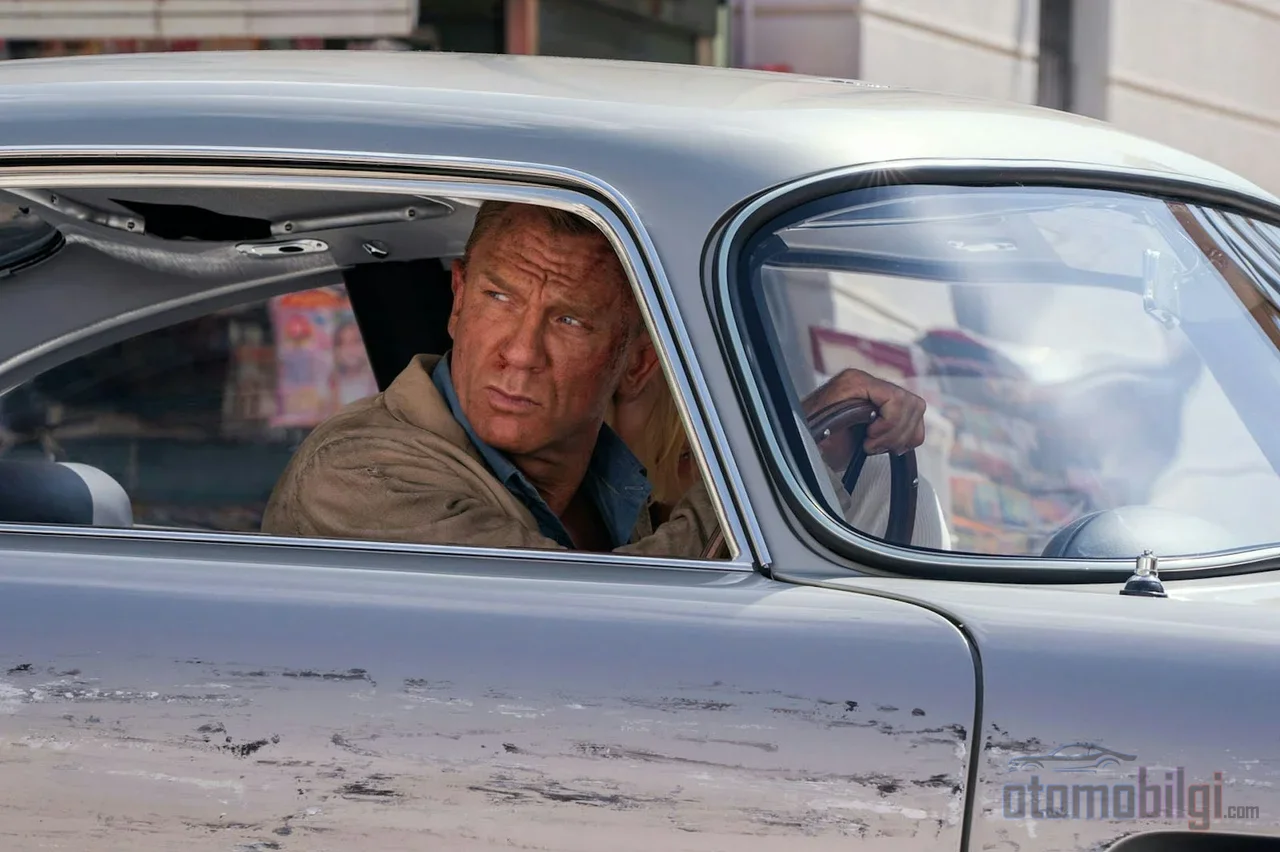
The relationship between James Bond and Aston Martin is an iconic British collaboration spanning more than 50 years. The DB5 is no longer just a car; it is part of Bond's personality, his grooming, even his sense of humor. Research shows that product placements in Bond films are noticed by more than 90% of viewers. In the marketing world, that is an almost dreamlike rate.
But here is the interesting part: Mustang's first encounter with Bond was also a pure marketing move. In the 1964 Goldfinger, Bond's DB5 and Tilly Masterson's white Mustang convertible race head to head on Switzerland's Furka Pass. The film had begun shooting even before the Mustang's launch; since the Alpine scenes were shot in the spring-summer of 1964, the car on screen was an early-production convertible. Ford also supplied the film with many vehicles, including a Thunderbird for the character Felix Leiter. In other words, 007 had contributed to the Mustang's rise in America before the brand could even produce enough cars. One of Hollywood's sharpest marketing collaborations, without a doubt.
Going beyond product placement, it has actually become part of the story itself.
Aston Martin's admission really sums it all up. But here is the interesting thing: the same Bond series can appear both on the lists of 'cinema's most successful product placement' and of 'the worst placements'. The 1995 GoldenEye is cited by some experts as an example of a placement that drew backlash. So even the legend is not always perfect.
Whose Cars Are in the Movies? The Contracted Life of Rental Stars
Now let's get to the truly striking part. Most of those legendary vehicles you see on screen are not sitting in the studio's garage. The film industry has a massive 'picture car' sector, and the golden rule of this sector can be summarized as follows: film cars are about contracts, not about the car. Productions usually rent or borrow vehicles from collectors; these contracts protect both the producers and the vehicle owners. When the film ends, the car goes back, its owner embraces it, and life goes on.
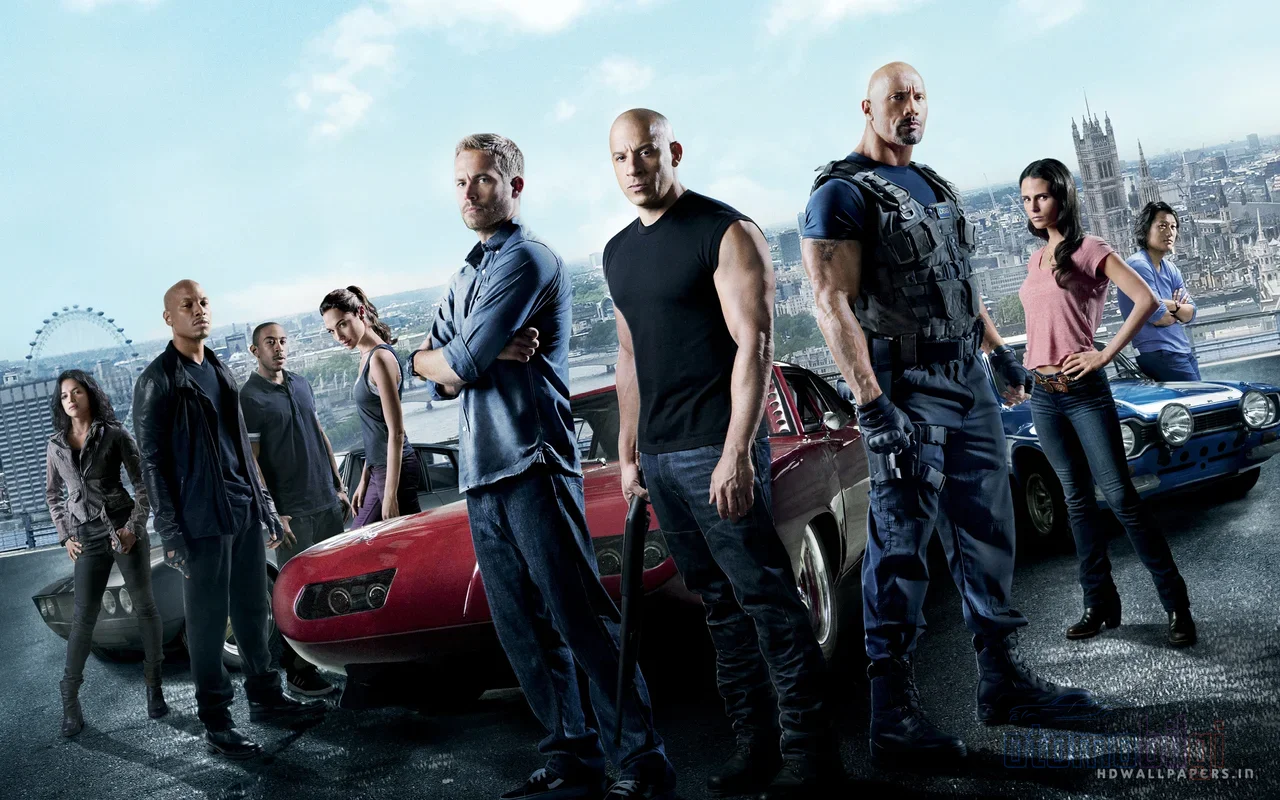
This sector has grown so much that there are giant companies that have been supplying vehicles to the worlds of film, TV series, and advertising for over 40 years. Fast & Furious The rental and custom-built vehicles in blockbuster films like this come from these firms. In fact, here's a little secret: even individual collectors can take part in this market. For example, on a film car rental platform, the 1974 Cadillac Eldorado from True Romance can be rented for 175 dollars a day, and a 2005 Mustang for 500 dollars a day. There are even companies that rent out famous film vehicles like the Batmobile, KITT, Ecto-1, and the DeLorean. For those thinking that one day they might rent their car to the movies, here is a critical piece of advice: make sure the contract states that the insurance belongs to the production company for as long as the vehicle remains on set.
What's more, this business is no longer just a luxury for big studios. Today, producers on any budget can strike deals with brands; from independent films to box office giants, everyone is part of this system. Cars are becoming stars on screen, but the contracts start at 175 dollars a day. The magic of cinema and the industry's ledger walk side by side.
Who Pays How Much? The Bill of the Placement Economy
How much money are brands putting into this game? The figures can soar. In 2021, the total value of deals between brands and film and TV productions exceeded 20 billion dollars. An ordinary brand pays its agency an annual fee between 40,000 and 300,000 dollars. But the biggest players spend far more heavily. Here are a few famous examples:
| Brand / Actor | Production / Context | Known Figure |
|---|---|---|
| Heineken | Skyfall (2012) | An estimated 45 million dollars, roughly 7 seconds of screen time |
| BMW | Bond series | A supply package worth approximately 110 million dollars |
| General Motors | A production deal | A donation of roughly 100 vehicles instead of cash payment |
| An automaker | A single placement | A sales increase of 240 million dollars |
The table also shows the most interesting detail here: the payment model varies by industry. Automakers usually do not write checks; they help with production costs and lend or donate the vehicles to be filmed to the studios. Indeed, GM once donated more than 100 vehicles for a production, all to be destroyed in an epic on-screen chase. Meanwhile, beverage or phone brands paid tens of millions of dollars in cash for giant series like Bond. The car comes free, but its on-screen value is measured in millions. Even as a 15-year-old student, I can say this: it is an economy a bit more complicated than the profit margins at the school canteen!
Where Is the Line Crossed? Placements That Ruined Films
Not every deal ends well. There are examples where product placement clearly ruined a film, and car enthusiasts have etched them into their memories. The classic example is the 1988 film Mac and Me: this film, chosen by McDonald's and Coca-Cola, devotes a significant portion of its screen time to a fast-food showcase. Watching these scenes, which showcase products without stopping for even a second, is like holding the TV remote in your hand. A work that still makes you ask "what kind of film is this?"
On the automotive side, the undisputed champion is the 2003 film The Italian Job: the MINI Coopers almost completely take over the film, and in the words of one fan, it may well be the only production where a product placement clearly ruined a car film. Transformers The series is also frequently criticized; especially the 2014 sequel has placements so dense that it ranks at the bottom of the "most absurd placements" lists. In fact, a film's promotional deals can alienate audiences enough to lead to box office failure. So there is a dosage limit even for brands: a product that takes up too much screen turns into a character the audience hates.
Let's add this too: product placement is not a very new phenomenon. The first film containing 'crude' product placement goes all the way back to the 1927 silent cinema classic Wings. In 1983, Risky Business is cited as the example that carried a car's image right into the heart of pop culture, while 1995's GoldenEye is mentioned as the example of the side that drew backlash. So cinema has been renting out its stars for almost a hundred years. Sometimes this collaboration creates legends, and sometimes it creates an ad block that drives the audience away. Do you know what the difference is? Whether or not it serves the story.
Bullitt: The Story of a Legend Intertwined with Marketing
Now let's move on to my favorite. The 1968 film Bullitt went down in cinema history with the scene in which Steve McQueen, in his 1968 Mustang GT 390, chases a black Dodge Charger R/T through the steep hills of San Francisco for about 10 minutes. Even today it is referred to as 'one of the most famous car chases in film history' and has become identified with McQueen's legend. This scene holds a special place in the heart of everyone who loves car culture; when I hear that engine sound I get goosebumps, and I'm sure it's the same for you.
But the story behind it is just as interesting as the scene. After the original stunt car remained lost for years, it was restored, and McQueen's years-long efforts to get that car back created a legend of its own. Ford, meanwhile, never wasted the film's popularity: it released a special Mustang Bullitt edition for the film's 50th anniversary, and the special series was reproduced again in 2019. In the world of automotive writing, fans relive that iconic chase in San Francisco with faithful replicas. So Bullitt is not just a film; it is a living brand where film and marketing have been intertwined for 60 years. The McQueen passion is real, but the product line built on that passion is also quite real.
Legend or Contract? You Decide for Yourself
Let's admit it: most of cinema's legendary cars were built on rental contracts and marketing deals. The Mustang's birthday was celebrated simultaneously on three channels, the story of Bond's Car was part of an alliance, and the vehicles wrecked in chases were each a line item of cost. But in my opinion, that doesn't completely take away the magic of those scenes. The smoke coming out of the DB5's doors, Bullitt's gear shift still get people excited; it's just that now we also see the signed contracts behind them. Does a legend have to be a coincidence to be 'real', or does a well-sold dream also count? I'm waiting for your answer in the comments - I've taken a little from both sides.
Sources
- The Early Mustang's Media Stampede - Hagerty
- James Bond and Aston Martin's DB5: behind the scenes of one of cinema's most successful product placements - The Conversation
- A Thrilling Partnership: Aston Martin's Unique Bond With 007 - Sotheby's
- The history of Britain's finest partnership: James Bond and Aston Martin - Aston Martin F1
- Product placement - Wikipedia
- The economics of movie product placements - The Hustle
- Carmakers are kings of product placement deals - Los Angeles Times
- These Are The Worst Automotive Product Placements In Film - Jalopnik
- The 10 Worst Movie Product Placements Ever - HowStuffWorks
- Product Placement: Has it Gone too Far? - FleishmanHillard
- Product placement as a way of promoting on an international scale based on a series of films about James Bond - ResearchGate
- James Bond Product Placement: The Definitive Timeline Of Brands In Bond - Hollywood Branded
- Understanding Picture Car Agreements for Film and TV - Thoolie
- About Us | Film Car Rentals & Custom Automotive Builds - Cinema Vehicles
- What Should You Know About Renting Cars for Your Movie - Raindance
- 5 Most Legendary Mustangs Ever Featured in Successful Hollywood Movies - autoevolution
- How A James Bond Movie Helped Kick Start The Mustang's Grip On America - HotCars
- The Bullitt Mustang Steve McQueen Tried To Buy Back - TopSpeed
- Rediscovering a Bullitt-sized piece of automotive history - McKeel Hagerty
- Product Placement in Film: How It Works & How to Get It - Filmustage
- Movie star cars: How much is product placement worth to makers - Autocar
- Rent Famous TV & Movie Cars - Volo Cars
- Rent out my Car for Movies - DriveShare