How Did KITT from Knight Rider Become a Television Legend?
Share This Page
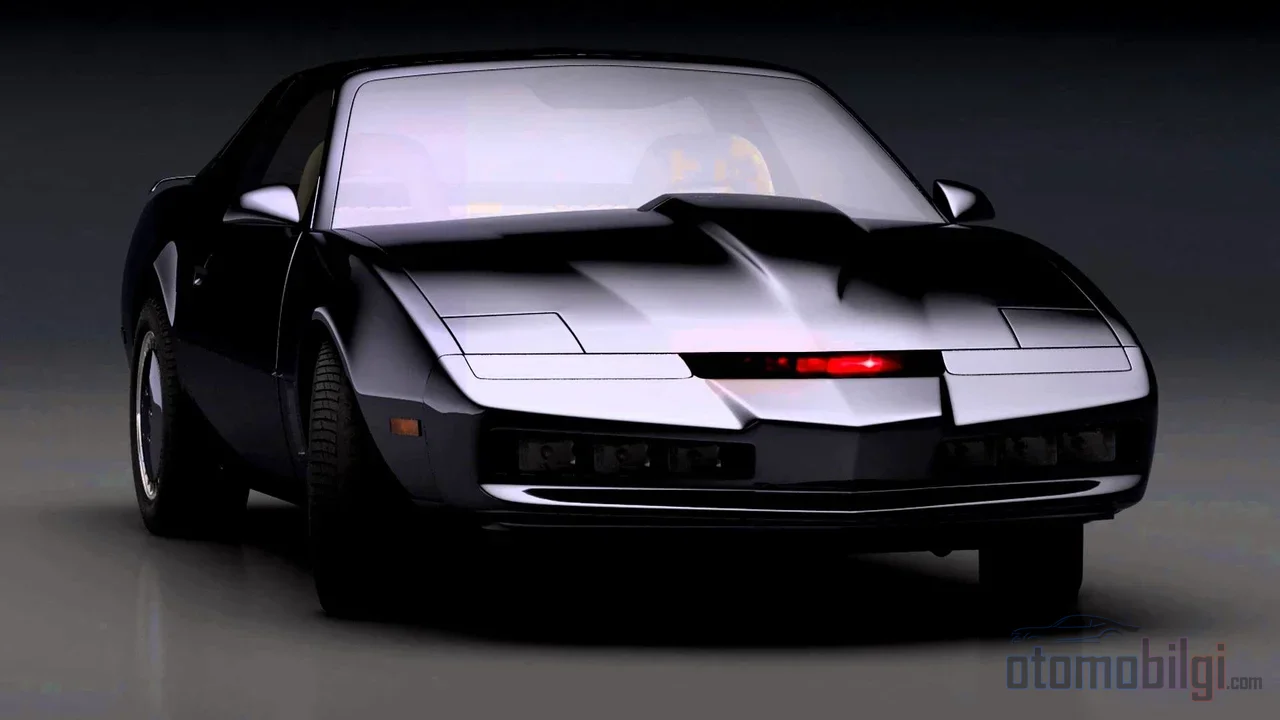
KITT, the fictional AI-powered vehicle based on the 1982 Pontiac Trans Am at the heart of the Knight Rider series that hit screens on September 26, 1982: Knight Industries Two Thousand. This black car that talks, thinks, and makes its own decisions is still alive more than forty years after the series ended, through fan restorations, auction records, and video game cameos. So how did a TV car become such a long-lasting legend?
Highlights
- A total of 23 KITTs were produced for the series' filming; today only 5 of them survive.
- KITT's fictional cost was $11,400,000, and its 0-60 mph acceleration was 2 seconds.
- David Hasselhoff's personal KITT received bids of up to $975,000 at an auction.
- The first sketch of the red scanner light was drawn on Pontiac designer John Schinella's handkerchief.
- The turbo boost scenes were filmed by mounting a Trans Am shell onto a buggy chassis.
The Story of KITT's Creation: How Did a Trans Am Become a Super Car?
It all started with an idea in Glen A. Larson's head: A car that talks to the viewer, makes jokes, and scolds its owner when necessary. But this idea needed a body. Larson's choice was Pontiac's third-generation Trans Am, which had been completely redesigned that very year. Think about it: 1982 was a brand-new zero-mileage design year for the model - Larson's use of the car as a screen is still considered one of the most successful product placements in automotive history.
The birth of KITT's famous red front light is quite an amusing anecdote. It is said that Pontiac designer John Schinella's first sketch was drawn on a handkerchief during a meeting. So one of the most iconic vehicle faces in television history was born on a napkin hastily offered by a designer who couldn't even find paper. Independent studio designer Michael Scheffe, meanwhile, was tasked with designing and producing the vehicle's interior: Those consoles, screens, and buttons came from his hands.
From Cylon to KITT: That Light and That Voice
The red light sweeping left and right on the front panel was never a random choice. Larson was also the creator of Battlestar Galactica, and he reused the sound and visuals of that series' Cylon eye scan for KITT's scanner bar. So KITT's "eye" is actually a relative of a science fiction robot's eye. As for the voice, it fell to another legend: William Daniels voiced the car. In my opinion, it's impossible to think of KITT as KITT without that sarcastic, sometimes fatherly tone. Those buddy conversations between Michael and KITT were the backbone of the series.
KITT's Features: What Could It Do in Fiction?
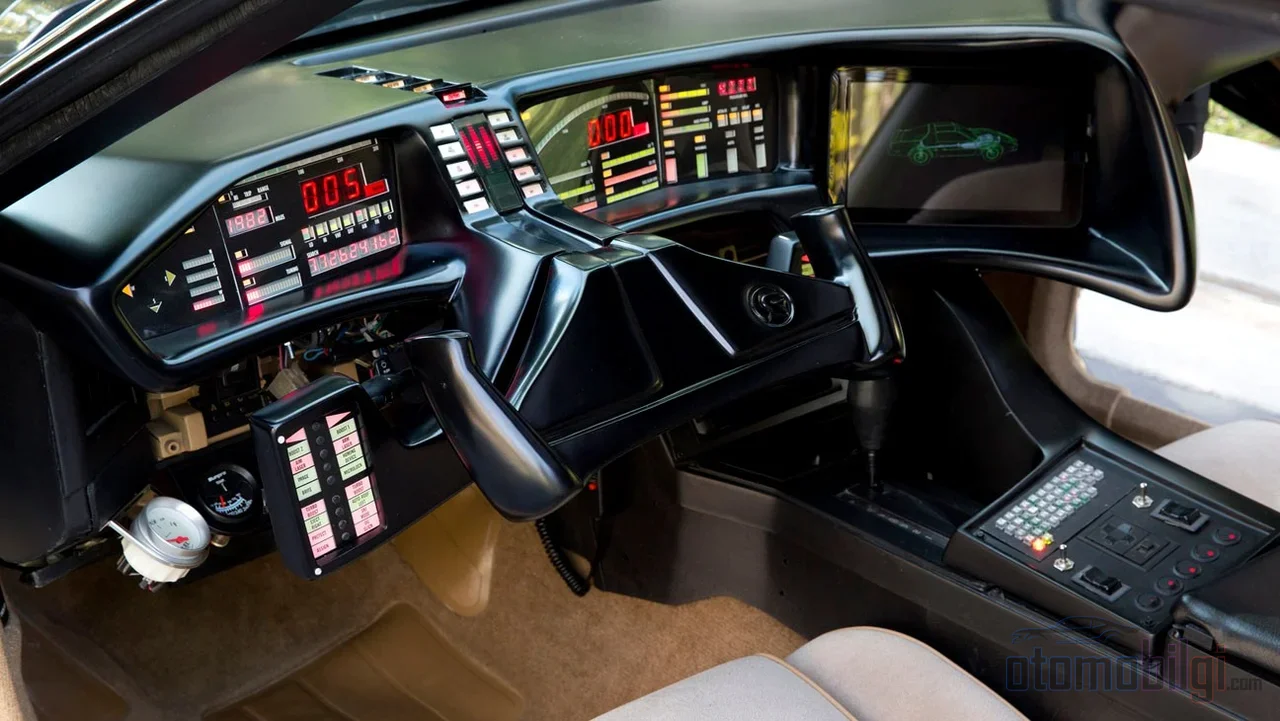
In the series, KITT was a supercomputer with a "self-aware cybernetic logic module." In the fifth episode, the initial production cost was $11,400,000 was described; its serial number was AD227529 and it boasted 1,000 megabits of memory with 1-nanosecond access time. In fiction it did 0-60 mph in 2 seconds. In reality, under the hood there was a plain 5.0L V8 engine with 145 hp - some stunt cars used a 3.8L V6 turbo. So it was imagination that saved the world, not horsepower.
| Feature | In fiction | In reality |
|---|---|---|
| Base vehicle | Custom cybernetic vehicle | 1982 Pontiac Trans Am |
| 0-60 mph | 2 seconds | Standard performance with a 145 hp 5.0L V8 |
| Top speed | Over 200 mph (322 km/h) | 3.8L V6 turbo in stunt cars |
| Armor | Tri-Helical Plasteel 1000 MBS body | Standard Trans Am body |
| Production cost | $11,400,000 | - |
Turbo Boost and Other Superpowers
The turbo boost is exactly why it got etched into all of our minds: thanks to twin rocket thrusters mounted behind the front wheels, the vehicle lifted off, gliding and jumping over walls and trucks. In addition, KITT was bulletproof thanks to its armor called the Molecular Bonded Shell, performed infrared tracking and X-ray imaging with a fiber-optic eye array called the Anamorphic Equalizer, jammed microphones with its jamming system, and spoke with its Voice Anharmonic Synthesizer. It even had ejection seats inside. And the two-way comlink on Michael's wrist was the very dream of the 80s smartwatch.
In later seasons, new members joined the family: convertible and Super-Pursuit versions designed and built by a famous vehicle customizer like George Barris. Super-Pursuit mode was added after the fourth season's "Knight of the Juggernaut" episode; it increased top speed by 40% and had pop-out aerodynamic fins. Doesn't a car sprouting fins still seem amazing to you?
Behind the Camera: How Was the Turbo Boost Scene Actually Filmed?
When we saw a rocket-powered Trans Am on screen, we believed it as kids, but the reality was a bit more down to earth: the producers placed a Trans Am shell on top of the buggy chassis seen in photos. Even the famous turbo boost scene in the "Soul Survivor" episode was filmed this way; a rare behind-the-scenes photo proves this setup. A simple but genius trick - the car wasn't flying, it was bouncing on a chassis.
The vehicles' interior accessories were also adapted from the era's technology: fan forums have long debated whether some of the lights and gauges on KITT's console were inspired by the era's consumer electronics, even images from the Mattel Intellivision game console. On set, however, the reality was different: a total of 23 KITT cars were produced for the entire series. They were programmed to be destroyed, flown, and toppled during filming, and most of them met exactly that fate.
The Dream of an AI-Powered Car: How Did KITT Reflect the Era's Technological Dream?
Think of 1982: Home computers were few and far between, phones were tethered to cables, and the internet was a promise of the future that hadn't even begun to take shape. It was precisely in this environment that KITT shattered the image of the computer as a "frightening box." According to an academic assessment of popular culture from that era, KITT domesticated computers and made them accessible, flexible, portable and reliable; Knight Rider also became one of the first popular texts to visualize the computer's potential to transform daily life.
A delightful debate that still rages among fans starts exactly here: Was KITT a true artificial intelligence, or just a very advanced algorithm? While some argue about the difference, one fan doubles down on the conversation with a joke that KITT was "reverse-engineered" from Cylon technology. The real car, of course, contained no flawless AI; the "brain" was represented as a special computer system stored in the trunk. But the fiction was truly pioneering: Today our cars take voice commands and park themselves. Would I be exaggerating if I said KITT was simply a vision born 40 years too early?
What Happened After the Series Ended? The 5 Surviving KITTs
When the series ended, much of the KITT fleet had paid the price of life on set. Most of the 23 vehicles produced were destroyed during filming, and today only 5 of them are believed to have survived. One of these was displayed at the Universal Studios theme park, then sold to Brisbane in Australia for World Expo '88. A hero car and a stunt car held by Universal later went to a private collector in the USA; the fifth car is believed to be in a private collection in the United Kingdom. The Marconi Automotive Museum in California displays a filming car, noting that the team also owns two other cars and has spent hundreds of hours with this vehicle.
We also own two other cars and have spent hundreds of hours with this one.
In Butler County, Pennsylvania, 2 of the 5 surviving cars were brought back together and the restoration of a filming car is nearing completion. The red scanner still works - and moreover, this is a KITT that was actually used on screen. A KITT replica on display at a museum in New York received a speeding ticket without even moving - a story that still makes me laugh. So even in 2026, KITT knows how to make headlines.
Fans' Own KITTs: Restorations and Replicas
The cult car has slipped out of collectors' hands and even found its way into fans' garages. The "KITT Still Rocks" team is building an exact exterior replica of the hero car that Michael Scheffe delivered to Universal Studios. One fan who spent 18,000 pounds to recreate the iconic car became the stuff of legend. The commercial side is serious business too: there are businesses offering custom KITT conversions and fan shops selling original parts. You can even buy a model of David Hasselhoff's car that can be assembled piece by piece, while the 1/6 scale KITT Ultimate DX limited edition collector's car is being produced for serious collectors. Modern fans aren't far behind either: one person built a real KITT home assistant using OpenAI as the "brain" and ElevenLabs as the voice. Michael's advisor can now read you the news in your living room.
Auction Fever: How Much Are Real KITTs Worth?
KITT's market value is the most tangible proof of its cult status. When David Hasselhoff's personal K.I.T.T. went to online auction in January 2021, the estimate was $175,000-300,000; during the opening week the bid climbed to $450,000, and finally soared to a spectacular $975,000. A camera car offered at Julien's Auctions was listed with an estimate of $200,000-300,000 but failed to sell; another KITT found a buyer for $60,000. Meanwhile, a warning is in order: it is known that more "original" cars have gone to auction than the number of cars produced for the series, meaning most "original camera car" claims deserve to be approached with skepticism. There are reports that Michael Jackson bought a KITT and that Joey Fatone also purchased one - the list of celebrity fans is quite impressive.
From Video Games to KnightCon: KITT's Living Legacy
KITT wasn't limited to a single series: there were three TV movies, a short-lived spin-off series, novels, computer and video games, and even a fan event called KnightCon. The 2002 release Knight Rider: The Game was listed with the slogan "the most popular 80s TV series and the most high-tech supercar." In Davilex's Knight Rider games, KITT appeared as a distinct character in its own "Game Timeline" universe. In 2019, Rocket League added the K.I.T.T. Battle-Car, K.I.T.T. wheels, and the Gullwing steering wheel to the stage with the "Knight Rider Car Pack." Now imagine this: KITT gliding toward the opposing goal with its Gullwing doors open. Yes, that actually happened.
The 2008 reboot brought the new Knight Industries Three Thousand KITT (based on the Ford Shelby GT500KR), but what is still debated in fan forums is this new car's relationship with the original. William Daniels' voice had been handed over to Val Kilmer in 2008 - in my opinion, a change just as jarring as the car itself. Today, KITT can still be seen as a "meet and greet" photo spot at Universal Studios' attraction area in California; fans are still sharing their memories of visits from 1986 and 1992. If new memories about a car are still being made after 40 years, we have no choice but to call it a legend.
Final Word: Why Does KITT Still Live On?
A red light sketch drawn on a napkin, a computer stored in the trunk, and a Trans Am shell mounted on a buggy skeleton. When all of these come together, what emerges is not just a TV series car, but a character that changed our relationship with technology. KITT's secret, in my opinion, lies neither in its turbo boost nor its armor: It is a car that talks with you and listens to you. Which TV series car do you think could repeat this achievement?
Sources
- KITT
- Knight Rider
- How Knight Rider's KITT became a Pontiac Trans Am
- Pontiac Firebird KITT Origin Story Explained
- KITT - The Complete Guide to the Knight Rider Car
- 2 of 5 surviving 'Knight Rider' cars reunited in Butler County
- Original Screen-Used KITT - Marconi Automotive Museum
- Museum's unmoved 'Knight Rider' replica car hit with speeding ticket
- K.I.T.T., David Hasselhoff's Personal Knight Rider KITT auction
- Under the Hood With Knight Rider's K.I.T.T. in Rocket League
- Knight Rider KITT Replica - Our Build
- Real Life Knight Rider: Fan Spends £18,000 Recreating Iconic Car
- Knight Rider Sixth Scale KITT Ultimate DX
- I've made a real life KITT