How Steve McQueen's Bullitt Mustang Became a Legend
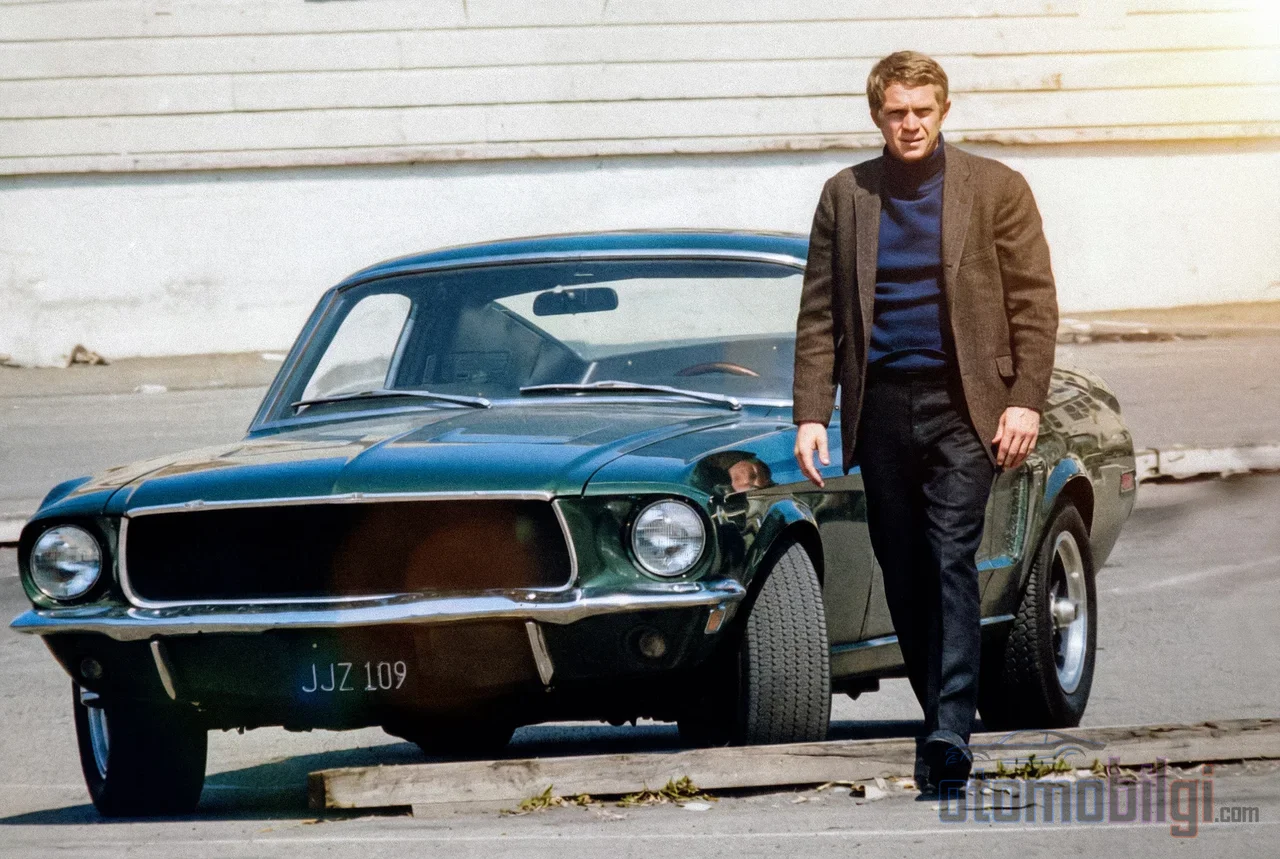
A green fastback floors the gas on San Francisco's steep streets, while a black Charger tries to keep up behind it with the sound of screeching tires. No music, no dialogue - just the conversation of two V8s. This roughly eleven-minute scene still stands at the top as cinema's most legendary car chase. So why is that dark green Ford Mustang GT so famous, and what happened to the two real-life cars? The answer is far crazier than you think.
How Does a Chase Become a Character?
In the 1968 film Bullitt, Steve McQueen plays San Francisco Police Lieutenant Frank Bullitt. The real star of the film, however, is a 1968 Ford Mustang GT fastback in dark Highland Green with its top raveled. McQueen's vision for the car was different from that of an ordinary movie vehicle: He wanted to use the machine on screen like a real character. That's why the chase scene lasts about 10 minutes 53 seconds and contains almost no music. The only things carrying the scene are engine sounds, tire squeals, and gear shifts. When you consider that we back up action scenes with music today, you realize just how bold that choice was.
And what about the rival facing it? The film pits the Mustang against a black 1968 Dodge Charger R/T, and this rivalry applied not just on camera, but in real life as well. The Charger's 440 Magnum engine was actually faster on a straight road. So during filming, the Mustang had to be constantly slowed down slightly so it could catch the car it was chasing. This detail, which the camera never shows, is a small piece of the effort behind the scene.
Highlights
- The chase scene lasts 10 minutes 53 seconds and was shot almost without music.
- Two Mustangs and two Chargers were used for the film.
- The hero car sold at auction in 2020 for $3.74 million - the most expensive Mustang at a publicly held auction.
- The lost stunt car was found in Mexico in 2016 and opened to the public in a museum in 2026.
- The engine sound heard in the film was taken from the Ford GT40 race car.
Behind the Scenes: Two Identical Mustangs
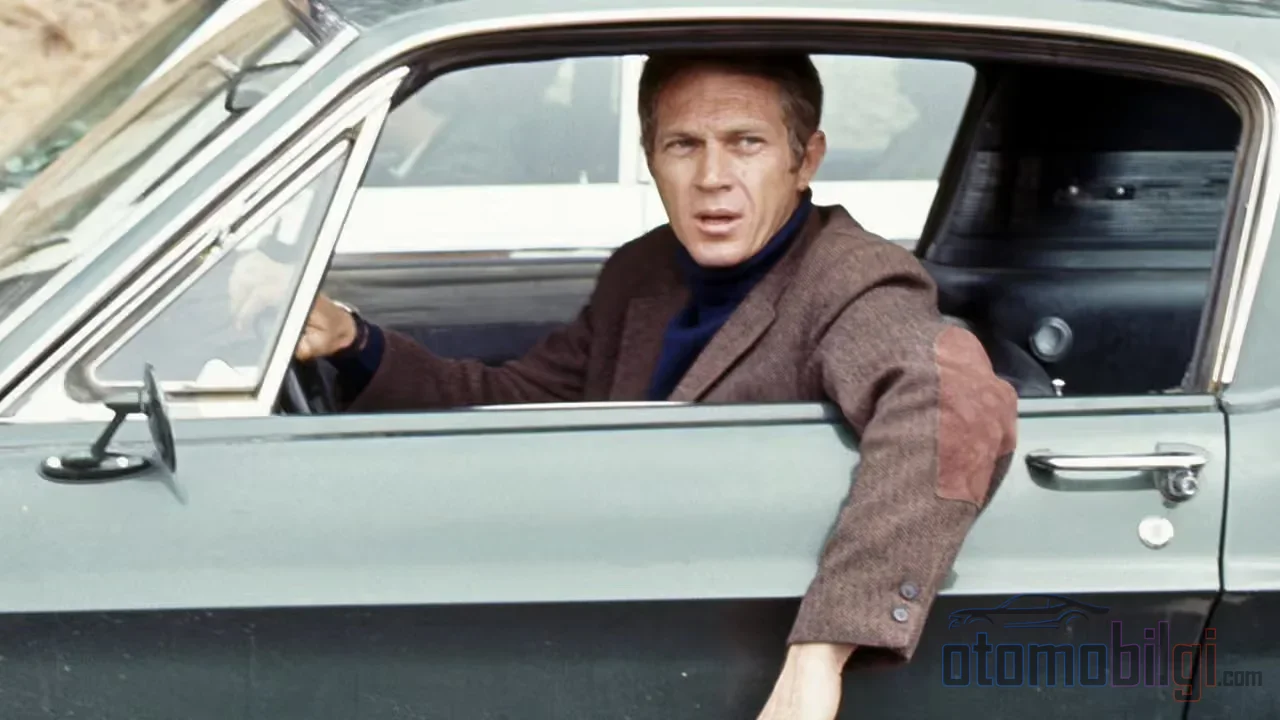
Warner Bros. and McQueen's company Solar Productions purchased two numbered S-Code 1968 Mustang GT fastbacks from Ford, one after the other. Both came out of the San Jose factory in Dark Highland Green, with a 390 cubic inch V8 engine and a four-speed manual transmission. So why two of them? Because the rules of action in the movies are ruthless: One does the beauty shots, the other takes the beating.
| Vehicle | Chassis | Role |
|---|---|---|
| Hero car | 8R02S125559 | Close-ups and the light scenes driven by McQueen |
| Stunt car | 8R02S125558 | Jumps and the harsh scenes where the car was pushed hard |
Modified to Catch the Charger
To prepare the car, McQueen brought in his friend and experienced race car builder Max Balchowsky. Balchowsky's touches seemed straight out of a racing garage: reinforced shock towers, heavy-duty springs, Koni shock absorbers, and strengthened chassis floors. On the engine side, the cylinder head was machined to raise the compression ratio, the carburetor and ignition were modified, and the exhaust was opened up. Simply put, they turned the nice kid of an ordinary street into a night race runner - because there had to be enough power to drag a faster Charger along on the straights.
Deliberate Minimalism: Why Are There No Badges?
The Mustang's appearance was deliberately simplified. The gray pony emblem, GT badges, fog lights, and reverse lights were removed; the fuel cap and taillight bezels were painted black. What's more, the stunt car's paint was dulled with Scotch-Brite pads - as if even looking at the car had been given up on. On its feet were 15x7-inch American Racing Torq Thrust D wheels. The goal was not to show the machine as a hero, but to completely shroud it in Bullitt's shadow. There is also an interesting detail: The engine sound heard in the film is said to have been taken from Ford's GT40 race car.
Was McQueen Really at the Wheel?
Yes, for the most part. McQueen drove most of the chase himself; in the riskiest maneuvers, the wheel passed to stunt legend Bud Ekins. The camera work was also unconventional: It was shot from very low angles, with long lenses, and with cameras mounted directly on the cars. For 1968, this meant an unparalleled close-action experience. We would not be exaggerating if we said that the visual language of nearly all subsequent car chases was born from this scene.
The famous jump scene took place at the corner where Taylor and Vallejo streets intersect, and the cars jumped far higher than the script had anticipated. As for the Charger's stunt car, it was completely destroyed while filming the scene where it spins out of control at the end of the chase and crashes into a gas station. So that collision on screen was real; there was nothing corrected at the editing table.
In the Footsteps of the Hero Car: The Legend Forgotten in a Garage
Now we move on to the truly crazy part: What happened to those two Mustangs after the film was finished? The hero car was sold to a studio executive after filming and later ended up in the hands of New Jersey private investigator Frank Marranca. Marranca sold the car to Robert Kiernan in 1974 for $6,000 through a classified ad he placed in Road & Track magazine. A million-dollar legend changed hands through a newspaper ad - and the buyer did not know what he would do with the car; his family used it as an ordinary daily vehicle for years. Robert's wife drove that legendary machine to the grocery store.
The most touching part of the story is this: Steve McQueen found Robert Kiernan in 1977 and tried to buy the car back for his family. Kiernan politely declined. Just imagine; a world-famous star writes you a letter, and the car still stays with you. In the early 1980s, when the clutch failed, the car was put in the garage and quietly waited there for years. Then, on the film's 50th anniversary, Robert's son Sean Kiernan reintroduced the unrestored and largely original hero car to the world, alongside the launch of Ford's 2019 Mustang Bullitt edition. The beauty of it was that the car was still shown used and in its natural state - not a museum piece begging for a polish, but a lived-in legend.
Then came the Mecum Kissimmee auction in Florida in January 2020: The hammer price was 3.4 million dollars, with a total of 3.74 million dollars including commission. It became the most expensive Ford Mustang ever sold at a public auction. Sean Kiernan drove the car himself, probably for the last time, and bid farewell to its steel.
The Lost Stunt Car: It Never Went to the Scrapyard
The story of the stunt car is even more staggering. For years, it was assumed that Chassis 8R02S125558, heavily damaged after filming, had gone to the scrapyard. Yet in 2016, in the town of Cabo San Lucas, Mexico, classic car collector Hugo Sanchez and vehicle fabricator Ralph Garcia Jr. discovered a rotten 1968 Mustang fastback. Even the initial plans were amusing: They were thinking of converting the car into the famous "Eleanor" replica from the film Gone in 60 Seconds. Luckily, the VIN number was checked against the Marti Report prepared by Kevin Marti, Ford's production records authority, and the result was clear: This was the lost Bullitt stunt car.
The evidence was still on the car: Reinforced shock towers made by Balchowsky's hand, and holes cut into the trunk to house the lighting generator needed for filming. The car also had its original, numbers-matching 390 V8; it was bought from the previous owner for 30,000 dollars - the owner initially wanted 60-70 thousand dollars, but the price came down through negotiation. After a restoration lasting roughly 10 years, the car began being exhibited with a public world premiere at the Petersen Automotive Museum on June 20, 2026; by that date, 95% of the restoration had been completed. Moreover, a special event was held at the museum where curator Jonee Eissen met with owner and restorer Ralph Garcia. The car's story became so popular that a watch brand even released a limited-production watch series containing real material from the stunt car.
So Why Is the Bullitt Mustang a Legend?
Let's give the short and clear answer to that question right here. What makes the Bullitt Mustang a legend is that McQueen saw the car as the lead of the screen, brought it to life with a music-free and brutally realistic chase, and the wild journey the two real cars went on afterward. The film is considered the Mustang's most significant appearance in popular culture, and Ford producing Bullitt-inspired models in 2001, 2008, and 2018/2019 is the most concrete proof of this iconic status. A car that was lost for more than forty years being found and continuing to turn the story from an ordinary film memory into a genuine legend.
You're asking whether a car becomes a legend because of a film? Here is the most beautiful form of the answer: A well-driven Mustang writes its own story - and sometimes people show up just in time to save it.
Sources
- The 1968 Ford Mustang: Dissecting Steve McQueen's Dark Highland Green Legend
- Bullitt sells for $3.74M, topping all-time Mustang record - Hagerty
- Found: The real Bullitt Mustang that Steve McQueen tried to buy - Hagerty
- Original 1968 Ford Mustang Bullitt Movie Car Shatters Records - MotorTrend
- Steve McQueen's BULLITT MUSTANG! - Petersen Automotive Museum
- 1968 Ford Mustang Bullitt Movie Car – Ultimate Guide - MustangSpecs
- Steve McQueen's Bullitt-Movie Mustang Suddenly Rediscovered - Car and Driver
- Ford Mustang Fastback GT "Bullitt" - USCars24-Classics