How Did Bumblebee Become the Face of the Camaro?
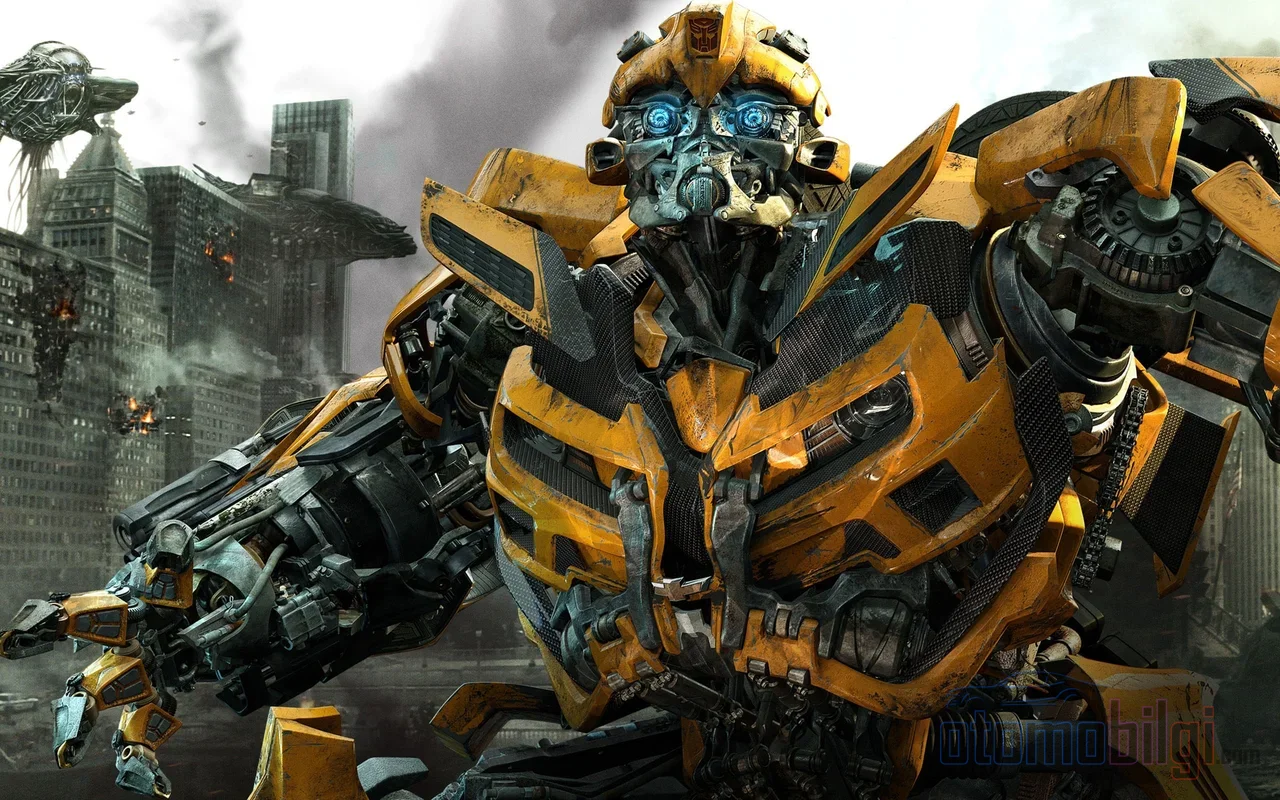
Could a yellow robot have shaken up an entire automotive giant? When the first Transformers film hit theaters in 2007, no one had thought of it: a movie figure boosting a model's sales by double-digit percentages. Yet that is exactly what happened. So why was a Chevrolet Camaro chosen as Bumblebee's companion? And how did this choice turn a movie vehicle appearance into one of the brightest marketing moves in automotive history? The answers are far more intriguing than you'd expect.
The Herbie Crisis: Why Couldn't Bumblebee Be a Beetle?
Let's clarify one fact first: Bumblebee wasn't always a Camaro. In the original 1980s animated series, the yellow Autobot transformed into a Volkswagen Beetle, the world's most innocent car. Small, cute, harmless to anyone. The character's motto suited this perfectly: "The least likely to be noticed may be the most dangerous." A classic scout robot, the eyes and ears of the team.
But when Michael Bay took the director's chair in 2007, the Beetle idea went in the trash. Bay's explanation was a thoroughly human reason: The Beetle reminded him of Herbie, the famous Love Bug, every single time. He didn't want Transformers, a film with an emotional, innocent car, to share the spotlight with another yellow car that had earned its own identity at the movies years earlier. Logical. After all, two robots riding the same car had never even happened in world history!
As an alternative, Chevy's muscle coupe was chosen, and this is exactly where the issue turned into admiration: sharp lines, a long hood, an alert stance. The exact opposite of the Beetle. In other words, Bumblebee's new body had decided to play not only with the character's soul but even with its appearance.
Highlights
- After the 2007 film, GM saw a 10% increase in yellow Camaro sales; yellow normally accounts for less than 5% of a model's sales.
- The modern Camaro in the film was a concept vehicle predating the 2010 production model.
- The four modern Bumblebee Camaros from the four films were sold together for $500,000 at the 2019 Barrett-Jackson charity auction.
- The 1977 Camaro from the 2007 film fetched more than $40,000 on eBay.
- Camaro production ended in December 2023; the final model year was 2024.
From the 1977 Camaro to the Concept: A Journey Through Time for the Movies
When we first meet Bumblebee in the first film, a 1977 Chevrolet Camaro stands abandoned before us: a faded yellow body, black stripes, rust stains. This was a deliberate choice; a look synonymous with a robot that had not yet found its true self. The car's exact specification, however, is a matter of debate: some say Type LT, others say Z/28. If you're wondering which one it is, no one can give you a definite answer without rewatching that scene in the dimly lit garage.
The real magic begins later. When Bumblebee upgrades himself, we are presented with an early version of the Camaro Concept, introduced in 2006 and updated in 2008. Here's the critical detail: this car was not bought from an ordinary showroom. The production model had not even gone on sale yet! The movie concept car was built on a Pontiac GTO chassis by SSV for GM and painted a color called "sunrise yellow". So the car filling the screen as you watched was a kind of preview of the future production Camaro.
There's also this convincing detail: multiple vehicles were built for the shoot. Custom body panels, different interiors, stunt cars... GM engineers and picture crews were all on board. So Bumblebee's car wasn't just a movie car, it was literally an engineering project. And that's where the iconic scene that sticks in people's minds comes from: the chase between the Camaro Concept and the evil robot Barricade, who transforms into a Saleen S281 Mustang. In other words: the moment when the fifth-generation Camaro showed its first and most unforgettable face was a muscle car chase.
Bumblebee, Film by Film: How Did It Change with Each Reboot?
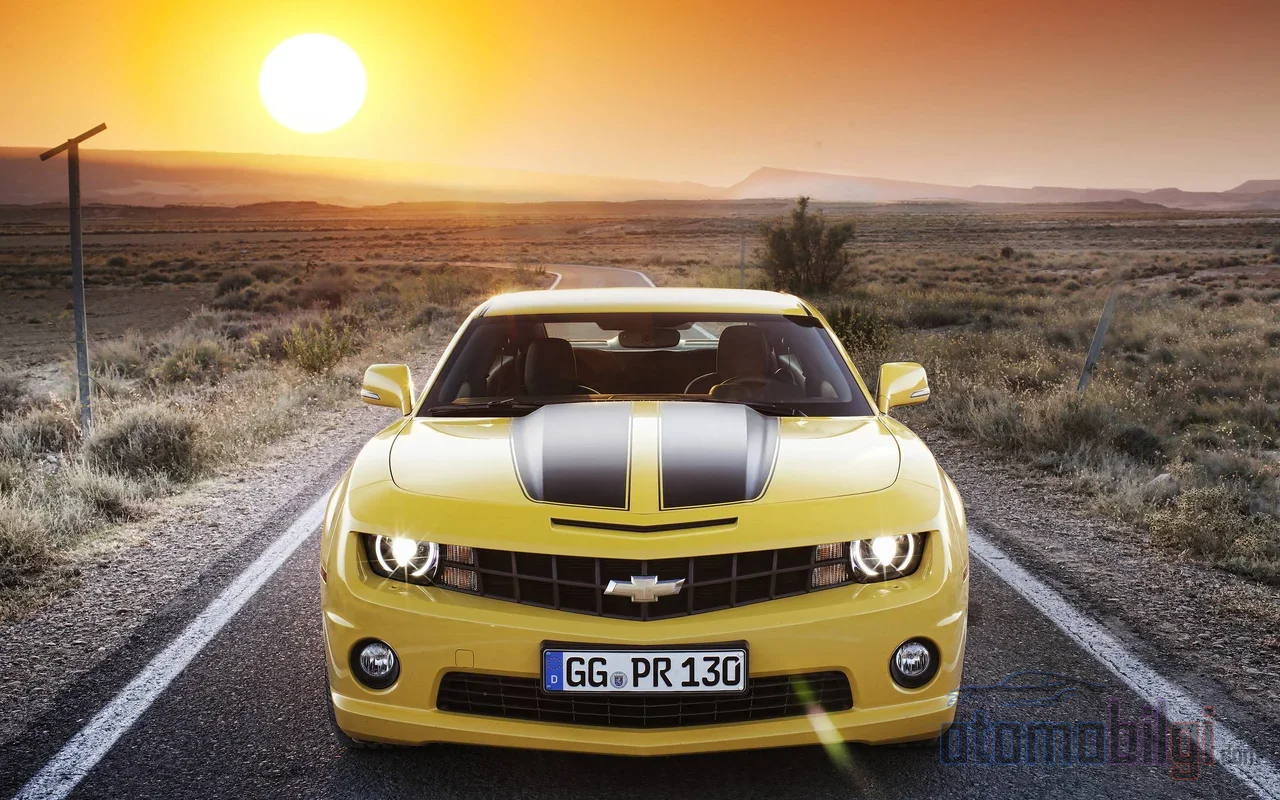
A tradition of redesigning Bumblebee in each sequel also emerged throughout the series. With every film, GM put an even more advanced Camaro in front of the camera. Here's a quick rundown:
| Film | Bumblebee's Vehicle | Highlights |
|---|---|---|
| Transformers (2007) | 1977 Camaro → 5th generation Camaro Concept | The shift from Beetle to Camaro; GTO-chassis concept |
| Revenge of the Fallen (2009) | Based on the 2010 production Camaro | Different wheels, new front bumper and splitter |
| Dark of the Moon (2011) | 2012 Camaro SS | Amber tone, thick black stripes, rear spoiler, battle mode |
| Age of Extinction (2014) | Concept based on the 2013 Camaro | Custom design for the film at GM's North Hollywood Design Center, slimmer headlights |
As you can see, with each installment of the series, Bumblebee was refreshed almost like a magazine cover. The 2014 car was particularly interesting: It was designed entirely specifically for the film at GM's North Hollywood Design Center and was based on the 2013 production Camaro. Slimmer headlights and a more aggressive stance carried the robot's maturing over the years. If it were you, which would you choose - the rustic 1977 version or the 2014 concept? This debate still continues in fan groups; some suggest a more modest car, while others argue the 1977 model is the iconic one.
Impact on Sales: A Case Study Taught in Marketing Classes
Now let's get to the serious part, because here the numbers do the talking. GM deliberately used the film to introduce the soon-to-return Camaro on a global platform. It accelerated the production model and launched it while keeping the design almost identical. So the film wasn't just a film - it was a launch strategy. Even today, this move is regarded as "one of the best film marketing moves of all time".
Here's the concrete data: In 2014, GM announced it saw a 10% increase in yellow Camaro sales. That's a massive figure by normal standards, because yellow typically makes up less than 5% of a model's sales. So the Bumblebee identity the film carried is strange but true: people were buying a yellow Camaro simply because they recognized it from the robot. Chevrolet sold 60,000 Camaros in that year alone. Also, while the second film's opening weekend brought in $201.2 million, above-list prices and 14,000 pre-orders were reported for the 2010 Camaro due to high demand.
Beyond the short-term sales boost, the real value lies here: the franchise's golden era allowed the Camaro to fully secure its place in popular culture. In short, GM got the chance to win a lifelong customer thanks to the film. Behind the brand's rebirth lies exactly this "product placement mastery". If you have a marketing class in high school, tell this to your teacher; the teacher will love it.
Bumblebee Edition: The Yellow Legend Opened to the Public
Of course, the job doesn't end when the movie ends. In 2012, Chevrolet began producing the Transformers Special Edition (known among the public as the Bumblebee Edition) Camaro Coupe. Even earlier, starting from 2009, a $995 Transformers package could be purchased: details like the Autobot emblem on the fenders, the same symbol on the hubcaps, and an embossed Autobot emblem on the console. So you could buy a normal Camaro and add a small robot touch on top of it.
The more ambitious example is the 2012 Camaro 2SS Transformers Edition: It came with a 6.2-liter V8 producing 425 hp and a 6-speed automatic transmission. This car went up for sale at the Barrett-Jackson Palm Beach auction in 2023. Also, Chevrolet offered the Camaro RS Limited Edition inspired by the Bumblebee concept in Age of Extinction. A small note: the car's official name is "Transformers Edition"; "Bumblebee Camaro" is a usage that has become established among the public. So if you search for the robot's name in the catalogs, you won't find it.
Auction Papers: How Much Are These Cars Worth?
The collector market is the area that most clearly shows the film's cultural weight. Here are the known significant sales:
- The 1977 Camaro used in the 2007 film found a buyer on eBay for a price of more than $40,000.
- Four modern Bumblebee Camaros from four different films were sold together, not individually, at the 2019 Barrett-Jackson charity auction: $500,000. That means an average of $125,000 per vehicle.
- Some special editions produced in limited numbers, though not more than 1,000, are expected to appreciate in collector circles; in 2023, a price of around $71,500 was asked for one example.
- In 2026, it was also shared that a Bumblebee Camaro sold at auction for a high price; collector interest is still going strong.
There is similar interest in the diecast world as well: 1/32 scale 1977 Camaro Bumblebee models can be found for about $8.50. So even a small copy of the robot turns into money. Why are these cars so expensive? Because they are not just a car; they are a generation's cinema memory.
The Camaro's Farewell and Bumblebee's Lasting Legacy
The story has a bittersweet but real chapter: GM announced 2024 as the final model year of the 6th-generation Camaro. Production ended at the Lansing Grand River plant in December 2023; the last vehicles rolled off the line in early 2024. For 2024, Chevrolet prepared a special Farewell (Collector Edition) package to honor its legacy. It is stated that around 1,335 units were produced for the final model year, which shows just how limited the car was. Thus a chapter closed for the muscle car icon; the Mustang remained as the last model keeping the V8 alive.
So what is the summary of this whole story? While Bumblebee was a yellow Beetle in the cartoon, he was turned into a fifth-generation American muscle car, thanks to Michael Bay's desire to avoid Herbie associations. GM used this character wisely: it turned the film into a showcase for a pre-production concept car, released the production model early, and saw a remarkable increase in yellow Camaro sales. Afterwards, special editions, collector auctions, and market interest made the bond between robot and car permanent. Although the Camaro is no longer in production, thanks to Bumblebee, that strange and beautiful bond between fiction and reality stands as one of the brightest examples of car culture. Do you think it's normal for a robot to have this much influence on a car? My answer: absolutely.
Sources
- The History of Bumblebee and Camaro
- How Chevy's Camaro Changed with the 'Transformers' Franchise
- All 4 Bumblebee Camaros from Transformers films fetch $500,000 in group sale
- Transformers 2 movie pushes Camaro sales over the top
- Bumblebee Camaro shows off GM's design muscle in 'Transformers' flick
- 2012 Chevrolet Camaro 2SS Transformers Edition
- This Is How Much The Transformers Bumblebee Camaro Costs Today
- Chevrolet Camaro
- Bumblebee | Transformers Movie Wiki
- The Legacy Of The Camaro