Chitty Chitty Bang Bang: The Legendary Flying Car on Screen
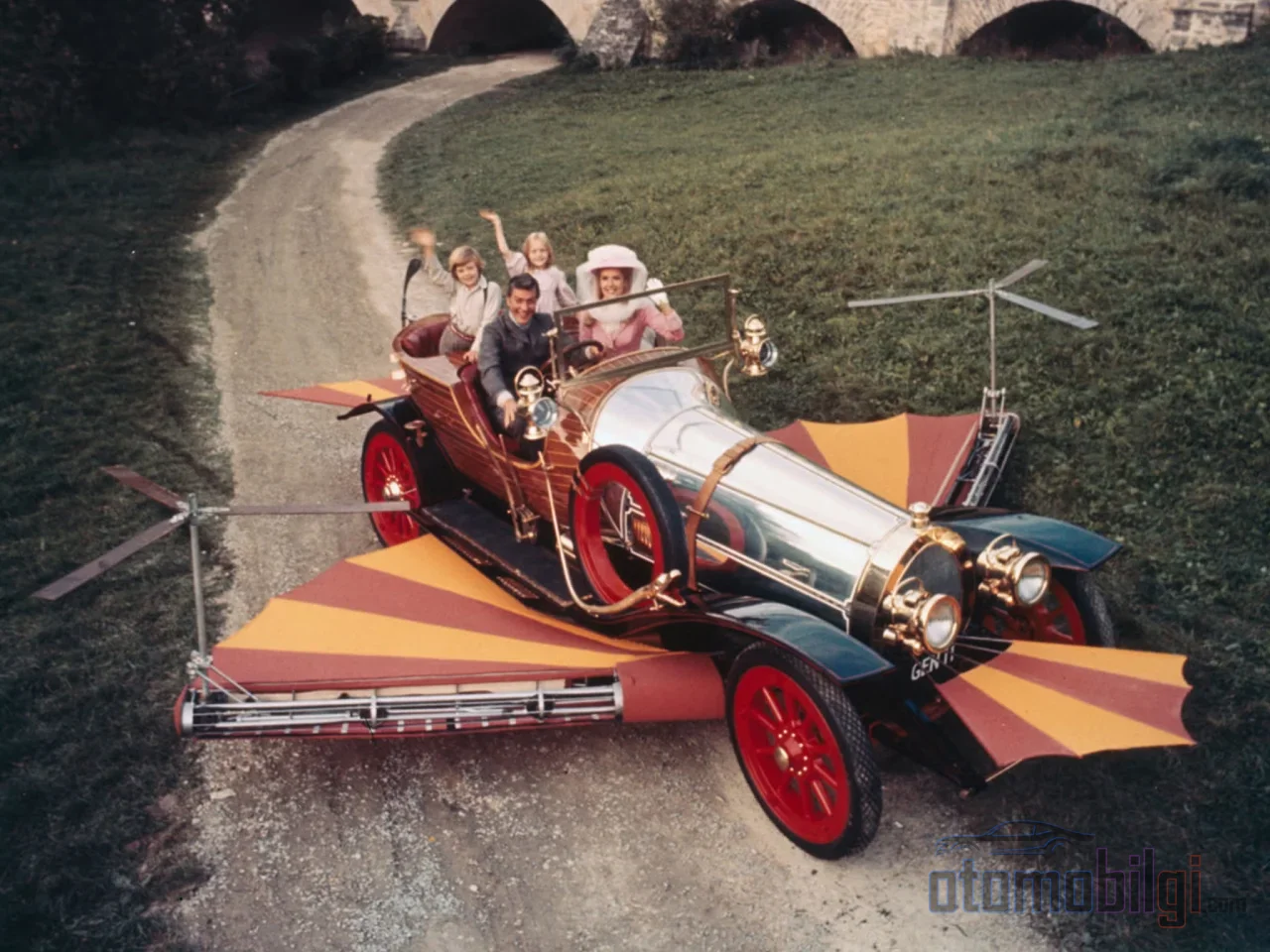
Just think about it: The creator of James Bond, while lying in bed after suffering a heart attack, told his son a bedtime story - and from that story came the most famous flying car in cinema history. What's more, on screen this car both flies and floats... but in reality it neither flew nor floated. So what was it that we saw, then? Behind the scenes of the 1968 Chitty Chitty Bang Bang, there were multiple specially built vehicles - one drivable, one suspended by wires, one that could be lowered into the water - and the best part of it all is that at the heart of these cars beat an ordinary Ford engine. Yes, you read that right: the world's most captivating fantasy automobile was, at its core, a Ford.
Ian Fleming's Final Gift: From a Bedtime Story to a Book
When you hear the name Ian Fleming, you might think of the blockbuster spy films, but the writer's heart actually lay somewhere far more innocent: in his son Caspar's bedroom. While recovering at a hotel in England after suffering a major heart attack, Fleming wrote the children's book Chitty-Chitty-Bang-Bang: The Magical Car based on the story he told his son every evening. Because the doctors forbade him from using a typewriter, he had to write the story by hand, and sadly he never got to see the book published - he lost his life on August 12, 1964, on his son's 12th birthday. The book, however, reached readers in three volumes just two months after his death, on October 22, 1964; each 48-page volume sold for 10 shillings and 6 pence.
The book's illustrations are a story in their own right. Fleming first tried to strike a deal with a newspaper cartoonist, but the newspaper did not permit it. Then came sketches by engineer Amherst Villiers, which went unused. Finally, award-winning illustrator John Burningham took on the job and gave the book its unique visual identity. The car in the story is a fictional model called the Paragon Panther; it took its name from the sounds made by its starter motor and two loud backfires. So that famous name is actually an onomatopoeia.
Highlights
- The book was published two months after Ian Fleming's death, on October 22, 1964.
- The film premiered on December 16, 1968; multiple specially built vehicles were produced for the car.
- At the heart of the film cars was a 3.0-liter Ford Essex V6 engine with an automatic transmission.
- The flying Chitty was sold at auction in 1973 for 37,000 dollars.
- One of the original vehicles is on display at Beaulieu in England.
Did Chitty Bang Bang Really Exist? Zborowski's Monsters
Here's the detail most people miss: Chitty was not a figment of Fleming's imagination. In the early 1920s, a wealthy English racing driver named Count Louis Zborowski built race cars with massive engines salvaged from aircraft, and these machines were called Chitty Bang Bang, just like in the book. Fleming had seen Zborowski race at the Brooklands circuit in his youth, and that image had been etched into his mind.
Zborowski's wildest machine was a chain-driven Mercedes with an eight-foot (about 2.4 meters) long hood, powered by a 23-liter Maybach Zeppelin aircraft engine. Even more extreme... pardon, let me correct that: another monster of the series was Chitty Bang Bang IV, the record-breaking machine known as Babs, which carried a 27-liter Liberty V12 aircraft engine producing 450 horsepower. So Fleming's car in the story was a combination of his own Standard Tourer and these aircraft-engined monsters. Taking a 23-liter engine out on the road in the 1920s was like driving a racing boat in traffic today.
The 1968 Film and the Magical Car's True Identity
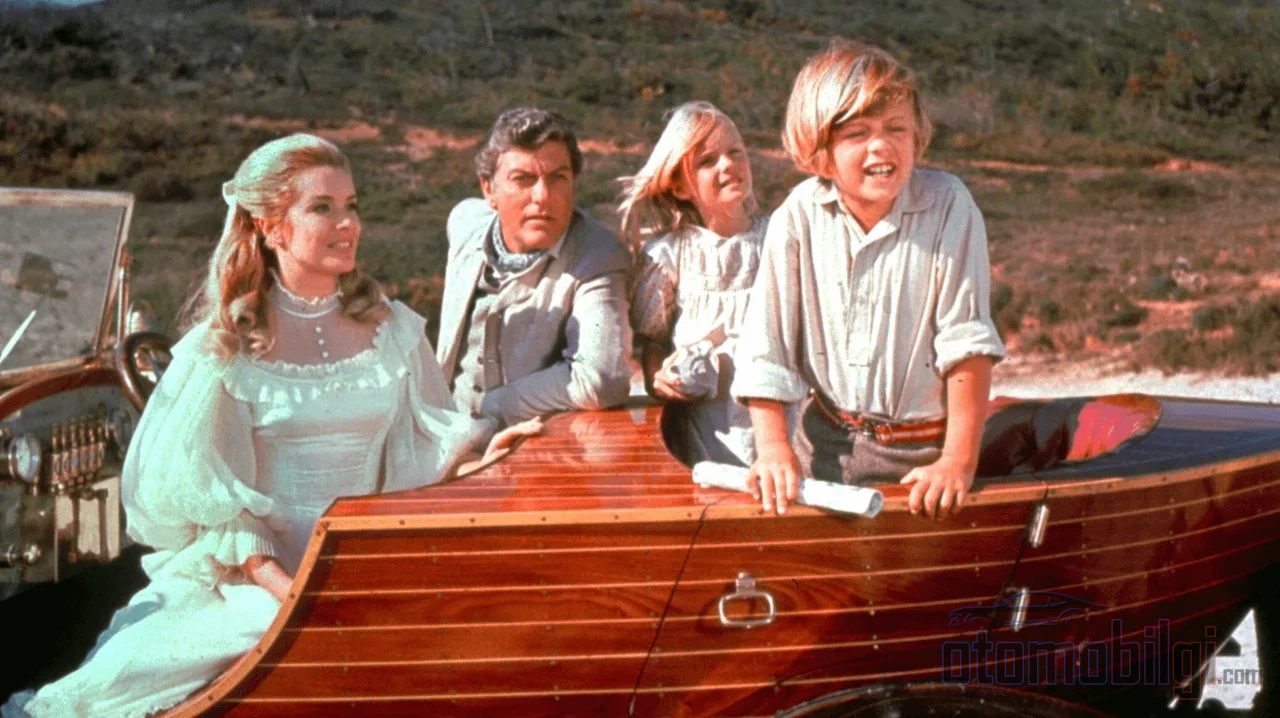
The book was brought to the screen in 1968 as a loose adaptation with a screenplay written by Roald Dahl and Ken Hughes. Ken Hughes sat in the director's chair, while production was handled by Albert R. Broccoli, who had by then made five Bond films. So the project was the Bond team's musical adventure for children, and the film premiered on December 16, 1968.
Did the car really fly?
The short answer: no, and even knowing this makes the story even more impressive. The production team prepared vehicles separately optimized for each task. A genuinely drivable version was used for ground scenes, while models equipped with wires and special effects were used for flying scenes. For the scenes on the coasts of Saint-Tropez, a floating version of the car was tested in real sea conditions. In the book, the car transformed into a hovercraft-like vehicle and even crossed the English Channel. The figures for how many cars were on set vary: there are different counts of four, six, and even at least eight vehicles being produced; because each version was made for a different job, and the production had different numbers of cars prepared at different times.
What's under the hood?
Here is where the secret is revealed. Although its appearance resembled an Edwardian racing monster, at the heart of the film cars was a 2,994 cc Ford Essex V6 engine paired with an automatic transmission. Its weight was around 2 tons, and its length was about 17 feet (approximately 5.2 meters). Think about it: the aesthetics of the early 1900s meet the ordinary but reliable Anglo-American engineering of the 1960s. The horsepower and torque figures, as well as the 0-100 km/h acceleration time, were never disclosed for the film cars; the production team did not share this data.
| Specification | Film Car (1968) |
|---|---|
| Engine | Ford Essex V6 |
| Engine displacement | 2,994 cc (3.0 L) |
| Transmission | Automatic |
| Weight | Approximately 2 tons |
| Length | 17 feet (approximately 5.2 m) |
| Horsepower / Torque | Not disclosed |
The Flying Legend Goes Up for Sale: The Auction Journey
After the film ended, the story of the Chittys did not end; on the contrary, a second life began. In 1973, the flying Chitty was sold at auction for $37,000; an amount equivalent to approximately $268,000 in today's money. Afterwards, the interest never ended: In 2011, estimates between 1-2 million dollars were given for the original road-going main vehicle, and it was reported that 805,000 dollars was paid for a replica. In 2012, a model made for children found a buyer for 15,000 pounds at the Goodwood Revival. In September 2015, Bonhams put up for sale a replica that was built from scratch starting in 1998, powered by a Ford V6 engine with an automatic transmission. In July 2023, another replica went under the hammer with an expectation in the 180,000-200,000 pound range. And in 2025, at a famous auction house in Scottsdale, a recreation carrying the film star's signed brass plate was brought to the stage.
The replica-building side is an entirely separate realm of passion. One of the replica masters explains that the film vehicles were produced purely for stage magic, and were therefore never considered for practical use; a good replica, however, tries to combine screen accuracy with real-world drivability. It is also known that one fan spent more than 65,000 pounds to turn a 100-year-old automobile into an exact replica. That money would buy many classic sports cars today, but passion is priceless.
Where Can You See It? The Originals in Museums
Good news: Some of the Chittys are still alive and in visitable condition. The National Motor Museum, Beaulieu, in England, displays one of the original vehicles; on weekends and school holidays, the car goes out on tours in the grounds. Beaulieu opened a special exhibition for the film's 50th anniversary, and Babs, the record-breaking car known as Chitty Bang Bang IV, also took part in this exhibition. In the USA, the Stahls Motor and Music Museum houses one of the film's rare surviving originals; this vehicle is the version prepared to appear as if it were driving itself, without a driver, during filming. The Riverside Museum in Glasgow, meanwhile, hosted an original vehicle in its collection. So you need to plot an intercontinental route to see this legend descended from the ancestor seed.
Its Place in Cinema History and a Surprising Sequel
So is this car really a legend, or just a nostalgic fuzzy memory? The numbers say legend. Chitty has secured a solid place for itself on the lists of the most iconic movie cars of all time; it also appears constantly in the compilations of the greatest movie and TV cars prepared by major automotive platforms. The musical staged at the London Palladium in 2002 played without interruption until September 2005, became the venue's longest-running show, and grossed 70 million pounds over 3.5 years. The Broadway version had 285 regular performances in 2005.
The story did not stay only on the screen, either. Between 2011 and 2013, three sequel books written by Frank Cottrell-Boyce were published. And the freshest part of it all: In December 2024, it was announced that a remake was in early development under the partnership of Amazon MGM Studios and Eon Productions, with Matthew Warchus working as director and Enda Walsh as screenwriter. Even sixty years after Fleming's death, Chitty still flaps her wings.
Final Word: Magic - Wires or Engine?
So let's give a clear answer to the question: Chitty Chitty Bang Bang flew and floated on screen, but she never actually did either in real life; the flight scenes were shot with wires, special effects, and separately optimized models, while the drivable version had at its heart a 3.0-liter Ford Essex V6 engine with an automatic transmission. Even so, the car sold for 37,000 dollars in 1973, has been treated like a queen in museums for decades, and is still making headlines in the 2020s with news of a remake. Perhaps that is exactly what the magic was: not the wire, the engine, or the flap; but a good story told to a small child that keeps on flying.