How the Rain Man Movie Turned the 1949 Buick Roadmaster Into a Legend
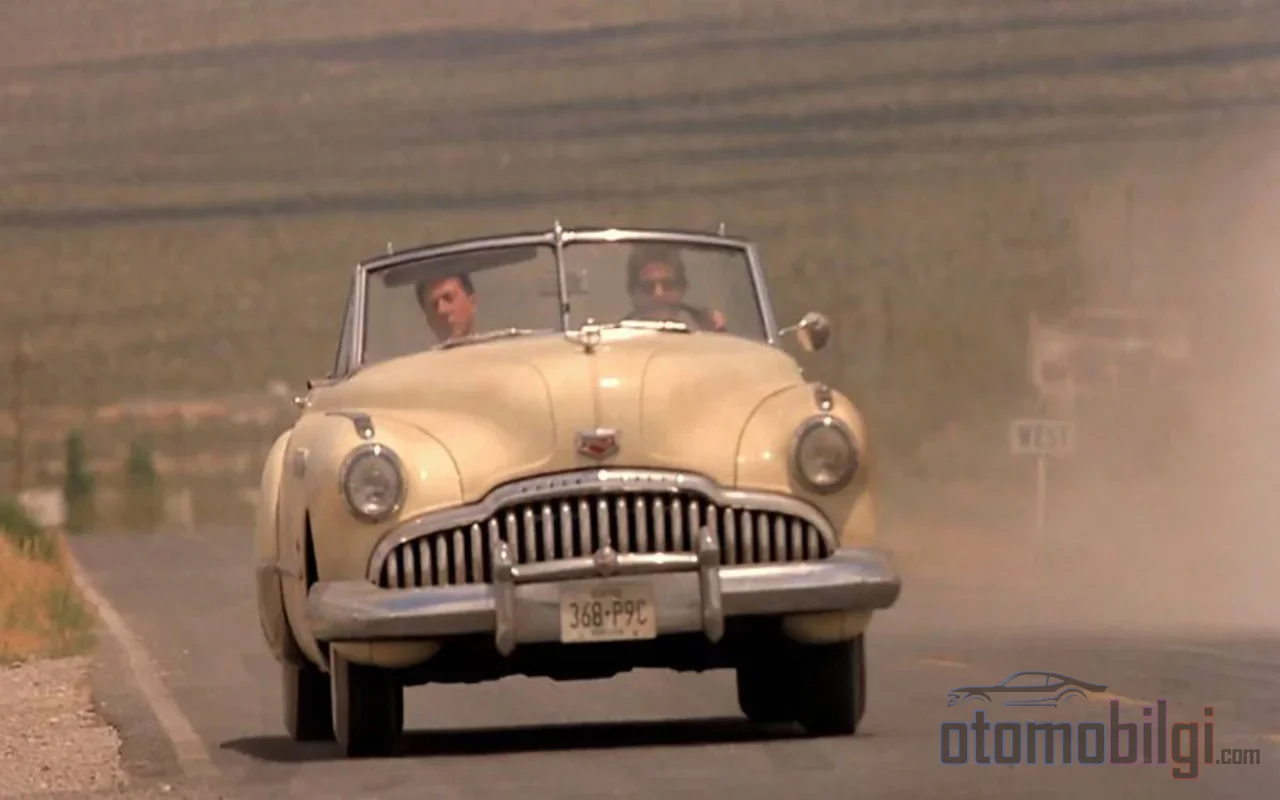
What comes to mind when you think of the movie Rain Man, showered with Oscars in 1988? Dustin Hoffman's unforgettable Raymond performance, or Tom Cruise's dazzling smile? Or how about that huge, pure white, open-top 1949 Buick Roadmaster? Yes, I mean that car. In Hollywood history, cars are usually extras that explode in chase scenes and fly off ramps. But Rain Man's Roadmaster did exactly the opposite: it became a legend without ever speeding up, without ever burning rubber, just by being there. So how did this gentle giant become a star in museum showcases and six-figure auctions today? Come on, let's hit the road.
How Did a Buick Become the Film's Third Lead?
Barry Levinson, the director of Rain Man, makes his most striking observation when talking about the film: the car had such a powerful visual presence on screen that it practically became a character in its own right. All that strange, fragile, and touching relationship between Charlie Babbitt (Cruise) and his older brother Raymond (Hoffman) matures inside this car across a vast map of America. At the center of the scene there is no chase, no explosion; just two brothers, an open top, and hours of silent road.
That's exactly why the Roadmaster's story grips me so much. It isn't armored like the Batmobile, it doesn't talk like KITT, and it doesn't drive itself like Herbie. It's just a family car - and moreover, a 1949 family car. And yet when the film ends, we can't imagine it without the car. The collector world's view of this vehicle is the same: auction houses define it not just as a movie memento, but as the film's catalyst.
Highlights
- At least two 1949 Buick Roadmaster convertibles were used for the film
- After filming, the car was purchased by Dustin Hoffman
- It sold for 335,000 dollars at the 2022 Bonhams auction
- The value of a 1949 Roadmaster convertible without the film connection is only in the 37,000-45,500 dollar range
- Engine: 5.2-liter inline-eight Fireball with 150 hp and 380 Nm of torque
The Technical Identity of the 1949 Roadmaster: The Gentle Giant from the Age of the Yellow Wing
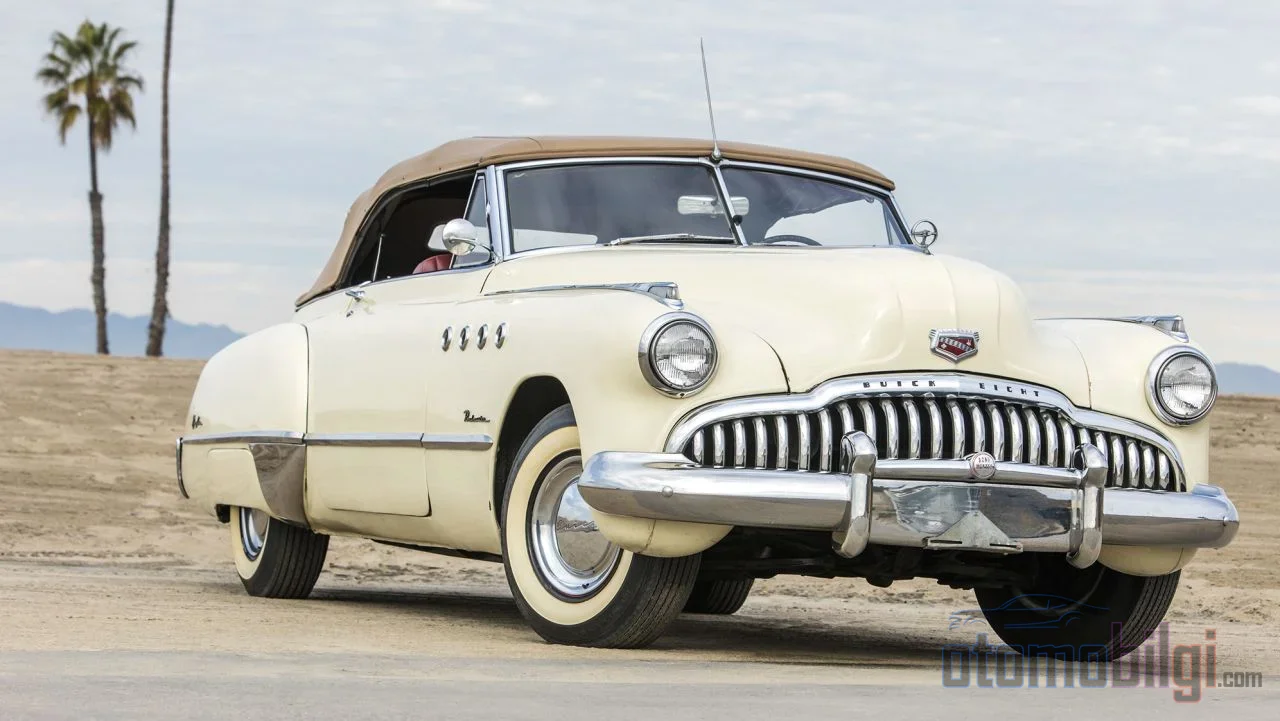
Now let's talk a bit about engines, but don't worry, I'm one of those who slept through physics class - what I'm about to explain is quite simple. The 1949 Buick Roadmaster Series 70 carries at its heart an inline-eight engine called the Fireball, displacing 5.2 liters (320.2 cu in). What's an inline-eight, you ask? The cylinders are lined up side by side in a single row, like a string of sausages in a long box. Fed by a two-barrel Carter carburetor, this engine produces 150 hp at 3600 rpm and 280 lb-ft (about 380 Nm) of torque at 2000 rpm.
Does 150 horsepower sound low to you? Today's hot hatches do twice that, I know. But the trick lies in the torque: 380 Nm, at low revs, and in 1949! That means the car moves along, knowing it isn't fast, but slowly and powerfully, like a calm giant sipping its morning coffee. 0-60 mph (about 0-97 km/h) acceleration takes approximately 16.6 seconds, with a top speed of around 84 mph. The numbers are slow, yes - but nobody was in a hurry crossing the continent with Raymond anyway.
| Specification | Value |
|---|---|
| Engine | 5.2 L Fireball straight-eight, OHV |
| Power | 150 hp @ 3600 rpm |
| Torque | 380 Nm @ 2000 rpm |
| Transmission | 2-speed Dynaflow automatic |
| 0-60 mph | Approximately 16.6 seconds |
| Length | 5,438 mm |
| Wheelbase | 3,200 mm |
| Brakes | 12-inch hydraulic drums on all four corners |
Dynaflow: The First-Class Passenger That Made History
The two-speed Dynaflow automatic transmission beneath the Roadmaster is no ordinary detail: When it debuted as an option in 1947, it was the first passenger car to use a torque converter transmission, and in 1949 it was promoted to standard equipment on the Roadmaster. In other words, this car is a carrier of a significant engineering milestone in automotive history. It also came with independent front suspension (coil springs), a 4.1:1 rear axle ratio, and 12-inch hydraulic drum brakes on all four corners. 1949 was also the year of the Roadmaster's first major postwar redesign: wheelbase and overall length were slightly shortened, while weight increased somewhat. The four VentiPorts on the front fenders - the fake air vents that would become Buick's signature for years - set it apart from other Buick models. A total of 86,131 Series 70 Roadmasters were produced in 1949; the convertible that starred in the film was a much smaller slice of that crowd.
How Many Roadmasters Were There and Where Did They Go?
This is one of the most intriguing parts of the story. Figures about the number of cars used in the film vary: solid records show that at least two cars appeared before the cameras, while some sources mention four identical cars. This uncertainty is common with classic film cars - production crews often use multiple vehicles for different angles and backups, and years later the question of which was which keeps collectors busy.
What is certain is this: after filming wrapped, one of the cars joined Dustin Hoffman 's personal collection. And I think the most heartfelt compliment that can be given to a car in Hollywood is exactly this - the actor who shared the screen with it wanting to buy it once the scene was over. This car, owned by Hoffman, was recorded with chassis number 15235854. The trail of the other cars extends into the collecting world: one was in the collection of famous collector Bob Pond, while another passed into the hands of car restorer and TV personality Wayne Carini; one of the cars was also displayed at the Greenwich Concours.
The Auction Scene: How Did the Hollywood Signature Reflect on the Price?
Now I'm taking you to an auction hall. Hoffman's Roadmaster was first put up at an entertainment music and film memorabilia auction held in Dallas. The starting bid was $80,000, and the car found its buyer at $170,500, a price about 113 percent above the estimate. That's a stunning result, isn't it? But the real finale hadn't arrived yet.
In January 2022, the same car came up for sale again at the Bonhams auction in Scottsdale - straight from Hoffman's ownership, with an estimate of $150,000-250,000 - and soared to $335,000 including premiums. So in just a few years, its value nearly doubled.
How Much Is a Roadmaster Without the Film?
Now for a brutal but instructive comparison: what is an example of the same model from the same year worth without the Rain Man provenance (in a good sense!)? An average 1949 Roadmaster convertible, not even in excellent condition, trades in a band of roughly $37,000-45,500 in today's market valuations. A 1949 Roadmaster Riviera sold in Hershey in 2026 - a very clean example with no connection to the film - changed hands for $52,640. When you put the numbers side by side, the picture is clear: cinema history lifts this car's value to roughly seven to eight times that of ordinary examples. A few months spent on the Hollywood screen means a six-figure premium six decades later.
Where Is It Today: The Quiet Star in the Museum Display Case
So where is Rain Man's Buick now? The good news is this: the legend is still alive and can be seen. A 1949 Buick Roadmaster greets visitors as the Rain Man car in the main gallery of the Studebaker National Museum in Indiana. In addition, one of the other examples I mentioned earlier, in the hands of collector Wayne Carini, continues to appear at classic car events. So one day you can hit the road and see this car with your own eyes - and I think you absolutely should.
So What Really Made This Car a Legend?
Let me give you the clear answer as promised. Rain Man's 1949 Buick Roadmaster is a legend because it managed to become the emotional core of the film without resorting to any tricks - no chase scenes, no explosions, no sci-fi gadgetry; it became a silent hero that carried the relationship between two brothers and transformed them, and this role earned it the status of one of the most valuable cult film cars in cinema history along with its current museum position.
Big already, not fast - that was the problem, but that was also the beauty. Just like Raymond's world: no need to rush. And perhaps that is exactly the secret of being perhaps the most famous "slow" film car of all time: real character doesn't need flashy speed stunts; it needs simplicity and patience. $335,000, a museum display case, or Barry Levinson's two-speed genius - whatever you're looking for, part of the answer always lies hidden under that long hood, in the rumble of the straight-eight engine.
Sources
- Buick Roadmaster - Wikipedia
- 1949 Buick Rain Man Roadmaster Convertible - Bonhams
- Iconic Film Car, Rain Man 1949 Buick Roadmaster Convertible - Heritage Auctions
- Rain Man 1949 Buick Roadmaster Hits Scottsdale Auction - Car and Driver
- The Buick Roadmaster Tom Cruise drove in Rain Man is up for sale - CNN
- 1949 Buick Series 70 Roadmaster Specifications - ConceptCarz
- An Ultra-Fine 49 - 1949 Buick Roadmaster - Hemmings
- 1949 Buick Roadmaster Model 76C Value - Hagerty
- A 1949 Buick Roadmaster that Starred in Rain Man - Vanderbilt Cup Races
- The Rain Man 1949 Buick Roadmaster - Studebaker National Museum