How Did Bond's Lotus Esprit Turn Into a Submarine?
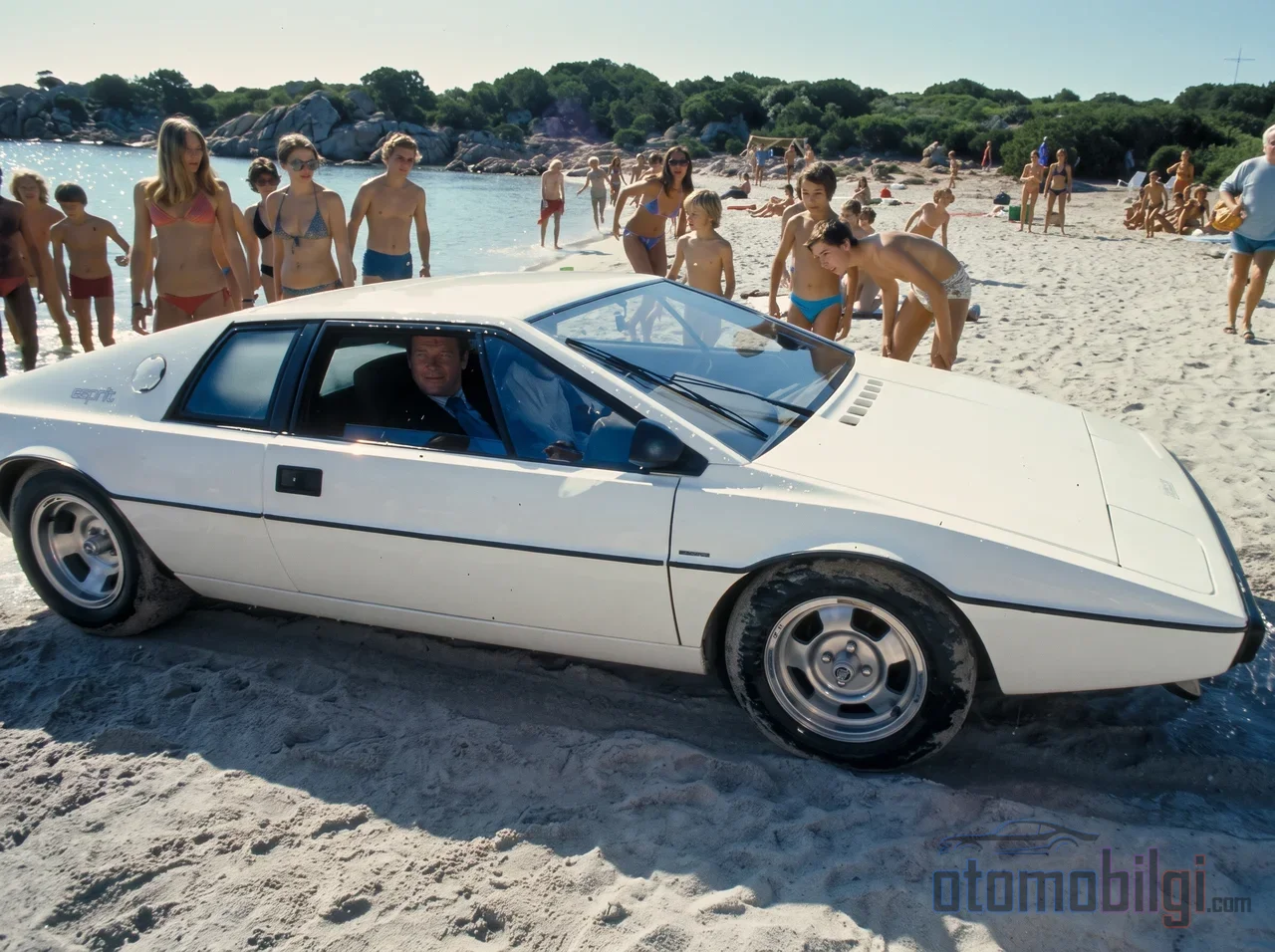
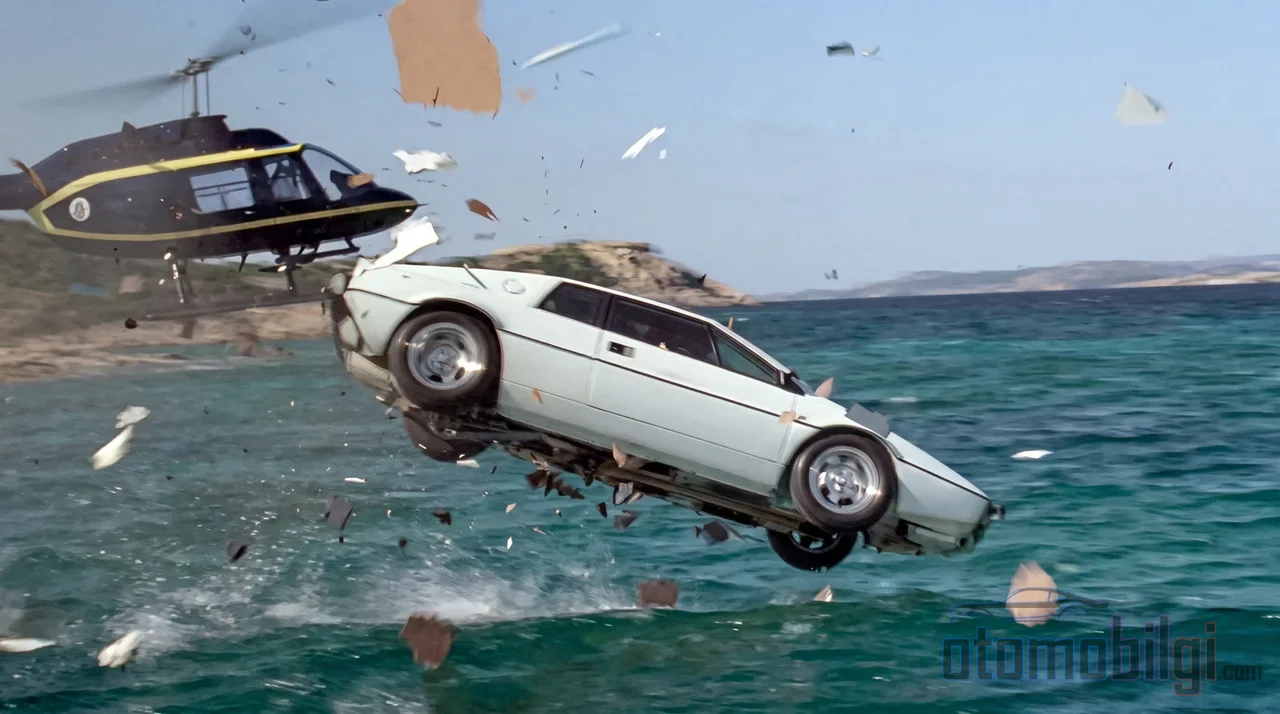
You probably remember the scene: Roger Moore's Bond, being chased by a helicopter along the Sardinian coast, drives the Lotus Esprit off the end of a pier into the sea, and the car instantly turns into a submarine that raises a periscope. Then it fires a missile from the sea into the air and takes down the helicopter. Everyone who watched this scene from 1977's The Spy Who Loved Me asks the same question: did that car really turn into a submarine? The answer is both yes and no, and the rest of the story is far more entertaining than you think. Because behind the scenes, there was a company called Perry Oceanographic, six Esprits, a legendary diver, and years later a billionaire who would pay half a million pounds.
What Is Wet Nellie, and Where Does the Name Come From?
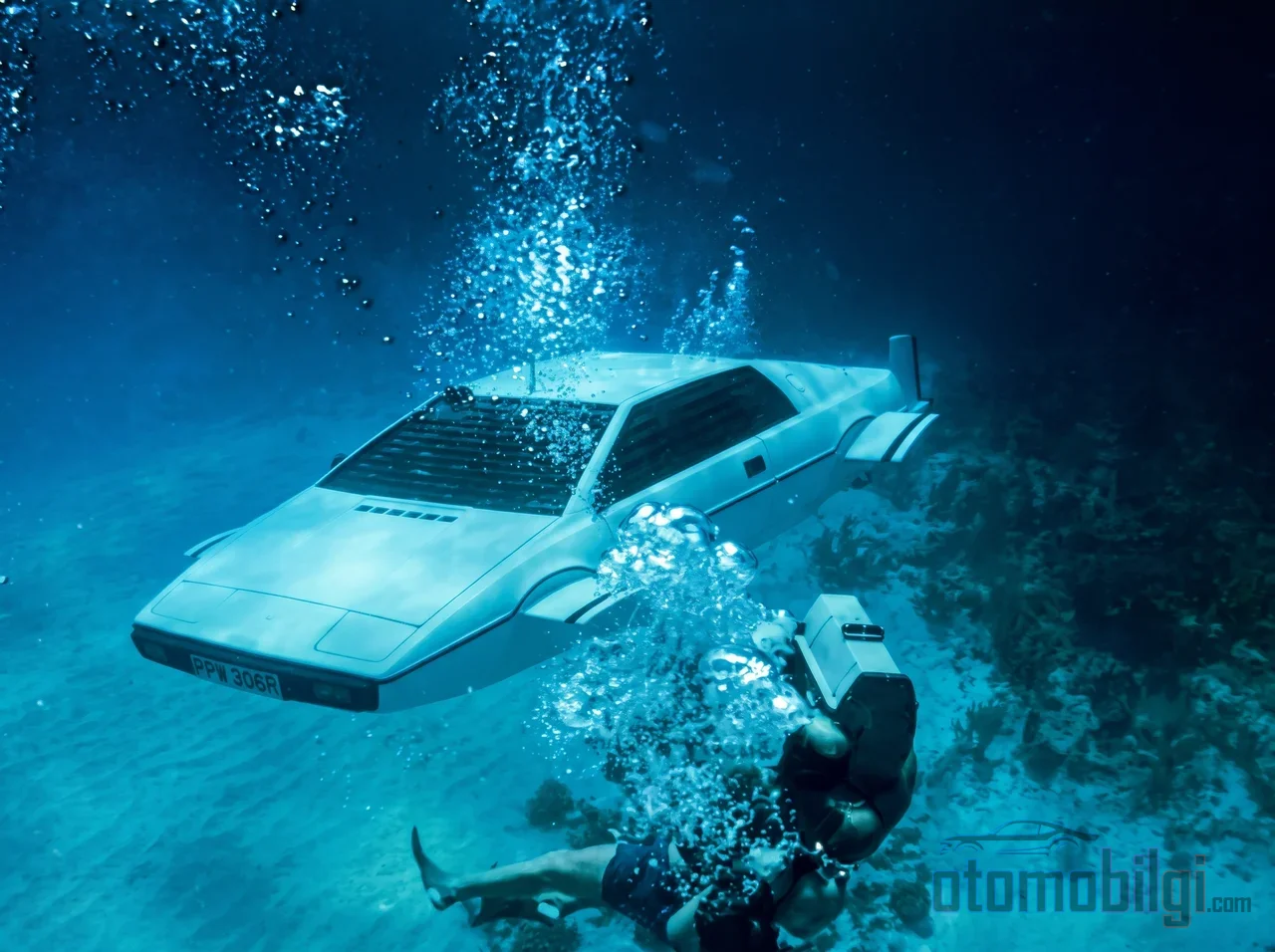
The thing everyone on set called Wet Nellie was, in fact, not a car. It was a submarine built by Perry Oceanographic, a company in Riviera Beach, Florida, for about 100,000 dollars in 1976, covered with a Lotus Esprit S1 body shell. So the car doesn't drive into the sea and then transform into a submarine; the submarine part was designed from the start as a separate vehicle.
So where did this odd name come from? It was a reference to Little Nellie, the autogyro in the 1967 film You Only Live Twice. Little Nellie itself took its name from the British actress and comedian Nellie Wallace. That's just how humor gets passed down from generation to generation in the Bond legend.
The Technical Structure of Wet Nellie
There's a detail here that will surprise you: Wet Nellie is a "wet submarine," in other words a wet sub. Its interior is not dry; there is neither a cockpit nor a cabin. There's no steering wheel inside either - just a platform for the divers and the submarine's power equipment. The crew has to wear diving gear. The image of a Bond sitting inside the vehicle, pressing the pedals and diving into the sea, unfortunately existed only in the movies.
Its dimensions are 4.3 meters in length, 1.8 meters in width, and 1.2 meters in height. It moves on four electric motors but can only go forward - there is no reverse gear. It carries a crew of two. The most interesting engineering problem was this: The Esprit's wedge shape was actually designed to produce downforce, pressing the car to the ground like a racing car. In the sea, that force works in reverse and would push the submarine down. The solution? Placing fins in the areas where the wheels were located. This provided balance underwater.
Highlights
- Wet Nellie was a real submarine, built in 1976 for about 100,000 dollars
- Six Esprits with the license plate PPW 306R were used in filming, but only one was a submarine
- The Esprit S1's engine is 1973 cc, power is 160 hp, weight is under 1000 kg
- Elon Musk bought Wet Nellie at auction in 2013 for 616,000 pounds (including premium)
- The Esprit's median auction price today is about 26,410 pounds
Collaboration with Lotus: The Colin Chapman Coincidence
How did Bond of 1977 end up with a Lotus? This is where the funniest part of the story begins. According to the accounts, Lotus founder and chairman Colin Chapman parked his personal Esprit in front of the film production offices. There were even moments when they had to borrow Chapman's car. In short, Bond's new car being a Lotus was in a way pure coincidence.
Once the collaboration was officially made, Chapman's oversight came into play on the Lotus side, and the special effects team led by Derek Meddings on the film side. The team, together with Lotus engineers, worked a full six weeks to transform the car. As a result of the agreement, Lotus delivered two production cars, and a protective sheet was added under each one's radiator. The cars used in the effects set were fitted with mechanically operated covers: missile launchers at the front, a smoke screen exhaust at the rear, and a mine cover underneath. The film also tells the story of a vehicle whose schematics are stolen by KGB agent Anya Amasova, developed by MI6's Q-Branch.
Filming in Nassau: Six Cars, One Submarine
The submarine scenes were filmed in Nassau, the capital of the Bahamas. In those famous underwater scenes, Wet Nellie was piloted with full diving equipment by Don Griffin, a former US Navy SEAL. So at the wheel in that scene, it wasn't even Bond, but a real military diver.
So how was the transformation scene filmed? Here is where the secret of the cinema magic lies: six different Esprits with the license plate PPW 306R were used, but only one of them, namely Wet Nellie, was a real submarine. Three Esprits were completely empty body shells, used to show every stage of the transformation. The moment the car first entered the sea, what you see on screen was a miniature model. For entering and exiting the sea, two wheeled but motorless dummy cars were built: one was launched from the end of the dock with an air cannon, the other was pulled by a rope buried in the sand. What you saw as a single car in front of the camera was actually a six-piece jigsaw puzzle.
Technical Specifications of the Esprit S1: How Powerful Was the Road Car?
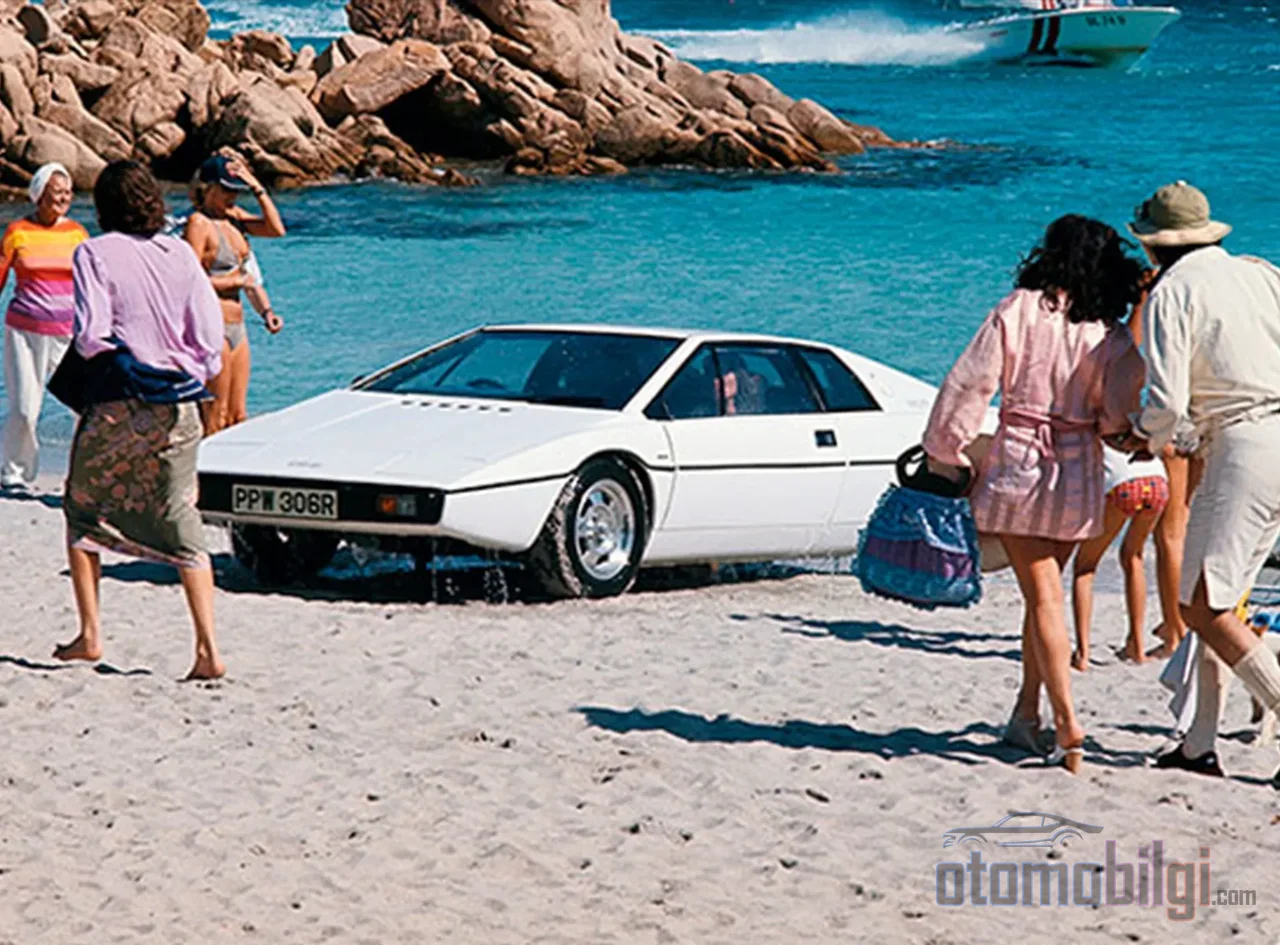
While the submarine story unfolds on one hand, let's ask on the other: what was the real Esprit S1 like? The concept of this wedge-bodied car designed by Giorgetto Giugiaro was shown at the 1972 Turin Motor Show, the production version was introduced at the October 1975 Paris Motor Show, and production started a year later. Giugiaro was awarded the title of "Car Designer of the Century" in 1999, meaning this body carries the signature of a design legend.
As for the technical side: at its heart is Lotus's naturally aspirated engine coded 907, with a displacement of 1973 cc, inline four cylinders, 16-valve DOHC, and two Dell'Orto DHLA 45 carburetors. It produces 160 hp at 6200 rpm and approximately 190 Nm of torque at 4900 rpm. Its weight is under 1000 kg, around 900-960 kg. Comparing it with today's supercars would be wrong, but in its own era, the combination of 160 hp to 907 kg was a considerable lightness/performance balance.
| Specification | Value |
|---|---|
| Engine | Lotus 907, inline 4 cylinders, DOHC 16 valves |
| Displacement | 1973 cc |
| Power | 160 hp @ 6200 rpm |
| Torque | Approximately 190 Nm @ 4900 rpm |
| Weight | Approximately 900-960 kg |
| 0-100 km/h (0-62 mph) | Approximately 6.8-7.0 s |
| Top speed | Between 200-222 km/h (124-138 mph) |
| Dimensions (L/W/H) | 4191 / 1861 / 1111 mm |
| Production count (S1) | 718 units |
A brief clarification on the performance figures is needed: The 0-62 mph figures range from Lotus's own claimed 6.8 seconds to Autocar's test results of 8.4 seconds, and the top speed also wanders between 124 and 138 mph depending on whether you go by factory data or magazine measurements. The reason is simple: test conditions, vehicle setup and market versions all differ. Looking at it through the fuel lens, 25-27.5 mpg consumption and a range of roughly 450-493 miles can be considered reasonable.
Car Bought for 100 Dollars Sold for Half a Million Pounds
Now for the most absurd part of the story. After filming, Wet Nellie spent years forgotten in a storage unit. The unit's owner bought the contents for a payment of less than 100 dollars; from 1989 to 2013, he occasionally exhibited the vehicle and had its exterior restored. So the story of "the person who bought the Lotus Esprit submarine for 100 dollars" is real.
At the auction held at Battersea in London in September 2013, Wet Nellie went to a new owner for 616,000 pounds including premium (approximately 997,000 dollars). Let's meet the buyer with the name revealed in October 2013: Elon Musk. Musk didn't buy it just for the collection; he said he planned to turn the vehicle into a genuinely working car-submarine just like in the film, and to fit it with a Tesla electric drivetrain. A small but important detail: according to the auction listing, the vehicle worked as a submarine but not as a car. As of 2026, Wet Nellie still holds its place in Musk's collection.
The Esprit's Cult Status After Bond and the Collector Market
The greatest favor that can be done to a car might be appearing in a Bond film. In Lotus's own words, the Esprit's cultural impact peaked exactly with that submarine scene in 1977, and the model became one of the most respected sports cars in history. Roger Moore drove the Esprit in two Bond films. Today it lives on model shelves too, with Scalextric's 1:32 slot car, Agora Models' 1:8 build kit and Hot Wheels versions.
So what if you want to buy a regular Esprit S1? According to auction data, the median price of Esprit models is approximately 26,410 pounds, with a typical range between 19,082 and 38,450 pounds. At the bottom of the distribution are 4,600-pound project cars, and at the top, the 616,000-pound Bond submarine. The Bond connection is rapidly pulling prices upward: a decade ago S1s could be bought for 6,000-8,000 pounds, and nowadays many Bond car buyers, priced out of Aston Martin DB5 prices, are turning to the Esprit. As the numbers dwindle, it seems hard for this trend to break.
So Did the Car Really Turn Into a Submarine?
The short and clear answer: no, but yes. The seamless transformation you saw on screen was a cinema illusion; it was created with empty body shells, a miniature model, and fake vehicles launched by an air cannon. However, the only functional piece, namely Wet Nellie, was a real submarine that actually floated underwater, moved by electric motors, and was operated by a Navy SEAL diver. So the Bond car did not turn into a submarine, but Bond's submarine really existed, and today it sits in the collection of one of the world's most famous billionaires, perhaps waiting to be reborn one day as an electric Lotus watercraft. That is exactly how some of the most wonderful cult car stories come to be.
Sources
- Wet Nellie - Wikipedia
- 1977 Lotus Esprit S1 'Wet Nellie' | London 2013 - RM Sotheby's
- The Spy Who Loved Me released in U.S. theaters - HISTORY
- Tesla founder Elon Musk buys James Bond's Lotus Esprit submarine car - The Guardian
- Lotus Esprit - James Bond's choice - Lotus Cars
- Esprit Models - LotusEspritWorld
- Couple paid $100 for car, Elon Musk bought it from them - CNBC
- Every Iconic Car Owned by Elon Musk - Observer
- Lotus Esprit values - British Classic Cars
- Market Trends - Bond Cars - ClassicsWorld