The Legend of the Porsche 917 in the Le Mans Movie
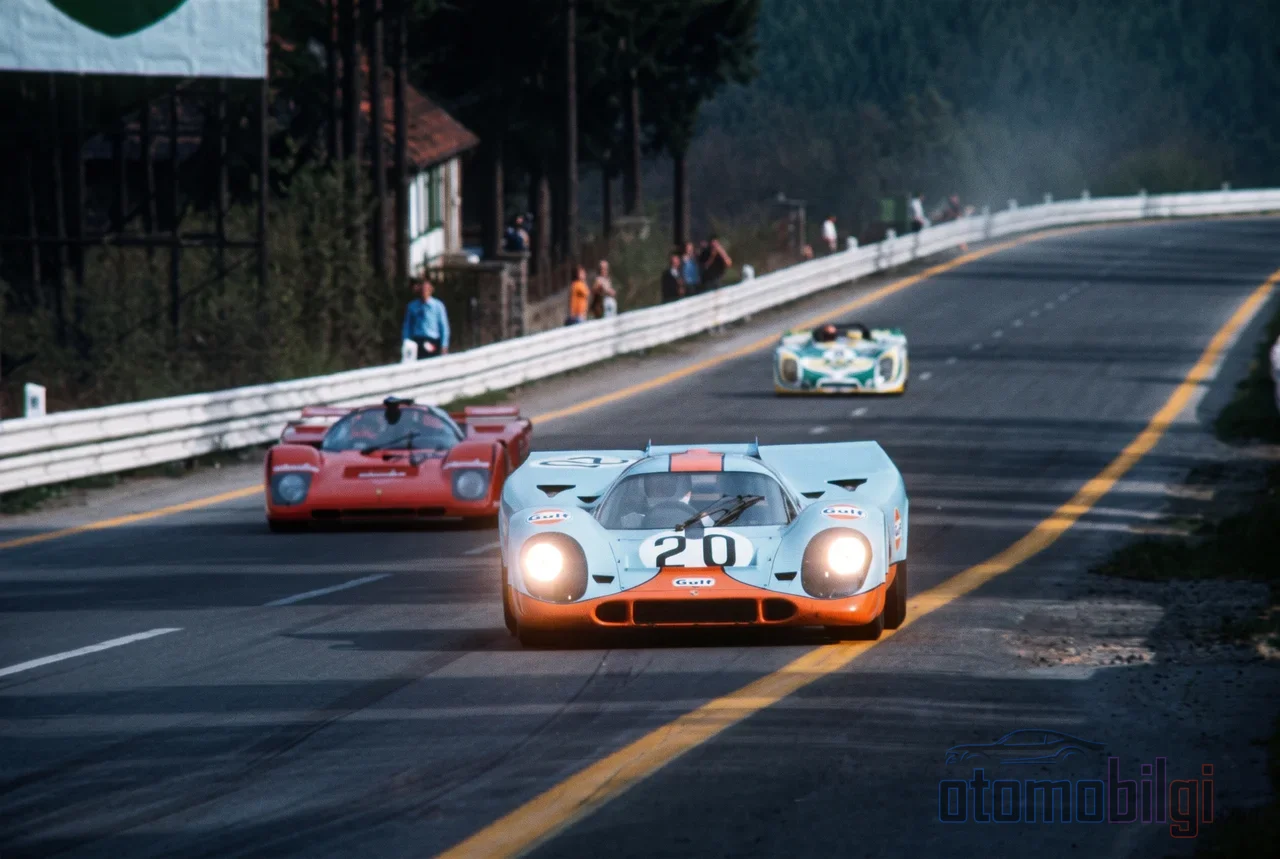
June 1970, the Le Mans circuit. While the real 24 Hours race was underway, a Porsche 908/2 fitted with film cameras was also lapping the track; real racing drivers at the wheel, and in the pits, Steve McQueen with his cameras. With his chase scene still ringing in everyone's ears, people call him the cop from Bullitt; but McQueen's real dream was something entirely different: a racing film shot on a real track, with real cars, without any fiction. The resulting film flopped at the box office, sank his company, and left behind the most cult car of racing cinema: the Porsche 917. Come on, let's take a look at how this legend was born.
How Did the Le Mans Film Come About?
The 1971 film Le Mans centers on a fictional 24 Hours of Le Mans race. McQueen plays Michael Delaney, the American driver of the Gulf team; facing him is rival driver Erich Stahler, played by Siegfried Rauch, and his Ferrari 512S. In the director's chair sits Lee H. Katzin, but the project actually began with John Sturges; the director changed during filming, and the script changed hands many times. When McQueen fell out with Bullitt's screenwriter Alan Trustman, Trustman was fired; the producers even considered Robert Redford to replace McQueen at one point, and the star had lost creative control. In other words, the tension behind the camera was no less than the one on the track.
The only thing McQueen wanted was clear: this film had to be about the cars. The producers, however, wanted drama. This tug-of-war gave birth to the film's documentary approach, which was both its weakness and the reason for its cult status today. With music composed by Michel Legrand, the 106-minute film was released on June 23, 1971.
Highlights
- The film Le Mans was released on June 23, 1971; it was made with a budget of approximately $7.6 million.
- Real Porsche 917 and Ferrari 512s were used in the film; footage was also shot during the actual race in 1970.
- With its 4.5-liter flat-12 engine producing 580 hp, the 917 weighed only 800 kg.
- An offer of $25 million was rejected for chassis 917-022, which McQueen had owned.
- Falling short of its budget at the box office with $5.5 million, the film became a cult racing classic.
Why Is the Porsche 917 Such a Legend?
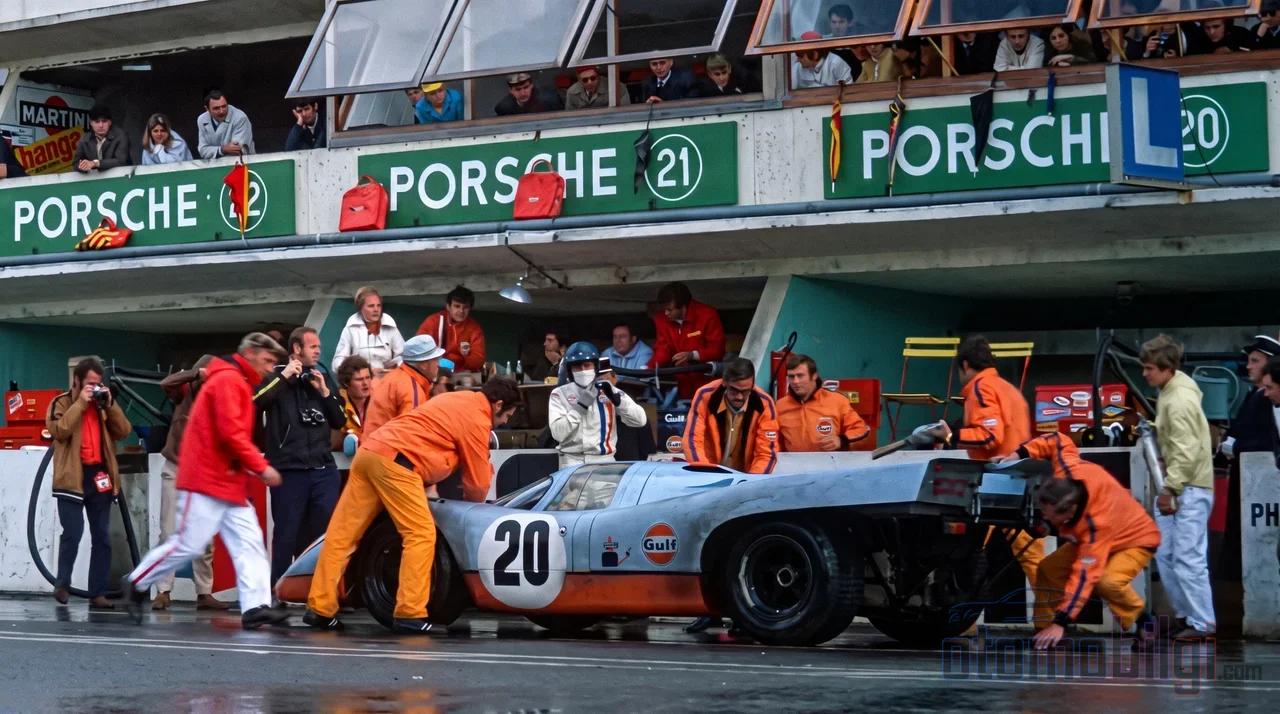
First, let's get to know the car, because half of the film's magic is already here. Introduced at the 1969 Geneva Motor Show, the 917 was developed in just 10 months at an incredible pace. Under the hood is a 4.5-liter flat-12 engine; according to Porsche's official story, it produces 588 PS, while the widely accepted figure is 580 hp. All of this in a body weighing just 800 kg. Think of it like putting this engine in something as light as a shopping cart; the result was the most feared racing machine of its era.
For 1970, the body split into two main variants: the short-wheelbase 917 K (Kurz) and the long-tailed 917 LH (Lang Heck). The 1971 LH version produced 591 hp and 404 ft-lb of torque with its 4.9-liter engine, and its top speed rose to around 240 mph. In the same year, engine improvements raised power to up to 630 hp. Pedro Rodríguez took pole position with the 917 LH at an average speed of 250.069 km/h; the lap record was 3:13.9 and top speed was 394 km/h. These were unthinkable figures for 1971.
The 917's Figures at a Glance
| Version | Engine / Power | Performance |
|---|---|---|
| 917 (1969, first unveiling) | 4.5 L flat-12, 580 hp | Top speed ~340 km/h (early tests) |
| 917 LH (1971) | 4.9 L flat-12, 591-630 bhp | Top speed ~386 km/h, 0-100 km/h ~2.5 s |
| 917/30 (Can-Am) | 5.4 L twin-turbo, 1,130 kW | 0-100 km/h 1.9 s, top speed 410 km/h |
Engine options were Type 912 flat-12 units of 4,494, 4,999 and 5,374 cc; the gearbox was a 4- or 5-speed manual. The 917 gave Porsche its first overall Le Mans victories in 1970 and 1971. Total production, remarkably, was tiny: only 25 units of the 917 and 12 units of the 917K. So that Gulf blue-and-orange car you see on screen was one of the rarest racing cars in the world.
The Courage to Shoot with Real Race Cars
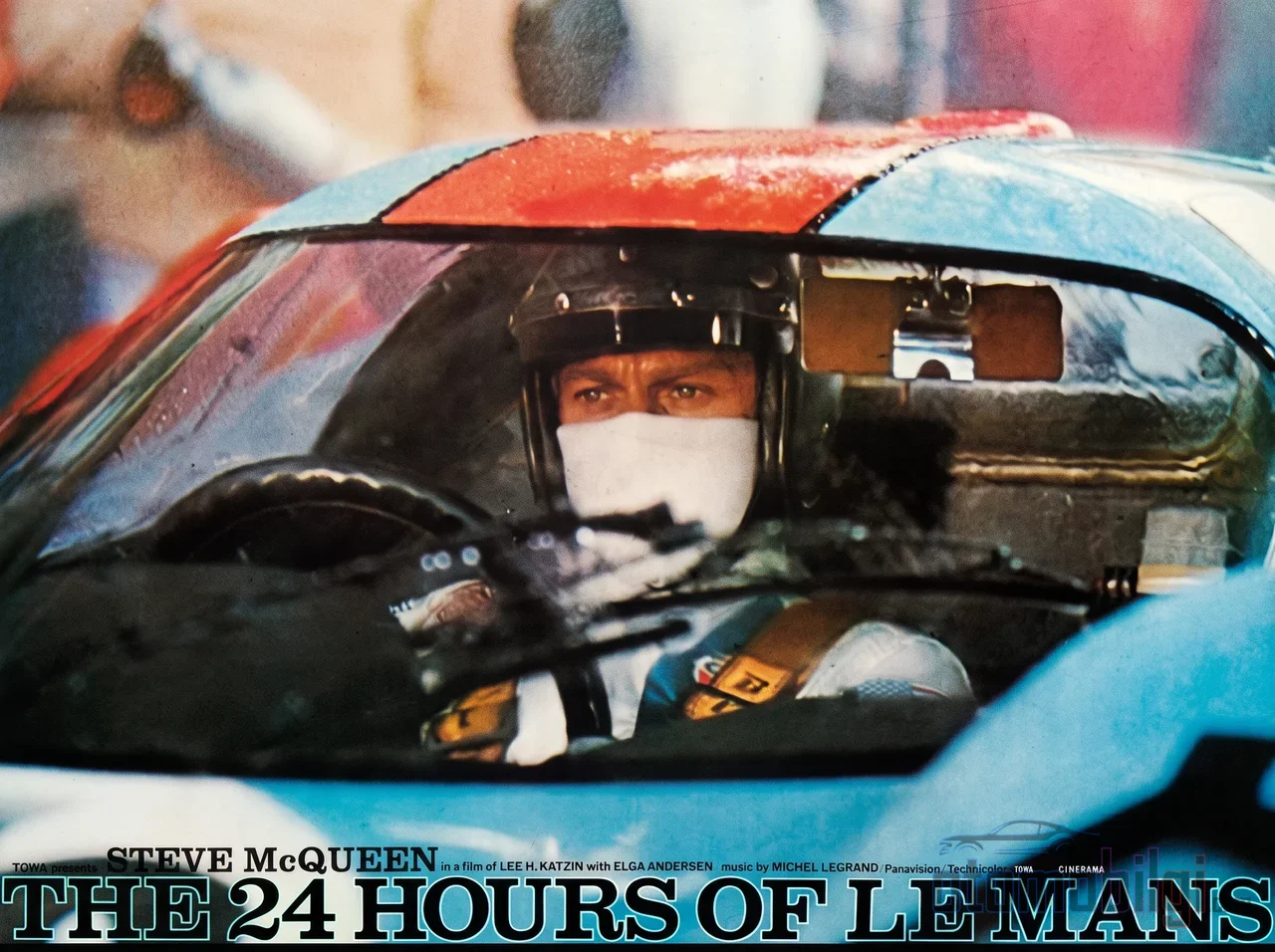
So what made the film a cult classic? The answer is simple but crazy: nothing was fake. Shooting took place between June and November 1970 on the Le Mans circuit, and cameras also rolled during the actual 24 Hours race in 1970. Solar Productions, where McQueen finished 2nd with Peter Revson at Sebring 1970. equipped the Porsche 908/2 with heavy film cameras and entered it in the actual race under number #29. The car was driven by Herbert Linge and Jonathan Williams; they completed 282 laps, failed to be classified overall due to the minimum distance rule but finished 2nd in the P3.0 class. (continuation) In other words, the film crew was not a spectator but a genuine participant. Additional scenes after the race were also shot with real Porsche 917s and Ferrari 512s; only in the crash scenes were Lola T70 chassis with Porsche and Ferrari bodies used.
You flinch when you look at the stunt roster: more than 40 real names, including Richard Attwood, Derek Bell, Vic Elford, Jacky Ickx, Jo Siffert, Brian Redman and Rolf Stommelen. In other words, the men flinging the 917 around on screen were the men who had won Le Mans in real life.
Why Did Enzo Ferrari Sulk?
One of the film's most interesting answers came from the Ferrari front. When Enzo Ferrari learned that the script had the 917 beating the Ferrari 512S in the final laps, he refused to contribute directly to the film. As a result, the Ferrari 512s were borrowed from Belgian distributor Jacques Swaters. Moreover, McQueen's own plan was far more ambitious: he really wanted to enter the 1970 Le Mans with Jackie Stewart in a 917, but his application under #26 was not accepted. In the film, Delaney starts in the #20 Gulf-Porsche 917K; that car actually belonged to Jo Siffert and Brian Redman.
The Price Behind the Camera
This documentary approach had a price. David Piper, who raced the camera car 917K, lost part of his leg in an accident during filming; he receives a special thanks in the credits, and it is noted that he received the first slice of the film's global revenue as compensation. The risk is felt in every frame of the film, and even today very few films can show what it means to work with real race cars on set.
A Box Office Flop, A Cultural Triumph
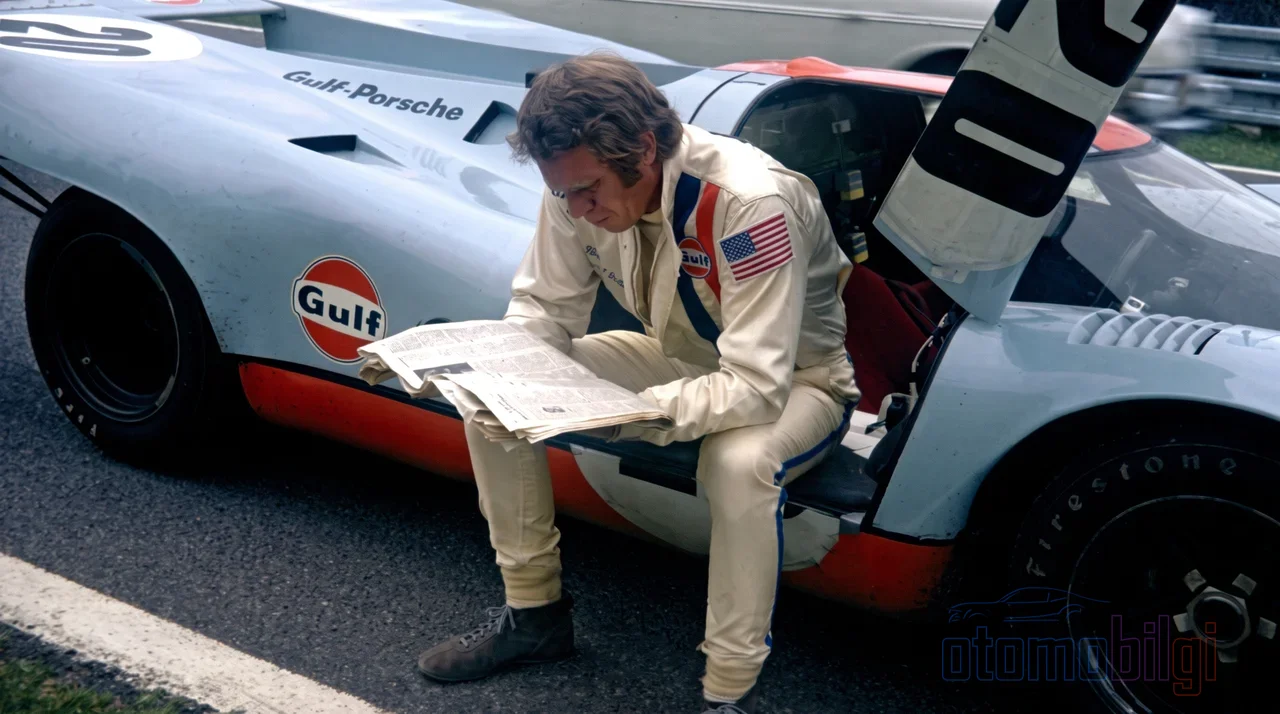
Here is the irony: a budget of roughly 7.6 million dollars, plus 2 million dollars in promotion and about 1.6 million in budget overrun. In return, 5.5 million dollars in rental revenue in North America. The film failed to recoup its costs, Solar Productions went bankrupt, and McQueen did not even attend the premiere. Judged by short-term profit, Le Mans was a complete flop.
But give it time. The critics were divided from the start; the film's lack of story and McQueen's preference for cars over drama were the most criticized aspects. For some, Bullitt was a good police film while Le Mans was a weak film with great racing scenes. On the other side, it was said that the film set new standards of realism in motorsport cinematography, creating an original audiovisual language that built tension through engine sounds rather than dialogue. With a 71% approval rating from 14 reviews on Rotten Tomatoes and 6.7/10 on IMDb, the film is today considered one of the cult icons of racing films thanks to its realistic approach among car enthusiasts.
The Incredible Afterlife of the Chassis
The film's real 917s also lived legends of their own alongside the movies. Chassis 917-022, purchased from Porsche by McQueen's production company, started the film in #20 livery. It kept racing in the 1970s, was bought in 2001 for 1.32 million dollars, then sold to Jerry Seinfeld and restored from the ground up. On January 18, 2025, a 25-million-dollar offer for the car was rejected at the Mecum auction, and the chassis passed to another buyer through a private sale.
The story of chassis 917-024-2 is even more cinematic. Borrowed from Jo Siffert, it was used in the shoot in #22 livery; after Siffert's death in October 1971, this car led his funeral convoy. Then it disappeared; in 2001 it was rediscovered in a hut in the French countryside, restored, and on August 18, 2017 it was sold in California for 14,080,000 dollars, a record for its time. Today it is on display at the Brumos Collection in Florida.
Where Is the 917 Legend Today?
When talking about its legacy, it is not only the film but also the auction world that is involved. At Amelia Island in 2026, the 1973 917/30 Can-Am Spyder broke a record, selling for 4.4 million dollars; a double record, both for Porsche and for the 917. RM Sotheby's brought chassis 917-K81, the last 917 to race at Le Mans, to the Grimaldi Forum in Monaco in May 2026. While the Monterey Car Week auctions exceeded 750 million dollars in total in 2026, Jo Siffert's 1971 917/10 Spyder Can-Am was also put up for bidding. Porsche displayed the 917 KH that won the 2026 Spa 1,000 km in Singapore. So even 55 years later, the 917 remains on the agenda of both collectors and the brand.
What Did the Le Mans Film Leave to Racing Cinema?
Let's sum it up briefly: McQueen's Le Mans film is one of the rare movies in cinema history shot with footage of real race cars, real drivers, and a real 24-hour race. It flopped at the box office, but it set the standard of documentary realism for racing-focused car films; the 917's track records carried it into cinema, making this car an icon not only of racing history but of popular culture as well. Bullitt showed how a chase scene should be filmed; Le Mans showed how the race itself should be.
And there is one small truth that is a purely beautiful touch of the film: the Gulf blue-and-orange 917 wins in the film, but in reality that never happened; in fact, the real 917 that won in 1970 barely appears in the film. Fiction bends reality, but the legend endures. While that flat-12 sound from the track is still ringing in our ears, the word is yours: Do you think Le Mans left a greater legacy than Bullitt?
Sources
- June 23, 1971 - The movie Le Mans, starring Steve McQueen, debuts
- 24 Hours of Le Mans - Porsche, Steve McQueen and Ferrari
- Steve McQueen's Porsche 917: Searching for a Chassis
- Movie Cars: Five Facts About Steve McQueen's Classic Film, Le Mans
- Steve McQueen in 1970: filming at the 24 Hours of Le Mans! (1)
- 24 Hours of Le Mans Centenary - The record-breaking Porsche 917
- The Le Mans Film
- Le Mans (1971) - IMDb Trivia
- 1971 Porsche 917: Legend Series
- Porsche 917 LH-71 (1971)