How to Choose a Vehicle Inspection Company When Buying a Used Car?

In the used vehicle buying process, the most critical signature is not placed on the notary desk, but under the inspection report. Rather than the report itself, the decision about who the company issuing that report is determines the fate of the entire process. The dealership's offer of "we have our own inspection service, let's take it there" sounds practical; yet the meaning of this offer deserves scrutiny. On this page, we will look step by step, together, at which inspection company you should entrust your vehicle to.
There are plenty of pages on how to read an inspection report. The real issue starts one step earlier: who will write the report? A vehicle taken to the wrong station may be misinformed even with the most detailed report. That is why choosing the company comes before reading the report.
The Difference Between Independent Inspection and the Dealership's Inspection
The inspection business is, at its core, a service of trust. The institution issuing the report is responsible not to the party selling the vehicle, but to the party paying the money. Going to an inspector recommended by the seller or affiliated with the dealership disrupts this balance. The report may be dated back; it may even have been taken from a point that serves the seller's interest.
This does not mean that dealership inspections always produce faulty reports. The meaning is this: the mechanism that ensures the report's impartiality arises not from the inspector being independent of the buyer, but from being independent of the seller. As the buyer, your choosing the station also increases the legal weight of the report. Indeed, not taking the vehicle to companies thought to have dealership ties is among experienced buyers' top recommendations. If the buyer detects a faulty condition with a report obtained from the company of their own choosing, they also retain the right to sue the company.
Eight Criteria to Look for in an Inspection Company
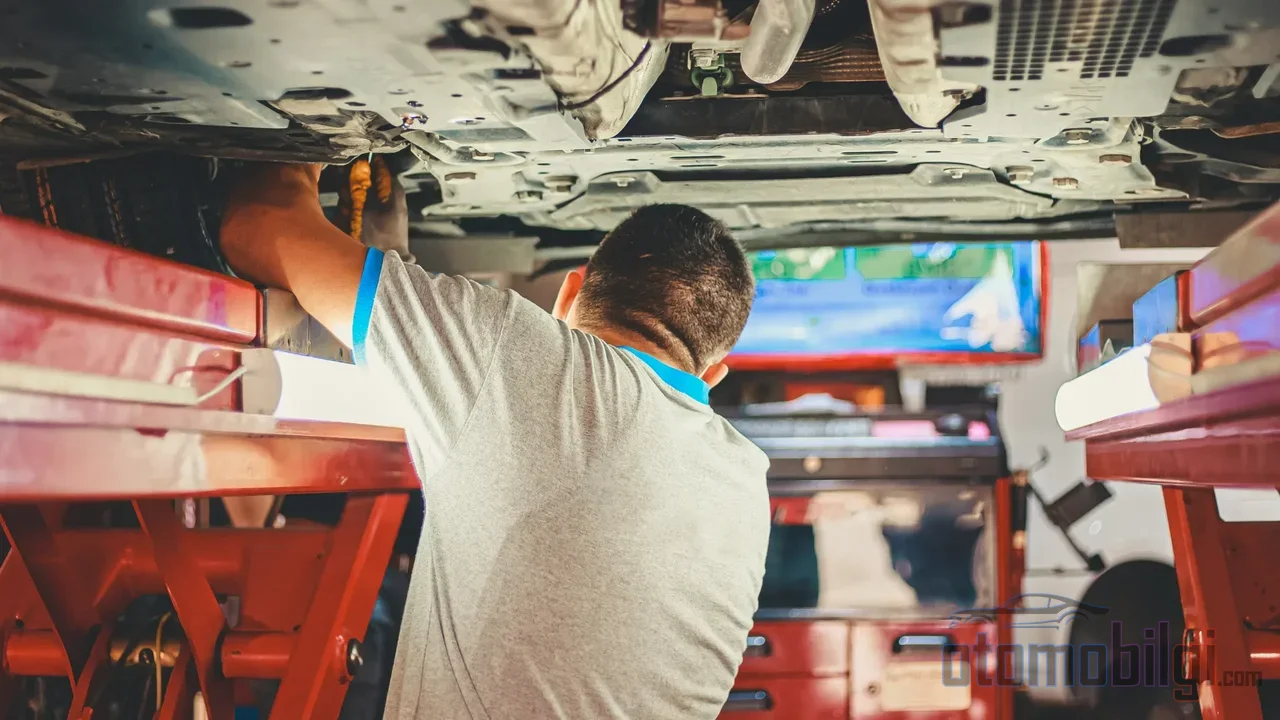
Someone who has been around the industry for over thirty years can say this: most of the "best inspection companies" lists on the internet are ranked by branch count and advertising budget. Yet what will inspect your vehicle is not a brand, but the equipment, the technician, and the checklist at the station you go to. There can be a serious difference even between two branches of the same brand. Let us look at concrete criteria.
- TSE Service Competency Certificate: Businesses meeting the TS13805 standard can obtain this certificate; the certificate should be hanging in the branch and verifiable through TSE's query page.
- Report format valid at the notary: The report must include the station's title, TSE certificate number, date, plate, and chassis number.
- Physical airbag check: An OBD device can show an airbag system with cleared fault records as sound. A resistor fitted to a deployed airbag can only be understood by manually checking the cover, connector, and plug.
- Paint check with UV light: The thickness gauge catches a treated panel; local paint and filler reveal themselves under UV light. Measurement values should be written in the report as numbers, panel by panel.
- Comprehensive report and photographic findings: Paint, bodywork, engine, mechanical, chassis, brakes, suspension, OBD, and road test should be listed under separate headings; findings without photos are open to debate.
- Transparent single pricing: Low package prices may exclude airbag, UV light, or road testing, which are then completed for an extra fee at the cash register.
- Written warranty: Some companies provide a 1 month / 1,000 km mechanical warranty in writing, together with the report, after the inspection.
- Google rating and review volume: Alongside the rating, the number of reviews, reviews from the last six months, and responses to negative reviews matter; "price surprise" and "missed check" complaints are a red flag.
Highlights
- In Turkiye, an inspection report is mandatory for the sale of second-hand vehicles not older than 8 years and with less than 160,000 km.
- A valid report notarized through a notary must be obtained from a station with TSE service competence certification.
- Full-scope inspection fees average 5,000-7,000 TL, and can reach up to 17,000 TL at the top end.
- The report must be obtained no more than 3 days before the notary transaction.
- An insurance damage record alone is not enough; the statement "no damage record" does not mean the vehicle is damage-free.
What Do Equipment and Devices Reveal?
When you enter the station, look around; the devices on the wall tell you how much business the company does. A lifting platform is a prerequisite for chassis and underbody checks. A paint thickness gauge detects painted and replaced parts with micron values panel by panel; these devices are also used for body, pillar (interior-exterior) and front-rear panel checks. An OBD diagnostic device reads the records of the engine and electronic units. Brake, suspension, and side slip measurements are performed on the test line; some facilities also keep more specialized equipment such as a thermographic measurement device.
A measured warning is appropriate here: a paint thickness gauge is necessary for a comprehensive inspection but is not sufficient on its own. Correct use of the device is critical; with incorrect application, a painted part can be made to look original. A high micron value should also not be interpreted on its own; it must be evaluated together with UV light and physical checks. The station you are looking for is not the one that boasts about the number of devices, but the one that uses them correctly.
The Report's Signature and Legal Liability
In the past, the inspection report was not discussed much; now these reports are taken seriously as legal documents. Regardless of the vehicle's age or mileage, an inspection report creates the expert's legal liability. A faulty report means the company provided defective service; if the sale was made through a dealership, the dealership may also bear liability.
The criterion for liability is this: not that the report's conclusion would have been different, but that the first report did not reflect the actual condition. In other words, it must be demonstrated through technical and legal evaluation that the expert made a mistake. What should the buyer do in such a case? Before filing a lawsuit, they obtain a new inspection report identifying the errors in the first report; this second report becomes the basis of the claim. In practice, at facilities where a separate report is issued for each part, the signature entered on the work order is valid for all report pages. Getting the inspection report no more than three days before the notary transaction stands out as the timing that legally protects the buyer.
Why Do Inspection Fees Vary by Region?
As of 2026, a full-scope inspection operates in an average range of 5,000-7,000 TL; basic packages start at approximately 3,000 TL. At the top of the band, especially in VIP and corporate packages, prices reaching up to 17,000 TL can be seen. The difference between cities is also significant: In Ankara and Izmir, the ranges of 4,200-5,000 TL at the lower band and 6,000-7,500 TL at the upper band apply, while in Bursa, packages are offered starting from 3,800 TL.
| Package type | Typical price range (2026) | Coverage note |
|---|---|---|
| Basic package | Starts from ~3,000 TL | Airbag, UV light, or road test may be excluded |
| Full-scope inspection | 5,000-7,500 TL | Bodywork, mechanical, OBD, road test |
| Corporate / VIP package | 9,000-17,000 TL | Includes physical airbag check, Tramer and KM query |
A regulation to bring order to this scattered landscape is on the way: The Ministry of Trade's draft Regulation on Motor Land Vehicle Inspection Services has been opened for consultation, and capping inspection prices at the district and province level is on the agenda. The draft, prepared on the grounds that regulating reports through methods that lack a central system and have no uniform application creates unfair commercial outcomes, is the most concrete step toward central standardization in the industry. Until the regulation settles, comparing prices remains the buyer's job.
Tramer Record and Inspection Report Are Read Together
The Tramer query is the fundamental tool that opens the door to the vehicle's insurance damage history. It can be done online via Turkiye Sigorta Birligi, by sending the license plate via SMS, or through e-Devlet with the plate or chassis number to check damage records. The Tramer record shows accidents, replaced parts, and damage claim amounts; the ratio of the damage amount to the vehicle's value should be examined.
However, there is a common mistake made here: The phrase "no damage record" does not mean the vehicle is undamaged. The Tramer record may contain incomplete information; damages that were never reported to the insurance company, that occurred during transport, or that were personally covered by the seller may not appear in this record. The correct approach is to place the Tramer record side by side with the inspection report. If the Tramer amount is large but the report is clean, or vice versa, the inconsistency between the two documents is what should be questioned. Some inspection packages include corporate Tramer and mileage queries in the report; this reduces the workload for the buyer.
Inspection When Buying a New Car from a Dealership
An inspection may seem unnecessary for a zero-kilometer vehicle; however, being "zero km" does not mean the vehicle has never been damaged. There is always a risk of damage during transport from the factory to the dealership and during the storage process. The most common problem in new vehicles is transport-related removal and reinstallation and paintwork; any inspection service with a paint measurement device can detect this. Hidden defects originating from manufacturing or transportation can also lead to surprises after delivery.
The law does not make an inspection mandatory for new vehicles, and in practice: dealers mostly turn away buyers who request an inspection when taking delivery of a new vehicle. There is a practical solution to this. By renting a paint thickness gauge or bringing along an expert who owns one, you can perform your own micron check and have the panels measured before taking delivery of the vehicle and before the invoice is issued. If the dealer objects, it is also the buyer's right to ask why.
How to Choose an Inspection Company? Short Answer
Here is the summary of the summary: Make sure you see the TSE service competence certificate at the branch and verify it through the inquiry page; choose the station yourself, not the seller; check whether the lifting platform, paint measurement device, UV light, physical airbag check, and test line are on site; request a report with photos, panel-by-panel measurements, and plate-chassis dates; clarify the price in advance in a single step. The mandatory requirement should also not be forgotten: if you are buying a used vehicle no older than 8 years and under 160,000 km, the report to be presented at the notary sale must be obtained from a TSE-certified facility; when buying from an authorized facility, presenting a report is a legal obligation.
The inspection fee is a small item next to the vehicle price; but that small amount paid to the wrong station is the most expensive one. The half hour you spend choosing the company is the guarantee of the peace of mind you gain at the notary's desk.
Sources
- How to Choose the Best Car Inspection Company?
- RS Auto Inspection
- Draft Regulation on Motor Vehicle Inspection Services
- Tramer Inquiry - SBM
- 2026 Türkiye Car Inspection Company Prices
- Liability and Compensation of the Inspection Company 2026
- Why Should an Inspection Be Performed When Buying a New Vehicle?
- Is Auto Inspection Necessary When Buying a New Vehicle?