Is Buying a Used Car Online Safe?
Share This Page
Thirty years ago, buying a car was a Saturday job: a morning tour of the dealership, negotiating at noon, a handshake in the evening. Today, most of the buying process is completed on a phone screen; we see the listing, message the seller, and can even send a deposit without ever seeing the car. So is buying a used car online safe, or is it the buyer who ends up paying the price for all this speed? Let me tell you as someone who has been through the trenches: The digital channel, when the right steps are followed, offers a process that is more auditable than a dealership; if the steps are skipped, it carries every kind of trap of classic dealership fraud right into your screen.
Listing Verification on Online Vehicle Platforms: Where Should You Start?
Naturally, it all starts with the listing. The subject of listing verification has changed significantly over the past two years. Under the regulation requiring that no vehicle listing may be posted without authorization verification, the identity and sales authorization of the person posting the listing are checked; the authorization is granted by the vehicle owner via e-Devlet, with a minimum duration of three months, structured so that it can be revoked. In other words, the era of listings with photos belonging to someone else's car, priced artificially low just to rack up clicks, is coming to an end.
What you, the buyer, need to do is still in your own hands:
- Check whether the listing displays an authorization verification logo; do not take a listing without one seriously.
- The brand, trade name, and model year cannot be changed in a listing; if you see inconsistent listing information despite this, stay away.
- A price more than twenty percent below the market average usually means hidden damage or a mechanical problem. Free cheese comes at a heavy price.
- If there are other listings for the same car, compare them; the system already supports displaying prices and links across listings.
Key Highlights
- As of September 27, 2024, the use of the Secure Payment System is mandatory in vehicle transactions.
- For vehicles under 8 years old and below 160,000 km, an inspection report is a legal requirement.
- As of January 1, 2026, a proportional duty increasing according to the vehicle's value has been added to notary transfers.
- Since insurance claim records are processed within 45 days, beware of the delayed damage trap.
What Should You Pay Attention to When Communicating with the Seller?
The next step after the listing is the messaging; and it is often here that the seeds of fraud are sown. The most common scenarios are fake listings, deposit fraud, and identity or document forgery. The method known as the "sucker spiral" is from the same family: an attempt to deceive the buyer with a fake seller and a made-up story about the car. The way to protect yourself is simple but requires patience - use a reliable platform, examine the listing details carefully, and verify by meeting face-to-face that the seller and the vehicle owner are the same person.
When a deposit request comes in, the fog thickens considerably. Never send a deposit without seeing the car live and without verifying the registration holder. The classic hook of this trap is to pressure you by saying there is huge demand and you need to hurry; a buyer who falls for this pressure never sees the money they sent to the account number again. Even if a deposit is to be sent, this is done only after the vehicle and its documents have been seen in place. These days, this pitch used to happen at the gallery door; now it takes place in the message inbox - the logic is the same, only the speed has increased.
There is also the trap of the inspection service that the seller directs you to. It is the buyer, not the seller, who decides where the vehicle inspection will be done. Approaching with a degree of suspicion toward a seller who will recommend a familiar, trusted inspection service is not an unnecessary habit in this trade; it is essential equipment.
Record Check: Tramer, Mileage, and Chassis Instead of Plate
Before making an offer without seeing the vehicle, you must pass the inquiry layer. The Tramer inquiry is free through e-Devlet; an SMS inquiry is 275 TL as of 2026. The interest in the Ministry of Transport and Infrastructure's mileage and damage record inquiry service also shows the scale of this need: As of August 2026, 16.8 million inquiries had been made.
But reading a Tramer record takes some skill. Records are not deleted, that is true; only damages repaired out of pocket outside insurance coverage are not recorded. Therefore, a vehicle with a zero Tramer value is by no means necessarily accident-free. An even sneakier method is the delayed damage trap: Since damage records are entered into Tramer within 45 days, a crashed vehicle may appear damage-free during this period. This is exactly why you should run the inquiry not by plate number but by chassis number; it is not affected by plate changes and is more reliable.
Cross-checking is also essential for suspicion of odometer rollback: TUV TURK inspection records, service history, and whether steering and seat wear is consistent with the mileage are compared. The clearest results, however, come from ECU queries. The digital display is easy to change, but the electronic brain's memory is not always so talkative.
Is an Inspection Mandatory for Remote Purchase?
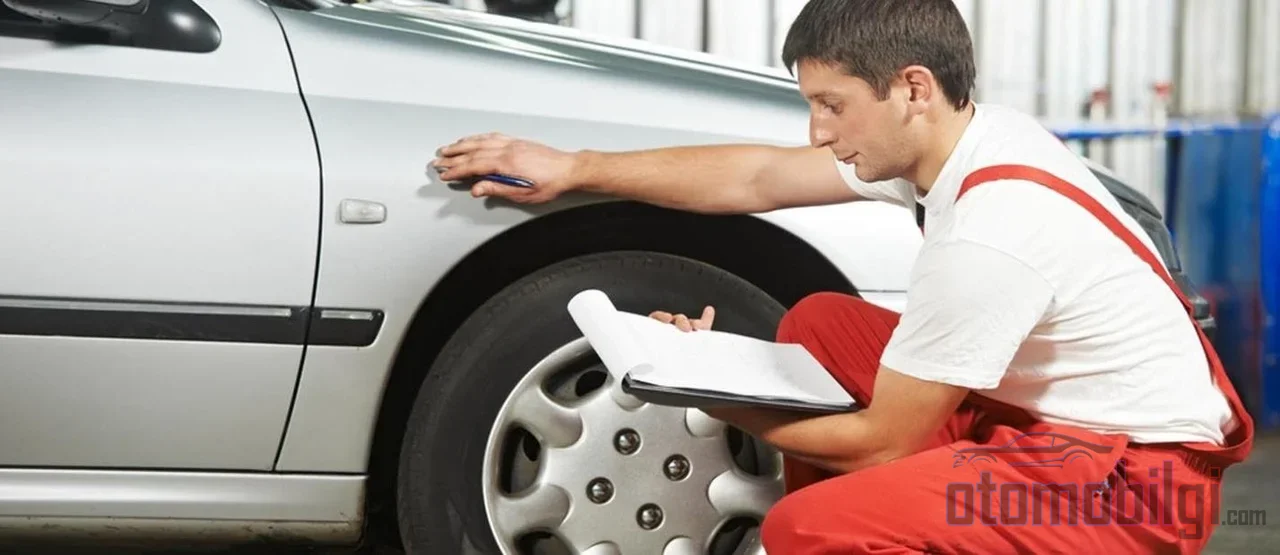
The short answer: For vehicles subject to the rule, yes - and this is not a preference but a legal requirement. A vehicle inspection report is mandatory for the sale of second-hand passenger cars and off-road vehicles under 8 years old and below 160,000 km; there is no such requirement for vehicles exceeding these thresholds. Those selling as part of commercial activity must obtain a report no more than three days before each sale. An authorized business, on the other hand, is obligated to obtain an inspection report immediately before the sale.
In a remote purchase, this report tends to be your only safeguard; if you cannot see the vehicle in person, your right to object to a defect not mentioned in the report also rests on solid legal ground. When buying from a dealer, the picture is a bit more comfortable: For vehicles under 8 years old and below 160,000 km, there is a three-month or 5,000 km dealer warranty covering the engine, transmission, differential, and electrical system; if a defect not mentioned in the report emerges, the dealer compensates the costs, including the inspection fee. In a private sale, no such umbrella exists; therefore, a remote purchase from a private seller is the combination that must be handled with the greatest care.
Payment and Transfer: How Does the Secure Payment System Work?
The area where fraud is most prevalent in online vehicle sales is the payment process; fortunately, this area is now largely regulated. As of September 27, 2024, the use of the Secure Payment System is mandatory for everyone buying and selling vehicles. The system works through intermediary institutions integrated with the Union of Turkish Notaries - banks, payment institutions, and electronic money institutions.
Here is how it works: The seller logs into the system through their own bank and enters the vehicle and sales information. The buyer approves the payment via the mobile app using a reference number, and the amount is blocked in the Guarantee Account. The notary clerk cannot initiate the sale without confirming from the system that the money is blocked; the secure payment reference code is a mandatory document. The moment the sale is signed, the money is transferred to the seller. In other words, the era of shady dealers excitedly waving checks at you while you waited in line is over; now, until you sign, the money stays in one single place, where it is visible. You can assume that anyone asking for a bank transfer to an account number is either unaware that this system exists, or knows about it and simply doesn't care - either way, not someone worth dealing with.
What Changed in the 2026 Notary Transfer Process
The transfer cost calculation also needs updating. As of January 1, 2026, a proportional fee was added to notary transfer transactions: In addition to the fixed fee, an extra fee is paid that increases in proportion to the vehicle's declared value and insurance value. While the standard transaction fee is approximately 1,869 TL, a proportional fee of 2 per thousand is added based on the vehicle's value. The basis of the fee is also interesting: The sale price declared at the notary is compared with the current insurance value, and the fee is calculated based on whichever is higher. So there is no longer any point in deliberately writing a low value.
Another regulation concerns the insurance side: As of December 5, 2024, during the notary sale transaction, an active mandatory traffic insurance policy issued in the buyer's name must be visible in the system; an uninsured vehicle cannot be sold at the notary. Within 15 days after the sale, new traffic insurance is obtained and the registration is completed; the registration can now be downloaded digitally via e-Government.
Checklist Against Fraud Scenarios
The subject of severely damaged vehicles should also be evaluated separately: In a vehicle whose chassis or platform has been worked on, the safety risk persists, obtaining insurance becomes harder, and loss of value upon sale is inevitable. On the other hand, caution is also required with offers that come with promissory notes or promises of installment sales; claims have surfaced that a firm belonging to a social media influencer collected customers with such promises and then shut down its branches. Buying a car with a promissory note is safe when done through a contractual and reliable used car dealer; it is not safe when it rests on a story sold to you with a screenshot. Complaints that undermine customer trust have also been on record regarding the differences between internet offers received through the platform and prices at the branch; verify the offer in person, not over the phone.
If we gather this entire process into a single list:
- Verify the authorization verification logo on the listing; Approve of prices noticeably below market value with suspicion.
- Do not send a deposit without verifying face-to-face that the seller is the person named on the registration certificate.
- Choose the inspection company yourself; Run the damage-record and mileage queries using the chassis number.
- Take into account the 45-day delayed damage reporting window and undocumented damages repaired out of pocket.
- Make the payment only through the Secure Payment System, holding the funds blocked with a reference number.
- If there is a severe damage record or a promissory-note-based sale promise, step back before the transfer and carry out the process with a licensed, contract-based dealer.
So, Is Buying a Used Car Online Safe?
Let me say it clearly with thirty years of observation: Safety comes from the procedure, not the channel. Buying a used car online is safe when a proper procedure is followed - one that starts with an authorization-verified listing, is checked with an independent inspection report and chassis-number queries, keeps the payment blocked in the Secure Payment System, and is completed with a notarized transfer; it is even more traceable than the dealership process. For a buyer who sends a deposit without seeing the car, goes to an inspection company the seller directs them to, and wires money to a personal account number, however, this channel is nothing but an accelerated version of the old used-car-dealer scam. Whoever sets the rules holds the safety - that has not changed, even behind a screen.
Sources
- Six-Month - Six-Thousand-Kilometer and Listing Restriction Regulations in Used Car Sales - Ministry of Trade
- Secure Payment System - Union of Turkish Notaries
- Regulation on the Trade of Second-Hand Motor Land Vehicles - Union of Turkish Notaries
- Used Vehicle Sales and the Responsibility of the Dealer and the Inspector - Batur Law
- How Are Used Vehicle Buying and Selling Transactions Carried Out? (2026) - Autoverse
- Things to Consider When Buying a Used Car: A Step-by-Step 2026 Guide - Otomerkezi
- Things to Consider When Buying a Used Car - Sigortam.net
- The Most Common Scam Methods on Vehicle Listing Sites - Arabam.com
- Fraud in Vehicle Sales (2026) - Harbiye Law
- Can a Vehicle Be Sold Without an Inspection Report - Bosch Car Service
- Secure Payment System in Vehicle Buying and Selling - Ziraat Bankası
- How to Read a Tramer Damage Record When Buying a Used Vehicle - Otomobilgi
- Mileage and Damage Records in Used Vehicle Purchases - TÜHA
- New Regulations in Used Vehicle Sales - Allianz
- Beware of Fake Listings in the Used Car Market - Anadolu Agency
- Is Selling a Car via Promissory Note Safe? - Hangikredi