How to Detect Odometer Rollback?
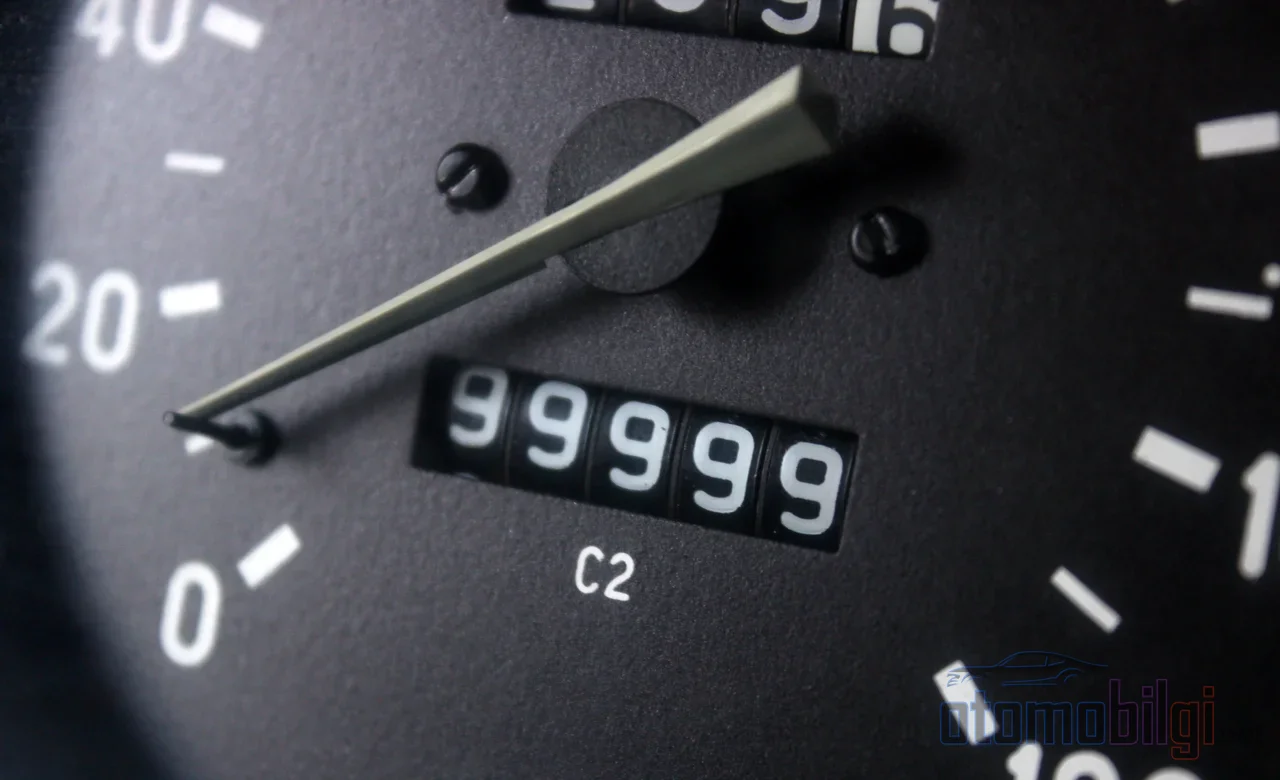
In used car listings, "low mileage, never painted" is not always a promise; sometimes it is a price: the money you pay on top of its real usage. The pedals of a car whose dashboard reads 90,000 can carry the trace of 250,000 kilometers of use; digital odometers are more vulnerable to this manipulation than their analog predecessors. Mileage rollback is one of the most common types of fraud in used car trading, and it cannot be solved with a single query or a single glance. The solution lies in combining physical wear evidence, official records, and data from the vehicle's computer in one chain of logic.
What Is Mileage Rollback and Who Profits?
Odometer fraud is defined as dismantling, resetting, or replacing the odometer in order to alter the mileage shown by the vehicle. In the Turkiye market, this is often done within minutes by connecting to the engine control unit (ECU) with an OBD device. The fact that digital displays require no mechanical intervention makes the fraud both easier and harder to trace.
The winner is always the seller: the car changes hands at a price above its true value. The loser, however, loses more than just money. A car with a hidden mileage means a deferred maintenance history; a car whose periodic maintenance items such as timing belt, brakes, or transmission oil were not done according to its real mileage transfers unpredictable mechanical risks to the buyer. In an operation conducted in Mugla, the mileage of five vehicles was found to have been rolled back by 100,000 to 200,000 km, and four people were taken into custody. The figure gives an idea of the scale of the sector.
Highlights
- In the Mugla operation, the mileage of 5 vehicles had been rolled back by 100,000-200,000 km
- The inspection mileage history can be queried free of charge via e-Devlet
- In notary sales, an expert inspection report is mandatory for vehicles under 8 years old and under 160,000 km
- Mileage rollback constitutes the crime of fraud under the Turkish Penal Code
Physical Wear: Metal Tells What the Gauge Cannot
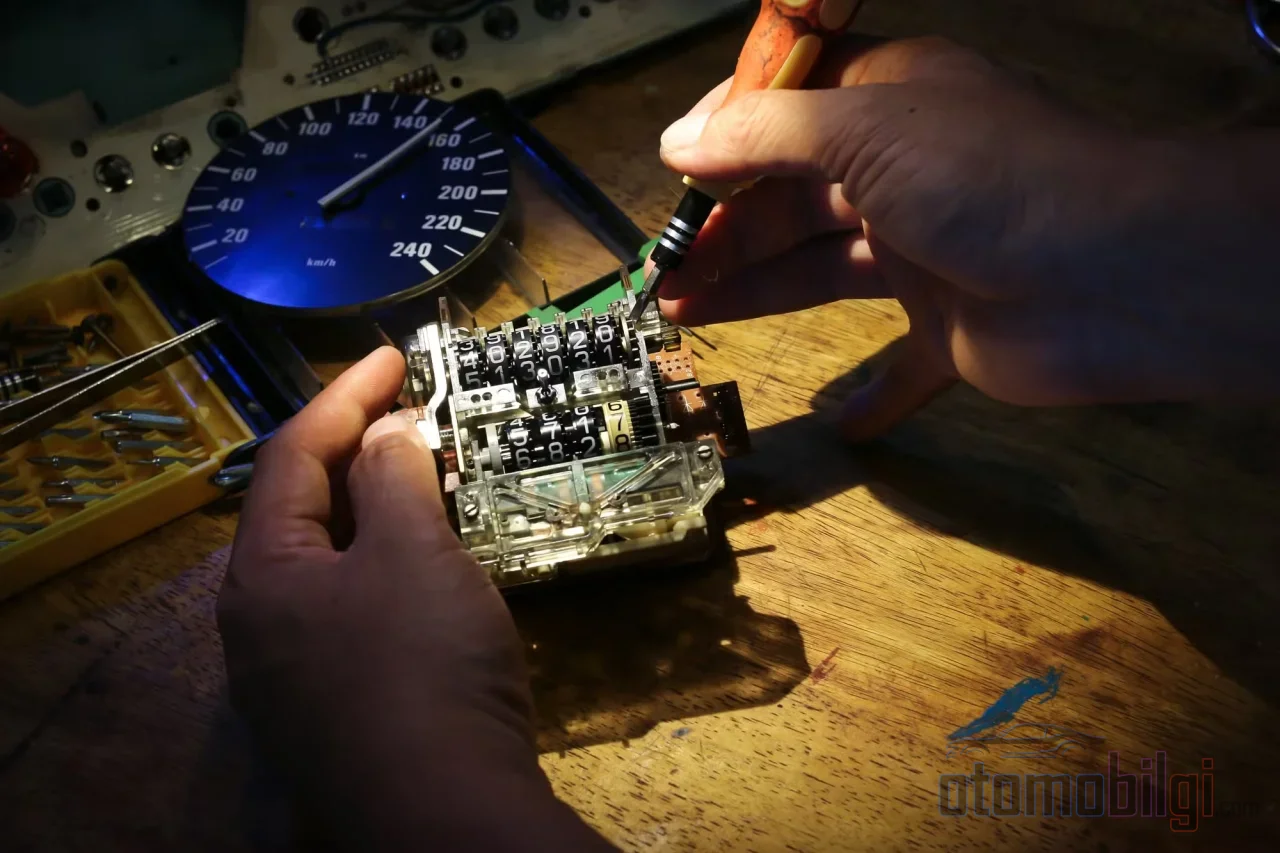
A car's interior follows a wear curve consistent with its mileage. When this curve breaks - that is, when the gauge says low but the material tells a high-mileage story - the first red flag has been raised. Unusual wear for its age is the most obvious sign of a possible rollback, and in professional inspections, connecting an OBD device alone is not considered sufficient; usage traces in the interior trim are examined additionally.
Pedals, Steering Wheel, and Gear Knob
The rubber on the brake and accelerator pedals is one of the most honest witnesses: in high-mileage vehicles, the pedals are noticeably worn, and a gauge showing low mileage is a serious inconsistency. Recently replaced pedals also raise suspicion on their own; fresh pedal rubber before the sale may be an attempt to hide the old one. The same logic applies to the steering wheel's peeling and shiny surfaces, and to the wear on the gear knob. Wet-looking shine on the steering wheel leather or leather loss on its edges is a sign of usage far beyond the displayed mileage.
Seats, Seat Belt and Instrument Cluster Surround
Collapse on the driver's seat side bolsters, shine and hardening of the fabric, and weakening of the seat heating progress in proportion to the mileage. The seat belt label, the belt's tension and retraction speed also give clues about the vehicle's history. Loose or scratched screws around the instrument panel suggest the panel may have been removed; on older vehicles with analog counters this was a classic trace, but in the digital age it has given way to software intervention via the OBD port.
The subtlety to pay attention to at this point is this: a single sign of wear is not enough to draw a conclusion. The goal is to compare the physical evidence with the displayed mileage, and if there is an inconsistency, move on to the next step, namely the records.
Verification Through Records: Periodic Technical Inspection, Service History and Tramer
Inspection Records and Mileage Lookup
In the periodic technical inspection, the vehicle's mileage is officially recorded, and this history can be queried. Querying the inspection mileage record via e-Devlet is free of charge; on paid lookup channels working with a plate number or chassis number, 2026 prices are in the range of approximately 200-275 TL. The mileage data of inspection stations is shared through channels connected to the Ministry of Transport and Infrastructure system. When querying, the point to note is to look at the sequence of mileage values rather than a single value: the increase between records must be logical and continuous. Gaps in mileage in service or inspection records, or mileage going backwards, are the most concrete documentary evidence of fraud.
Authorized Service and Periodic Maintenance Records
Authorized service records keep the vehicle's maintenance history together with mileage values. The odometer value is recorded in the service book at every service and repair; the sequence of the mileage values in the book should be checked. Blank pages, skipped maintenance, or the complete loss of the book is not proof on its own, but it is a serious warning. Verification from authorized service data, together with ECU records in the digital odometer era, forms the most reliable second layer of checking.
The Tramer query is as important for mileage verification as it is for damage history: the mileage values detected in insurance damage records offer another fixed point on the timeline. If the Tramer and inspection data corroborate each other, and the physical wear also matches, the vehicle is most likely clean.
Verification with ECU Data in the Digital Odometer Era
Unfortunately, the answer to the question of whether mileage can be rolled back on vehicles with digital displays is yes. The value on the display can be changed with an OBD device; for this reason, the display reading alone is not reliable evidence in any vehicle. In professional practice, two methods are combined: physical wear inspection and reading the ECU records via OBD-II. If there is a discrepancy between the odometer reading and the mileage data in the ECU, the vehicle falls into the suspicious category without even needing to be inspected.
One limitation should also be known: when the value on the odometer display and the ECU record can be altered consistently at the same time, the digital data in the vehicle itself may not be sufficient on its own. This is exactly why independent, date-stamped records (periodic technical inspection, service, Tramer) are the unbreakable links of the chain; these cannot be altered afterward.
If Suspicion Exists: Inspection and the Legal Process
Inspection Report and the Mandatory Threshold
In Turkiye, the notarized sale of second-hand vehicles not older than 8 years and with less than 160,000 km requires the presentation of an inspection report obtained from a business holding a TSE service competence certificate. The report includes a mileage consistency check, an OBD audit, and the review of previous service records; in comprehensive packages, the Tramer damage record and mileage query are offered together. However, an inspection is not an infallible guarantee: a 2023 model vehicle was reported as original at 18 thousand kilometers, but it was later understood that the vehicle was actually at 127,000 km. Therefore, the report should be placed alongside your own verification chain, not instead of it.
If You Realized After Buying: Your Rights
The liability of a seller who sells a vehicle with rolled-back mileage is based on the liability for defects provisions in the Turkish Code of Obligations. On the criminal side, mileage rollback is evaluated under the crime of fraud; legal circles offer assessments regarding the sentencing range spanning a wide spectrum, from one to five years of imprisonment to heavier sanctions through aggravated fraud. Some legal commentators criticize the fact that the law contains no specific, deterrent penalty for mileage rollback, and that the sanction operates through the general provisions of fraud. The buyer may request compensation for the material loss suffered due to purchasing the vehicle at a price higher than its real value; which records will be considered evidence and whether the two-year statute of limitations applies in each case is evaluated on a case-by-case basis. If the inspection report does not mention mileage tampering, and the conditions are met, compensation can also be claimed from the inspection company.
High Mileage, or Deceptively Low?
The final question left at the negotiation table is this: between a high-mileage but honest vehicle and a suspicious vehicle that appears low-mileage, which is the sensible choice? The answer is clear with engineering logic: a high-mileage vehicle with verifiable records is always less risky than a low-mileage vehicle whose records cannot be verified. A well-maintained vehicle with a regular periodic maintenance history is long-lasting even at high mileage; a vehicle whose mileage is hidden is a vehicle that has also been forced to hide its maintenance history.
Detection Checklist: Four Steps Before Purchase
The summary of how to detect mileage rollback is a four-layer verification chain:
- Compare the odometer mileage with the wear on the pedals, steering wheel, gear knob, and seats; if there is an inconsistency, walk away.
- Query the inspection mileage history and check whether the increase between records is sequential.
- Line up the mileage values in the service book and authorized service records on a timeline; look for gaps and backward steps.
- At the decision stage, get an expert inspection report that reads ECU data via OBD and does not skip the physical examination.
If all four of the four steps point in the same direction, the vehicle is safe. If one contradicts, that contradiction is not a bargaining point but a reason to walk away; because in mileage fraud, the only thing lost is not money, but trust in the vehicle's entire maintenance history.