Post-Winter Undercarriage Wash: How to Stop Salt Damage
The periodic maintenance log has lines for oil, filters, spark plugs and timing belts; no maintenance schedule ever says "check under the vehicle". Yet the process that truly threatens the vehicle's skeleton works down there, out of sight: corrosion. Salt scattered on the roads in winter, mud that accumulates in summer, and moisture that cannot drain away erode the metal's thickness on a time scale where mechanical parts wear out far more quickly. So how does underbody corrosion really affect a vehicle - and how much do underbody washing and protective coating applications change this picture?
What Is Corrosion, Is It the Same Thing as Rust?
Corrosion is the gradual deterioration of metal over time as a result of chemical or electrochemical interaction with its environment. Not every corrosion is rusting; rust is the corrosion product seen especially in iron and iron-containing materials. In other words, rust is corrosion's most common but not only manifestation. The factors that accelerate the process are clear: prolonged water contact, road salt and salt water, mud buildup, damage to paint or protective coatings, stone impacts, contact between different metals under unsuitable conditions, and moisture trapped in areas where water cannot drain.
The areas of a vehicle where corrosion is most commonly seen also align with this mechanical logic: chassis and structural parts, the vehicle floor, side sills, fender and body panel edges, suspension and undercarriage metal components, connection points, and the exhaust line. The common denominator is the same in all of them: surfaces where water and dirt can remain for a long time.
Highlights
- When road salt mixes with moisture, it forms an electrolyte solution and significantly accelerates rusting.
- The general lifespan of undercarriage spray protection is approximately 3-5 years; annual maintenance is recommended for continuity.
- Corrosion affecting the bodywork and structural parts can fall within the scope of defects in the vehicle's periodic technical inspection.
- Zinc corrodes about 30 times more slowly than iron; however, its resistance to road salt is limited.
- Incorrectly applied rust prevention can accelerate rusting due to trapped moisture and dirt.
How Does Road Salt Work on the Underbody?
Salt by itself causes no harm to metal; the problem begins the moment salt combines with moisture. The mixture forms an electrolyte solution, and oxidation - that is, rusting - progresses far more quickly in this environment. Salt also helps moisture adhere to the metal surface; its effect is indirect but persistent. A vehicle that travels on salted roads during the winter months yet appears spotless underneath may encounter a surprise at the first serious inspection in spring: salty mud acts like an invisible insulation for rusting.
That is why underbody corrosion is not merely a winter issue. Salt in the air in coastal regions, chemical residues in agricultural regions, and accumulated dirt and moisture in cities feed the same mechanism in different doses. Secondary factors such as clogged water drainage channels and stone impacts beneath the paint also trigger the process.
Which Areas Are Critical? Risk Ranking from Surface to Structural Parts
In inspection practice, corrosion is assessed on a scale of stages according to its severity:
- Surface oxidation: color change on the surface; the level of metal loss must be measured.
- Advanced corrosion: crusting and flaking; metal thickness and strength may be affected.
- Corrosion progressing toward perforation: pitting, thinning and holes; serious material loss.
- Connection point corrosion: concentrates at bolts and joint areas; the condition of the joints must be examined separately.
- Structural zone corrosion: loss in chassis metal; the most critical stage in structural terms.
Risk ranking is entirely about geometry and load. Chassis rails and suspension connection points can cause damage that cannot be repaired when corrosion is advanced. When the thin metal brake and fuel lines under the body are perforated, they create a risk of instant brake failure. Perforation in the exhaust line and mufflers creates an indirect but serious danger such as exhaust gas leaking into the cabin. Side sills and wheel arch edges may look cosmetic, but because they are the areas where water can remain the longest, they are the gateways for corrosion.
Post-Winter Underbody Washing: How and When Should It Be Done?
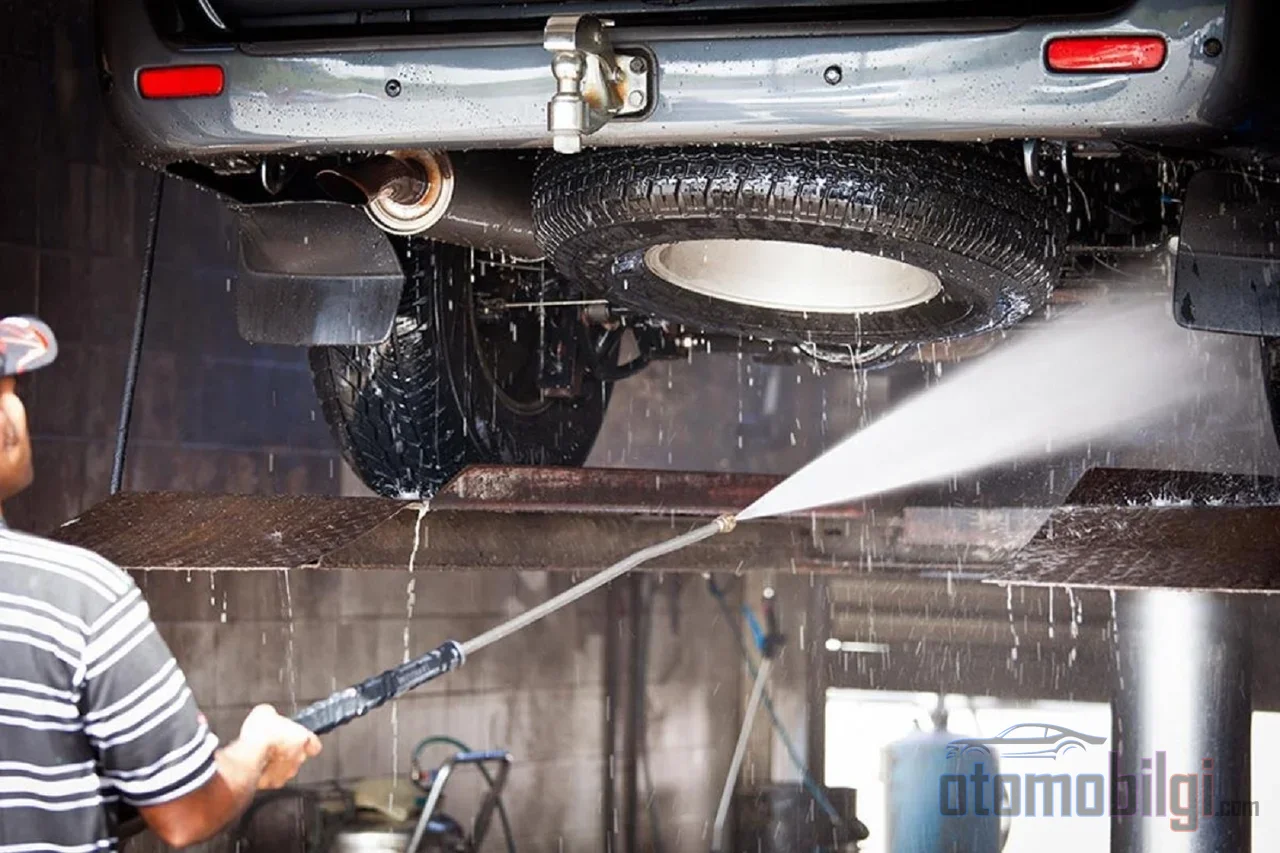
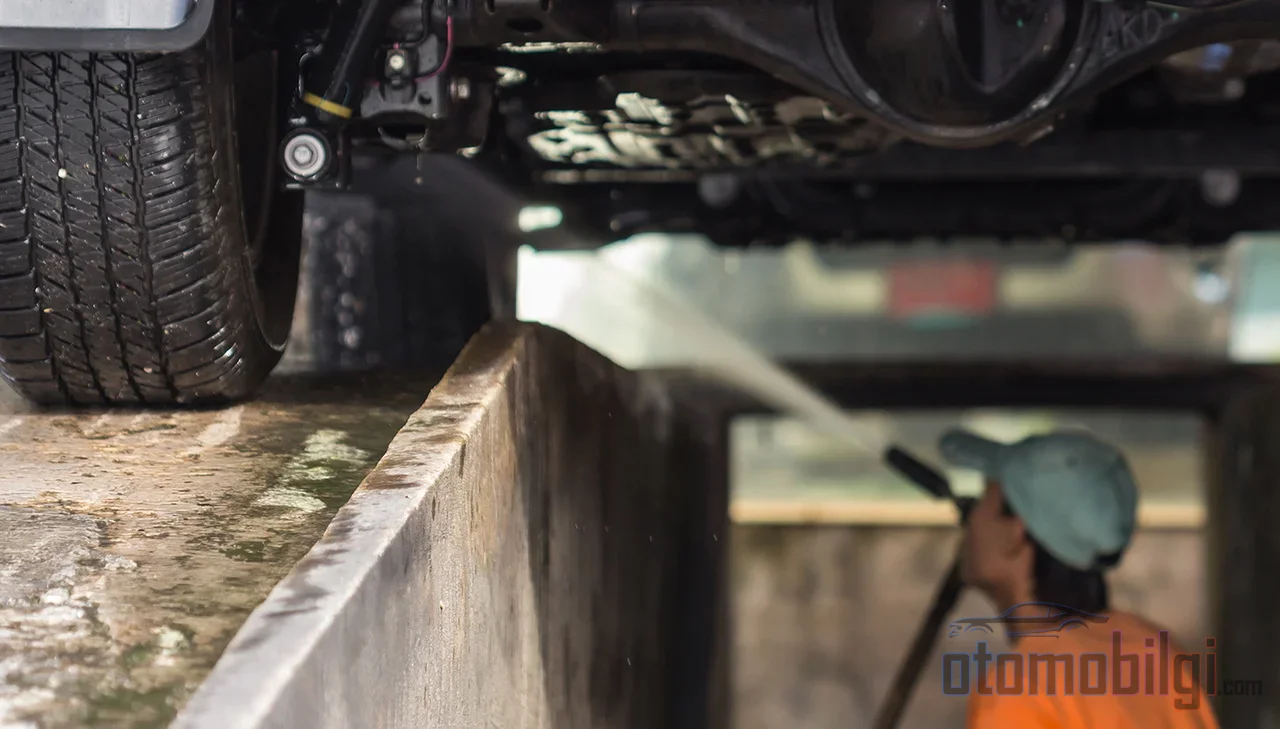
The logic of underbody washing is simple: the shorter the chemical effect of the salt, the better the outcome for the metal. If you have driven on salted winter roads or done heavy muddy driving, rinsing the underbody without delay is the most effective and cheapest protection step. If underbody washing is not done a few times a year, washing the top of the car largely loses its meaning in terms of protection.
The Right Technique
The correct method is not to start directly with high-pressure water. First loosen coarse dirt and salt with plenty of non-high-pressure water; then rinse the underbody with high-pressure, preferably hot, water. Pay extra attention to areas such as under the doors, sills and wheel arch interiors - salt loves to accumulate there. A wax or protective application done before winter begins also protects the upper body by reducing the adherence of salt and dirt to the paint.
One warning: in vehicles with a protective coating, the aim is to clean the surface without removing that layer. For this reason, underbody rinsing after exposure to salted roads, coastal salt, heavy mud or agricultural chemicals is useful - but the application must not be so intense as to damage the protective film.
Underbody Protection Applications: Which Method Makes Sense When?
Underbody coating, i.e. vehicle underbody coating, extends vehicle life by slowing corrosion and allows avoiding costly repairs. It is a valuable preventive maintenance item especially for vehicles exposed to road salt, winter salt-solution mixtures, coastal air and frequent moisture. There are four main approaches on the market:
| Method | Feature | Suitable Use |
|---|---|---|
| Wax-based | Flexible, lightly adhesive, well-conforming coating | Classic cars, vehicles stored indoors |
| Tar/rubber-based undercoating | Thick physical barrier; also stops existing corrosion | Heavy conditions, intensive use with stone impacts |
| Cavity wax | Injected into chassis rails, penetrating oily protection | Closed sections, chassis interiors |
| Lanolin-based liquid film | Professional application on new vehicles is a common practice | New vehicle, early protection |
There is a measurable reference regarding continuity: the overall lifespan of underbody spray protection is approximately 3-5 years and most protection companies recommend annual maintenance service. A single application is not a permanent solution.
Counterargument and Realistic Assessment
To be honest, these treatments are controversial. It is known that rust prevention treatment can accelerate rusting if there is trapped dirt and moisture underneath - the problem lies more in incorrect or ill-timed application than in the product itself. There are also vehicles that have lived trouble-free for more than 20 years without rust prevention; climate, usage and manufacturing quality are the determining factors here. Factory galvanization is a strong protection - zinc corrodes approximately 30 times slower than iron - but it cannot withstand harsh environmental effects such as acid rain and salt; manufacturing-related galvanization defects also accelerate rusting. Serious corrosion traces in the underbody of vehicles coming from coastal regions are a typical example.
As a result, underbody protection is not a mandatory item for every vehicle; it should be considered preventive maintenance recommended for vehicles intensely exposed to salt, moisture and coastal air.
Does Corrosion Affect Inspection and Second-Hand Value?
It does - and this effect is directly in your pocket. Corrosion affecting body and structural parts, as well as rusty body parts posing a hazard, can be evaluated as a defect in the vehicle inspection. During the expertise process, the vehicle is placed on a lift; the underbody, chassis and running gear are examined in detail, and if necessary, the underside of the vehicle and connection points are evaluated in detail with an endoscope camera. In second-hand value assessment, corrosion detection is an important factor; advanced corrosion reduces metal strength, increases repair costs, and becomes one of the buyer's strongest cards at the negotiation table.
Early intervention can reverse this picture: small rust spots can be stopped from growing with sanding and protective paint. Repairing missing or damaged protective coating without delay, keeping water drainage channels open, and cleaning the underbody after salted roads are the sequence of measures with the lowest cost.
Short Answer: Does Underbody Corrosion Affect the Vehicle?
Yes - in terms of both safety and value. Underbody corrosion, as it progresses, weakens chassis and suspension connections, exposes brake and fuel lines to the risk of punctures, can be evaluated as a defect in inspection, and significantly reduces second-hand value. In contrast, underbody washing after winter, early repair of damaged protective coating, and underbody protection renewed every 3-5 years under appropriate conditions measurably slow this process down. Mechanical maintenance keeps the vehicle running for years; underbody maintenance keeps it solid for years - when the latter takes its place in the maintenance calendar, the vehicle not only runs well but also retains its value.
Sources
- What Is Corrosion? The Importance of Corrosion in Vehicle Inspection
- How Corrosion (Rust) Secretly Damages Your Vehicle and How to Prevent It?
- The Importance of Underbody Washing and Salt Removal in Winter Months
- Should You Wash Your Car in Winter? Road Salt, Mud, and Underbody Washing
- Rust and Corrosion Prevention Methods on Metal Surfaces
- How Long Does Car Rust Proofing Last?
- Wax, Oil, or Rubber? Rust Protection Guide
- How Road Salt Damages Your Vehicle
- How Do We Prevent Corrosion From Forming in Our Vehicle?
- Why Is Vehicle Inspection Mandatory When Buying a Used Car?