Is the 2026 MINI Countryman JCW Right for You?
Share This Page
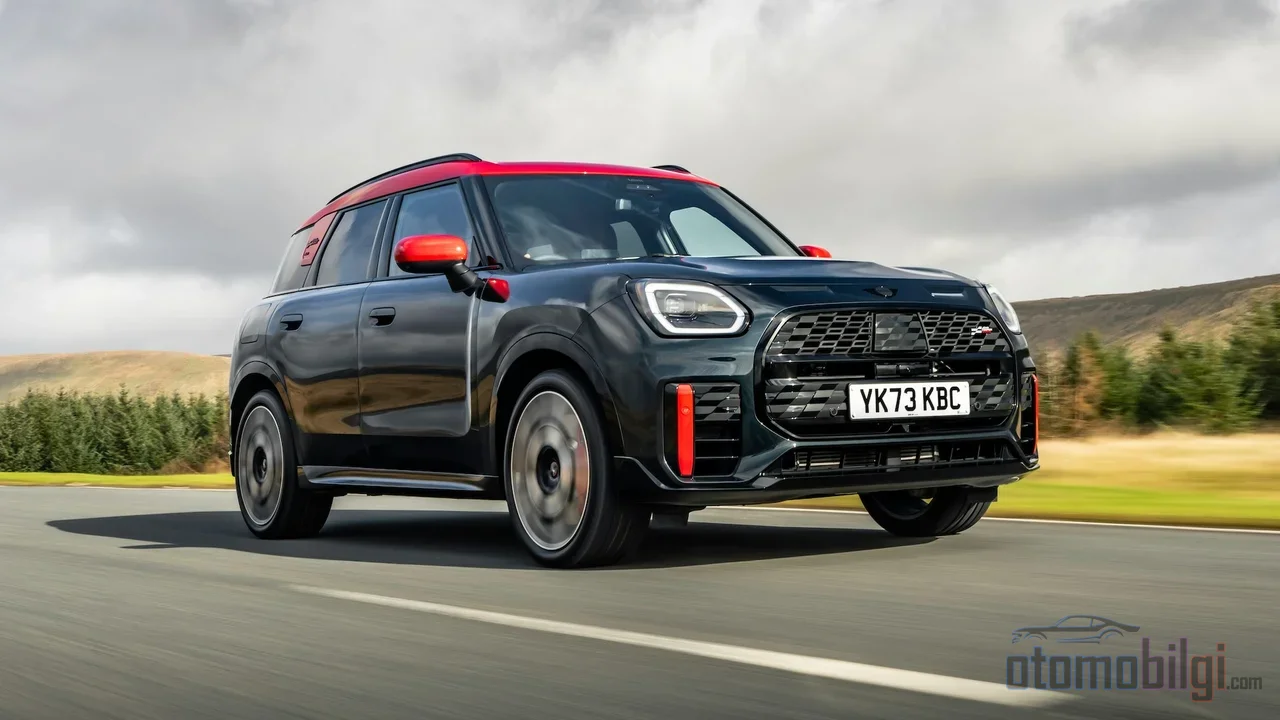
The 2026 MINI Countryman John Cooper Works ALL4 is positioned as a C-segment premium performance SUV with its 300-horsepower 2.0-liter turbocharged gasoline engine and standard all-wheel drive system; it can be a sensible choice for drivers who want a practical family car but don't want to compromise on performance in everyday use. However, the official consumption figure of 8.3 l/100 km and the firm suspension setup show that this choice isn't right for everyone.
Highlights
- 1,998 cc turbocharged gasoline engine producing 300 HP and 400 Nm of torque
- 0–100 km/h acceleration in 5.4 seconds, top speed 250 km/h
- 7-speed dual-clutch automatic transmission and ALL4 all-wheel drive
- WLTP combined consumption 8.3 l/100 km, CO2 186 g/km
- Cargo volume up to 665 liters, expanding to 1,530 liters with the rear seats folded
What need does the Countryman JCW answer?
The Countryman, MINI's largest-bodied model, has grown significantly with its new generation and is now produced in Germany. This growth moved the model into genuine family SUV territory: both passengers and cargo get more space than the previous generation, and practicality in city use has also improved. The John Cooper Works trim level, meanwhile, places the brand's racing heritage spanning five decades on top of this family skeleton.
In practice, this car answers a need like this: on weekdays, a comfortable and well-equipped premium SUV in the school, work, and grocery-run traffic; on weekends, a car that challenges the hot hatch class with its 300 horsepower. That is exactly where it differs from the standard Countryman it is based on. The JCW uses a thoroughly revised version of the Cooper S's 2.0 engine; it comes with 20-inch JCW Flag Spoke wheels (two-tone), special body details, and the brand's peak performance tuning. Exterior dimensions are 4,447 mm in length, 1,843 mm in width, and 1,645 mm in height; in other words, C-segment SUV dimensions but with a premium content.
| Technical Specification | Value |
|---|---|
| Engine | 1,998 cc, 4-cylinder turbocharged gasoline (Twin Power Turbo) |
| Power / Torque | 300 HP (221 kW) / 400 Nm |
| 0–100 km/h | 5.4 seconds |
| Top speed | 250 km/h |
| Transmission | 7-speed dual-clutch automatic |
| Drivetrain | ALL4 all-wheel drive |
| WLTP consumption (combined) | 8.3 l/100 km |
| CO2 | 186 g/km |
| Cargo volume | 665 liters (up to 1,530 liters when folded) |
The character of the 2.0 turbo engine and ALL4 all-wheel drive
On the engine side, the job goes beyond a simple power figure. The 2.0-liter turbocharged gasoline unit's 400 Nm of torque delivers a power curve that is already full at low revs; this directly affects eagerness in city traffic and mid-range acceleration on the highway. Improved aerodynamics appear in the official data as one of the factors contributing to its 5.4-second 0–100 km/h acceleration. The 7-speed dual-clutch automatic transmission shifts gears quickly and sharply; there is no manual option, which is now a standard approach for performance versions of the segment.
The ALL4 all-wheel-drive system is the practical way of transferring this power to the asphalt. Where one axle loses grip, the other engages; traction on wet surfaces, reduced wheelspin when cornering and four-season usability are the system's most tangible gains. In a market like Türkiye, with rainy transitional periods and variable winter conditions, ALL4 is a decisive advantage for the driver choosing between a high-torque engine and front-wheel drive.
What does 8.3 l/100 km mean in daily use?
The official WLTP combined consumption figure is 8.3 l/100 km, which is a high number for this class. To put it in perspective, the S ALL4 version in the range can reach a combined consumption of around 6.5-7.3 l/100 km; the JCW sits above this band. Depending on the engine and the added weight of the all-wheel-drive system, this value is natural from an engineering standpoint; but things don't work that way on the wallet side. The difference between official and real-world consumption of a 300-horsepower vehicle must also be taken into account: official figures are obtained through measurement protocols; with aggressive driving, real figures can rise noticeably above them, while calm highway driving can keep them close to the official value.
So the first caveat of a sensible purchase question is consumption. For a user who covers high mileage and is mostly exposed to city traffic, the annual fuel cost increases to a level that cannot be ignored compared to the standard Countryman. For a user who drives fewer kilometres and knows they are buying performance, however, this is a deliberate cost.
Interior and boot practicality
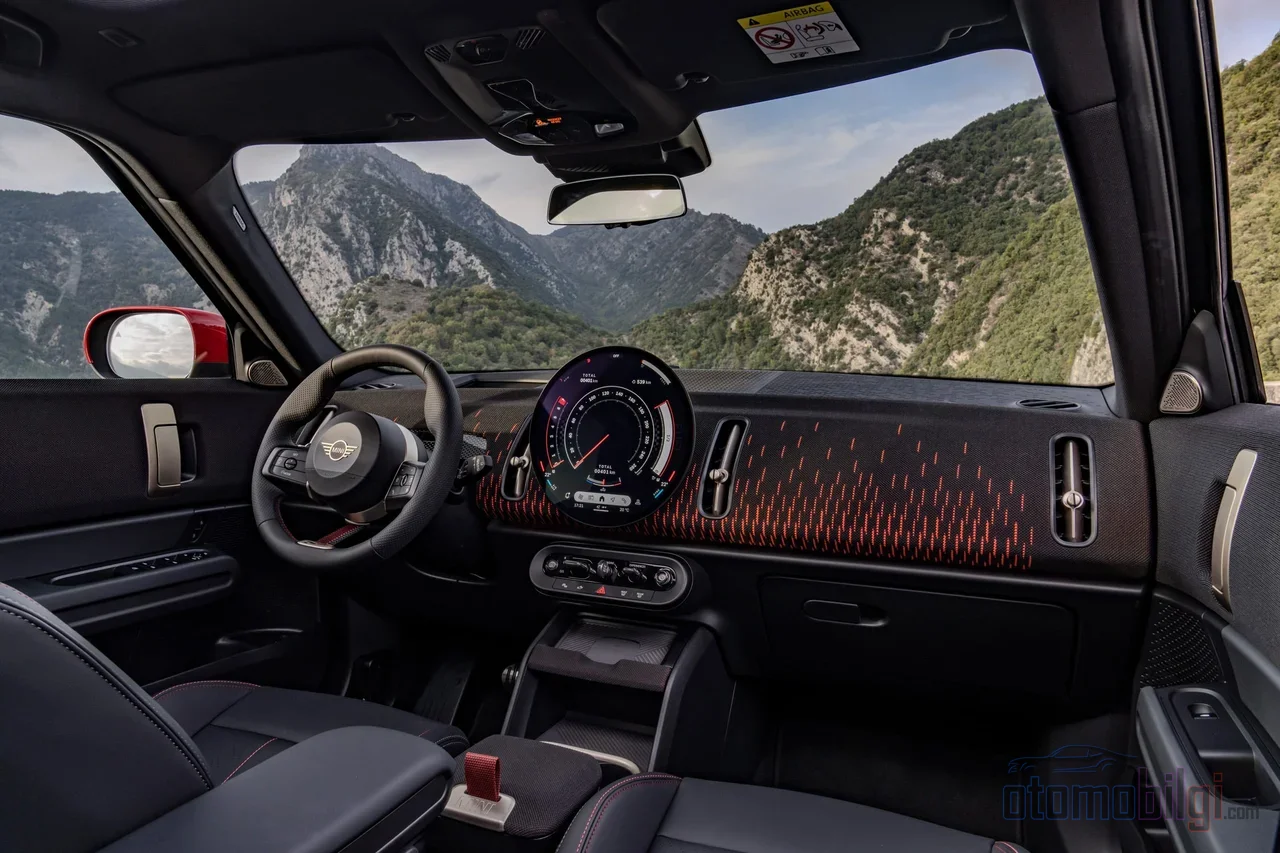
The new generation's growth is felt inside. There is reasonable knee and head room in the rear seats for adults; boot capacity rises to up to 665 litres according to official figures, expanding to 1,530 litres with the rear seats folded. Litre figures given without a specified measurement method are not worth comparing; the ones taken as reference here are the values published on the manufacturer's official page. Still, the practical outcome is the same: there is sufficient flexibility for bulky loads such as bicycles, strollers and large suitcases.
On the equipment side, this is one of the JCW's strong cards. Adaptive LED headlights, keyless entry and heated front seats come as standard; 20-inch two-tone JCW Flag Spoke wheels are also part of the equipment. The colour palette is wide: choices can be made among options such as Melting Grey, Midnight Black, Nanuq White, Blazing Blue and British Racing Green IV. So despite being a performance version, it doesn't present a picture where optional extras on equipment that directly affects daily-use comfort are eye-wateringly priced.
Strengths and weaknesses
To clarify this vehicle's identity, its strengths and weaknesses need to be seen together:
- 300 HP / 400 Nm and 5.4-second acceleration make it a C-segment premium performance SUV
- ALL4 all-wheel drive's wet-road grip and four-season usability advantage
- Increased interior volume and cargo flexibility with the growing body
- Rich standard equipment including adaptive LED headlights, keyless entry, and heated seats
- The daily cost burden of 8.3 l/100 km WLTP consumption
- The firm, jittery suspension setup highlighted in foreign press tests
The suspension issue is decisive when it comes to the family car question. A firm setup means body control in corners and a sporty driving feel; but what a child sitting in the back seat thinks on Istanbul's broken asphalt is an equally real parameter. The go-kart feel emphasized in the manufacturer's communications, when blended with this generation Countryman's size and weight, does not give everyone the same feeling; some note that the vehicle is not as agile as a hatchback MINI. Also, as an isolated case, one user reported bubble formation on the headlight chrome trim; such quality concerns may also play a role in second-hand value.
What distinguishes it from the standard Countryman and the Golf GTI class?
Compared to the standard Countryman, the JCW offers the same body with a very different mechanical content: an extensively reworked 2.0 turbo engine, a 300-horsepower performance level, standard all-wheel drive, 20-inch wheels, and distinctive body details. For someone seeking driving excitement beyond the family car need, this difference is the very reason to buy; for those seeking pure practicality, the standard lineup is more rational.
The comparison with the Volkswagen Golf GTI is a classic debate in this class. Both engines are around 2.0 liters (Countryman 1,998 cc, GTI 1,984 cc) but their positioning differs: While the JCW Countryman offers a degree of SUV versatility without compromising its performance intent, the GTI stays more faithful to the hatchback form. A driver prioritizing highway stability and comfort will find the GTI is considered more balanced and refined; for those seeking all-wheel-drive grip and an elevated seating position, the Countryman JCW's offer is in a category of its own. It should also be noted that power and torque figures vary across different markets; the official value of the version sold in Türkiye is 300 HP, and all evaluation should be based on this specification.
Conclusion: who is it sensible for, and who is it not?
To summarize with the numbers: 300 HP, 400 Nm, 5.4 seconds, and ALL4; on the other hand, 8.3 l/100 km and a firm suspension. If your priority is combining family practicality with genuine performance in a single vehicle, if you accept the consumption cost as a conscious price, and if ride firmness does not bother you, this car is a sensible choice. If your annual mileage is high, rear-seat comfort is a priority, or your fuel budget is tight, the standard Countryman or a more refined rival is probably the better answer. Clearly seeing the price when buying the performance is the most engineering-minded step in the purchase decision in this segment.
Sources
- MINI John Cooper Works | MINI Türkiye
- MINI Countryman | MINI Türkiye
- MINI John Cooper Works Countryman | MINI Türkiye
- MINI Türkiye
- Mini Countryman JCW Review 2026 | Carwow
- Mini Countryman 2.0 JCW ALL4 (F60) | Open Hood
- MINI Countryman JCW (2024) review | Car Magazine
- Mini Countryman JCW vs Golf GTI | Zigwheels
- Should You Buy a MINI Countryman? | Webtekno