Is the 2026 Fiat Egea Still Türkiye's Best-Selling Model?
Share This Page
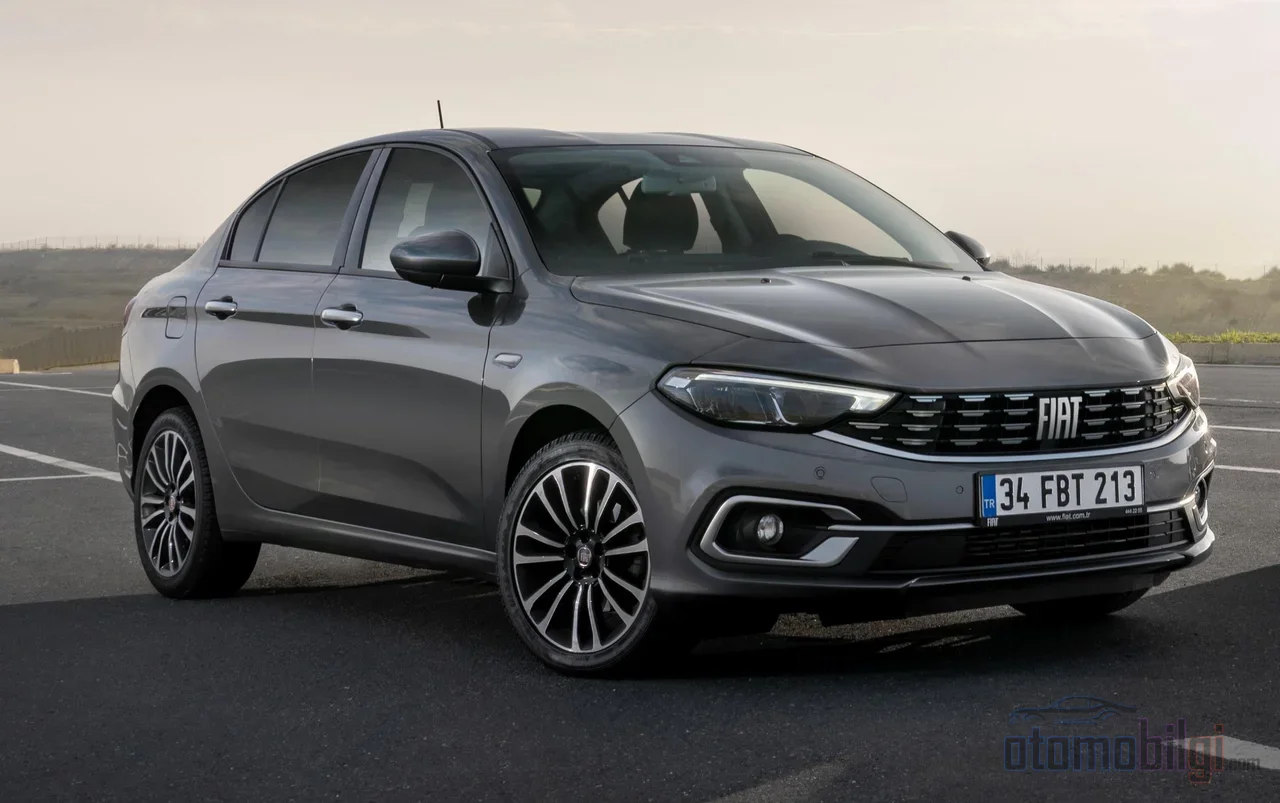
Yes; the Fiat Egea has been Türkiye's best-selling car every year since 2016, and although production ended on June 30, 2026 at the line in Bursa, sales continue with the remaining vehicles in stock. Positioned in the C segment, the Fiat Egea with its sedan body offers a 520-liter trunk and low running costs, appealing especially to family users who cover high mileage; with its gasoline and diesel options, it is still a model available on the shelves.
Highlights
- Over 11 years of production, a total of more than 1.4 million vehicles were produced in Bursa and exported to 40 countries.
- From 2016 to 2025, it was Türkiye's best-selling car every single year.
- Trunk volume of 520 liters in the sedan body and 550 liters in the Station Wagon.
- Factory-stated consumption of 3.9 l/100 km in the 1.6 MultiJet DCT version.
The Egea's Situation in 2026: Production Ended, Sales Continue
A critical threshold has passed in the Egea's story. TOFAŞ management had previously announced that sedan production would end by June 2026 at the latest, and the schedule did not slip: the last Egea rolled off the line at the Bursa plant on June 30, 2026. Introduced at the Istanbul Motor Show in May 2015 and launched for sale in Türkiye in October 2015, the model's production journey thus lasted 11 years; during this period, total production reached 1,417,4xx units .
This does not mean the model has vanished from daily life. Since 2015 in Türkiye, 565,097 units of the Egea Sedan have been sold, and the weight of sales has always been in the sedan body. With production ending, new car sales now depend not on manufacturing but on factory and dealer stocks. In other words, it is still possible to find a brand-new Egea in a showroom today; however, knowing that this window will close as stocks deplete is important planning data for buyers. Even in February 2026, the model was one of the top names in the sales rankings with 2,324 units; in other words, there was demand even during the phase-out process.
What Segment Is It: C Segment or "Budget Compact"?
The Egea is officially classified in the C segment. However, this label does not explain its dimensions as much as it explains where it sells: the sedan is 4532 mm long, with a 2637 mm wheelbase; width is 1792 mm and height is 1497 mm. The Station Wagon is even more spacious with a length of 4571 mm and a height of 1514 mm . These dimensions show that a vehicle said to have inherited the Linea's B-segment identity is in fact significantly larger than the Clio or Polo class.
This is also where the segment debate originates. Fiat explained that the model had no direct rival in Europe in the classical sense, and that its position overlapped with price-focused sedans like the Peugeot 301 and Skoda Rapid. Therefore, the most accurate description is this: the Egea is a model that combines C-segment dimensions with pricing and equipment levels closer to the B segment. The value proposition it offers to the user comes precisely from this size-price balance.
Engine and Transmission Options: What Does Each Version Promise?
In the Egea family, there are two distinct characters: gasoline and diesel. On the gasoline side, the naturally aspirated 1.4 Fire 95 HP forms the entry level, while 1.0 Turbo 100 HP and 1.4 T-Jet 120 HP turbo options, 1.5 FireFly hybrid 130 HP on the other hand represents the modern face with 15 kW of electric support (240 Nm of torque). In diesel, there are the 1.3 MultiJet II 95 HP and 1.6 MultiJet II 120 HP / 130 HP options. The transmission range covers 5 and 6-speed manual alongside a 6-speed automatic, 6-speed DCT, and 7-speed automatic.
| Engine | Power | Average consumption | 0-100 km/h |
|---|---|---|---|
| 1.4 Fire (petrol) | 95 HP | 5.7 l/100 km | 11.5 sec |
| 1.5 FireFly Hybrid | 130 HP | 5.0 l/100 km | 8.6 sec |
| 1.3 MultiJet (diesel) | 95 HP | 4.1 l/100 km | 11.7 sec |
| 1.6 MultiJet (diesel) | 120 HP | 4.2 l/100 km | 9.6 sec |
| 1.6 MultiJet DCT (diesel) | 120 HP | 3.9 l/100 km | 9.8 sec |
The figures summarize the character. For city-focused use and drivers with low annual mileage, the 1.4 Fire or 1.5 hybrid is sufficient; the hybrid's 8.6-second 0-100 km/h time is also the most aggressive option on the petrol side. Long-distance and high mileage, however, are the diesel's territory: the 1.6 MultiJet with 320 Nm of torque delivers a character that lets you feel the engine's power earlier both in the city and on the highway, and inspires confidence when fully loaded. Combined with the DCT automatic, this engine also has the lowest consumption figure on the list; it is the most sensible match for those seeking economy and comfort together.
Interior and Cargo Practicality: The Space That Makes Buyers Choose the Egea
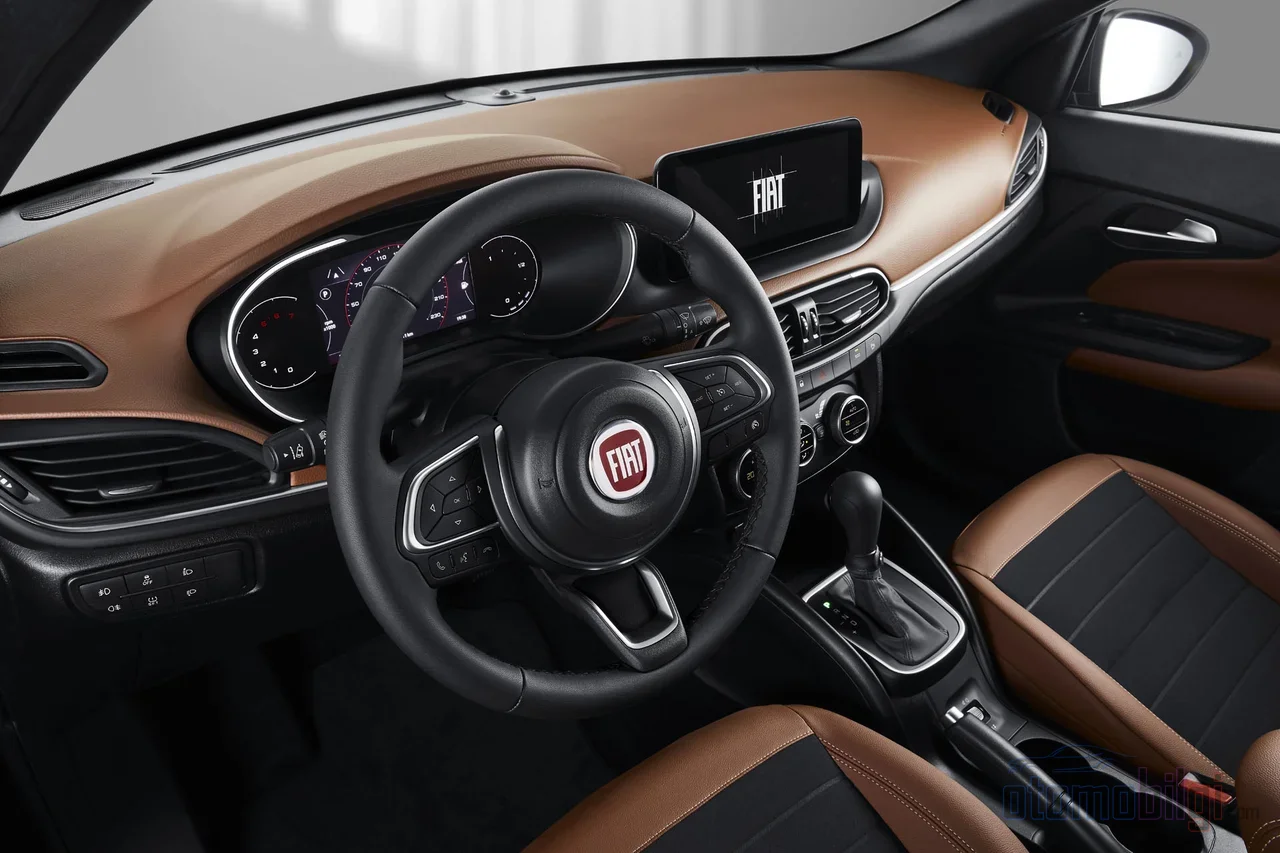
It would be no exaggeration to say that the Egea's sales success comes more from its glovebox than from its engine. The 520 lt trunk capacity in the sedan body is a figure above most C-segment sedans and makes a real difference in family use. The knee room offered in the rear seats is also part of this picture; a family of four being able to carry their weekend load in a single vehicle is the foundation of the model's "family car" identity.
The Station Wagon takes this aspect even further: 550 lt of trunk capacity and storage compartments that keep small items organized along the way make it one of the most generous in its class in terms of volume. The picture changes in Cross versions; with the values brought by the wheel-over-road design, the trunk drops to 440 lt(Cross), while the Cross Wagon still offers 550 lt . Upper trim packages also feature keyless entry, advanced driver assistance systems, and richer interior trim options; however, it should be taken into account that as equipment increases, the price moves away from the accessibility at the core of the model's basic formula.
Strengths and Weaknesses: What Is Good, What Is Ordinary?
The Egea's strengths consistently gather around the same points:
- Low maintenance and spare parts costs; a broad and well-established service infrastructure
- Fuel economy that stands out especially in diesel versions
- A long-lasting chassis and engine unit designed with durability in mind
- The generous interior space and large trunk it offers for its price
- A strong second-hand market; depreciation remains relatively controlled when selling
Weaknesses are also out in the open. Interior material quality is the model's most frequently criticized aspect; hard plastics and plain texture work do not satisfy eyes accustomed to higher-class models on first contact. In driving dynamics, the Egea is also not among the most refined examples of its class in terms of comfort and steering feedback; it is a setup that does the job, but does not excite the driver. In terms of design, the model aims to be spacious, adequate, and practical; reading its plainness not as a flaw but as a deliberate cost choice is appropriate. This positions the Egea not as "the best at everything," but as the most car for the money .
On the safety side, the official measurement is clear: In the 2016 Euro NCAP test, the model received 82% in adult occupant protection, 60% in child protection, and 62% in pedestrian protection. Adult protection is a respectable result for its class.
Where Does the Egea Stand Against the Corolla, Civic, Passat, and Astra?
The comparison of the Egea with its rivals is, in fact, a comparison of two different purchase logics. In the presence of the Toyota Corolla, the Egea stands out with its diesel option, more accessible position, and large trunk; the Corolla distinguishes itself with the brand's hybrid ecosystem and long-term quality perception. The equation is similar next to the Honda Civic: the Egea plays the interior space and price card, while the Civic is clearly a step ahead in design and driving dynamics.
The comparison with the Volkswagen Passat is an example that clarifies the segment difference; the Passat is positioned in the D segment and the Egea in the C segment, and looking at the median listing price, the difference is around 605,000 TL . This is the most concrete number showing that the two vehicles do not target the same buyer. In the Opel Astra line, the matter is a bit more nuanced: by Fiat's own definition, the Egea's true direct rivals are price-focused sedans like the 301 and Rapid; models like the Astra Sedan, Megane Sedan, Octavia, and Ceed enter comparison lists in market practice.
The common conclusion is this: on the side of the Corolla, Civic, and Passat, comfort, technology, and driving quality are discussed; on the Egea's side, price-performance, low operating costs, and abundant space. For most of the year, the Egea led the sales charts because this second group aligned better with real budgets in Türkiye.
Which Buyer, Which Egea?
For a driver with low annual mileage, who drives in the city, and prefers gasoline, the 1.5 FireFly hybrid is the most consistent option in terms of both consumption and performance balance. A user with budget priority for short city distances can also get along with the 1.4 Fire; this engine's 5.7 l/100 km average is unambitious but predictable.
For a driver who covers tens of thousands of kilometers a year, travels between cities, or uses it intensively for commercial purposes, the route is the 1.6 MultiJet. 320 Nm of torque makes a noticeable difference on long inclines with a full trunk and four passengers; combined with the DCT automatic, it becomes one of the most economical combinations in its class with a factory consumption figure of 3.9 l/100 km. The formula for body choice is simple: Sedan for transport-focused use, Station Wagon for families who regularly carry large loads, and Cross for those who want a more compact stance and raised look in the city.
Given that the zero-kilometer sales window is limited by stock, it makes sense for a buyer wanting to decide on one of these four engine-body pairings to act quickly. The gap left by the Egea - a C-segment sedan with a diesel engine, cargo capacity above 500 liters and low running costs - does not look likely to be filled easily in the Türkiye market anytime soon; which is the most honest summary of the model's decade-long sales dominance.
Sources
- Fiat Egea
- Fiat Egea Model and Prices - Discover the Egea!
- Which Segment Is the Fiat Egea? C Segment or B ...
- Türkiye's best-selling car will no longer be produced
- Türkiye's Most Preferred Car for 10 Consecutive Years
- March 2026: Best-Selling Cars
- Fiat Egea Sedan Driving, Comfort, Engine and Transmission
- Fiat Egea Cross Review 2026: Engine Options and ...
- Fiat Egea: Features, Chronic Problems, Fuel Consumption and ...