Why Is the 2026 Dacia Duster Still One of Türkiye's Most Anticipated SUVs?

Share This Page
The Dacia Duster is a compact SUV that has been present in the Türkiye market since 2010 with the promise of "a real SUV at an affordable price," and today it is sold new in its third generation with a renewed engine lineup. In the C-SUV segment, its combination of off-road capability, a factory-fitted LPG option, and a high seating position in a single body still makes it one of the most sought-after models. This page examines the model's identity, engine options, and who it suits without getting into pricing.
Highlights
- 1.3 TCe version: 145 hp, 245 Nm, 7-speed EDC automatic
- Official luggage capacity: 594 liters (maximum 1,600 liters)
- Ground clearance 209 mm, turning circle 10.86 m
- No diesel in the new generation; petrol, ECO-G (LPG), full hybrid, and mild hybrid 4x4 options are available
- Produced in Bursa: alongside the service and parts availability advantage of local production
Why Is the Duster Still in the Spotlight? An Overview of the Model
The Duster's formula is as simple as it was on day one: delivering what a real SUV offers - high body, generous luggage space, genuine off-road capability - in a simple package at a reasonable cost. Across three generations, this formula has not changed; what has changed is the technical platform beneath it. The new generation is built on the Renault Group's CMF-B platform and is produced at the Oyak Renault factories in Bursa, Türkiye. The fact that the 1.3 TCe automatic, 1.8 Full Hybrid, and 1.2 Eco-G versions are locally produced means a tangible advantage in spare parts and service access.
One frequently asked question in recent months concerns the brand: the Duster is now sold in Türkiye under the Renault Duster name. This transition has caused some readers confusion over "Dacia or Renault?" In practice, the situation is this: the product's DNA is the same, while sales and the dealer network operate under the Renault umbrella. The model being described by Renault as "one of the best-selling compact SUVs" is the corporate reflection of this structure.
Anadolu Agency describes the Duster as Dacia's market-leading model in the SUV segment. And that is exactly what the curiosity is about: there is a wide audience that, without knowing the price list, wants to know whose needs this vehicle actually answers and where it differs from its rivals.
Dimensions and Technical Data: What Do the Measurements Say?
The first place to look from an engineering standpoint is the measurements. The Duster's official technical data show a body slightly above what the segment expects and a clear intended use:
- Length: 4,343 mm, width (excluding mirrors) 1,921 mm, height 1,616 mm
- Wheelbase: 2,657 mm, ground clearance 209 mm
- Luggage capacity: 594 dm³, maximum with rear seats folded 1,600 dm³
- Fuel tank 50 liters, kerb weight 1,293 kg, 5 seats
Two values here are especially meaningful. The first is the 594-liter trunk: a volume above most of its rivals and a figure that makes a real difference in family use. The point to note is that trunk capacity can vary depending on the engine - the space taken up by the hybrid battery could cause small losses in previous generations; the official base figure belongs to the 1.3 TCe version. The second is the 209 mm ground clearance: a distance that keeps the underbody away from hazards across a wide range, from city speed bumps to rough dirt roads.
Engine and Transmission Options: Which Driving Character Suits You?
The current lineup in the Türkiye market is built on four engines, each appealing to a different user profile. The common point is this: there is no diesel option in the new generation; the 1.5 Blue dCi existed only in the previous generation. This is the natural consequence of the electrification strategy.
| Engine | Power / Torque | Transmission | Drive | Character |
|---|---|---|---|---|
| 1.0 TCe ECO-G | 120 hp / 170 Nm | 6-speed manual | 4x2 | Economy-focused, factory-fitted LPG |
| 1.3 TCe EDC | 145 hp / 245 Nm | 7-speed EDC automatic | 4x2 | Balanced performance, 6.3 lt/100 km WLTP |
| 1.6 E-Tech Full Hybrid | 160 hp system power | Automatic | 4x2 | ~5.0-5.5 lt/100 km in city traffic |
| 1.2 Mild Hybrid 4x4 LPG | 150 hp (130 hp + 48V) | 6-speed automatic | 4x4 | 4x4 + LPG + automatic together for the first time |
1.3 TCe EDC 145: The Flagship Gasoline Engine
The 1,332 cc four-cylinder turbocharged gasoline engine, reaches 0-100 km/h in 9.4 seconds; WLTP consumption is 6.3 lt/100 km and the CO2 value is 141 g/km. Test drives also show that this consumption figure can be achieved in real-world use. The pairing of this engine with the 7-speed EDC dual-clutch automatic at the end of 2025 was the most important update in the lineup: meeting the automatic transmission demand of a model long sold with a manual emphasis is a step that directly affects sales potential. The point to note is a known engineering reality: at low speeds, especially in stop-and-go transitions, there are vibration reports; factoring in repair costs at high mileages would also be wise.
ECO-G: The Value of Factory-Warrantied LPG
The 1.0 TCe ECO-G is a 999 cc unit that comes with LPG from the factory, and the fact that 999 cc falls into the lower SCT bracket is the key to this version's price calibration. Factory LPG offers a different level of reliability than aftermarket-installed systems: warranty coverage, engine management software integrated with LPG, and homologation. The known weak point is this: complaints about turbo whine/rattle are reported at chronic levels on this engine, and the view that power is limited on hills is widespread among users. 120 hp is sufficient for this body weight but never flexible; the engine needs to be read this way.
Hybrid Options and the Return of 4x4
The 1.6 E-Tech Full Hybrid 160 hp, with consumption values dropping below 5 liters in heavy city traffic, is a solution designed for those who want to minimize cost per kilometer. On the other hand, something is happening for the first time in Duster history: the 1.2 Mild Hybrid 4x4 LPG version offers 150 hp 150 hp of power, supported by mild hybrid technology, together with a 6-speed automatic transmission, four-wheel drive, and factory LPG all in the same package. This triple combination is effectively unique in the segment. The 4x4 versions 217 mm of ground clearance and five driving modes (ECO, AUTO, Snow, Mud & Sand, Off-Road).
Interior and Trunk Practicality
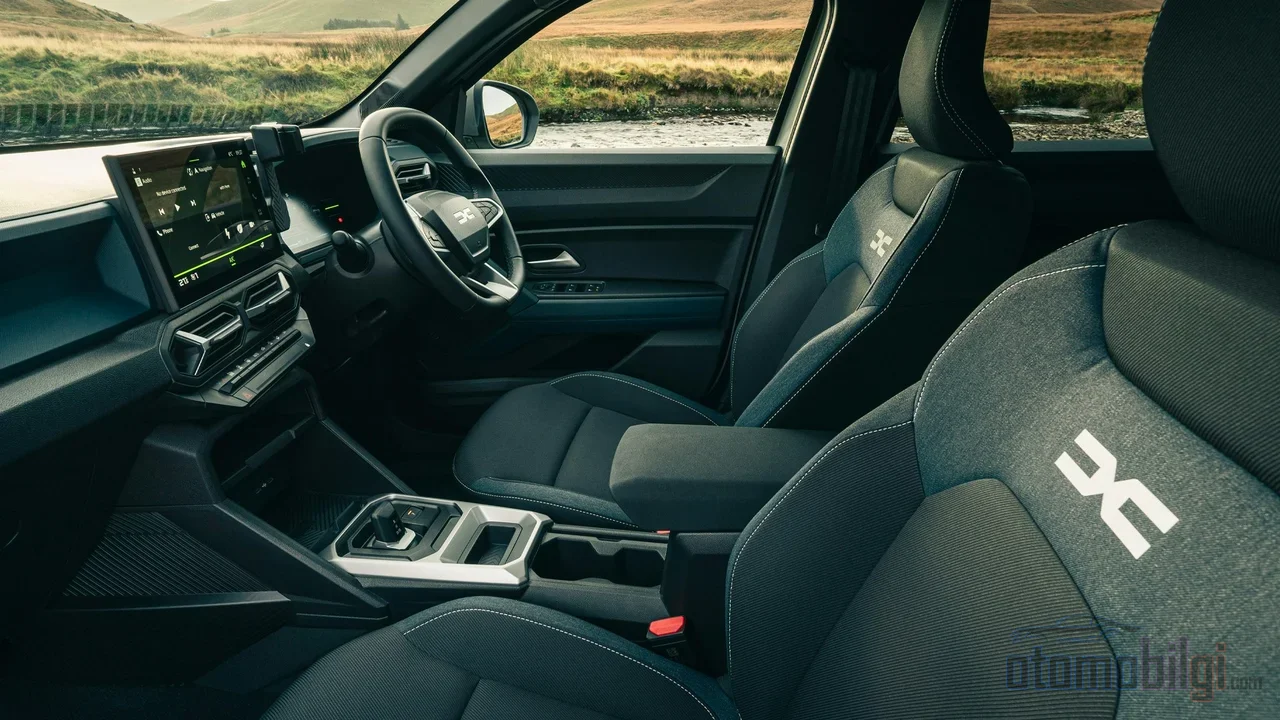
The interior's identity reflects the Duster's entire philosophy: durability and ease of use come first. The high seating position provides wide front and side visibility; this geometry, which makes it easy to read the vehicle's corners in city traffic, is one of the most praised aspects in user reviews. On rough roads, the suspension's firm yet tolerable character combines with the perception of "solidity."
On the equipment side, even the base Evolution trim offers a modern package: a 10.1-inch OpenR touchscreen, wireless CarPlay/Android Auto, a 7-inch digital instrument cluster, LED headlights, a rearview camera, and among driver assistants, automatic emergency braking, lane keeping, and cruise control are standard. The top Techno trim adds an electric parking brake (Autohold), wireless charging, and automatic climate control; a spare tire, modular roof bars, a 360° camera, and blind spot warning are on the options list. The weak side is also clear: hard plastic quality in the interior, noises from some trim pieces, and occasional multimedia freezes are the inevitable traces of the cost strategy.
The trunk is the model's strongest asset. The 594-liter base volume expands to up to 1,600 liters with the rear seats folding in a 60/40 split; the two-level trunk floor in the Techno trim makes it easier to organize cargo. When the 50-liter fuel tank is combined with the LPG tank in ECO-G versions, the range calculation follows a different logic than gasoline rivals.
Strengths and Weaknesses: An Objective Balance Sheet
To position the Duster correctly, the pros and cons must be weighed on the same scale. Strengths:
- A trio unique in the segment: 4x4 + factory LPG + affordable price ; in the rival chart, the Bayon, Captur, and Crossland offer neither of these together
- Trunk volume and ground clearance above its rivals
- The service and parts availability advantage brought by domestic production
- A tendency to hold value well on the second-hand market, especially in 4x4 versions
- Sufficient capability for light off-road use in stabilized, unpaved, snow, and mud conditions
The list of weaknesses must also be written with the same honesty:
- In the Euro NCAP 2024 test, it received 3 stars; part of the reasoning is that some driver assistants are not standard due to the cost strategy. On the other hand, it is stated that body strength was good in crash tests and full marks were achieved in the side impact test
- Chronic turbo lag criticism and ramp performance complaints in the 1.0 ECO-G
- Low-speed vibration on the 1.3 TCe EDC and repair costs that may increase at high mileage
- Hard plastic quality and multimedia software issues
- The "affordable" image straining against current price levels; users are debating these prices
The safety score is a point that deserves particular attention. Three stars do not mean the vehicle's body is weak; in the current Euro NCAP regime, where the test methodology weights driving assistants heavily, the score loss stems from staying at the hardware level. Still, a buyer expecting maximum performance from safety assistants should evaluate this picture knowingly.
How Does It Stand Out From Its Rivals in the C-SUV Segment?
In the C-SUV segment, what most sets the Duster apart is that the combination we discussed above is not found in its rivals. Direct competitors such as the Bayon, Captur and Crossland offer neither four-wheel drive nor factory LPG; the Duster is alone at both of these poles. Add ground clearance and cargo volume, and the result is a clear positioning that prioritizes "beyond-asphalt use and operating costs."
On the other hand, there are areas where the rivals are stronger: more refined interior materials, a quieter cabin, more extensive safety equipment and, in some cases, more refined transmission quality. Therefore, the Duster is not a "better than everyone" vehicle but a "unique for a specific need" vehicle. The target audience includes those looking for roomy interior space for family use, those wanting low consumption in heavy city traffic (the full hybrid side) and those heading out on gravel roads at the weekend. Those seeking luxury, quietness and premium texture would be wise to look at the segment above.
Who Is the Dacia Duster the Right Choice For?
To sum up: the 1.0 ECO-G for those who want to minimize fuel costs and can live with a manual transmission; the 1.3 TCe EDC for those who want balanced performance, automatic comfort and a city/long-distance balance; the 1.6 E-Tech Full Hybrid for the lowest consumption in traffic; and the 1.2 Mild Hybrid 4x4 LPG for genuine off-road and harsh weather conditions. Each engine has a clear corresponding user scenario, and that is a sign of a model's maturity.
The Duster is not a perfect vehicle; it has known weaknesses in its safety score, interior texture, and some engine characteristics. But the combination that none of its rivals offer - four-wheel drive, factory LPG, a large trunk, high body - is produced in Türkiye and backed by a widespread service network. If your needs align with this combination, the Duster is still the first name to look at in the segment. If not, alternatives that are more refined but less capable await you for the same money.
Sources
- Technical specifications - Renault Duster
- Dacia Duster Review 2026: Should You Buy It? Engine and User Comments
- New Renault Duster 1.3 TCe EDC 145 Test&Impressions
- Türkiye's Renault Duster, new engine options - Motor1 Türkiye
- Renewed Duster launched for sale with an automatic transmission option - Anadolu Agency
- Renault Duster 2026 Review - Lenacars
- Should You Buy a Dacia Duster? 2026 Detailed Review - Otomerkezi
- Dacia Duster LPG User Comments and Complaints - Şikayetvar