Who Is the 2026 SEAT Arona For?
Share This Page
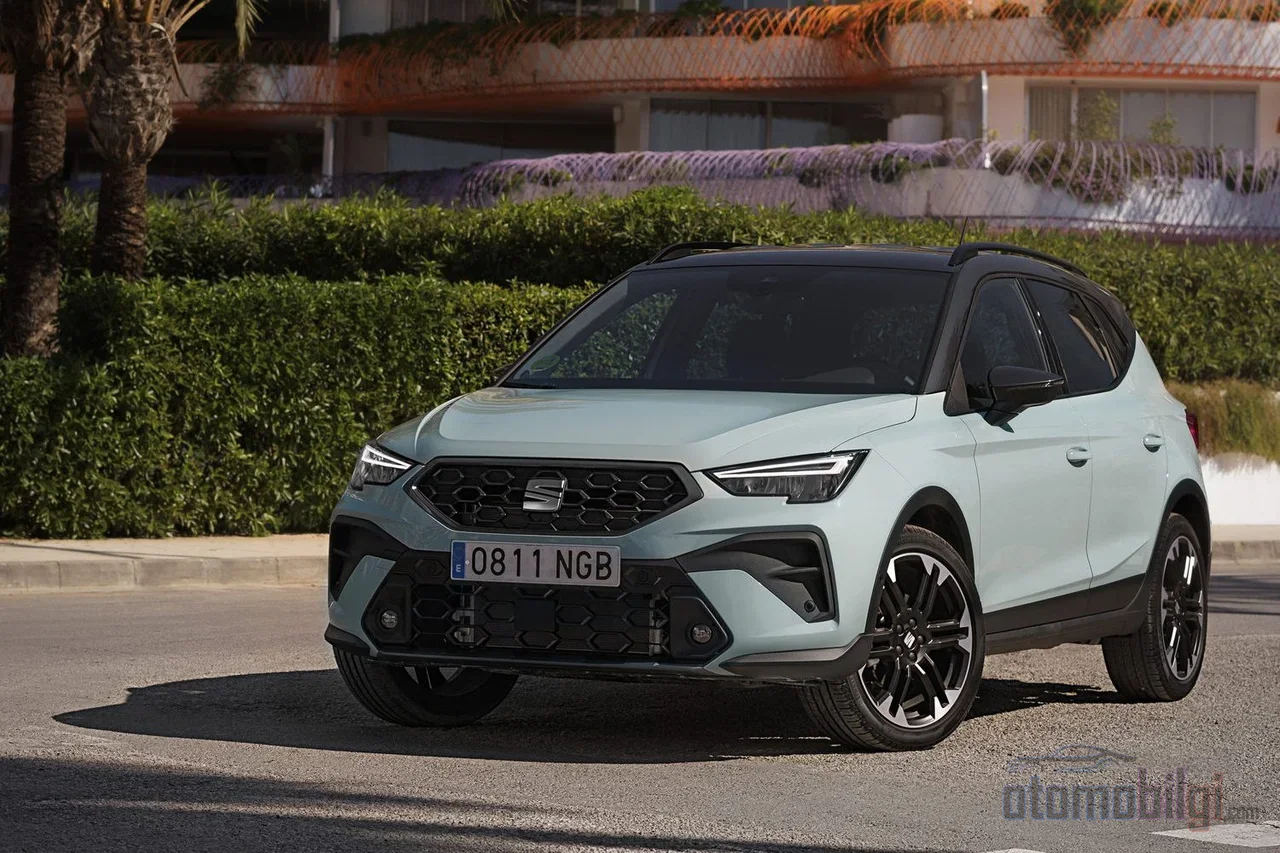
The SEAT Arona, the Spanish brand's small B-segment crossover SUV, continues to be sold brand new in Türkiye with the 2026 model year, featuring a 999 cm³ 1.0 TSI turbocharged petrol engine and a 7-speed DSG automatic transmission. Sharing its platform with the Ibiza, this model aims to cover a wide spectrum, from city use to family needs, in a single body, thanks to the added height on a hatchback base and a 400-liter trunk. In size, it's a small SUV; in character, a hatchback: it is precisely this duality that explains who the Arona speaks to.
Highlights
- Only engine option in Türkiye: 1.0 TSI, 116 PS of power, 200 Nm of torque
- Only transmission: 7-speed DSG dual-clutch automatic
- 0-100 km/h in 9.9 seconds, top speed 195 km/h
- 400 liters of trunk volume; approximately 1,280 liters with the seats folded
- A 5-star safety rating from Euro NCAP
Who does the SEAT Arona serve?
The answer to this question lies in the model's physical structure. With a length of 4,138 mm, a width of 1,780 mm and a wheelbase of 2,566 mm, the Arona is a full-fledged B-segment car; although its height has increased slightly with the facelift in some details, the fundamental proportions remain unchanged. It is about 8 cm longer than the Ibiza and offers a 52 mm higher driving position. In other words, the difference remains at the level of a raised hatchback rather than a true off-road vehicle.
In practical terms, this means the following: drivers who want to raise their seating position due to age or in city traffic but still need to stay within parkable dimensions form the Arona's first target audience. Small families carrying a child seat and weekly groceries in the back are naturally added to this list thanks to the 400-liter trunk. This volume, which is above the segment average, provides serious flexibility in daily use when combined with the two-level trunk floor.
What does it share with the Ibiza, and where does it differ?
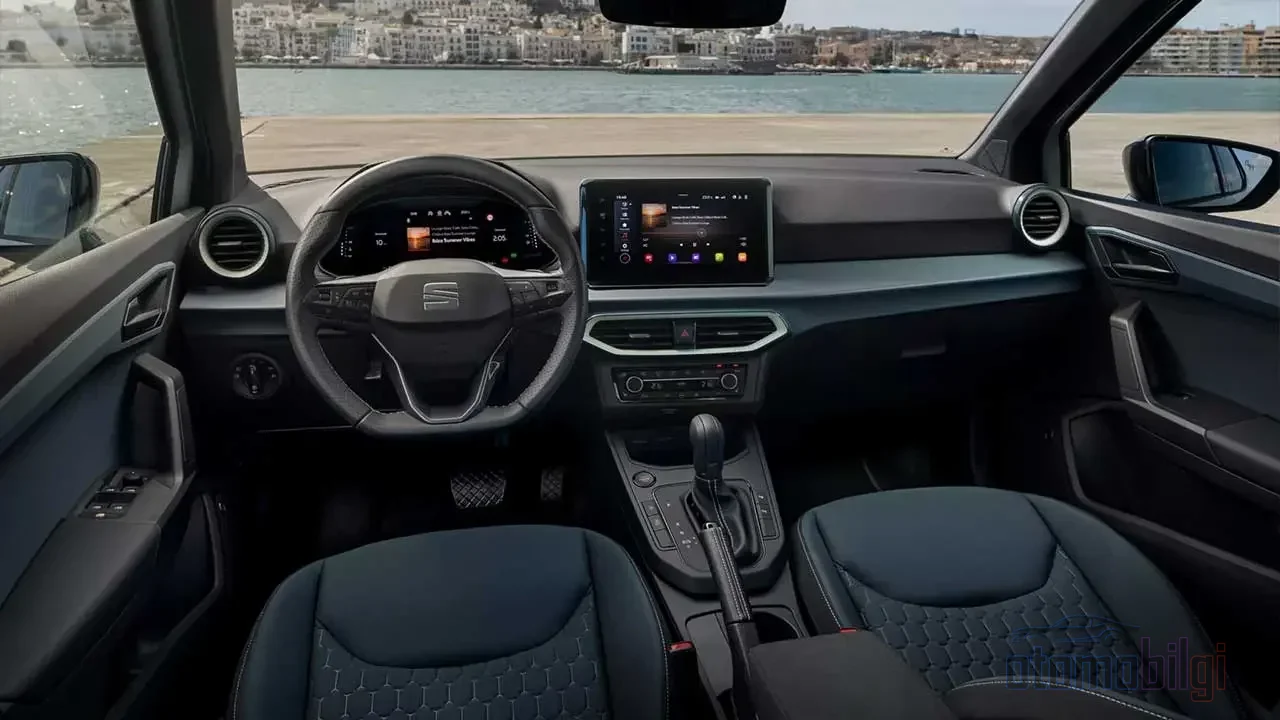
The Arona is based on the Volkswagen Group's MQB A0 platform; the Polo and Ibiza use the same architecture. The interior is also largely shared with the Ibiza. This partnership works both ways: material quality and ergonomics carry the maturity of a well-established hatchback; thanks to the digital instrument cluster, the interior even looks more modern in the Arona than in its sibling in some evaluations.
The distinguishing features start on the outside: the strong lines on the hood, the increased body height and the SUV form. Inside, the difference can be reduced to three measurements: the high driving position, the 400-liter trunk and the headroom provided by a roof height of around 1,526 mm. This is the technical answer to the question "Arona or Ibiza?"; if the interior is nearly identical, the deciding criteria should be seating position and loading volume. While offering these differences, the Arona is positioned below its larger sibling, the Ateca, as the brand's smallest SUV.
Engine and transmission: a single combination, a clear calculation
In the Turkish market, there is only one power unit available for the Arona: 1.0 EcoTSI sold under the name, an in-line three-cylinder, direct-injection, turbocharged 999 cm³ petrol engine. Producing 116 PS, this unit delivers 200 Nm of torque in the 2,000-3,500 rpm range. Keeping the torque band low compensates for the three-cylinder displacement's lack of urban flexibility: the desired response can be obtained at starts and overtakes without raising revs.
On the transmission side there is only one option: a dry-clutch, 7-speed DSG dual-clutch automatic. Gear changes are faster compared to a classic torque-converter automatic; apart from low-speed behavior in parking maneuvers, the gearbox exhibits a sweet and smooth character. According to official figures, 0-100 km/h takes 9.9 seconds, and top speed is 195 km/h. Official combined fuel consumption is around the 5.0-6.2 l/100 km band; in real use it draws a reasonable picture with 6.5-7.5 in the city and 5.5-6.0 l/100 km out of town. The 40-liter fuel tank, with this consumption, offers frequent station intervals in city use.
Historical alternatives: why are diesel and CNG not on the list?
The Arona's career did not include only petrol engines. In the past there were 1.5 TSI EVO versions producing 95 PS and 150 PS (250 Nm, 0-100 km/h in 8 seconds), 95 and 115 PS 1.6 TDI diesels, and a 90 PS CNG-powered 1.0 TGI option. However, none of them feature in the current Türkiye sales lineup. It is not hard to understand the reasoning on the diesel side: the 95-horsepower 1.6 TDI, with a 0-100 time of 12.8 seconds, offered a slow and noisy character that did not suit the Arona's agile identity. Today's single-engine lineup matches the model's actual use scenario, namely the city and short-to-medium-distance family routes.
Driving character: SUV form, hatchback reflexes
The Arona's road holding aligns with the many reviews that call it one of the most nimble models in the B-SUV class. A body only about 1.5 cm higher than the Ibiza's does not create a serious shift in the center of gravity; as a result, the car behaves more like a raised hatchback than an SUV. Thanks to its light structure it is considered even more agile than its bigger brother, the Ateca; reassuring in fast corners, with steering that is precise but kept somewhat light.
The suspension setup fits softly into this sporty framework. It is frequently noted that it behaves more comfortably than most rivals over potholes, bumps and speed humps, and therefore suits Türkiye's road conditions. The high seating position and generous headroom are also among the most frequently mentioned points of user satisfaction.
The weak points are also measurably defined: above 100 km/h, wind and road noise are felt; the three-cylinder engine idles and runs cold with vibration and a gruff note. These are not critical failures, but the sound and vibration tolerances that are the price of the character. In return, the dry-clutch DSG is the model's most debated component, with users on forums reporting gear-change problems even at low mileage; questioning the regular maintenance record of used-car candidates equipped with this gearbox is a sensible precaution.
Equipment and practicality: which trim is for whom?
In Türkiye, the Arona is sold in four trim levels: Style, Style Plus, Xcellence and FR. The top-level FR trim offers a tangible counterpart to its sporty identity: 18-inch alloy wheels, dark rear windows, Full LED headlights, bucket seats, dual-zone climate control, adaptive cruise control, front and rear parking sensors with a reversing camera, drive mode selection, wireless Full Link, and a 9.2-inch multimedia screen. Park Assist is one of the features that most enhances the model's everyday practicality.
- For city families: the Style Plus level covers the basic needs with parking sensors and a digital instrument cluster.
- For long-distance drivers: Xcellence and FR, which include adaptive cruise control and dual-zone climate control, are sensible options.
- For visibility assurance: Full LED Design headlights promise a noticeable improvement in night vision and brightness.
Criticisms of the equipment should also be mentioned: some users point out the lack of a panoramic roof, electronic parking brake, and keyless start, the Full Link restrictions in the multimedia system, and the absence of built-in navigation. The second facelift applied in 2025 brought a new front fascia, a revised bumper, and modern headlight units, giving the car a more mature stance; the launch of the Liminal Red color in May 2026 was the final touch that broadened the color palette.
The Arona's place among its rivals
Given the crowded B-SUV segment in Türkiye, the Arona's position is clear: it competes directly with the Nissan Juke, Renault Captur, Peugeot 2008, and Opel Crossland X; it shares its target audience one-to-one especially with the Captur. In this crowded field, two points set the Arona apart. First, the platform: the MQB A0 foundation offers fully internal combustion, non-hybrid mechanical simplicity that is increasingly rare in the group. Second, the transmission strategy: the entire range being sold exclusively with DSG automatics creates one of the clearest pictures in the class for buyers who insist on an automatic. The formula of "German engineering with a Mediterranean soul" is the real substance of this pairing beyond marketing.
On the safety side, the Euro NCAP 5-star rating provides a measurable foundation for family-oriented buyers' decisions. In terms of pricing, the Arona sits a few notches above its cheapest rivals; user feedback suggesting that the premium paid over Stepway-class alternatives is justified in driving and quality is an assessment that aligns with the engineering data.
Conclusion: for whom does it make sense, and for whom does it not?
The Arona, with its high driving position, trunk of over 400 liters, spacious interior, 5-star safety, and reasonable fuel consumption, truly meets the single-car scenario of a small family. City use is its main territory; the 9.9-second 0-100 figure doesn't leave the agility claim empty either. On the other hand, long-distance highway users should pay attention to the noise above 100 km/h, buyers seeking mechanical simplicity to the absence of a hybrid, and users with high equipment expectations to the missing comfort features. The three-cylinder vibration and dry-clutch DSG debate are the two items on this list that must be consciously accepted. This car, with the character of a hatchback and the look of a crossover, is one of the most sensible offers in the segment for those who want that combination.
Sources
- NEW SEAT Arona
- Seat Arona FR Technical Specifications
- Seat Arona Style Technical Specifications
- Seat Arona Driving, Comfort, Engine and Transmission - arabazzi
- Seat Arona 1.0 TSI 110HP DSG-7 Technical Specifications
- Seat Arona (facelift 2025) 1.0 TSI (115 hp) DSG - Auto-Data.net
- Seat Arona - Vehicle technical data - Automoli
- Seat Arona 1.0 TSI Review: Price, Performance and Comments
- Seat Arona Xperience | Is the Ibiza More Sensible?
- Seat Arona: A tough rival to the Renault Captur
- Discover the 400-liter trunk capacity of the new SEAT Arona and its other features
- New SEAT Arona Features and Details - Ototeknikveri
- seat arona