2026 MINI Countryman: A Look at the Premium C-Segment Compact SUV
Share This Page
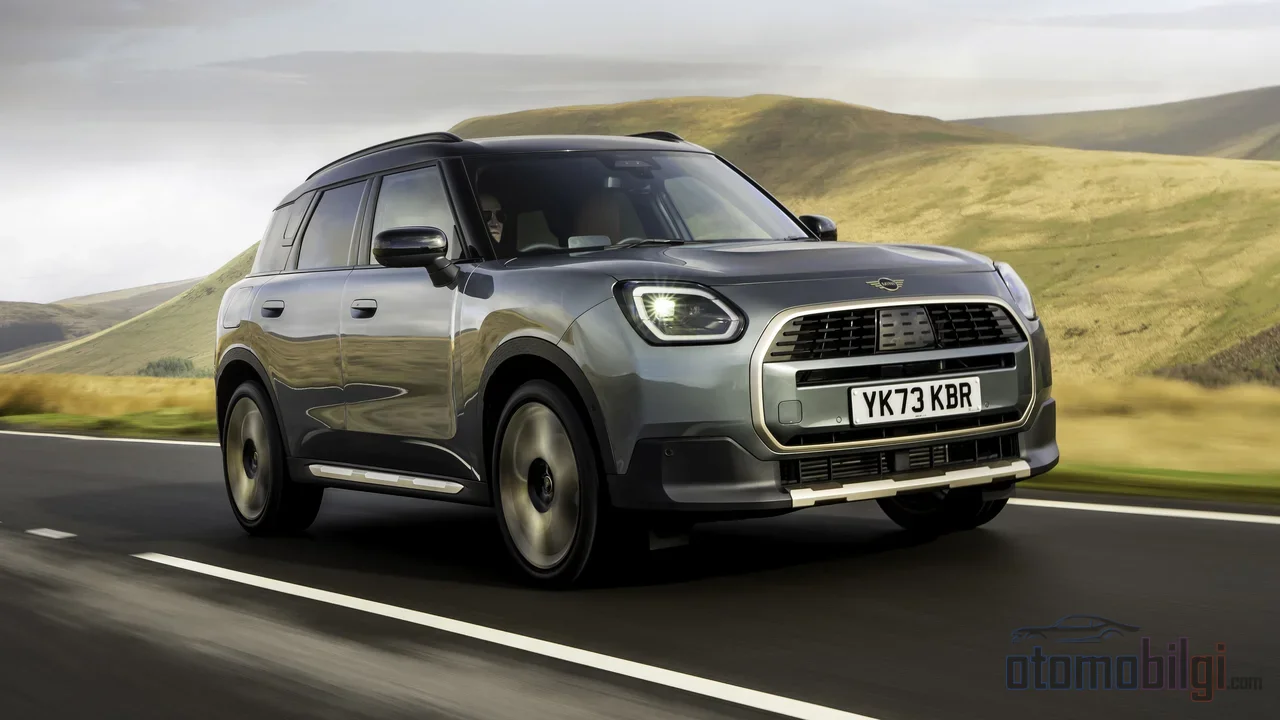
The 2026 MINI Countryman C is one of the premium compact SUVs sold brand-new in Türkiye that is not a hybrid: Its 1.5-liter three-cylinder gasoline engine delivers 170 hp of power and 280 Nm of torque, placing it in the C segment on a BMW underpinning. Its most distinctive difference from its rivals lies not so much in technical data as in its identity: big in size, yet still MINI in driving character. In this guide we cover the model's segment, the character of its engine-transmission duo, the practicality of its interior and luggage compartment, and its strengths and weaknesses - without providing a price list.
Highlights
- 1.5-liter three-cylinder gasoline engine with mild hybrid support: 170 hp / 280 Nm
- 0-100 km/h in 8.3 seconds, top speed 212 km/h
- Length 4,444 mm, wheelbase 2,692 mm - the brand's largest model
- Luggage capacity of up to 1,530 liters with the seats folded
- WLTP combined consumption of 6.2 l/100 km, CO₂ of 141 g/km
What segment does the 2026 MINI Countryman C belong to, and who is it aimed at?
In terms of technical classification, the Countryman C is a C-segment compact SUV. The third generation, which uses BMW underpinnings, is the largest Countryman in the brand's history: 4,444 mm in length, 1,843 mm in width and 1,661 mm in height, with a wheelbase of 2,692 mm. These dimensions make it a full class larger than its first-generation predecessors; so it is no longer a "cute little SUV" but a family-scale vehicle.
Its target user profile sits at the intersection of two needs: a driver who carries the quality, safety and equipment expectations of the premium segment, yet seeks a more characterful design and driving feel than the established brands offer. On the practical side, seating for five adults, the standard MINI Connected infotainment system, automatic climate control, lane-keeping assist and parking assist support this profile in daily use.
In Türkiye, the model is imported by Borusan Otomotiv and sold with country-specific versions such as Dark Edition, Favoured and Trail Edition. This variety of versions means the same basic mechanical package is offered with different design and equipment emphases; on the engine and transmission side, the choice is single and clear.
What character does the 1.5-liter gasoline engine have?
At the heart of the Countryman C is a 1.5-liter three-cylinder, turbocharged gasoline unit with mild hybrid support. The official figure for system output is 170 hp; the values seen in price sources as 156 + 20 hp arise from listing the internal combustion engine's own output and the contribution from electric assistance separately. The two figures are different representations of the same system; when making a purchase decision, it is correct to base it on the official total output, i.e. 170 hp. Torque is 280 Nm.
On the performance side, the promises are adequate for a compact SUV format: 0-100 km/h in 8.3 seconds and a top speed of 212 km/h. This is a set of figures that sits in the same league as the entry engines of rival premium compact SUVs. The mild hybrid system's function here is less about a sporting power boost and more about torque fill and efficiency: electric assistance during launch and acceleration smooths out the low-rev region where the engine's three-cylinder character is at its weakest.
The consumption figures confirm this picture: WLTP combined 6.2 l/100 km and CO₂ 141 g/km. In the real world, this figure can run higher depending on driving style; third-party figures like 6.8 l/100 km are a natural consequence of this gap. Official values are measured on a standard cycle, and city driving and aggressive use push real consumption upward. With its 54-liter tank, the theoretical range is calculated at around 790 km.
How does the transmission work, and is it good enough?
Behind the engine sits a 7-speed Steptronic-type dual-clutch automatic transmission. The nature of this type of transmission is that it offers faster and more direct gear changes compared to classic torque-converter automatics; in return, it can sometimes respond slowly during low-speed maneuvering or through throttle pedal transitions. In the Countryman too, user reviews have criticized the transmission's occasionally lagging responses - this is a known behavior of dual-clutch technology and can be partly managed through drive mode selection.
From an engineering standpoint, the pairing makes sense: when 280 Nm of torque is distributed across 7 gears, highway cruising is relaxed, revs are kept low, and consumption shapes up accordingly. When sporty driving is desired, the transmission needs to be held in a higher rev range with manual intervention; in automatic mode, the three-cylinder engine's character is tuned for a calmer emphasis.
Interior and cargo practicality: can it be a family car?
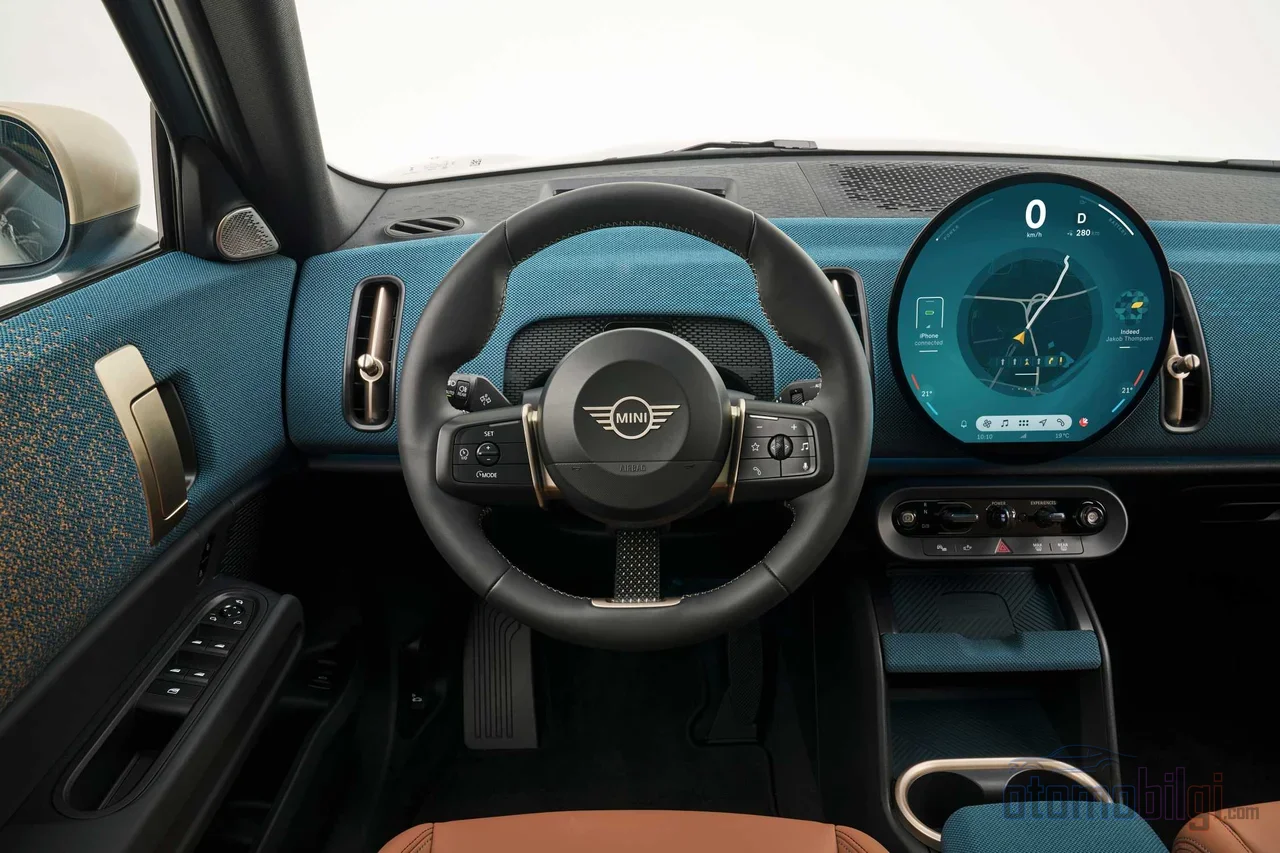
The biggest gain of the third generation came in dimensions, and this is directly reflected in the interior. The 2,692 mm wheelbase provides generous knee room in the rear seats; the five-seat layout is genuinely usable. Inside, the circular central display, the geometric grille texture, and MINI's distinctive design language make the premium feel noticeably different from a classic German SUV; the cockpit layout and technology package are generally well received. When it comes to the premium label on the materials front, user reviews include both the very satisfied and those who find it below expectations - this is a subjective dividing line seen across the segment.
On the cargo side, the official figure is clear: up to 1,530 liters with the rear seats folded. Catalog data also confirms practical solutions like partial folding in a 40:20:40 split and a foldable-tilting cargo floor. With the seats upright, there is still a comfortable volume for everyday shopping and family loads. Figures like the 460/1,450 liters quoted for the electric versions do not apply to the gasoline model; the two versions have different cargo architectures and should not be confused in comparisons.
Driving identity: what sets the Countryman apart from its rivals?
MINI's brand identity becomes tangible on the driving side: sharp and precise steering, committed road holding, a chassis that changes direction quickly. The agility and sporty experience that stood out in earlier generations' driving assessments remain the model's defining trait even in the new generation with its longer wheelbase. Compared to the BMW X1, which shares the same platform, the Countryman's difference is not mechanical but characteristic: while the X1 is a more neutral family SUV, the Countryman chooses to offer the driver a tactile, elbows-out experience.
- Design: an exterior look that stands apart from the premium compact SUV crowd at a glance with its circular screen and angular lines.
- Driving: clear steering feedback and sporty chassis tuning deliver a feel above the segment average.
- Scale: being the brand's largest model adds family practicality while preserving MINI character.
- Mechanical kinship: the BMW underpinnings provide the technical foundation, while the British design identity creates its distinguishing face.
On the other side, the weaknesses are also measurable: the dual-clutch transmission's low-speed responses, some material details that can be debatable despite the premium badge, and running costs that are anything but cheap among the petrol models in its class. Especially the frequent service intervals should be seen as a long-term cost item for high-mileage users.
The position of the petrol Countryman C in Türkiye: competitors and the current market reality
The Countryman C's real rivals in Türkiye are the petrol versions of the Audi Q3 and BMW X1; in terms of price positioning, it is compared directly with this premium trio. Moreover, the fact that it shares the same technical base as the X1 turns the comparison into one of equipment and design preference rather than the engine.
The decisive dynamic on the market side is the model's electric sibling. Due to the SCT tax advantage, the electric Countryman E's price sits noticeably below the entry version of the petrol C - this gap directly affects buyers looking for a premium compact SUV but wanting the brand and shape to stay the same. The petrol C's answer is transparent: for buyers who do not want to move to hybrid and electric technologies and value the consistency of the internal combustion engine and long-range comfort, it remains one of the dwindling number of options in the category. Compared with more affordable C-segment SUVs like the Peugeot 3008 or Hyundai Tucson, the Countryman C sells not price but design and driving identity; an easy car to justify for those who make their choice on that axis.
Conclusion: the short answer for those seeking a non-hybrid premium compact SUV
The 2026 MINI Countryman C is a characterful example of the internal combustion premium compact SUVs on sale new: 170 hp of power, 8.3 seconds 0-100, up to 1,530 liters of cargo space and a clear driving identity. The engine-transmission duo is not sportily ambitious, but efficient and adequate; the transmission's low-speed responses are the most prominent technical criticism point. For the buyer who wants family practicality, premium equipment and a design that stands out from its rivals in one package, and doesn't want to look at hybrid offerings, it remains a valid option in Türkiye - it ranks high on the list of those who will make their choice based on its identity rather than its price.