What Needs Does the 2026 SEAT Ibiza Meet in the City and on the Road
Share This Page
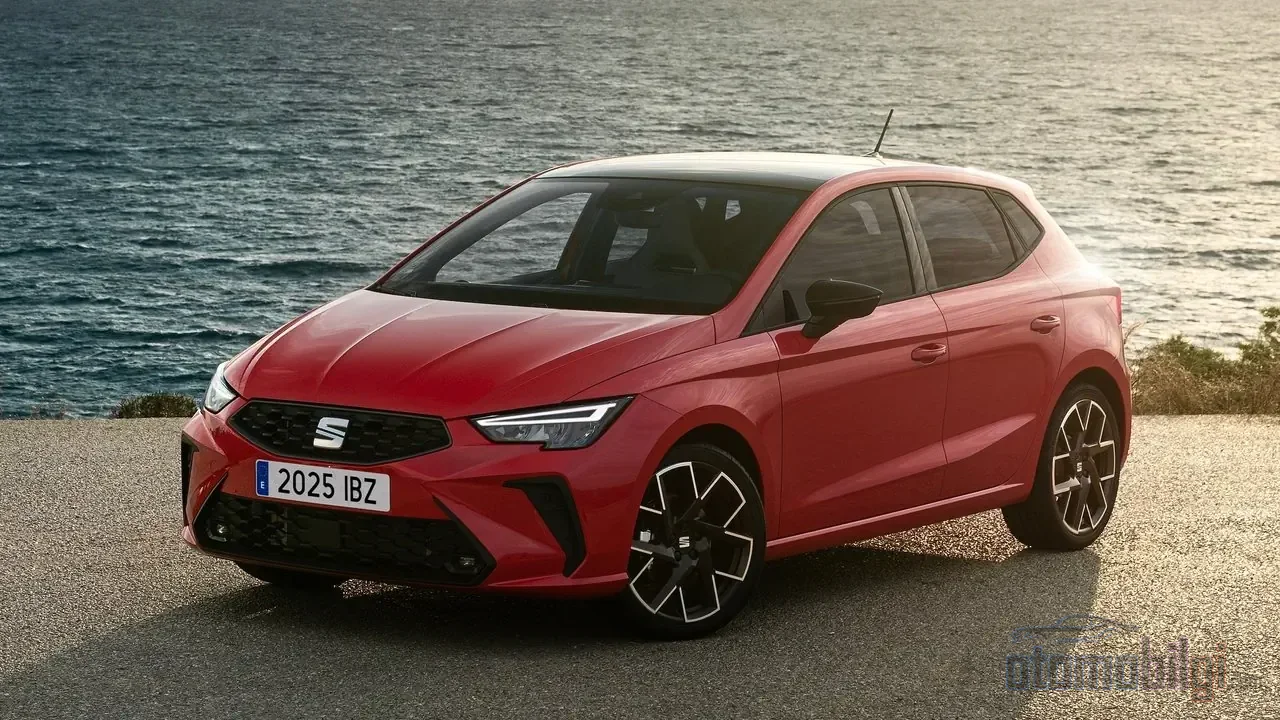
The SEAT Ibiza is a city hatchback still sold brand-new in Türkiye, offered exclusively with petrol engines: Ibiza's job is to offer small families and city users C-segment-like practicality in a B-segment-sized body. The 355-liter trunk, the low consumption of the 1.0 TSI engines, and the driving balance of the MQB A0 platform are measurable counterparts of this claim. Although mentioned in the same group as the Leon, it answers a separate need with its shorter body, lower fuel consumption, and more accessible price point.
Highlights
- Trunk capacity: 355 liters, expanding to 1,165 liters
- when the rear seats are folded Engines: four petrol options from the 1.0 MPI 80 PS to the 1.5 TSI 150 PS
- Fuel consumption (WLTP average): 5.0–5.8 l/100 km range
- Safety: Euro NCAP 5 stars, speed limiter standard in the base equipment
- Reliability: in production since 1984, with more than 6 million sales worldwide
Who Does the SEAT Ibiza Answer the Needs Of?
The Ibiza's target audience becomes clear at two ends. The first end is the user who drives the car mostly in the city and does not want to limit themselves with parking maneuvering and body size. A length of 4,070 mm, a width of 1,780 mm, and a height of 1,447 mm sit in a comfortable window of dimensions for this task: while the same brand's Leon is 4,368 mm long with a 380-liter trunk, the Ibiza is only 309 mm shorter and the trunk difference narrows to 25 liters.
The second end is a small family's single-car need. In this scenario, two data points are decisive: the trunk and safety. The 355-liter trunk is above the B-segment values of most of its rivals; the 1,165 liters opened up when the rear seats are folded is sufficient for weekend loads. On the safety side, a body that received 5 stars from Euro NCAP is supported by systems such as adaptive speed control, lane keeping assist, automatic emergency braking, fatigue detection, and the semi-autonomous Travel Assist.
A historical note helps explain the model's identity: the first generation was developed with Giorgetto Giugiaro design, Karmann body engineering, and Porsche-derived engine technology, and was the first car SEAT produced with its own engineering. Produced since 1984 and surpassing 5 million units in its 30th year, the model stands as the brand's best-selling car. This track record is a concrete parameter that reduces the risk taken by today's buyer.
Engine and Transmission Options: Four Petral Characters
There is no diesel in the current lineup; all four options are petrol. Start&Stop is standard across the range, and the TSI engines have a petrol particulate filter. For those who want to choose, the characters of the four engines are laid out side by side in the table below:
| Engine | Power / Torque | Transmission | 0–100 km/h | Top speed | Average consumption (l/100 km) |
|---|---|---|---|---|---|
| 1.0 MPI | 80 PS / 93 Nm | 5-speed manual | 15.3 s | 175 km/h | 5.2–5.6 |
| 1.0 TSI | 95 PS / 175 Nm | 5-speed manual | 11.0 s | 190 km/h | 5.0–5.4 |
| 1.0 TSI | 116 PS / 200 Nm | 6-speed manual or 7-speed DSG | 9.9 s | 200 km/h | 5.1-5.7 |
| 1.5 TSI | 150 PS / 250 Nm | 7-speed DSG | 8.1 sec | 220 km/h | 5.7-5.8 |
1.0 MPI: The Entry Gate but the Engineering Limit
The 1.0 MPI is by definition a non-turbocharged entry-level engine. 93 Nm of torque and a 15.3-second 0-100 km/h time, which shows this engine is calibrated for low-speed urban use and falls behind on highway overtakes and when loaded. It is a sensible base if budget is the primary criterion; if there are performance expectations, you need to look higher.
1.0 TSI: The Center of Gravity Is Here
The 95 PS 1.0 TSI delivers 175 Nm of torque to its three-cylinder block from 2,000 rpm. This early-arriving torque, combined with a light body, produces a character that is sufficient and enjoyable for city use; the assessment that it is more than enough for users without performance expectations is a fair one. Factory average consumption is in the 5.0-5.4 lt/100 km range; real-world values appear in user feedback of 3.5-5 on long journeys and 5.5-7 lt/100 km in the city.
The 116 PS version is the structural middle of the range: 200 Nm of torque, 9.9-second 0-100 and a 200 km/h top speed, plus a choice of 6-speed manual or 7-speed DSG. In the Türkiye market, the facelifted body is sold with the DSG version of this engine. The 150 PS 1.5 TSI is the top option, reaching 0-100 in 8.1 seconds with 250 Nm of torque; drive modes can be set in four levels: Eco, Normal, Sport and Individual.
DSG Realities: Fast but Criticized
DSG is a dual-clutch automatic transmission offering fast gear changes. Two weak points recur in user experiences: gear decision errors on long journeys and in congested traffic, and low-speed judder. These are measurable drawbacks stemming from the transmission's calibration, not the engine; when making a purchase decision, the existence of the 6-speed manual option should be taken into account. A comparative note: while some rivals lack a speed limiter even in their top trim levels, this function is standard in the Ibiza's base equipment.
Interior and Connectivity: Screen, Sound, Charging
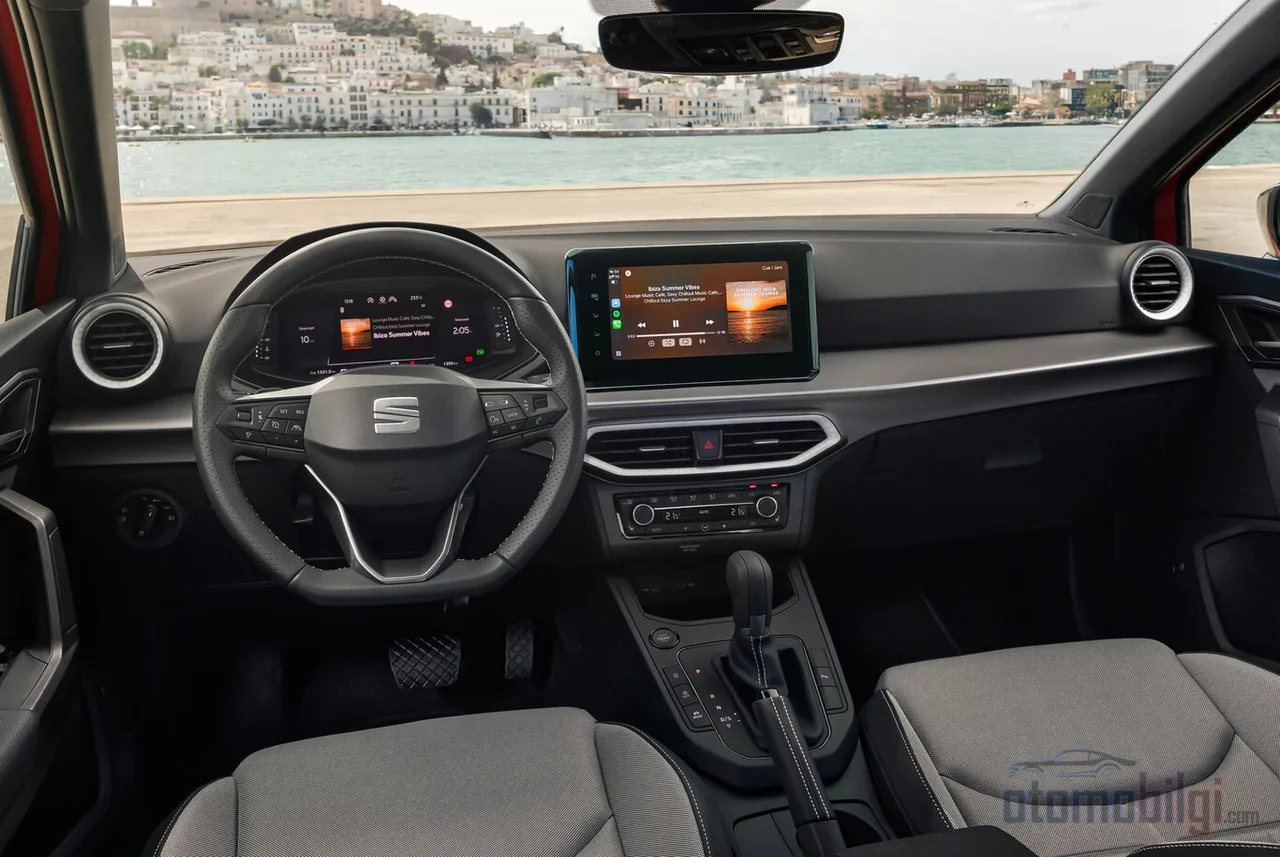
The cabin has a standard 8.25-inch infotainment screen; the optional 9.2-inch system includes navigation and SEAT CONNECT connectivity, and these connectivity services are free for 10 years. Wireless Apple CarPlay and Android Auto support, 15W fast wireless charging, the 300W SEAT Sound System and a voice assistant meet current cabin expectations. The facelift added embossed fabric upholstery to the seats and an optional panoramic glass roof.
Practicality Data: Luggage and Dimensions
Four numbers that are decisive in practice: 355 liters of luggage space, with folded seats 1,165 liters, 4,070 mm in length and a curb weight of approximately 1,059 kg . The luggage volume today matches the values of some models in the compact class; this is the most concrete point where the Ibiza stands apart from its rivals with its B-segment label. The roof load limit is stated as 75 kg, with a maximum loaded weight of 1,640 kg. The suspension geometry is MacPherson at the front and torsion beam at the rear: this cost-effective setup draws the comfort boundaries with an urban priority in mind.
Ibiza or Leon? The Criteria for the Sibling Divide
The data set separating the two models from the same Volkswagen Group platform family is clear. With its longer body and larger trunk, the Leon takes the upper tier within the family, while the Ibiza pulls ahead on the consumption and cost side.
| Criterion | SEAT Ibiza | SEAT Leon |
|---|---|---|
| Length | 4,059-4,070 mm | 4,368 mm |
| Trunk capacity | 355 liters | 380 liters |
| 0-100 km/h (compared engines) | 9.9 s (1.0) | 9.4 s (1.5) |
| Average consumption | 5.2 l/100 km (1.0 Style Plus) | Behind the Ibiza |
The common outcome of user discussions is this: fuel consumption and the price difference make the Ibiza a sensible choice, with the shared view that the size difference has largely closed and the gap sits at a midpoint closer to the Ibiza than to the Leon. The Leon pulls ahead with its equipment set; the Ibiza balances it with lower running costs.
The Ibiza's Place Against the Polo, Clio, Corsa and Swift
Alongside the Polo, Clio, Corsa and Swift, the Ibiza also competes in the same space with successful models like the Fiesta, i20 and Fabia. The headings that set it apart in this crowded group are:
- Trunk: 355 liters, above the class; many rivals fall below this figure.
- Standard equipment: The cruise control being standard in the base package and the extensive safety set are optional or absent in some rivals.
- Platform dynamics: The MQB A0 base is a modern architecture developed by the Group for light vehicles; the driving balance is a benefit of this structure.
- FR trim: The FR, which includes sport seats, dual-zone climate control, adaptive cruise control and a rear camera, answers those seeking a sporty character in the class; at the top, the FR Black Edition offers 18-inch wheels, 9.2-inch navigation, a 10.25-inch digital display and wireless charging.
- Fuel economy: The 1.0 TSI family's factory average dropping to 5.0 l/100 km sits at a point that narrows the roughly 1.5-liter gap between diesel and gasoline.
The weak points must also be read with discipline: the DSG's vibration and gear decisions, the entry engine's 15.3-second acceleration time and 93 Nm of torque, and the comfort limit of the torsion beam suspension at the rear axle. These are engineering choices embedded in the model's identity; the natural limits of a cost-focused city car in an all-gasoline lineup.
Equipment Trims: What Does Each Level Offer?
There are four trims in the Türkiye lineup: Ibiza, Style, FR and FR Black Edition. Style brings basic comfort with 16-inch wheels; the FR is the sporty trim, and the FR Black Edition is the equipment peak. The facelifted body made 100% LED taillights standard across all versions; slim Full LED headlights, the refreshed hexagonal grille and sporty bumper are the new signatures of the exterior design. Wheel options ranging from 15 to 18 inches and new colors like Liminal, Oniric and Hypnotic expand the catalog. The Euro NCAP 5-star rating is common to all trims.
In conclusion, the Ibiza is the current form of a formula that has been running since 1984: small body, big practicality, low consumption. It is a sibling of the Leon but not a copy of it; a fully petrol-powered city car that, in the territory shared with the Polo, Clio, Corsa and Swift, sets itself apart in measurable ways with its boot and standard safety package. The decisive question in the buying decision is this: does the torque curve of the 116 PS 1.0 TSI or the lower cost of the 95 PS version match your usage profile? Once your answer becomes clear, it also becomes clear which version of the Ibiza is the answer to your needs.
Sources
- Seat Ibiza
- Seat Ibiza Style
- Facelifted 2026 Seat Ibiza Technical Specifications, Price and Review
- The Renewed Seat Ibiza Is Sportier and Smarter
- Seat Ibiza Style Plus 2026 Detailed Technical Specifications
- Seat Ibiza Interior, Volume and Practicality
- Seat Ibiza Driving, Comfort, Engine and Transmission
- Should You Buy the Seat Ibiza 1.0 EcoTSI? Fuel Consumption and Reviews
- Seat Ibiza Ibiza V - Vehicle technical data
- SEAT Ibiza
- Seat Leon vs Seat Ibiza Comparison
- An affordable new engine option for the SEAT Ibiza