Is the 2026 SEAT Leon More Than Just the VW Golf's Cousin?
Share This Page
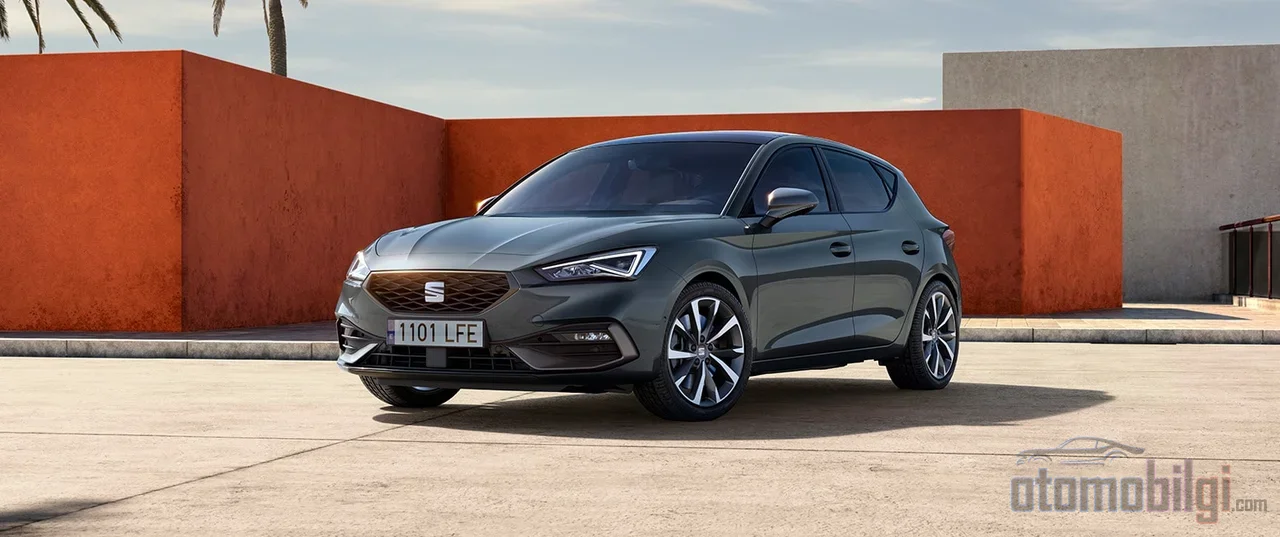
The SEAT Leon is a C-segment petrol hatchback that shares the same technical platform as the Volkswagen Golf, but with a distinctly sportier character and a more aggressive price positioning. Sold in Türkiye mainly with 1.0 and 1.5 TSI petrol engines and a 7-speed DSG transmission, the model does not settle for being a simple "Golf cousin": with sharper design, a livelier engine-transmission harmony and a practicality balance shaped by trim level, it defines its own audience. This guide explains exactly what need the Leon answers and where it diverges from the Golf, with measurable data.
Highlights
- In FR trim 1.5 eTSI 150 HP, 250 Nm torque, 0-100 km/h in 8.5 seconds
- 7-speed DSG and 48V mild hybrid eTSI technology
- 380 liters trunk volume, class-standard practicality
- Fuel consumption: official 5.5-6.3 lt/100 km, around 6-6.5 lt in real life
- Euro NCAP 2020 five stars: 92% in adult occupant safety
Why Is the SEAT Leon More Than the Golf's Cousin?
The question deserves its due: where does the difference lie between two cars carrying the same automotive group's platform, the same engine family and the same transmission? Part of the answer lies in measurable technical data, part in a character spread across the driving feel. The Leon has roughly the same dimensions as the Golf, at 4.37 meters long and 1.99 meters wide; the 50 mm of rear knee room gained over the previous generation also confirms that both models share the same mechanical base.
The divergence begins where the intended use is chosen. While the Golf emphasizes insulation, material feel and calmness, the Leon comes with a sharper design language and a firmer, more youthful driving character. The steering is sharp and responses quick; despite the FR trim's low and firm suspension, there is no marked discomfort on rough roads. Additionally, a tighter turning circle than the Golf creates a tangible difference in city use.
The second axis of divergence is pricing. The Leon converts the technical foundation it shares into a more accessible price/benefit ratio; the model winning the 2021 Autobest "Best Buy of the Year" award internationally also shows this positioning is no coincidence. So reading the Leon as a "cheap Golf" falls short: this is an alternative built on the same skeleton, sportier and more rationally priced.
As a note: the Leon's story dates back to October 1999, when Giorgetto Giugiaro drew the first generation's design. The third generation (5F) alone reached 1 million sales, and in 2017 set an annual sales record of around 170 thousand units. The generation sold today builds on this legacy.
Engine and Transmission: The Character of the 1.0 TSI, 1.5 TSI and DSG Duo
The petrol lineup in the Turkish market is built around two engines: 1.0 TSI 110 HP and 1.5 TSI - 130 HP in the normally aspirated boosted version, 150 HP in the mild hybrid eTSI version. Both engines are available in mild hybrid versions. The 1.5 eTSI ACT in FR trim, with a displacement of 1,498 cc, produces 150 HP of power and 250 Nm of torque; 0-100 km/h acceleration takes 8.5 seconds.
The eTSI designation refers to a 48-volt mild hybrid system. The system recovers kinetic energy while slowing down and smooths stop-start transitions; the ACT abbreviation means cylinder deactivation under low load, i.e. it saves fuel by disabling some cylinders while cruising at a constant speed. The key distinction is this: this is not a full hybrid - the vehicle cannot travel long distances on electricity alone. The electric motor is an auxiliary support unit, not the actual source of propulsion.
On the transmission side, all of these engines are paired with a 7-speed DSG dual-clutch automatic. Real-world usage data indicates that this pairing is lively from low revs, with mid-range overtaking maneuvers and electrically assisted launches proving successful. The official average consumption 5.5-6.3 lt/100 km range; in real life, 6-6.5 lt/100 km is an achievable figure for the 1.5 eTSI ACT. The 1.5 eTSI 116 PS version in Style trim offers 220 Nm of torque and an official average consumption of 5.9 lt/100 km.
| Engine / Trim | Power | Torque | Standout figure |
|---|---|---|---|
| 1.0 TSI | 110 HP | - | Mild hybrid version available |
| 1.5 TSI | 130 HP | - | Mild hybrid version available |
| 1.5 eTSI ACT (FR) | 150 HP | 250 Nm | 0-100 km/h in 8.5 s |
| 1.5 eTSI (Style) | 116 PS | 220 Nm | 5.9 lt/100 km official average |
Interior and Trunk Practicality: What Does 380 Liters Mean?
The Leon's trunk capacity of 380 liters - matches class standards but is not the class leader. In practice there are two drawbacks: the loading sill is high and there is no adjustable trunk floor. The wider-trunk Leon Estate (620 liters) body style is not sold in Türkiye either; those with this need will have to look at other models. Fuel tank is 45 liters.
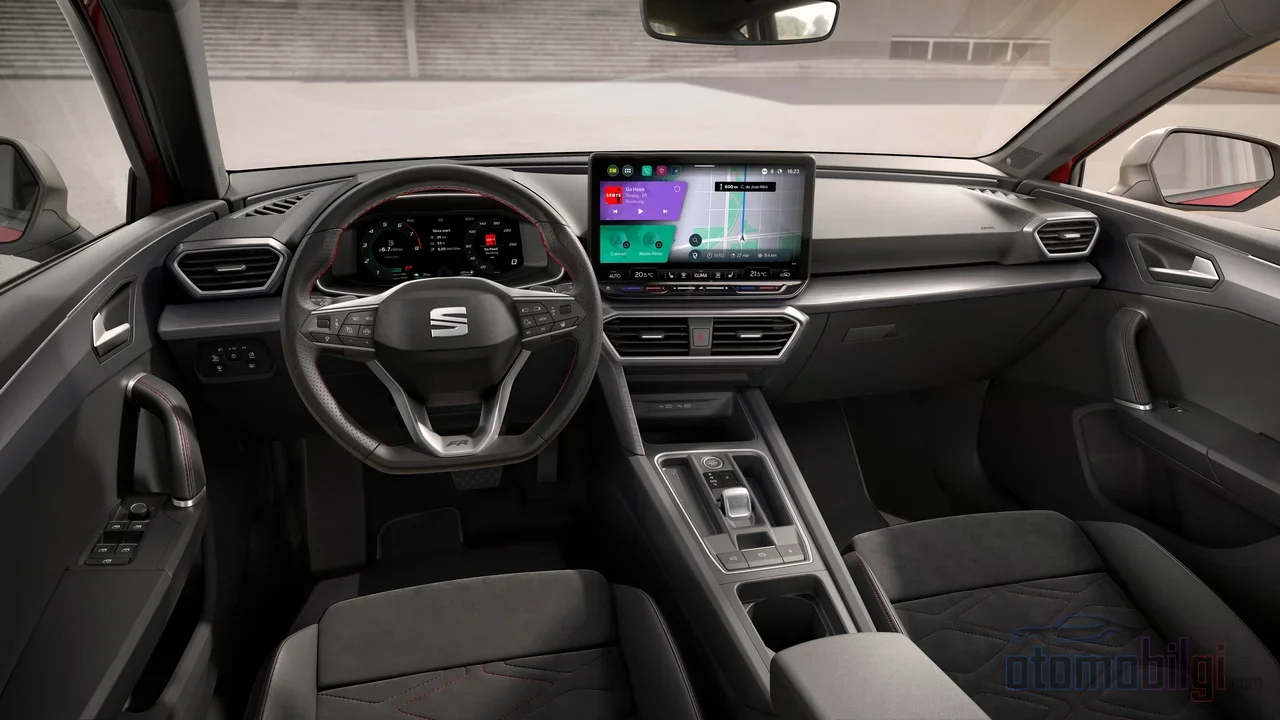
Inside the cabin, the equipment varies by trim level. On higher trims, a 10-inch touchscreen infotainment display and a 10.25-inch digital instrument cluster are standard; the flat-bottom leather steering wheel is found across the entire range. The FR offers suede upholstery, while Xcellence offers a leather upholstery option. The Style trim's three-zone automatic climate control is a practical advantage for long family use.
Is the FR Trim a Performance Model? Drive Modes and the Truth
A common misconception needs to be clarified: the FR trim is not a performance model, but a sportily oriented equipment level. It does not mean Cupra-level performance; it signifies a sporty visual and chassis setup, with engine output in the standard range.
The FR's contribution on the driving side materializes through four drive modes: Normal, Sport, Eco and Individual. These modes reconfigure the throttle pedal map, transmission behavior and suspension character according to the driver's preference. Combined with sharp steering and quick responses, the FR truly delivers a more focused driving experience - but it is a sportiness that remains at the equipment package level, and should not be confused with the Cupra.
Safety, Electric Option and Reliability Table
Euro NCAP awarded the Leon five stars in 2020: 92% in adult occupant safety, 88% in child occupant safety, 71% in vulnerable road user safety and 80% in safety assist. These scores point to adult protection above the level expected from a C-segment family car.
There is no fully electric option in the lineup, but the Leon e-HYBRID (PHEV) version combines the 1.5 TSI with an 85 kW electric motor, producing 150 kW (204 PS) of system power. At 50 kW DC charging, the 10–80% range takes about 26 minutes; electric range is 131 km, 0–100 km/h takes 7.7 seconds and top speed is 220 km/h. A serious alternative for buyers who want a plug-in hybrid.
On the reliability front the picture is neutral: the Leon is listed with a similar number of chronic issues as the Octavia. When it comes to the DSG transmission, it needs to be determined whether the fault lies in the clutch or the mechatronics; users are advised to run a cold-start test and check the fault records before buying second-hand. It is also noted that the model does not show a bad failure record, but the overall perception of interior quality lags behind the Golf, and user complaints highlight weak insulation, multimedia issues and the quality of service.
Against the Golf, Octavia and Astra, Who Is the Leon the Right Choice For?
The clearest way to make this rival assessment is along three axes. Against the Golf: the Leon is roughly 50 kg lighter in every engine option, with design and performance favoring it, while the sense of quality and insulation belong to the Golf. Against the Octavia: Skoda is unmatched in functionality with its generous interior space and trunk capacity; the Leon does not compete in this area - instead it sells driving dynamics and character. Against the Astra and other C-segment rivals: the ubiquity of the Volkswagen Group platform and the maturity of the DSG are the Leon's most concrete advantages.
A warning is also needed on the second-hand side: the Leon is a popular model in tuning culture - software (stage), spring, wheel and exhaust modifications are common in used cars. This is not an issue a new-car buyer will care about, but it is a reality that affects value when selling later.
In conclusion, the Leon is a sensible choice for this buyer: a driver who wants the Golf's mechanical reassurance on a budget close to the Octavia's price, with a sportier character, who does not seek maximum trunk capacity in the class, and who puts the engine-transmission duo ahead of the sense of interior quality. With this order of priorities, the Leon is far more than the Golf's cousin.
Sources
- SEAT Leon
- SEAT Leon FR Technical Specifications
- SEAT Leon Style Technical Specifications
- SEAT Leon e-HYBRID (PHEV)
- SEAT Leon test result: Overly positive
- SEAT Leon Style 1.5 eTSI 116 PS 2026
- SEAT León - Wikipedia (TR)
- seat leon discussions
- Golf vs Leon forum discussion
- C-Segment Cars
- Guide to DSG Transmission Problems
- Leon vs Octavia reliability comparison
- SEAT Leon reviews and complaints